Category Archives: Oprah Winfrey

The Color Purple-1985

The Color Purple-1985

Director Steven Spielberg

Starring Whoopi Goldberg, Oprah Winfrey

Top 250 Films #153

Scott’s Review #358

60026621

Reviewed January 9, 2016

Grade: A

Steven Spielberg, admittedly a director who focuses more on sentimentality, mixes heartbreak with the courage to blend a recipe that makes for a perfect, mainstream film from 1985.

It is a different direction for him- far extreme from the summer blockbusters he was known for until this time.

Exceptional acting and cinematography lend themselves to The Color Purple, a film based on the much darker novel by Alice Walker. Certainly, one of the best films of the 1980s.

A relative unknown when the film was made, Whoopi Goldberg gives an astounding performance in the lead role.

The film spans approximately forty years in the early twentieth century and is set in rural Georgia.

Celie Harris (Goldberg) is an oppressed black woman, her sister and best friend Nettie is sent away, leaving Celie a virtual prisoner with a man, Albert Johnson (Danny Glover), whom she is forced to marry and care for in addition to his children.

Raped and beaten, Celie is left with little self-worth until two women, rotund, feisty, Sophia (Oprah Winfrey), and Shug (Margaret Avery) inspire her to be something better.

The Color Purple is a very sentimental film filled with inspiration for anyone beaten down or otherwise abused by people or by society.

The depiction of southern life for blacks, especially black women is depicted well, though softened I have no doubt. Liberties must be taken for the sake of film as black men, in particular, are not portrayed well- surely there must have been some decent black men in this time?

But, despite Spielberg being a male, The Color Purple is told from a definite female perspective.

Her role of Celie is Goldberg’s finest and hers is a case of the Academy getting it all wrong; she should have won an Oscar for this performance instead of a conciliation win a few years later for her secondary (and unremarkable) role in Ghost.

Goldberg never achieved any roles as great as Celie.

Her expressions and mannerisms spoke volumes and her occasional wide, beaming smile would melt the coldest heart.

Winfrey, equally brilliant as Sophia (and also robbed at Oscar’s time), is a completely different character. Angry, abrasive, and outspoken, she fills Sophia with life and energy, which makes her big scene heartbreaking to watch.

Defying a white man she is beaten and arrested and reduced to living out her days as a limping maid to a white woman- who she swore she would never serve.

The cinematography and direction of The Color Purple are grand.

Spielberg does a believable job of depicting time accurately. The costumes worn by the cast and the lighting, in general, are bright and colorful, and I think this gives the film a flavor that is nice to watch.

Again, Walker’s novel and the real-life experience were undoubtedly much darker, but for the film’s sake, this adaptation (numerous stage versions preceded and followed) makes for a wonderful film.

Oscar Nominations: Best Picture, Best Actress-Whoopi Goldberg, Best Supporting Actress-Margaret Avery, Oprah Winfrey, Best Screenplay Based on Material from Another Medium, Best Original Score, Best Original Song-“Miss Celie’s Blues (Sister)”, Best Art Direction, Best Cinematography, Best Makeup, Best Costume Design
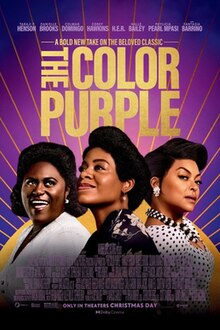
The Color Purple-2023

The Color Purple-2023

Director Blitz Bazawule

Starring Fantasia Barrino, Danielle Brooks, Taraji P. Henson

Scott’s Review #1,423

Reviewed March 16, 2024

Grade: B+

In 2023, director Blitz Bazawule recreated the famous 1985 cinematic version of The Color Purple by Steven Spielberg with mostly good results though it won’t be remembered like Spielberg’s is.

Bazawule is also a visual artist, rapper, singer-songwriter, and record producer so his version differs greatly from Spielberg’s in style and production design.

The ‘new’ version feels closer to what a feel-good Broadway stage version might feel like with incorporated musical numbers breaking up the drama and sometimes the comedy.

The Color Purple was a stage version and before that a much bleaker novel by Alice Walker so I’m not averse to comparing the 2023 version to all that preceded it.

Since we are talking cinema, although I’m more partial to the 1985 version mostly because that one packed a much greater emotional punch I think the numbers are a wise move and are choreographed well.

My favorite by far is ‘Hell No!’ an aggressive and anthemic stomp performed by a defiant Sofia (Danielle Brooks) and later reprised when mousy Celie (Fantasia Barrino) finds a set of balls.

We all probably know the story but here is a brief synopsis for those unfamiliar with the plot.

Set in the Deep South (Georgia) from the early 1900s until the 1940s, the main story follows the shy and put-upon Celie. She is raped and forced to bear the children of her father who then sells the babies. She is sent to marry and live with ‘Mister’ (Colman Domingo) who beats her and sets his sights on Celie’s sister Nettie (Halle Bailey).

Nettie and Celie are the best of friends but through circumstance lose touch for years.

The decades march on as Celie finds her voice and independence thanks to Sofia, jazz singer Shug Avery (Taraji P. Henson), and other kind folks.

The Color Purple is a lovely look at perseverance, extraordinary strength, and hope in the unbreakable bonds of sisterhood during a difficult time in history.

Black women especially were not always treated well.

The casting is uneven. I wasn’t completely won over by Barrino as Celie. The one-time ‘American Idol winner can sing and was Celie on Broadway in 2007 but I kept musing how exceptional Whoopi Goldberg was in the part in 1985.

Speaking of Goldberg, she appears in a cameo role early on as a midwife.

Henson, as Shug, has a tremendous voice and confidence providing the glamour and outrageousness needed for the role. However, she is supposed to be a drop-dead gorgeous woman who Celie is madly in love with and Henson doesn’t have the looks.

As my apt husband announced, Beyonce Knowles would have been a brilliant casting choice.

The standout is Brooks as Sofia, justifiably receiving the sole Academy Award nomination. The instant she appears on screen bullying her meek husband Harpo she has the audience wrapped around her finger giving as good a performance as Oprah Winfrey did in 1985.

While the musical numbers incorporate more of the Broadway-style they also contain a musical rock video vibe that takes away a bit of the cinematic production.  The dance moves are so perfect that they make the film feel ‘fun’ when it should feel ‘tragic’.

Even though Spielberg’s version was accused of excessive sappiness, it’s downright raw compared to the 2023 version. The finale is overly sentimental and the reunion of Celie and Mister, Mister now suddenly converted to a saint, is unrealistic.

Everything ends up so perfect for Celie and that’s all well and good but the fairy tale ending offsets some of the anguish she goes through early in the film.

Finally, Sofia’s big scene when she punches the mayor and other white townsmen lack the emotional heartbreak that the 1985 version did.

Held on its own merits, the film is a success. The Color Purple (2023) never drags and entertains from the first scene to the last. It’s a crowd-pleaser so those looking for a gooey experience will enjoy this version.

It’s safe waters without languishing towards dull or ineffectual.

Oscar Nominations: Best Supporting Actress-Danielle Brooks

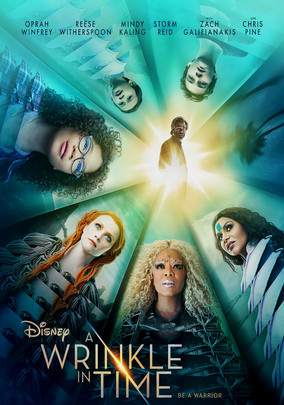
A Wrinkle in Time-2018

A Wrinkle in Time- 2018

Director Ava DuVernay

Starring Storm Reid, Oprah Winfrey, Reese Witherspoon

Scott’s Review #788

Reviewed July 16, 2018

Grade: C

A Wrinkle in Time (2018) is a film I had high hopes for, given the enormous marketing push, first-rate cast, and especially the acclaimed female director involved with the project, Ava DuVernay (Selma, 13th).

Additionally, having admired the 1962 novel, I expected a rich, earthy, and mysterious experience. Sadly, whether it be a “too many cooks in the kitchen” situation given the star power involved, or some other factors leading to a disconnect, this film disappointed me.

It’s not terrible, but it suffers from miscasting, too much CGI, and a story that is not very compelling.

Thirteen-year-old Meg (Storm Reid) is having a tough time in school. Smack dab in the “awkward phase,” she is picked on by schoolmates because her father (Chris Pine) has disappeared, presumably having ditched the family.

In reality, he is a scientist transported to another world after solving the question of humanity’s existence.

After Meg and her family are visited by a strange woman named Mrs. Whatsit (Reese Witherspoon), Meg, her little brother Charles Wallace, and Meg’s crush, Calvin, time-travel to find a way to save her father.

Fans who have read the fantastic novel written by Madeleine L’Engle will most certainly be disappointed since many details of the film are vastly different from the written page.

DuVernay attempts to take the film out of the 1960s and into 2018 (I have no issue with that), but the film feels so slick and modern with the visual elements and heavy use of CGI that the story suffers enormously.

The film is gorgeous, especially in the sweeping outdoor scenes, but in this case, too many bells and whistles spoil A Wrinkle in Time.

The three strange women characters, Mrs. Whatsit, Mrs. Who (Mindy Kaling), and Mrs. Which (Oprah Winfrey), are completely butchered. In the novel, each is portrayed as peculiar, mysterious, and similar to witches: frumpy, awkward, yet lovable.

In the film, however, they are colorful, glamorous, and empowered, but lack uniqueness or intrigue.

I am all for female empowerment, but the characters just felt wrong.

Kaling is fine in the most minor role, but in the case of Witherspoon and Winfrey, it appears to be a case of “we have big stars, let’s find roles for them.” A tough sell with Mrs. Which is to think of Oprah as anyone other than….well, Oprah!

Witherspoon’s attempts to be goofy and the comic relief of the film do not work.

The casting of newcomer Storm Reid is lackluster. I have no issue with the character of Meg being changed to bi-racial, I feel that’s a plus in the modern age. However, the actress is not the greatest, appearing both sullen and wooden in various scenes.

Nor does she have any chemistry with her love interest, Calvin.

This is a shame since the theme of young love would have been a nice addition to the film and was a coming-of-age element in the novel.

At the risk of being overly critical, A Wrinkle in Time is not a total disaster either. The progressive and heroic message of the overall film is quite inspiring if kids watch the film (and since it is Disney-produced and heavily advertised, I can see no reason why they wouldn’t), they will be exposed to a nice message of good conquering evil.

On a side note, the villain is safe and hardly conjures up much fright, so parents need not worry about the film being too scary.

With heaps of buzz and anticipation regarding A Wrinkle in Time (2018), the film seemed poised to become a blockbuster hit and a great spring flick. Instead, critics and audiences alike have largely derided it.

With creative genius, star power, and a considerable budget, something ran amok as the final product is fair to middling.

Let’s hope director Ava DuVernay gets her groove back with her next project- I expected more.

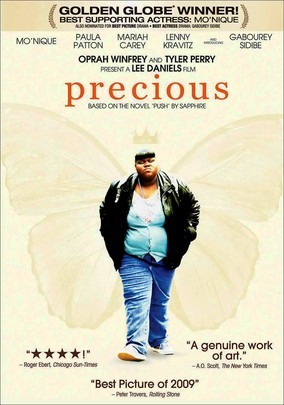
Precious: Based on the Novel Push by Sapphire-2009

Precious: Based on the Novel Push by Sapphire-2009

Director Lee Daniels

Starring Gabourey Sidibe, Mo’Nique

Scott’s Review #581

Reviewed January 2, 2017

Grade: A

Precious is an amazing film and one of the best to come out of the year 2009. Due to the hype, I had high expectations entering the theater and I was not disappointed.

The film is an in-your-face slug-fest with some of the rawest acting performed in recent years.

The marvelous aspect is that the film takes the viewer into a world that is probably not one’s own experience and makes them empathize with the characters.

The film is very disturbing at times, raw, gritty, and violent, but also has some light, humorous moments and an oh-so-important film to see. There is a heartwarming charm that offsets the violence perfectly.

The story itself, and the direction are basic, but the wonderful acting is what sets this film on a high pedestal. Gabourey Sidibe, a relatively unknown and novice actress, gives an astounding turn as an unloved, overweight, pregnant teen mom.

She is abused by both of her parents in separate ways and seems to have a life of pain ahead of her.

Paula Patton, who has been in several fluff films, impresses as a teacher who takes a shine to Precious. Mariah Carey is simply unrecognizable as a plain-looking social worker, who is also a sympathetic character.

However, actress and comedienne, Mo’Nique plays an unfeeling, brutal, violent mother to the hilt and holds nothing back. Her Best Supporting Actress Oscar win was deserving.

Everyone should see this fantastic slice-of-life film.

Oscar Nominations: 2 wins-Best Picture, Best Director-Lee Daniels, Best Actress-Gabourey Sidibe, Best Supporting Actress-Mo’Nique (won), Best Adapted Screenplay (won), Best Film Editing

Independent Spirit Award Nominations: 5 wins-Best Feature (won), Best Director-Lee Daniels (won), Best Female Lead-Gabourey Sidibe (won), Best Supporting Female-Mo’Nique (won), Best First Screenplay (won)

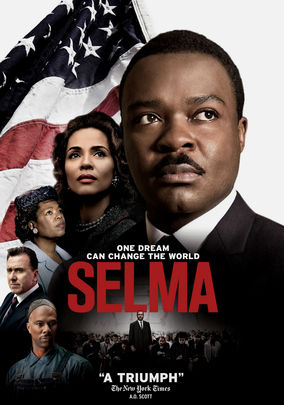
Selma-2014

Selma-2014

Director Ava DuVernay

Starring David Oyelowo, Carmen Ejogo

Scott’s Review #248

80013278

Reviewed June 19, 2015

Grade: A-

An Oscar-nominated factual feast, set in the mid-1960s during the Civil Rights movement, Selma (2014) is a re-telling of the life and times of Martin Luther King Jr. and the struggles that black Americans endured during a tumultuous period in history.

The film includes dealings with then-President Lyndon B. Johnson and the famous and important 1965 Selma to Montgomery voting rights march, which led to the signing of the pivotal Voting Rights Act of 1965.

This film reminded me quite a bit of 2013’s The Butler in subject matter and style-ironic since Lee Daniels was slated to direct and instead signed on for The Butler.

Both feature a charismatic and intelligent black man struggling with racial matters.

Despite being an independent undertaking, it is glossy, polished, and reflective of the time. Both The Butler and Selma boast a huge cast, and historical political figures, in a tumultuous era in history.

Selma features a bevy of real-life figures from George Wallis to President Johnson to the obvious leader of the Civil Rights movement, Martin Luther King Jr., and his wife, Coretta Scott King, and the casting is very well thought out.

Tim Roth, David Oyelowo, Tom Wilkinson, and Carmen Ejogo portray their roles professionally and passionately. None of the above received Oscar nominations and I am okay with that.

I did not feel that any were definite standouts from a crowded field of talent, though perhaps Ejogo could have been in the running with her understated though compelling performance.

The drama surrounding the lack of expected Oscar nominations is not shared by me. The truth is, the film was included in the Best Picture category and won Best Song.

While an emotional and compelling film, neither is it a masterpiece nor will change the art of cinema, though I must stress it is good.

I find Selma to be an important film- a look back on history and the shame and humiliation placed on blacks who attempted to obtain voting rights. A heartbreaking scene depicts a determined woman (played by Oprah Winfrey) being denied this right by a cold and racist authority figure as she is asked impossible and tricky questions to prove her patriotism, which of course, she cannot possibly answer correctly.

Yes, the film is directed by a black, female director (Ava DuVernay) and yes, one might argue that it has a black point of view. However, the film successfully sympathetically portrays several white characters and avoids the assumption that all white people were racist in this period.

Let’s face it- racism still exists, especially in the South, and in the 1960s even more so. I did not find the message in black people vs. white people’s terms, but rather as a humanistic struggle for rights.

And the struggles continue as the film makes abundantly clear in the message of the film.

While King was a life changer to the black people of the United States, his life was abruptly cut short in his prime. One wonders how much more good this man could have achieved.

The song “Glory” is an emotional, powerful number, especially during the marching and subsequent slaughter scenes highly emotional and effective.

And who will not become teary-eyed as the innocent marchers are beaten and treated like cattle, simply for taking a stand? One will gasp at the senseless bombing scene that rocks a building and takes four innocent little girls’ lives away with it.

Selma successfully transplanted me to a time before my time and made me appreciate and capture the positive and negative experiences of a race of people not long ago.

This film inspires and moves me and teaches me what a movement occurred in 1965.

Oscar Nominations: 1 win-Best Picture, Best Original Song-“Glory” (won)

Independent Spirit Award Nominations: Best Feature, Best Director-Ava DuVernay, Best Male Lead-David Oyelowo, Best Supporting Female-Carmen Ejogo, Best Cinematography

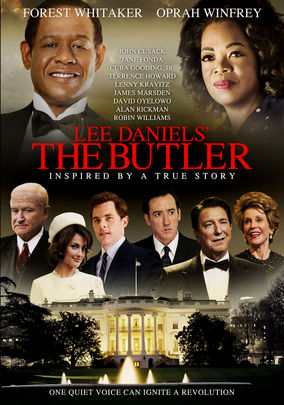
Lee Daniels’ The Butler-2013

Lee Daniels’ The Butler-2013

Director Lee Daniels

Starring Forest Whitaker, Oprah Winfrey

Scott’s Review #81

70266686

Reviewed June 30, 2014

Grade: A

Director, Lee Daniels, is a recent favorite of mine (Precious-2009, The Paperboy-2012) and his latest The Butler (2013) is an excellent, true story, undertaking.

While the trailer looked appealing, I was concerned that the film might be overwrought or have a Hollywood sappiness.

While it’s a Hollywood film, it is also a powerful, emotional experience.

The viewer is taken on a journey from 1926 through the current president from the viewpoint of White House butler Cecil Gaines (Whitaker), who serves several presidents and is privy to the goings-on in the White House.

He is played by Forest Whitaker and his boozy, troubled wife is played by Oprah Winfrey.

Both give tremendous performances.

The Butler is a political journey through time and I love the authenticity of each decade from the sets to the costumes to the hairstyles.

The casting of the Presidents is curious (Robin Williams as Eisenhower and John Cusack as Nixon), but works nonetheless.

The rivalry between Cecil Gaines and his rebellious son is quite interesting as the viewer sides with each individual at different times.

The film is more emotional than I anticipated and much of the audience was teary during scenes of heartbreak and triumph.

I feel The Butler (2013) is a must-see for everyone.