Category Archives: Jordan Peele

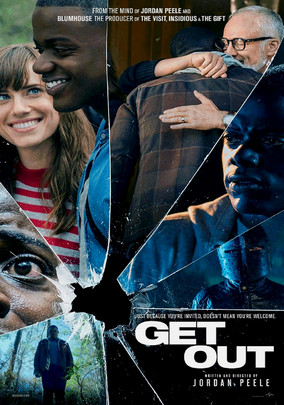
Get Out-2017

Get Out-2017

Director Jordan Peele

Starring Daniel Kaluuya, Allison Williams

Top 250 Films #158

Top 40 Horror Films #24

Scott’s Review #629
Reviewed March 28, 2017

Grade: A

Get Out (2017) is a unique modern-day horror film that combines classic horror elements (notably, great camera angles to elicit jumps) with a touch of slapstick humor, a rare blend in the horror genre.

In the case of Get Out, all of these tidbits come together in a marvelous experience. The subject matter is rather risqué (see below), a plus for me as I like films that push the envelope a bit.

Indeed, as with most horror films, liberties must be taken regarding plot points and continuity issues, but this film is impressive work.

Given that it is director Jordan Peele’s directorial debut, kudos.

Chris Washington (Daniel Kaluuya) is a young photographer who is handsome, educated, and enjoying life. He is black, and his girlfriend, Rose, is a pretty white girl from an affluent upbringing—it is implied that they are opposites on the social scale.

One weekend, they travel out of the city (presumably New York City) to visit Rose’s parents in the country. Her parents, Dean and Missy, own a sprawling estate with acres of land. Nervous to meet Rose’s parents and make a good first impression, Chris notices that Dean and Missy’s servants are all black and act peculiarly.

Soon, it is revealed that Chris’s mother died when he was a little boy, and when Missy hypnotizes Chris, things begin to go from strange to downright scary.

I adore how the film immediately feels ominous—there is simply something not “right” with the situation. Even before Chris and Rose arrive at her parents’ estate, something seems off.

They hit and kill a deer with their car, the policeman who aids them seems racist, and despite Rose seeming fresh-faced, she also seems not to be trusted.

There are so many ominous warnings not to approach her parents’ house that when they finally do arrive, the audience is compelled to watch for more, perhaps while biting fingernails nervously.

Jordan Peele’s decision to keep everything cheery and bright for most of the film only makes the audience wonder what secrets lurk in the grand estate—the setting where most of the action takes place.

When the pair finally arrives at her parents’ house, everything is out of whack. The film undoubtedly borrows from The Stepford Wives (1975) in some of the characters’ pleasant, almost robotic cheerfulness.

The big reveal and the objectification of all of the black characters —specifically black males —can indeed be cause for debate. The racial motives of the characters are also only skimmed over and never discussed or rationalized in detail.

The physical strength and resilience of black men are mentioned a few times, and Rose’s parents, a psychologist and a neurosurgeon, are significant points in the story. Still, the intentions are somewhat wishy-washy and hardly plausible.

Peele mixes a hilarious scene amid the doom and gloom in a wise move.

The comic relief of the film, Rod, Chris’s best friend and proud TSA agent, calls the police and describes in detail his fears of a sex slave operation, which results in the police having a good guffaw- at Rod’s expense. Rod serving as an instrumental part of the film’s conclusion is a fantastic decision, mixing dark humor with more grotesque horror moments.

This succeeds in setting Get Out well above the traditional genre.

The acting by all parties is believable and deserving of acclaim, but newcomer (to me) Kaluuya carries the film very well, even offering more than one heartfelt dramatic scene, mostly when remembering his mother.

Allison Williams (a dead ringer for a young Jennifer Connelly) is also a marvel, as the character changes direction mid-stream and essentially becomes a different character.

Fantastic are the throwback elements of The Stepford Wives, complete with a similar setting. The film does not reveal whether “in the country” is Connecticut or upstate New York.

The Stepford Wives was Connecticut.

Get Out (2017) is a fresh, novel approach to the standard elements of horror. It mixes comedy and aspects of race into a story brimming with suspense, good frights, and fascinating camera angles.

This film, a great success at the box office, doesn’t seem like the typical sequel, but I am intrigued by what more it could offer.

Oscar Nominations: 1 win- Best Picture, Best Director- Jordan Peele, Best Actor- Daniel Kaluuya, Best Original Screenplay (won)

Independent Spirit Award Nominations: 2 wins- Best Feature (won), Best Director- Jordan Peele (won), Best Male Lead- Daniel Kaluuya, Best Screenplay, Best Editing
Nope-2022

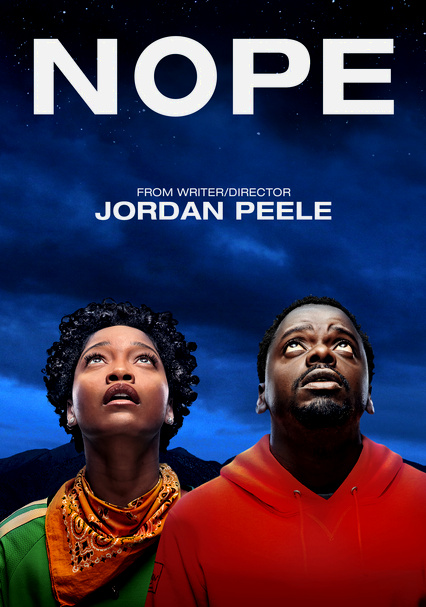
Nope-2022

Director Jordan Peele

Starring Daniel Kaluuya, Keke Palmer

Scott’s Review #1,334

Reviewed January 15, 2023

Grade: B

I excitedly anticipated the latest offering from one of my favorite modern directors, Jordan Peele. Always conjuring some message, intrigue, or social issue, his projects are laden with meaning rather than a one-dimensional portrayal of a crazed killer or a one-note story.

Get Out (2017) and Us (2019) were riveting efforts that could be watched over and over again for deeper meaning, and the same was expected of Nope (2022).

Peele’s brilliant yet short-lived The Twilight Zone series further cemented his appeal.

While there are moments of mystery, intrigue, and horror, and the stories are good individually, they don’t come together cohesively at the end of the film. Nothing was clear or specific, nor was it fulfilled.

Nope is not a dud and deserves respect for the originality of the premise as well as the sprinkling of nods to past horror films like The Shining (1980) and others.

Hollywood animal wrangler OJ (Daniel Kaluuya) and his sister Emerald (Keke Palmer) begin observing unexplained phenomena on their vast Southern California ranch. After a falling object kills their father, they become obsessed as they plot to capture the mystery on camera.

Their next-door neighbor, Jupe (Steven Yuen), a former child star turned family theme park ringmaster, has his own story to tell.

Through flashbacks, we learn of a deadly incident with a chimpanzee who went berserk on the set of a television series in which Jupe starred.

The 1998 events involving Jupe and the chimpanzee are the best parts. This is surprising since they are not part of the main action. Peele does wonders with chapter title cards to separate the film and haunting camera angles focusing on Jupe’s point of view.

The chimp slaughters nearly everyone on set except for Jupe and tenderly reaches out to him before being shot and killed by the police.

OJ and Emerald’s story also has juice. The foreboding, unidentified flying object that circles and appears at varying times provides a sense of mystique and wonder. What could it be, and why does it hover only over their land?

Peele wrote, directed, and produced the venture, so presumably, he had complete creative control over the entire film.

He even convinced the appealing Daniel Kaluuya, who starred in Get Out and just won an Academy Award for Judas and the Black Messiah in 2021, to return.

There are no significant issues with the technical special effects, the cinematography, the cast, or the two separate stories.

My beef is with the myriad of questions I was left with when the end credits began to roll, and I thought, ‘Why has Jordan Peele disappointed me for the very first time?’

Here are just a few of them.

Why is the unidentified flying object afraid of horses? Why does it viciously attack anyone who looks it in the eye? What does the vicious chimpanzee attack have to do with anything? How does Jupe’s story connect with OJ and Emerald’s? Why is the character named OJ; what is the connection to OJ Simpson?

Knowing Peele, I could venture a guess at the UFO’s anger at being looked at as having a connection to the celebrity or a society of voyeurs, but the others are perplexing to me.

I was both compelled and fascinated by the events throughout the film, but I wish the payoff had been more substantial; it never came.

Peele creates sophisticated films, and Nope is no exception, offering sophistication and a deeper meaning. I wasn’t personally able to put the pieces together like I was for Get Out or Us.

I may not have the energy to rewatch the two-hour and fifteen-minute spectacle to see if I can get more out of it a second time, but I probably should.

I will watch whatever Peele creates next with anticipation and excitement because there is always something to ponder and be entertained by. However, at first review, Nope (2022) seems inferior to his other projects, and more was expected.

Candyman-2021

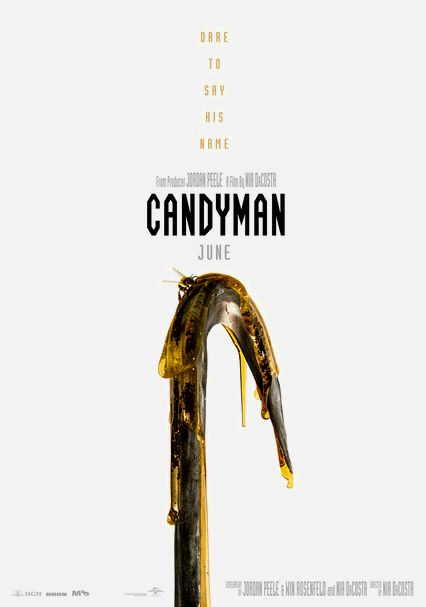
Candyman-2021

Director Nia DaCosta

Starring Yahya Abdul-Mateen II, Teyonah Parris

Scott’s Review #1,217

Reviewed January 8, 2022

Grade: B

Not being such a fan of the original Candyman horror film from 1992 though admittedly not remembering it too well either I had mixed feelings when I heard that a reboot was in the works.

I’ve learned that while most remakes, especially in the horror genre, are not masterpieces, there is some joy in seeing them resurface.

I was delighted when I realized that Jordan Peele, the magnificent modern director of gems like Get Out (2017) and Us (2019), had co-written the screenplay.

Peele tends to create intelligent and well-written black characters, a representation that is still underrepresented in film today.

I admire the creativity and visual aspects that the new Candyman (2021) offers, and the characters, primarily black, are to be respected and emulated because they are the heroes of the film.

The social message is another win, and Peele is not the only player deserving of credit: newcomer director Nia DaCosta treats the viewer to more than the story. An artsy and sophisticated downtown Chicago art gallery, along with a swanky apartment, are the main settings.

With all these credos, Candyman is not a complete win and is sometimes overcomplicated. The supernatural elements, paired with a socially relevant angle, are implausible, and I yearned for a more direct and accountable approach rather than fantastical storytelling.

The film has a specific left-wing message, which I champion but that others may not.

For as long as residents can remember, the urban housing projects of Chicago’s Cabrini-Green neighborhood have been terrorized by a word-of-mouth ghost story about a supernatural killer with a hook for a hand. He can easily be summoned by simply repeating his name five times into a mirror.

As a child, Anthony McCoy (Yahya Abdul-Mateen II), who was a resident of the towers, met a man assumed to be the killer, who was then unnecessarily killed by police.

Decades later, the Cabrini towers are long gone, and Anthony is a struggling visual artist. He and his girlfriend, gallery director Brianna Cartwright (Teyonah Parris), move into a luxury loft condo in Cabrini, now gentrified and inhabited by affluent millennials.

Anthony has a chance encounter with a former Cabrini-Green resident named Billy Burke (Colman Domingo). Anthony begins to explore these macabre details in his paintings, unknowingly unleashing a supernatural beast and risking his own sanity.

The sophisticated visual style, especially the wonderful drawings featured at the start and end of Candyman, is impressive. They provide a heavy and realistic portrayal of African American culture and the generations of unfairness and mistreatment they have suffered.

This relates to the film’s point and is nuanced in explaining why the supernatural force with the hook rises in the first place and exacts vengeance on those who conjure it.

The final sequence cements this detail as a slaughter erupts between Anthony, Brianna, and the police. The police are portrayed as unkind and corrupt, but I get the point of the film. Oftentimes, the police are no friends of poor black people.

Despite the social element, Candyman doesn’t feel preachy.

The lead actors are attractive and appealing, and even the original Candyman, actor Tony Todd, makes a brief appearance. Other characters from the original also make appearances.

The kill scenes, a must for a horror film, are delightful, especially a sequence in which a troupe of gossipy schoolgirls meets their maker in a bloody girl’s bathroom scene. Besides being fun, the scene features a camera visual through a makeup compactor that is highly effective.

It’s just that when the credits rolled, I didn’t feel enough satisfaction from what I had just seen. I was more perplexed by how the legend intersected (or did he become?) relevant to present times and to Anthony specifically.

Candyman (2021) delivers an entertaining and relevant themed resurfacing of a thirty-year-old film that I’m glad I watched. It sometimes delivers, but an otherworldly spirit sometimes overshadows the realistic and important racial message.

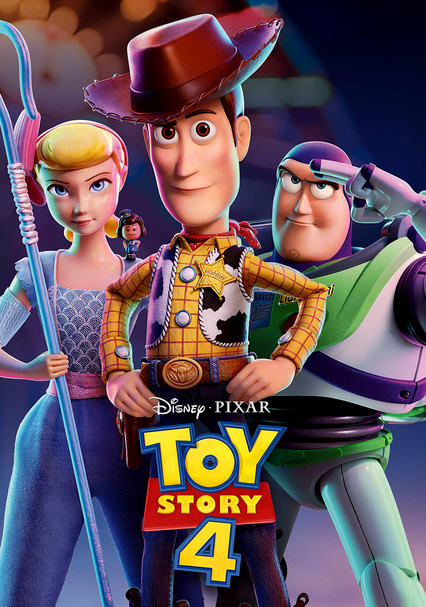
Toy Story 4-2019

Toy Story 4-2019

Director Josh Cooley

Voices: Tom Hanks, Tim Allen, Annie Potts

Scott’s Review #966

Reviewed December 10, 2019

Grade: B

Toy Story 4 (2019) is the fourth installment in the Pixar/Disney-produced Toy Story series, now nearly twenty-five years old!

The glitter is beginning to fade on a once-endearing franchise, and hopefully, this is the last one- additional segments are not needed unless desperation develops.

After a slow start and too many retread moments, the film shows bombast and familiar heart and tenderness in the finale, presumably wrapping up the long story with a neat bow.

The animation is vivid and colorful, almost astounding, and makes up for an otherwise unnecessary story.

In a flashback sequence, nine years after Toy Story 2, Bo Peep (Annie Potts) is donated to a new owner, and Woody (Tom Hanks) begrudgingly decides to maintain his loyalty to the owner, Andy.

Years later, and now a teenager, Andy donates a forgotten Woody to a young child named Bonnie, who lacks the affection for the toy that Andy had. When Bonnie makes and bonds with Forky, a toy made of plastic, Woody struggles to convince Forky that each is more than garbage.

When Bonnie and her parents embark on a summer road trip to an amusement park, Woody and other familiar faces are along for the ride.

The group meets other forgotten toys, some benevolent and some sinister, at the park and a nearby antique store. Woody’s dear friend and comic relief, Buzz (voiced by Tim Allen), is in the mix and helps all the toys realize that they are not forgotten and that they can still bring joy to children.

The film provides an unwieldy list of celebrities in major and minor roles. The incorporation of characters like Chairol Burnett, Bitey White, and Carl Reineroceros (voiced naturally by Carol Burnett, Betty White, and Carl Reiner) may not be necessary.

Still, it’s fun to watch the credits roll and see who’s who from the cast.

The minor characters are little more than window dressing, but the creativity is admirable.

The main story of abandonment, loyalty, and discarding of one’s toys is ample and pleasant, but has occurred in every segment thus far in the series.

Do we need to see this again? Yes, it is an essential message for both children and adults, but why not simply watch the first three installments of Toy Story, each brilliant in their own right?

Toy Story 4 plays by the numbers with little surprises.

One glaring notice is how almost every single adult is either incompetent or played for laughs.

I understand that the main draw is the toys and outsmarting the adults is half the fun, but when Bonnie’s father assumes his navigation system is on the fritz, rather than catching on to the fact that one of the toys is voicing the system, one must shake one’s head.

Suspension of disbelief is increasingly required in these types of films.

Toy Story 4 picks up steam in the final twenty minutes with a thrilling adventure through the amusement park and a cute romance between Woody and Bo Peep.

When the long-forgotten toy Gabby Gabby (Christina Hendricks) emotionally rescues a lost child, she is rejuvenated and breathes new life into both the child’s life and her own.

In a darling moment, Forky meets another creation named Knifey. Knifey suffers from the same existential crisis as Forky once did, and Forky immediately becomes smitten with her, both realizing that even though they are odd-looking, they still matter.

The nice lesson learned is that even toys from the 1960s and 1970s can provide warmth and comfort to a young child and are more than “of their time”.

This is a clear and bold message that resonates with human beings and acknowledges that advanced age does not come with an expiration date.

Everyone matters and brings importance. The underlying theme is heartwarming and central to the film, bringing it above mediocrity.

What should certainly be the final chapter in a tired franchise that continues to trudge along, the bright message and strong animations remain, but the film feels like a retread.

Given that Toy Story 3 was released in 2010, Toy Story 4 (2019) needs to bring the series to a conclusion before installments 5, 6, 7, or 8 result in a dead-on-arrival sequel.

Oscar Nominations: 1 win-Best Animated Feature Film (won), Best Original Song-“I Can’t Let You Throw Yourself Away”

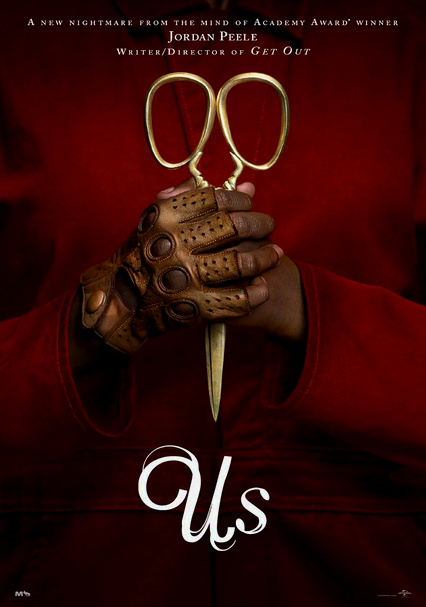
Us-2019

Us-2019

Director Jordan Peele

Starring Lupita Nyong’o, Winston Duke

Scott’s Review #882

Reviewed April 1, 2019

Grade: A

Hot on the heels of his critically acclaimed and shockingly Oscar-nominated horror film Get Out (2017), Jordan Peele does it again with an even more thought-provoking creation.

Us (2019) combines classic horror elements with macabre and insightful qualities, crafting an ambitious project that can be dissected and discussed at length following the climactic and psychologically perplexing ending.

One thing is for sure: Peele has earned his spot among the most influential and elite directors circling Hollywood.

The film begins in 1986 as an event entitled “Hands Across America,” a publicity campaign encouraging people to hold hands to create a human chain to fight hunger and poverty, gripped the United States.

Nine-year-old Adelaide Thomas goes on vacation to Santa Cruz, California, with her parents, only to wander off into a deserted house of mirrors.

When she meets her doppelganger, she is terrified beyond comprehension and requires therapy to resume an everyday life.

Events return to the present day as Adelaide (now played by Lupita Nyong’o) is married to Gabe Wilson (Winston Duke) with two young children, Zora and Jason. Coaxed into a weekend getaway to none other than Santa Cruz to visit their wealthy friends Josh and Kitty Tyler (Tim Heidecker and Elisabeth Moss), Adelaide is apprehensive about the trip with a dreading sensation that her doppelganger is returning to get her.

When a strange family dressed in red jumpsuits appears on Wilson’s driveway, the plot transforms in a bizarre direction, especially since the family looks precisely like the Wilsons.

Us is exceptionally layered and reminiscent of the expression “peeling back the onion” in analysis and discussion possibilities. For starters, a character thought to be one person is revealed to be another, causing the audience to spin into confusion and not know who they were rooting for or against all along.

The astounding questions are endless and, in Peele’s brilliant fashion, can be asked at different times during the film. Why do the doppelgangers exist? What do they want? What does Hands Across America have to do with anything? What do the rabbits symbolize?

One gruesome scene and a favorite is the barbaric scene when the Tylers are suddenly attacked by their doppelgangers, home invasion style.

Reminiscent of the infamous Charles Manson murders, the family is slain quickly and mercilessly as the audience is left agape at the brutal slaughter. So much happens in this scene, first and foremost is the realization that there are more doppelgangers than we initially thought.

To lighten the mood a bit, Peele adds morbid comic relief as the family’s voice-controlled Siri system misunderstands the dying victim’s plea to call for police and mistakenly plays “F#@$ the Police” by N.W.A. instead.

Nyong’o has the most opportunities to showcase her acting ability by tackling two very different types of roles. As Adelaide, she is kind, capable, and your typical suburban Mom, but as her doppelganger Red, she is grizzled and desperate with a dry, throaty voice filled with pain and defeat.

At first thought a villain, the audience eventually learns the complexities of Red’s story more clearly, and the Oscar winner delivers both parts with exceptional grace.

The supporting actors bring their characters to life with gusto, with special mention going to Duke and Moss. Duke’s character of Gabe contains inept humor, coming across as slightly incompetent and the typical goofball dad-type character.

Moss takes her one-note character of Kitty, a spoiled, never-made-it-as-an-actress whiner with a wealthy husband, and infuses naughty passion into her doppelganger.

As she playfully applies lipstick while coquettishly watching herself in the mirror, she soon gives the term “plastic surgery” a new definition as she curiously carves her face.

Peele delivers a treasure with Us (2019), and I salivate at the thought that the film is only the novice director’s second attempt. Not suffering from the dreaded sophomore slump, he is becoming a modern director whose works are more like events than mere film releases.

Quentin Tarantino is a director who has also achieved this status because his directorial style is vastly different from that of other directors. I cannot wait to feast on Peele’s next attempt.

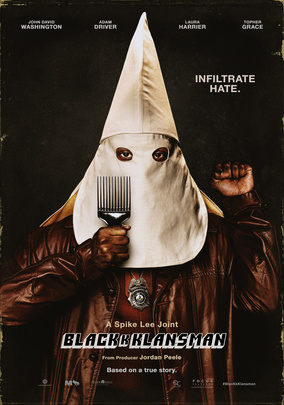
BlacKkKlansman-2018

BlacKkKlansman-2018

Director Spike Lee

Starring John David Washington, Adam Driver

Scott’s Review #802

Reviewed August 14, 2018

Grade: A

Spike Lee’s latest offering, BlacKkKlansman (2018), is a brilliant effort and oh so timely given the tumultuous political climate in the United States in 2018.

Despite the film being set in the early 1970s, the racial issues and tensions that Lee examines are sadly still an enormous problem today. Lee infuses some humor and even romance into the drama, so the film is not too preachy or heavy.

A grand and relevant effort that all should watch.

As the film commences, we are treated to a clip from the 1939 classic Gone With the Wind, and BlacKkKlansman concludes with prominent clips of racial tensions circa 2017.

The timeline is crucial and influential, as the film clearly demonstrates that racism is still alive and well.

Lee, a known liberal, clearly puts a left spin on his work. BlacKkKlansman will likely not be seen by conservative filmgoers, which is sad, as valuable lessons can be learned by viewing this piece.

The story is based on a true story memoir written by Ron Stallworth, the first black police officer to be hired by the Colorado Springs police department. He successfully infiltrates the local chapter of the Ku Klux Klan with startling results.

The film begins with a speech by a doctor (Alec Baldwin) offering a “scientific explanation” of white superiority in 1957. Fast-forward to the early 1970s, where the rest of the film occurs.

Ron is initially hired by the police force as part of a progressive initiative for diversity, but he quickly moves into a detective role. He manages to pose as a KKK member via telephone while another detective, Flip Zimmerman (Adam Driver), goes to meetings in person.

Lee’s focus is clearly on the overall content and message of the film, and therefore, little character development is achieved. I admittedly did yearn to know the “hows ” and ” whys” of many of the characters, but the film is not really about the characters individually, and I am okay with this.

Why did Ron desire so much to become a police officer? What was his childhood like? How did Patrice become President of the black student union? What was her childhood like? What upbringings did some of the KKK members have?

Indeed, not enough time would have been allowed to answer these questions—minor gripe.

Lead actor John David Washington, son of Denzel Washington, was unknown to me before watching this film. He is tremendous in his role, as is Driver in his supporting role of Zimmerman, but again, these are not character-driven roles.

Washington has tremendous chemistry with his love interest, played by Laura Harrier. Ron and Patrice discuss politics and dance the night away, but she is an activist and a cop, making their chances of a happily ever after tough to imagine. Their romance is atypical of most films as it is based on intelligence and not silly, melodramatic aspects.

On the acting front, Topher Grace as the racist David Duke is tremendous. With a kindly demeanor mixed with a bubbling under the hatred of blacks and Jewish people, Lee makes sure he is the foil.

A delicious scene towards the end of the film, when Duke gets his comeuppance of sorts, is well done and received a thunderous roar from the theater audience.

Lee is careful to ensure the bad guys get their just due and are all portrayed as complete fools. With a false sense of nationalism, many hate minorities simply because they feel they are taking over their beloved country.

Not to harp on this, but BlacKkKlansman will attract those who already agree with Lee’s beliefs and politics. If only those who disagree would give the film a chance. Unlikely.

The final five minutes of BlacKkKlansman arguably are the most pivotal experience of the entire film, but they have nothing to do with the actual story portrayed in the rest of the production.

Lee concludes the 1970s portion of the film satisfyingly, then fast forwards to the horrific events that took place in Charlottesville, Virginia, in 2017 when protesters clashed with a racist group, resulting in an innocent woman’s death.

The controversial remarks of President Trump, refusing to cast blame on the racist group, are shown. Sitting in a crowded movie theater, these clips had the most significant reaction from the audience, with some flipping Trump the finger, while others sobbed in anguish and disbelief that we have achieved so little as a nation.

Rarely has a more pertinent or meaningful film been made for the current political climate in the United States. BlacKkKlansman (2018) brilliantly ties racism spanning one hundred and fifty years together and shows how it still exists.

Amid this message, however, lies a great drama containing humor and importance.

Oscar Nominations: 1 win-Best Picture, Best Director-Spike Lee, Best Supporting Actor-Adam Driver, Best Adapted Screenplay (won), Best Original Score, Best Film Editing