Category Archives: Amy Adams

Nightbitch-2024

Nightbitch-2024

Director Marielle Heller

Starring Amy Adams, Scoot McNairy

Scott’s Review #1,479

Reviewed May 5, 2025

Grade: B+

A bizarre premise becomes a quality message as Amy Adams plays depressed and frumpy in Nitchbitch (2024), immersing the audience in her life and conflicting emotions about career and motherhood.

In 2024, the film jumped out of the gate with Oscar buzz but quickly and peculiarly fell by year’s end. It needed to be content with mere Golden Globe and Independent Spirit Award nominations.

Billed as a dark comedy/horror based on Rachel Yoder’s 2021 novel, it was undoubtedly too weird for many.

I didn’t recognize it as quite a horror film, but I appreciated the satirical and corny nature of the underlying message.

The standout is Adams, with Heller’s intelligent and witty script in second place.

Mother (Adams) is a woman who pauses her successful art career to be a stay-at-home mom seeking a new chapter in her life and encounters just that when her maternal routine takes a surreal turn.

Continually frustrated with stay-at-home life and the redundant story hour, she fantasizes about letting loose and speaking her mind. One day, she grows fur and a tail and experiences increased hearing. She also connects with wild dogs and other wildlife, causing her to believe she is turning into a dog.

When she begins to bark in public and eat without silverware, she begins to worry. But, is it all in her mind?

Adams, a legendary and terrific actor, goes full throttle in Nightbitch, appearing sans makeup, haggard, and plump. This is necessary for the role and, helped by close-ups, successfully makes the audience feel how exhausted and angry she is.

She never takes it out on her child, but her husband (Scoot McNairy) must tolerate her outbursts of frustration despite being well-intentioned. She tolerates three female acquaintances (also mothers) but desires something more stimulating.

Marielle Heller, who directs and writes the screenplay, challenges the norms of women expecting to have children and smiles while surviving two hours of sleep per night.

Sometimes, women with newborns or toddlers hate their lives and the world, and Heller/Adams proves this is okay.

When Mother finally gets a night out with her art colleagues she is aghast at their calousness having suddenly never realized what assholes they are.

She gleefully snarls and goes all rabid dog before realizing she has manners to follow. Still, the most fun is her fantasies.

Scoot McNairy is perfect as a husband, lovingly playing second fiddle to Adams. His character, blatantly named ‘husband’, tries to help but is usurped by his career and subconscious expectations that the mother does most of the childcare.

Sadly, most of the world still seems to agree.

Mother’s friends are comical but slightly one-note. They teeter between shock at Mother’s honesty and opening their eyes to what awaits them.

Conventionally, Nightbitch (2024) is an excellent watch for a mother/daughter outing for the progressive, thought-provoking crowd, though it’s not a mainstream film.

For others, it reflects societal norms, fantasies, and a metaphor of sacrificing one’s happiness for another.

While some may find it silly, the film dares to tell a unique story rarely told before. I didn’t take the plot literally and think Mother was turning into a dog.

I loved the satire, the one-two punch of Mother telling it like it is, and Adams looking deliciously homely.

Independent Spirit Award Nominations: Best Lead Performance, Amy Adams, Best Editing
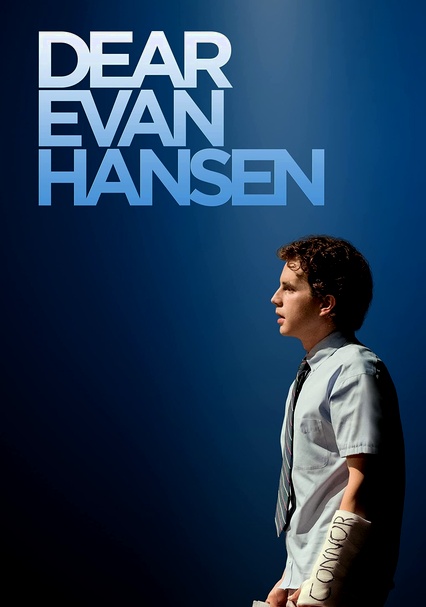
Dear Evan Hansen-2021

Dear Evan Hansen-2021

Director Stephen Chbosky

Starring Ben Platt, Kaitlyn Dever, Amy Adams

Scott’s Review #1,258

Reviewed May 25, 2022

Grade: A-

From the very first scene, Dear Evan Hansen (2021) grabbed me by the collar and never let me go. Providing an emotional wallop that mixes perfectly with meaningful and catchy pop songs, the film is one that nearly everyone can relate to.

The oftentimes painful world of teenage angst is the central storyline, and the dangerous and unfortunately too timely pandemic of mental illness is examined in heartwrenching form.

Dear Evan Hansen has a relevance that I found to be powerful and profound, leaving me not soon forgetful of the experience.

I had never seen the hugely popular Broadway stage version, so I only had a limited understanding of what the story was about going in.

Still, as much as the subject matter is of great importance, the film’s follow-through is what is tremendous and emotional, with superb acting all around.

Tony, Grammy, and Emmy Award winner Ben Platt reprises his stage role as the anxious, isolated high schooler named Evan Hansen who craves companionship and understanding.

He suffers the same quandary that many fellow teenagers face in a world rendered impersonal and heartless. He tries to survive the pressures and the chaos of the social-media age.

Lonely, he meets a young man named Connor Murphy (Colton Ryan) who is as wounded as Evan is. They have an odd first (and only) exchange after which Connor steals a therapy assignment of Evan’s, a letter to himself.

Soon after, Connor commits suicide, and his parents, played by Amy Adams and Danny Pino, assume that the boys were best friends.

Evan lies about the events to spare Connor’s parents, which ultimately leads to events spiraling out of control.

I’m well aware of the outpouring of negative reviews that have been hurled at the film, and I don’t understand nor agree with any of them.

My hunch is that the stage version may have been even more potent because it’s a live production and the raw emotion is right there, but the film does right by it.

Sure, Platt looks older than a teenager. The actor was twenty-seven years old when he filmed Dear Evan Hansen and a mere twenty-two or so when it appeared on Broadway, but so what? With talent as superior as he is, why cast a movie star?

I didn’t hear anyone complain when Olivia Newton-John played the iconic role of Sandy, a seventeen-year-old in Grease (1978) at the ripe old age of thirty.

Sometimes a suspension of disbelief is required.

Platt is a terrific casting choice and encompasses the role of Evan completely. He is shockingly good in dramatic scenes or when he comically fumbles over his words. His dramatic voice perfectly infuses the production’s most recognizable number You Will Be Found.

Besides, there are big stars in Dear Evan Hansen. Amy Adams plays the emotionally drained but hopeful Cynthia Murphy, blessed with affluence at the price of losing a son. Julianne Moore plays the haggard nurse and financially struggling mother of Evan.

Both are fabulous.

The film is directed by Stephen Chbosky, who is responsible for the terrific and sorely underappreciated film adaptation of the novel The Perks of Being a Wallflower (2012), which he also wrote. He knows how to tell a coming-of-age story.

There are a couple of foul balls to be aware of, but the emotion to be felt far exceeds these pesky matters.

The film occasionally overplays its casting with the inclusion of a few stock characters, like the Indian technology wizard and the perky, straight-A student with the same problems as everyone else. Still, the characters don’t have enough to do to make them bothersome.

The chemistry between Platt and Kaitlyn Dever as the romantic interest is only tepid, but I didn’t watch this film for the teen romance.

I could not disagree with the torrent of negative reviews for Dear Evan Hansen (2021) more, and urge anyone reading this review to take in the film and be prepared for a tearjerker that feels authentic and justified in its existence.

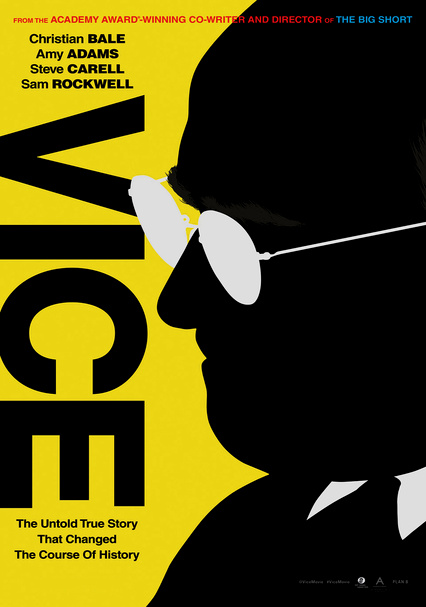
Vice-2018

Vice-2018

Director Adam McKay

Starring Christian Bale, Amy Adams, Steve Carell

Scott’s Review #849

Reviewed December 31, 2018

Grade: A

Following 2015’s The Big Short, Adam McKay once again creates an intelligently written, thought-provoking political film based on facts and historical accounts.

With Vice (2018) he focuses on former Vice President Dick Cheney and his rise through the political ranks to second in command.

Brilliant and wise in every way, the film is fair-minded in its approach. Predictably, in this era of “fake news,” it will be embraced by liberals but shunned by conservatives.

In the first seconds of Vice, a disclaimer appears stating that Cheney was a private man with secrets, but the filmmakers did their best to relay accurate information. The salty language in this clip will likely elicit chuckles, but McKay stays the course with his statement.

Immediately, the film flashes to the September 11 attacks with Cheney sitting in crisis mode, about to make an important decision.

Vice then retreats to 1963 Wyoming as a drunken college-aged Dick Cheney (Christian Bale) is pulled over for erratic driving after a barroom brawl. He is nearly dumped by his girlfriend and future wife Lynne Cheney (Amy Adams), who threatens to find another man if Dick does not straighten out.

He manages an internship and an admiration for Donald Rumsfeld (Steve Carell), a staunch Republican and White House Chief of Staff, and begins his political climb.

In clever form, the film is narrated by a character named Kurt (Jesse Plemons), who we do not know is connected to Cheney until the end of the film. This adds an added measure of intrigue to the overall film, as we know a secret will be revealed.

Vice is also unique in direction, with constant back-and-forth timeline scenes and quirky humor throughout. Are the Cheneys portrayed as ridiculous? No, but sardonic humor is directed at them as their ambitions and power-hungry motivations are completely exposed.

The film does a great job of taking the viewer through the political state of Cheney’s administration, roughly the early 1970s until 2008, when Obama took office. The Clinton years are completely skipped, but that is more to do with Cheney being in the private sector rather than an intentional slight.

The Nixon years and the George W. Bush years are given hefty screen time and the latter is portrayed as nearly a buffoon as Rockwell portrays him as a boozy, dumb frat boy.

Bale is startlingly good as Cheney and deservedly steals the show. In addition to the forty-pound weight gain, the actor endured the facial and hair treatments (props to the makeup department!) and became the man.

His body movements, smile, and speech patterns are daringly good. With a sneer and a calculating grin, we see the wheels spinning in Cheney’s head numerous times, and Bale is incredible at portraying these thoughts to the audience.

The film contains many well-known actors in vital supporting roles worth noting. The depictions of the following are examples of excellent casting with spot-on representations: Tyler Perry as Colin Powell, LisaGay Hamilton as Condoleezza Rice, Sam Rockwell as George W. Bush, Alison Pill as Mary Cheney, and Lily Rabe as Liz Cheney.

All portrayals are excellent to watch, especially for viewers who remember the real-life people involved.

Some will undoubtedly complain that the film has a “liberal slant” and portrays Cheney as power-hungry and self-serving. While this is a valid point, and McKay makes left-leaning choices, the director bravely carves the film into an experience that goes both ways.

More than a few scenes (including the final scene) justify Cheney’s actions, in his mind anyway. Claiming to do what is suitable for the people and be a true American, his actions and yearning for power can be understood to some degree, or perhaps by some people.

Vice (2018) is controversial and undoubtedly divisive, which is unsurprising given the current state of American politics. It tells an inspiring and rich story of an elusive politician’s life and policies, daring to be forgotten, that still resonate across the United States.

The more I ponder this film’s importance, the greater it becomes, but stay past the credits for arguably the best moment in the movie and of monumental importance in 2018.

Oscar Nominations: 1 win-Best Picture, Best Director- Adam McKay, Best Actor- Christian Bale, Best Supporting Actor- Sam Rockwell, Best Supporting Actress- Amy Adams, Best Original Screenplay, Best Makeup and Hairstyling (won), Best Film Editing

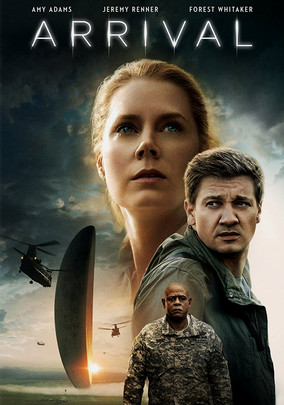
Arrival-2016

Arrival-2016

Director Denis Villeneuve

Starring Amy Adams, Jeremy Renner, Forest Whitaker

Scott’s Review #642

Reviewed May 9, 2017

Grade: B-

Arrival (2016) is the latest in a recent trend of science fiction-themed films garnering Academy Award praise, either for technical achievements or, in the case of Arrival, a surprising Best Picture nomination in addition to the more traditional awards notice for categories like sound effects and editing.

Traditionally, science fiction gets little or no recognition in significant categories; this makes the inclusion of films in the under-the-radar style with the big guns all the more surprising.

Similar in style to recent films such as Interstellar (2014) and Gravity (2013), Arrival ultimately proves a disappointment as a complete film, succeeding only in specific avenues like its musical score and a sort of surprise twist ending that the film presents, but at times is downright to say nothing of its tedious moments.

Needless to say, I wholeheartedly disagree with its Best Picture nomination.

I am not claiming to be the world’s greatest science fiction fan. At times, Arrival does have glimmers of success (mainly in the first act) and some high points in the vein of 2001: A Space Odyssey (1968), the greatest of the greats in the genre. However, the good moments ultimately fade as the story lumbers on, only to show a brief resurgence in the final act.

Sadly, the rest of the film is rather middling.

In a role seemingly written just for her, Amy Adams stars as Louise Banks, a linguist professor living and teaching in Massachusetts.

One day, a series of twelve extraterrestrial aircraft appeared across the world. Louise is summoned by an Army Colonel (Forest Whitaker) to travel to a remote area of Montana where one aircraft has taken up residence and assist a physicist, Ian Donnelly (Jeremy Renner), in communicating with the aliens.

Their goal is to determine why they have come to planet Earth.

Interspersed with the main story are strange flashbacks of a life Louise briefly spent with her daughter, who appears to have died of cancer as a teenager.

The film’s premise is reminiscent of another film named Contact, made in 1997, starring Jodie Foster.

The film seems to borrow aspects from several other famous science fiction films, such as the creepy, ominous score that harkens back to 2001: A Space Odyssey in its mysteriousness to the oddity of The Day the Earth Stood Still (1951).

So much so that the film reminds me too much of other films, it, therefore, has little identity, especially throughout the film’s mid-section.

Other than Louise’s character, there is no character development, and this is glaring among the male cast of top talents like Whitaker and Renner. The roles are glorified throwaway roles.

Except for Renner’s limited involvement in the film’s climactic “twist,” which admittedly barely raises the movie above mediocrity, neither character serves many purposes and could be played by any actor.

Whitaker’s G.T. Weber has little motivation other than convincing Louise to participate in the mission. The film also seems unsure whether to fully explore a romantic entanglement between Louise and Renner’s Ian.

Indeed, a flirtation exists on the surface, but the film never hits a home run with it. Couldn’t a meatier story be created for these two storied actors?

The unique extraterrestrial, a hybrid of tentacles, fingers, and funny eyes appearing as a pair humorously nicknamed Abbott and Costello, is impressive from an artistic perspective, and this does help the film.

The characters’ unsureness about whether Abbott and Costello are friends or foes is also slightly intriguing. However, the film’s main negative is that nothing much happens other than Louise’s repeated attempts to communicate, whimsically staring into the camera in wonderment and ultimately figuring out the alien’s messages and purpose.

Worthy of mention is a fantastic and ominous musical score that gives the film some climactic and dark elements that feel like its highlights. It adds chilling, practical elements, bringing the movie up a notch from complete blandness.

The film’s best part is its ending, which sent a chill down my spine. The unique and inspired big reveal made me a bit shiver.

This way, Arrival saves itself from being completely lackluster, but too little, too late. I would have preferred the film to balance the emotions, surprises, and thrills more rather than exist mainly as a tedious, uninteresting film.

Overall, the outcome of Arrival (2016) is more of a retread than anything new or original.

Oscar Nominations: 1 win-Best Picture, Best Director-Denis Villeneuve, Best Adapted Screenplay, Best Sound Editing (won), Best Sound Mixing, Best Production Design, Best Cinematography, Best Film Editing

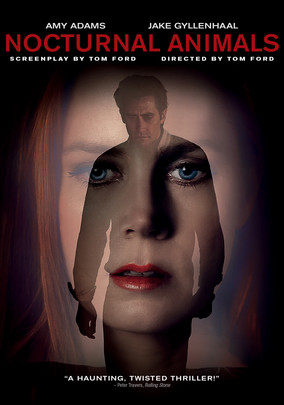
Nocturnal Animals-2016

Nocturnal Animals-2016

Director Tom Ford

Starring Amy Adams, Jake Gyllenhaal, Michael Shannon

Scott’s Review #640

Reviewed April 30, 2017

Grade: A-

Nocturnal Animals (2016) blurs the lines between fantasy and reality in a revenge-themed thriller directed by Tom Ford, in only his second directorial effort- 2009’s A Single Man was his first.

While not constantly hitting the mark and, at times, very difficult to follow, the film is unusual, mesmerizing, and lovely to look at from a visual perspective. Some scenes blur together splendidly, so they seem interposed—a brilliant touch.

David Lynch influences the film in tone and style.

Events are divided between “The Real World” and “The Novel”.

The film begins strangely as a bevy of nude, obese women prance and dance on video screens during an art exhibit opening.

The gallery is owned by Susan Morrow (Amy Adams), a successful woman living a glossy life in Los Angeles. We quickly learn that Susan is involved in a loveless marriage with hunky Hutton (Armie Hammer), a business person who is inattentive towards Susan.

Before Hutton, Susan was briefly married to Edward (Jake Gyllenhaal), a novelist who dedicates his latest manuscript to Susan, received via mail. As Susan reads the manuscript, she is transported down a dark path of memories and fantasies concerning Edward and their past.

The film’s locales are mainly between Los Angeles (the real world) and western Texas (where the novel occurs). This compelling aspect of the film separates the two worlds.

Los Angeles is featured mainly at nighttime as Susan, presumed to be suffering from insomnia, is compelled by her reading. She also rubs shoulders with sophisticated artist types and colleagues at her studio.

Conversely, western Texas is worlds apart from the Los Angeles setting—like night and day. In Texas, we are introduced to the protagonist of the story Susan reads.

Tony, traveling through Texas with his wife, Laura, and their daughter, India, are accosted and terrorized, bypassing local motorists.

Clearly from out of town, the family is stranded in the middle of nowhere and kept at bay by the rednecks- the story has a tragic ending. The stories intersect interestingly as we see the differing worlds.

The scenes in western Texas were frightening and tense—so much so that my heart beat quickly. I pictured myself as Tony in a situation of peril and danger.

As the family attempts to reason with the thugs, they get deeper and deeper into trouble. The feeling of being vulnerable and unsafe with no help around is tremendous in the film.

The acting in Nocturnal Animals is excellent overall, which is no surprise given the tremendous cast. Adams and Gyllenhaal are especially worthy of mention. Through flashbacks, we see their scenes and find them both sympathetic and vulnerable (at first— he is a sensitive writer, and she is a college girl with aspirations of love and family life.

As the plot thickens, both characters become more nuanced and complex- the subject of betrayal and revenge certainly comes into play, and both characters, now older and more pessimistic, intersect again as mature adults.

Michael Shannon, though believable as Detective Bobby Andes, assigned to Tony’s case and suffering from stage four lung cancer, is not the standout for me. I disagree with his Oscar nomination for Best Supporting Actor.

Indeed, it is an acceptable performance. I would have much rather Gyllenhaal or Aaron Taylor-Johnson (as one of the rednecks) be awarded the nomination.

I was reminded of David Lynch’s masterpiece, Mulholland Drive (2001), mainly during the Los Angeles scenes. The slick night air and the trials and tribulations of the wealthy mirrored each other quite readily.

The sequences contain a gothic, haunting, moody vibe.

The central theme of revenge is present in both worlds. Tony and Bobby seek revenge on the criminals in western Texas, while revenge also focuses on Los Angeles, though much more subtly.

A hint is given several times in Susan’s art gallery, where a large ” Revenge ” exhibit is a focal point. However, what the Los Angeles revenge is is not revealed until the very last scene.

One thing is sure about Nocturnal Animals- the film is dreamy, complex, and worthy of conversation.

Tom Ford is an up-and-coming director with visual sensibilities and a dream-like vision. I hope we see more from this fascinating director.

Oscar Nominations: Best Supporting Actor-Michael Shannon

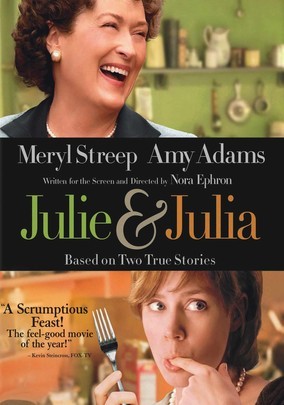
Julie & Julia-2009

Julie & Julia-2009

Director Nora Ephron

Starring Meryl Streep, Amy Adams

Scott’s Review #588

Reviewed January 7, 2017

Grade: A-

Julie & Julia (2009) is a darling film about cooking that centers and centers on the legendary chef Julia Child. It is for the foodie or culinary geek in all of us.

The film is lighthearted and will ruffle no feathers, but it is a delicious well-told treat.

The film tells of the life of Julia Child (Meryl Streep), at one time an aspiring chef, contrasted with the life of a young New Yorker, blogger Julie Powell (Amy Adams), who is determined to cook all five hundred twenty-four recipes in Child’s famous cookbook, Mastering the Art of French Cooking, within one year.

The film, of course, would not be half as good without the amazing talents of Streep, who portrays Julia Child herself. All of Julia Child’s personality characteristics are portrayed exceptionally well by Streep.

Her laugh, voice, and zest for life, are all perfect. Of course, since Streep is not nearly as tall a woman as Child was, liberties had to be taken by way of camera trickery.

Regardless of Streep’s performance, props for a nice performance by Adams, too.

Julie & Julia (2009) is a cute, charming, light, fun movie. I thoroughly recommend it.

Oscar Nominations: Best Actress-Meryl Streep

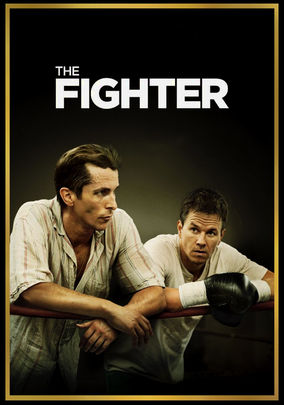
The Fighter-2010

The Fighter-2010

Director David O. Russell

Starring Mark Wahlberg, Christian Bale

Scott’s Review #546

Reviewed December 11, 2016

Grade: A-

The Fighter (2010) is an excellent film. Being a sports film there are the inevitable cliches, which make the entire sports film genre rather predictable.

But this film is a very well-done story and based on real-life figures (the Ward brothers).

Tremendous acting by Wahlberg, Bale, and Melissa Leo, in the role of Mama Ward- a role of a lifetime.

The telling is a true story of Mickey Ward, a boxer from Massachusetts, and his battle to stardom, dealings with family members, and his love life.

The characters may be ever slightly overdone in the rugged, rough, Bostonian way, almost appearing New Jersey-Soprano-ish instead of New England, but the message is clear- they are in the boxing world and are tough guys (and gals).

This film is much more character-driven than many similar sports movies, thank goodness and the casting is spot-on. There are the inevitable final boxing match and the standard reaction shots, but again sports films are riddled with cliches.

The real win is with the character’s layered, complexities as they love and hate each other.

Bale and Leo deserved their Oscars for their respective roles in The Fighter (2010), specifically Bale for the shocking weight loss and spot-on character imitation.

Oscar Nominations: 2 wins-Best Picture, Best Director-David O. Russell, Best Supporting Actor-Christian Bale (won), Best Supporting Actress-Melissa Leo (won), Amy Adams, Best Original Screenplay, Best Film Editing

Big Eyes-2014

Big Eyes-2014

Director Tim Burton

Starring Amy Adams, Christoph Waltz

Scott’s Review #216

70095129

Reviewed January 18, 2015

Grade: B

Big Eyes (2014) tells the true story of Margaret Keane, a talented artist, famous for the “big eyes” waif collection, whose husband manipulated her and took credit for her works during the 1950s and 1960s.

A con artist, he passed himself off as a talented artist, but in truth, he scammed other artists and had no artistic talent of his own.

He was also mentally unstable.

Due to his charisma and ability to wine and dine, with influential people, combined with his marketing talents, he made millions in profits from his wife’s art.

Amy Adams and Christoph Waltz portray Margaret and Walter Keane.

Tim Burton directs the film.

Adams and Waltz are the main appeals in this film. They share tremendous chemistry, when they are courting one another and subsequently when they despise each other and fight a bitter divorce battle in court over the rights to Margaret’s paintings.

I love Christoph Waltz in whatever he appears in as his charisma and acting ability astound me.

Adams is quite effective and believable as the passive, loyal, and talented Margaret Keane.

As compelling performance as Adams gives, one issue with the film is that I did not feel as sympathetic towards Margaret Keane as the film probably intended.

I like the character very much and was rooting for her in the courthouse scenes to be awarded rights to her paintings and cheered when she escaped to Hawaii with her daughter to begin a new life.

But, she willingly went along with her husband’s plot, as they both decided a female artist would not sell like a man could (it was the 1950s), and they made millions from her art. They lived in a gorgeous house, had wonderful dinners, and were able to maintain an extravagant lifestyle- not so bad.

It was not as if Walter stole all of her money and left her homeless. She enjoyed a nice lifestyle.

So, my sympathy for her was affected.

A positive of Big Eyes is how Margaret continues to uncover Walter’s deceptions. She first learns he has taken credit for her work then finds out that he is not even an artist and has conned another painter into giving Walter credit for their work.

The buildup to these reveals is excellent.

The film is a change of pace for Tim Burton. Big Eyes is not a dark film and is quite bright and colorful. Some interesting sets and art direction are similar to his other works- Edward Scissorhands and Beetlejuice.

Big Eyes (2014) is an enjoyable film largely made successful by the talents and appeal of its two stars.

Independent Spirit Award Nominations: Best Screenplay

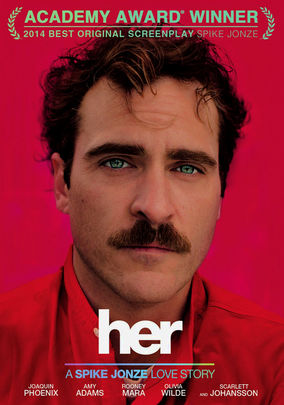
Her-2013

Her-2013

Director Spike Jonze

Starring Joaquin Phoenix, Scarlett Johannson

Scott’s Review #147

70278933

Reviewed August 5, 2014

Grade: A-

Her (2013) is a very unique film directed by Spike Jonze.

The film tells the tale of a lonely, depressed man named Theodore, played by Joaquin Phoenix, who lives in a beautiful high-rise in futuristic Los Angeles.

He works as a writer for a company that creates intimate cards for people in relationships. Having suffered a recent divorce, he falls in love with his computerized operation system named Samantha, played by Scarlett Johansson- voice only.

Conflicts emerge as the relationship deepens and intensifies. Her is a love story uniquely crafted, but also a story of loneliness and the world of technology we now live in.

It portrays human relationships as troubled and unsuccessful yet several characters have wonderful relationships with computers.

Is this what the future may bring with human beings? How many people have fallen in love with a fantasy or a voice on the phone?

The film ponders why relationships have been changed due to technological advances and wonders what will happen further into the future. Technology, while wonderful, has changed our interpersonal relationships and this film successfully delves deeply into that aspect.

The conversation is a lost art and Her features the joys and the tragedies of technology.

Visually, the film is successful because it portrays Los Angeles in a sophisticated, ultra-sleek, modern way that is fascinating.

Several technological games are featured (the Alien child is brilliantly comical) and the “Mom points” is fascinating in its irony.

Her is a deep film that raises questions and I applaud this in modern cinema.

Her is a slow-moving film, but a questioning one.

It won the 2013 Best Original Screenplay Oscar and I am so glad the academy recognized the originality of this film.

Oscar Nominations: 1 win-Best Picture, Best Original Screenplay (won), Best Original Score, Best Original Song-“The Moon Song”, Best Production Design

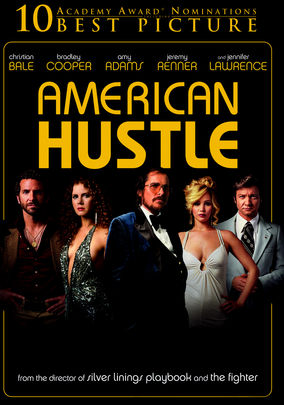
American Hustle-2013

American Hustle-2013

Director David O. Russell

Starring Christian Bale, Bradley Cooper, Jennifer Lawrence

Scott’s Review #39

70281530

Reviewed June 18, 2014

Grade: A

Having seen American Hustle (2013) a month ago and finally getting around to reviewing it, it’s a perfect time as a slew of Oscar nominations has been reaped upon it, thus, undoubtedly more people will be seeing it in the weeks ahead.

I loved this film.

Some were underwhelmed, but I found it quite authentic and stylish.

I loved the 1970’s period and felt the hairstyles, clothes, and props were spot on.

I also felt the film had great acting and, though I’m not a fan, Jennifer Lawrence enraptured me. The same with Cooper, Bale, and Adams, who all deserve their Oscar nods.

I found it similar in style to Boogie Nights, a 1997 masterpiece directed by Paul Thomas Anderson.

The 1970s musical rock score was perfect. The subject matter of political corruption and cat-and-mouse intrigue was effective and resounding.

Oscar Nominations: Best Picture, Best Director-David O. Russell, Best Actor-Christian Bale, Best Actress-Amy Adams, Best Supporting Actor-Bradley Cooper, Best Supporting Actress-Jennifer Lawrence, Best Original Screenplay, Best Production Design, Best Costume Design, Best Film Editing