Category Archives: Brian Tyree Henry

Joker-2019

Joker-2019

Director Todd Phillips

Starring Joaquin Phoenix, Robert De Niro

Top 250 Films #166

Scott’s Review #953
Reviewed November 1, 2019

Grade: A

Joker (2019) is a film that has divided audiences. Some love it, others loathe it. The experience is not your standard fun, superhero fare, with a hero’s rescue and the good triumphing over evil.

Despite the parlay into Batman territory, the film smacks the viewer across the face with its brutality, violence, and social and psychological injustices.

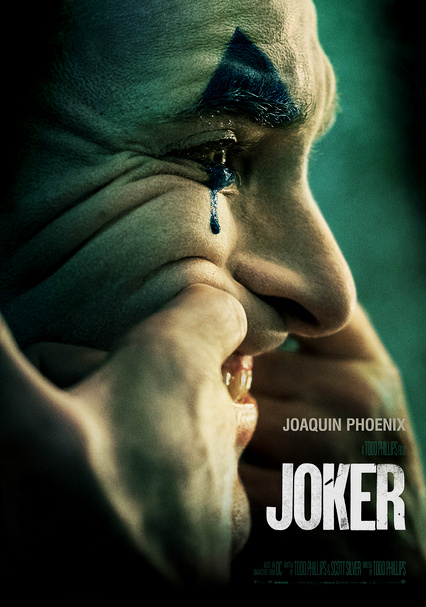
Joaquin Phoenix pummels the audience with an angry and bitter portrayal of the title character, easily one of the best performances of the year.

In one of the first scenes, before we even know the character, we experience a long, close-up of Phoenix laughing hysterically. We wonder what is so funny, before the revelation that he, Arthur Fleck, suffers from a nervous condition that causes inappropriate outbursts.

The year is 1981, and the fictional Gotham City, clearly a mirror image of New York City, serves as the setting. Times are tough, and crime is rampant.

Arthur lives in a dumpy apartment with his sickly mother, Penny (Frances Conroy), and visits a social worker regularly to receive his prescription medicine.

Arthur finds meager work as a party clown and aspires to be a stand-up comedian. After a gang attacks him in an alley, Arthur’s co-worker, Randall, encourages him to take a gun. Arthur invites his neighbor, single mother Sophie, to his stand-up comedy show, and they happily begin dating.

Finally, another person understands him. Segments of the population are disenfranchised and impoverished as Thomas Wayne, a billionaire philanthropist, runs for mayor of Gotham. A strange connection develops between Arthur, Penny, and Thomas, becoming central to the plot.

Can we discuss Phoenix’s bravura performance for a moment?

Suppose anyone thinks that Heath Ledger was phenomenal when he portrayed the same character in 2008’s The Dark Knight. In that case, they will be elated by Phoenix, who elevates the character to an entirely new level.

What Phoenix adds is strong sympathy for Arthur/the Joker and a care for the character. We feel sorry for him, but should we? He is a villain after all. One could easily debate whether his character can be considered the bad guy or the hero.

Regardless of the assessment, the performance is unforgettable.

A turn-off to some, which I found tremendously powerful, is the role reversal in the portrayal of the Wayne family, Bruce, and Batman characters.

Always deemed the “good guys”, in Joker, Thomas Wayne is self-centered, pompous, and embodies a sense of entitlement and snobbery.

Bruce is a young boy, but the implication is that the family is unkind, and what might the child grow up to believe?  Why is Batman/Bruce Wayne heralded as good and the Joker evil? It turns the tradition upside down into a twisted mind warp, and this is wonderfully creative and thought-provoking.

The best scene in the film, which triggers much of the subsequent violence and chaos, occurs when Arthur is invited to appear on a late-night talk show hosted by Murray Franklin (Robert De Niro). A week earlier, Franklin had played a humiliating clip of Arthur poorly performing stand-up.

Arthur decides to appear in full “Joker” attire, and the eventual discussion and words lead to tragic events. The scene is tense, intelligently written, and combative as the men spar over politics and class distinction.

Lastly, the musical score is dark, haunting, and mesmerizing without overtaking the film. Many key scenes of Arthur dancing and posturing are masterful, with the inclusion of the bombastic music.

He is a celebratory character, in his mind at least, and the music fuses into the scene with gusto and power. The combination of clowns and an incredible score adds significantly to the production.

Joker (2019) showcases a marvelous acting performance on the part of Phoenix, which combines a haunting musical score in its depth.

Providing a social commentary for people experiencing poverty and disenfranchisement, this film will divide viewers, probably based on preconceived expectations of a traditional Marvel-type superhero event.

The film offers much more than safer films like Wonder Woman (2017) or Black Panther (2018) ever could- a dark and violent character study.

Oscar Nominations: 2 wins-Best Picture, Best Director-Todd Phillips, Best Actor-Joaquin Phoenix (won), Best Adapted Screenplay, Best Original Score (won), Best Sound Editing, Best Sound Mixing, Best Cinematography, Best Makeup and Hairstyling, Best Costume Design, Best Film Editing
Child’s Play-2019

Child’s Play-2019

Director Lars Klevberg

Starring Aubrey Plaza, Mark Hamill

Scott’s Review #948

Reviewed October 17, 2019

Grade: B

In the horror cinematic genre, when a successful franchise has been dormant for a period, a reboot will inevitably be among the offerings.

Child’s Play (2019) resurrects the series of films popular in the late 1980s and early 1990s with a modern stamp.

The film is formulaic, but it adds a bit of macabre dark humor that lifts it above mediocrity. However, the freshness turns too silly in the final act, and neither the film nor the killer is terrifying.

Kaslan Corporation has launched a successful new global product called Buddi, a revolutionary line of high-tech dolls designed to be human-like companions to their owners, learning from their surroundings and acting accordingly.

Buddi dolls can also connect to and operate other Kaslan products, quickly becoming a phenomenon for kids worldwide. A disgruntled employee tweaks one of the dolls to turn sinister and then commits suicide.

Single mom Karen Barclay (Aubrey Plaza) works as a retail clerk in Chicago, raising a thirteen-year-old son named Andy (Gabriel Bateman), who wears a hearing aid.

New to the area, he struggles to make friends, so Karen takes the defective doll from her store as a substitute friend and picks me up for her son.

As Andy makes acquaintances within the building and takes a dislike to Karen’s new beau, Shane (David Lewis), Buddi names himself Chucky and seeks vengeance against those surrounding Andy, eventually turning on the boy.

Child’s Play takes a modernized approach by making the new Chucky a more high-tech doll, significantly advanced from the original Chucky introduced in 1988.

2019’s Chucky is creepier and more lifelike than the original Chucky, which lends the film a fresh look rather than merely a retread of the 1980s.

Set in present times, the film feels relevant and glossy. New Chucky is more human than old Chucky, with more capabilities and room for thought and deduction, making him more devious.

A treat for Star Wars (1977) fans and any fan of cinema history is the inclusion of Mark Hamill as the voice of Chucky. While Hamill’s voice is not sinister nor particularly distinguishable to the naked ear, the star power adds fun and familiarity, a throwback and ode to film lore.

Hamill’s voice is pleasant and kind, which adds a foreboding and sinister quality.

The film has some clever moments and bits of chilling dark humor that make it a fun experience. When Shane becomes the first victim of Chucky’s wrath and meets a dire fate at the hands of a tiller while hanging Christmas lights, he is beheaded, and Chucky leaves the head in a disgusted Andy’s room.

In hilarious and laugh-out-loud form, the head ends up as a wrapped Christmas present for Andy’s elderly neighbor Doreen, who props it on her mantle until she can open it.

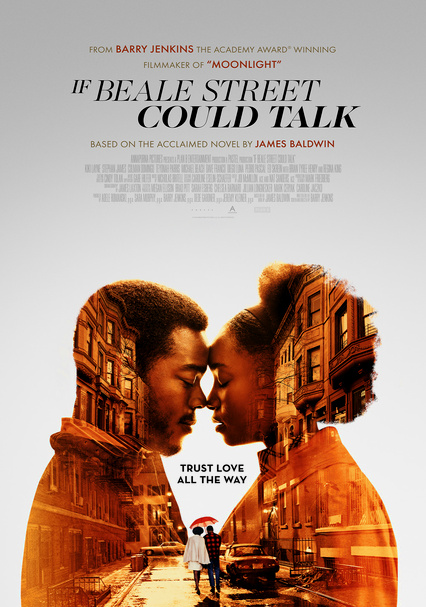
Bryan Tyree Henry, known for his prominent roles in Widows (2018) and the wonderful If Beale Street Could Talk (2018), brings comedy and a likable edge as Andy’s neighbor, Detective Mike Norris.

Plaza, like Karen, is given limited material and unable to shine in her role, not seeming old enough nor motherly enough to add much realism. A big fan of the actress, she is more talented than this part allows her to be.

The film misfires with the cliched misunderstandings and incorrect assumptions that Andy is responsible for the deaths Chucky caused.  Andy’s two apartment buddies are caricatures, and the big finale set inside the retail store is disappointing.

Chucky brilliantly hacks the Buddi toys on the shelves, and chaos ensues as parents and children are massacred as a stampede tries to escape the store. The scene does not work as well as it should at a climax.

Sticking closely to the script and offering a predictable formula film, the 1988 film Child’s Play is remade in 2019 with added star power. Familiar faces (and voices), Plaza, Henry, and Hamill, raise the film slightly above B-movie status, though the dumb finale made me tune out a bit after the main kills were over.

I doubt the film performed well enough at the box office to secure the known actor’s returns, and hopefully, this will be a one-and-done project.

Spider-Man: Into the Spider-Verse-2018

Spider-Man: Into the Spider-Verse-2018

Director Peter Ramsey, Rodney Rothman, Bob Persichetti

Voices Shameik Moore, Hailee Steinfeld, Lily Tomlin

Scott’s Review #881

Reviewed March 30, 2019

Grade: B+

There have been many film versions of Spider-Man.

To my recollection, the first series consisted of three installments, directed by Sam Raimi: Spider-Man (2002), Spider-Man 2 (2004), and Spider-Man 3 (2007), all starring Tobey Maguire in the title role.

These were the good old days.

Andrew Garfield took over in 2012 and 2014 to mixed reviews before the superhero was merged into Captain America and The Avengers films, as well as one or two additional solo outings. This is where I lose track.

Finally, through all the incarnations comes the very first computer-animated film based on the Marvel Comics character.

Spider-Man: Into the Spider-Verse (2018) was an enormous box-office success as well as a critical success, winning the coveted Best Animated Feature Oscar.

My choice would have been for the dark and sarcastic Isle of Dogs, but the former has impressive merits and grand animation that are astounding to the eyes.

Towards the climax, the film teeters into familiar and predictable territory from a story perspective, though admittedly, the superhero and animated genres are not my favorites.

Miles Morales is a Brooklyn teenager, bright, energetic, and likened to an average city kid. His father, Jefferson Davis, is a muscled policeman who is no fan of Spider-Man, the heroic masked man who prevents city crime, outshining the cops daily.

While close to his father, Miles is much more connected to his uncle, Aaron Davis, despite his father and uncle having a distant relationship.

When a hungry spider bites Miles, he immediately begins exhibiting Spider-Man-like abilities and stumbles upon others with similar stories.

The teen meets super-villain Wilson Frisk (a not-so-subtle Donald Trump parody if ever I saw one), who is intent on accessing a parallel universe to retrieve his deceased wife and son. Events involving a USB drive and the “real” Spider-Man, Peter Parker, also living in a parallel universe, come into play.

The overly complex story is not the best part of the experience, and I began to lose interest in the hows and whys, especially when compared to the escapist and marvelous, super-cool animations.

Spider-Man: Into the Spider-Verse deserves great praise for making the film’s central character ethnically mixed (Hispanic and Black), a first in the franchise’s history.

This diversity, evident in Black Panther (2018), is all the rage now in the superhero genre, along with gender equality, a slogan once deemed a “guy’s movie.”

This is a delight to witness, with hopefully even more of a slant towards richer diversity. Are Asian, gay, or physically impaired characters coming next?

The film looks fantastic, with creative and slick modern animation and graphics that never waver throughout the nearly two-hour running time, which is lengthy for an animated feature.

Styled and bright, the film’s most striking appeal lies in its colors, shapes, and sizes. The metropolitan New York City is a treat to witness, as the creators not only focus on Manhattan, but also on Queens and Brooklyn, boroughs that are often forgotten in favor of Manhattan’s glitz and bustle.

The clever re-titling of FedEx trucks to Red Ex is worthy of mention.

With its glitzy look, fast-paced action, and interesting villains, Spider-Man: Into the Spider-Verse (2018) is an impressive feat and a deep dive into the possibilities of combining the superhero and animated genres.

This is around the corner due to the critical, audience, and award notices that surround this film. If only the story contained more twists and turns and fewer standard genre-pleasing qualities, the possibilities would be endless.

Oscar Nominations: 1 win- Best Animated Feature Film (won)

If Beale Street Could Talk-2018

If Beale Street Could Talk- 2018

Director Barry Jenkins 

Starring Kiki Layne, Stephan James

Scott’s Review #854

Reviewed January 8, 2019

Grade: A

2018 proved to be a year where filmmakers of color prided themselves in telling stories of diversity, inclusion, social injustice, and the never-ending challenges of minorities.

One of the year’s best films is If Beale Street Could Talk (2018), a lovely piece of storytelling by director Barry Jenkins. His other major work, Moonlight (2016), is a similarly poignant and melancholy experience.

The film is based on a novel by James Baldwin.

The title is explained in the first dialogue of the film. Beale Street exists in New Orleans, but thousands of streets exist in other cities. It is a metaphor for discrimination and unnecessary struggles that black folks continue to endure.

Right away, the audience knows that an important story is to be told.

The wonderful part of If Beale Street Could Talk is the combined elements that lead to brilliance.

Tish Rivers (Kiki Layne) and Fonny Hunt (Stephan James) have known each other since childhood. Growing up in a Harlem neighborhood, their families are interconnected and community-centered.

Events begin in 1973 when Tish realizes she is pregnant. Ordinarily, a happy occasion, this situation presents a major challenge because Fonny is imprisoned for a crime he did not commit.

A woman has accused him of rape and a corrupt policeman has positively identified Fonny as the rapist despite this being a logistical impossibility. Tish is determined to prove his innocence before the baby arrives with the assistance of her family.

The story is non-linear. Jenkins begins the film in the present day with Tish breaking the news of her pregnancy to him and then notifying her family.

As the film progresses, more of Fonny and Tish’s love story is explored. The couple falls in love, has romantic dinners, and nervously makes love for the first time. In this way, the film becomes a tender story of young love.

The social injustice and family drama are carefully mixed amid the central romance.

The film impresses with warm touches, ingenious cinematography, and a musical score that left me resounding with pleasure at the intricate and intimate details. The frequent use of jazz music over dinner or as the Rivers family sips celebratory wine adds sophistication to many scenes.

The film’s texture is muted and warm, giving it a subdued look that is genuine to the quiet and timeless nature of the production.

A plume of cigarette smoke can be seen in nearly every scene, as most of the characters smoke. Since the period is the 1970s, the authenticity is there, and a glamorous image is portrayed.

Smoking enhances the sophistication of the characters and adds to the tremendous cinematography.

Several scenes of simple dialogue crackle with authenticity and passion. In one of the best scenes, Fonny’s friend Daniel, a recent parolee, stays for dinner, and the friends talk while consuming beer and cigarettes.

The lengthy scene is poignant and tremendous with meaning. Daniel recounts his experience in prison and how black men are victims of the whims of white men and the terror involved in that. The scene is powerful in its thoughtfulness and a foreshadowing of Fonny’s impending trauma.

The supporting characters are stellar and add to the bravura acting troupe.

Regina King as Sharon Rivers gives an excellent performance when she bravely travels to Puerto Rico and confronts Fonny’s accuser, hoping to get her to modify her story. The scene is laden with emotion and honest dialogue.

The other notable actors are Colman Domingo and Teyonah Parris, who play Tish’s father and sister, respectively. Both do wonders in fleshing out the Rivers family as strong and kind people.

Jenkins is careful to add benevolent white characters to offset the other dastardly white characters. An example is the kindly old woman who comes to the rescue of Fonny and Tish and berates the cop.

The Jewish landlord who agrees to rent a flat to the pair is portrayed as decent and helpful, and finally, the young lawyer who takes Fonny’s case is earnest and understanding.

If Beale Street Could Talk (2018) continues talented director Barry Jenkins’s plunge into the depths of being one of the modern greats. With a beautifully visual and narrative film, he creates an experience sure to win more fans.

The ending is moving yet unsatisfying, as there are so many more miles to go in the race for prison justice. Adapting an important story of race and repression based on skin color is a powerful and detailed affair.

I cannot wait to see what Jenkins comes up with next.

Oscar Nominations: 1 win- Best Supporting Actress- Regina King (won), Best Adapted Screenplay, Best Original Score

Independent Spirit Award Nominations: 3 wins- Best Feature (won), Best Director- Barry Jenkins (won), Best Supporting Female- Regina King (won)