Category Archives: Colin Firth

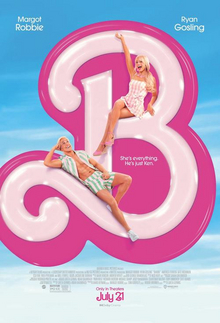
Barbie-2023

Barbie-2023

Director Greta Gerwig

Starring Margot Robbie, Ryan Gosling, and America Ferrera

Top 250 Films #226

Scott’s Review #1,381
Reviewed July 23, 2023

Grade: A

Greta Gerwig is a tremendously talented director who is influencing Hollywood films. The gifted woman crafted Lady Bird in 2017 to critical acclaim and forged ahead with another feminist and progressive project.

In Barbie (2023), she takes a traditional and iconic ‘Barbie doll’ product by Mattel and explores the positives and negatives of the doll throughout its existence.

An incredible opening sequence harkening to Stanley Kubrick’s 1968 masterpiece 2001: A Space Odyssey explains the evolution of the doll.

Barbie incorporates gender balance, creativity, thought, satire, and slapstick comedy fraught with meaning. Not forgotten is heart and humanity, and a look at how much progress has been achieved for women over the years, and how much more is still needed.

As if that’s not enough, Barbie deserves praise for its direction, production design, costumes, music, and cast performances.

Well done.

The film stars Margot Robbie as Barbie and Ryan Gosling as Ken, who embark on a journey of self-discovery after Barbie faces an existential crisis. Deemed the ‘stereotypical’ Barbie, she begins having peculiar and ‘un-Barbie’ thoughts of death and analytics, and must return to the real world to find her doll’s owner.

She soon longs to return to Barbie Land, which is a perfect place. Unless you’re a Ken who exists merely to pine after Barbie, but do they secretly resent this?

There are numerous positives to explore regarding Barbie, but one slight drawback is its proximity to silly comedy and goofiness. The meaning of the film mostly offsets this, but I fear that some audiences may be overwhelmed by gag jokes and lose the overall point of the story.

Let’s take a deep dive. The production design and art direction are dazzling and immediately noticeable. Particularly, I’m referring to Barbie Land and its pink and pretty sets. Luxurious pools, streets, houses, and cars are rich with color and ooze a fun vibe.

I can’t imagine these teams being overlooked during the year-end awards season.

Robbie and Gosling, looking blonde, buff, and tanned, are wonderfully cast and not only look the part but quickly switch from physical comedy to heavy drama without looking foolish.

Robbie, for example, while the classic Barbie type has layers of emotion that she channels. And Gosling could have looked like a buffoon with over-the-top sequences if not for a startlingly good dramatic scene towards the film’s climax.

The supporting cast is brilliant and includes Kate McKinnon as ‘weird Barbie,’ a perfect role for her to unleash her comedic prowess. How lovely to see Rhea Perlman again in the small but powerful role of Ruth Handler, co-founder of Mattel and creator of the Barbie doll.

Finally, America Ferrera and Will Ferrell add both comedy and meaningful spirit to their roles. And how could the inclusion of British stalwart Helen Mirren as the narrator not create credibility?

The main attraction, though, is the writing. Isn’t it always the case when it’s done intelligently?

The dynamic duo of Gerwig and Noah Baumbach (famous for, among other works, the 2019 film Marriage Story) pair well, giving equality messages to both Barbie and Ken. While it is easy to dismiss Ken, his role is valued and respected within the overall context of showing that everyone deserves a seat at the table.

I was touched by the film in various moments more than I ever expected. Wonderful sentiments about being a mother are powerfully stated by Ruth and Gloria (Ferrera) during various scenes and messages, such as everyone deserves respect and serving a purpose, which are hard not to get choked up over.

Barbie wins points for diversity and inclusion with nearly every ethnic group represented and a transgender character, Dr. Barbie (Hari Nef), featured prominently.

Providing roaring entertainment, bubble gum sets and design, and a message that will break your heart while exuding intelligence, Barbie (2023) is a win.

It’s a story about the wills of plastic and humanity, making for a perfect, harmonious blend. Who would have thought a film about Barbie would be so important?

Oscar Nominations: 1 win-Best Picture, Best Supporting Actor-Ryan Gosling, Best Supporting Actress-America Ferrera, Best Adapted Screenplay, Best Costume Design, Best Production Design, Best Original Song-“I’m Just Ken”, “What Was I Made For?” (won)
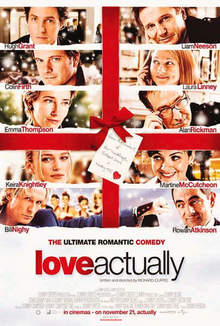
Love Actually-2003

Love Actually-2003

Director Richard Curtis

Starring Hugh Grant, Emma Thompson, Liam Neeson

Scott’s Review #1,438

Reviewed September 8, 2024

Grade: B

Love Actually (2003) is a British romantic comedy perfect for watching around the holidays, especially on Christmas Eve. Perhaps even on Valentine’s Day, the setting is tinsel-laden and filled with holiday merriment and sweetness.

It involves an ensemble cast of dozens but surprisingly not hard to follow. The myriad of stories had me naturally more invested in some than others, preferring the heavy drama to the silly side plots.

The film begins beautifully as a voice-over narrator sets the stage and message of love. He ruminates about pure and uncomplicated love of lovers, and friends, and points out that the messages from the 9/11 victims were messages of love and not hate.

The story then switches among the interconnecting “love stories” of many people.

The quick segment nearly left me in tears and to let the poignant message sink in.

I was pleasantly surprised to find nine stories some of which intersect with others. I am a fan of this type of storytelling but not all of them connect with others which might have made it too confusing or even better layered.

Some stories are not given a lot of exposure but the balance feels close to right.

I preferred the first half of Love Actually to the second. I had heard of the film and finally watched it twenty years later but anticipated more of a sappy romantic comedy than anything of substance, especially since the rom-com master Hugh Grant stars.

I immediately felt an emotional connection to stories like the United Kingdom Prime Minister (Grant) and his romantic connection with Natalie (Martine McCutcheon), a junior member of his household staff. This ‘boy meets a girl from the wrong side of tracks’ felt authentic and laden with possibilities.

Another win is the love story between Sarah (Laura Linney) and handsome creative director, Karl (Rodrigo Santoro). Their buildup and near tryst after a Christmas party had me in their corner, and rooting for the pair to overcome an obstacle involving Sarah’s dependent brother.

Finally, my favorite couple is writer Jamie (Colin Firth) and his Portuguese housekeeper, Aurélia (Lúcia Moniz). Their sweetness and innocence are gleeful and true and rooting for them to get together despite language barriers was easy. 

Richard Curtis, who directs and writes the screenplay, misses an opportunity when he creates an unfulfilling love triangle between newlyweds Juliet (Keira Knightley), Peter (Chiwetel Ejiofor), and best man Mike (Andrew Lincoln). Initially unclear if Mike is smitten with Juliet or Peter the traditional route is chosen instead of an LGBTQ+ presence.  

In one story, the horny British lad named Colin (Kris Marchall) unsuccessfully tries to woo British women and decides to go to America to get laid. Predictably, he meets one hot woman after another in the mid-west USA.

This story is hokey and could have been dropped altogether in favor of more screen time for the more interesting stories.

In the final act, I was disappointed when the film teeters too much towards cheesy with a tepid Christmas pageant where many stories come to a head.

This culminates with a silly chase throughout Heathrow Airport where one character jumps security and outwits inattentive airport personnel to catch his love interest before she leaves on a flight to New York.

Since 9/11 is mentioned in the beginning this tired plot device is surprising given the times of heightened terrorism and deserved respect for airport security.

Curtis rips off Paul Thomas Anderson’s Boogie Nights (1997) in the epilogue by using the same song, ‘God Only Knows’ by the Beach Boys, and the same wrap-up of what happens to the characters.

Despite the thievery, I did enjoy seeing what happens in my favorite stories.

Love Actually (2003) wobbles a bit by trying to have all nine stories pack a punch but the effort is nice and the message of love closes out the film.

We know happiness and Christmas miracles usually don’t pan out but it’s nice to escape and pretend they do.

Nanny McPhee-2005

Nanny McPhee-2005

Director Kirk Jones

Starring Emma Thompson, Colin Firth

Scott’s Review #1,161

Reviewed July 15, 2021

Grade: B

Patterned after the classic family film Mary Poppins (1964), but with a slightly harder edge, Nanny McPhee (2005) attempts to recreate the iconic character with a similar storyline setup.

But a couple of other family films make their presence known.

The Sound of Music (1965) is quickly added to the mix with a well-meaning but absent daddy and a slew of siblings who terrorize former and present nannies.

A scullery maid with big dreams ala Cinderella (1950) solidifies the harkening back to 1960s cinematic family fun.

Great British actors like Emma Thompson and Colin Firth add much to the film which would be mediocre without their benefits. And the iconic Angela Lansbury hops aboard in a small yet important role. They make what would be a disposable kid’s movie into something respectable, romantic, and fairly cute.

The film tries a bit too hard with the comical moments, losing the magical moments that would have made it feel more alive. Instead, most scenarios come across as campy or family-oriented.

Of course, the conclusion can be seen from the very beginning.

The effort is admirable but the story experience never feels very compelling. Thinking demographically, Nanny McPhee has much to offer the younger set. The kids will love the candy-box sets and costumes like confectionery-shop windows, the whimsy and farcical grotesqueness of it all.

The adults might be won over by the creativity and the cast.

Thompson (who also wrote the screenplay) has fun playing ugly and getting her feet dirty, her snaggletooth almost a character itself, so prominent is it featured. She is even the anti-Mary Poppins, lacking an umbrella or the high-class pose that she had.

Each time the children learn a lesson, one of Nanny McPhee’s facial defects magically disappears.

But why not just dust off the original Mary Poppins? Nanny McPhee will inevitably be forgotten since an actual remake of the Mary Poppins film was released in 2015 all but confirming the Nanny McPhee franchise as the second tier.

And Nanny McPhee made me want to revisit Mary Poppins instead of watching Nanny McPhee again.

Set in Victorian-era England, lonely widower Cedric Brown (Firth) hires Nanny McPhee (Thompson) to care for his seven rambunctious children, who have terrified and chased away all previous nannies. But McPhee is different and will have no such nonsense. She slowly wins over the children with magic and a bit of discipline.

And when the children’s great-aunt and benefactor, Lady Adelaide Stitch (Lansbury), threatens to separate the kids, the family pulls together under the guidance of their new leader.

Lansbury nearly steals the show. Short-sighted and domineering, the family is financially supported by her and Cedric cowers to her every request until she demands custody over one of the children. She also viciously threatens to reduce the family to poverty unless Cedric remarries within the month, meaning the family would lose the house, and be forced to separate.

She is deliciously wicked in the role and plays it to the hilt.

The sweet romance between Cedric and scullery maid Evangeline, played by Kelly Macdonald, works well. They resist at first, but then realize their feelings for each other and agree to marry, satisfying Aunt Adelaide’s conditions for maintaining her financial support.

Nanny McPhee (who is now fully beautiful), magically makes it snow in August, transforming the wedding scene and changing Evangeline’s clothes into a beautiful wedding dress.

This is the fairy tale ending that ultimately makes the film work and wins me over.

Nanny McPhee (2005) is solid if not remarkable.

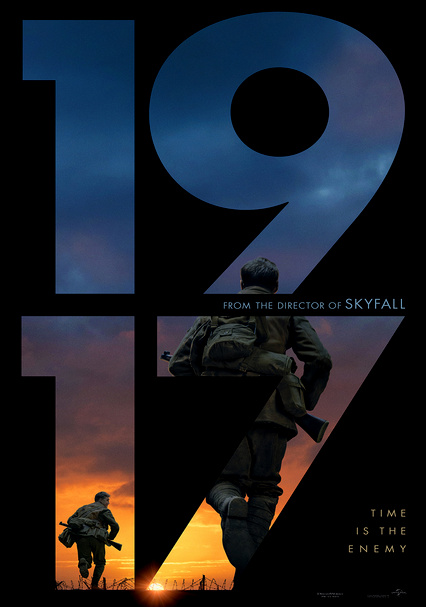
1917-2019

1917-2019

Director Sam Mendes

Starring George Mackay, Dean-Charles Chapman

Scott’s Review #979

Reviewed January 14, 2020

Grade: A

My tastes do not always lean towards the standard war film, so when I first heard about 1917 (2019), I was less than enthusiastic for no other reason than my pre-conceived perceptions.

Though it peaked with the idea of a World War I film rather than the standard World War II or Vietnam War film, I anticipated a run-of-the-mill experience or a story that had already been told.

Boldly told with incredible intensity and a brilliant technical style, director Sam Mendes creates a memorable cinematic treasure.

In April 1917, during the height of World War I, two British soldiers are tasked with a daring assignment: to hand-deliver crucial news to the 2nd Battalion of the Devonshire Regiment, calling off their planned attack on the German forces.

The Germans have faked a retreat to the Hindenburg Line and are ready to ambush the battalion, intending to kill sixteen hundred soldiers.

Schofield (George MacKay) and Blake (Dean-Charles Chapman) are chosen, with Blake’s brother Joseph among the soldiers bound to meet their fate.

As they journey, the young men face a myriad of hurdles including booby traps left by the Germans, terrain littered with dead bodies of their comrades, a precarious helicopter crash, giant rats, and the rapidly approaching deadline to deliver their message.

If they do not accomplish their mission in a timely fashion (twenty-four hours), the results will be devastating. Mendes keeps the tension high because he tells his story in real-time.

1917 is raw and emotional, hitting a hard punch.

Powerful scenes of dead bodies riddle the land, fat and pale from days spent immersed in cold water, young soldiers once handsome, now dead and bloated, remind the viewer what a terrible thing war is, and the ravages it causes.

Unlike other war films, patriotism and nationalist pride are not present.

Instead, the soldiers are weary and angry, confused as to why they are sent to fight for land as ugly as where they are, to die for land that is not even their own. They are depressed and confused.

The relationship between Schofield and Blake is excellent. Both men are weary and afraid, but have each other’s backs throughout their assignment.

It is not clear how long they have known each other, but they are at least acquaintances. They each come to the other’s rescue, and a pivotal scene occurs in a dusty hideout where they nearly die after a cave-in.

The characters possess grit and determination, but it is their humanity and connection with each other that resonate powerfully with the viewer.

An incredible scene unfolds as the day turns into night, and Schofield is well into enemy territory. To avoid a pursuing German soldier, he hides in a dusty basement area and finds a cowering young French girl. At first fearful, the pair quickly bonds, and a realization occurs to Schofield.

A newborn child accompanies the girl.

Assumed to be hers, the soldier immediately parts with his stash of food, not realizing the baby can have only milk. A ghastly realization is that the baby is not the French girl’s at all, but was instead found and rescued to prevent its death. The scene is tender and beautiful, perfectly contrasting the ugliness of the war.

The fantastic scene gives the viewer pause, prompting them to wonder what will become of the girl and the baby.

Nearly rivaling this lovely scene, another poignant moment occurs when Schofield stumbles upon a group of soldiers watching another soldier perform a rendition of the melancholy war tune, “Wayfaring Stranger”.

This moment slows the action down to a crawl, dedicated to loneliness and sadness amid the terrible battles.

The technical aspects that Mendes creates are spectacular and meant to be enjoyed on the largest screen possible. He uses a one-take approach, which keeps the action fast and furious.

The lavish and grandiose exterior scenes of immense dry land perfectly counterbalance a terrific watery scene when Schofield is chased into the river and soon embarks on wavy, grand rapids.

The camera remains on the soldier throughout the scene, as the viewer is taken on a wild adventure, sweeping every morsel of up and down motion with the tide.

To piggyback on this point, a scene occurs when one of the young men is knocked unconscious. It is daylight, but when he regains consciousness, it is night. The cinematography is brilliant, with a sharp left turn to translucent colors and blurry images of buildings.

The viewer is as disoriented as the soldier and fears what lurks in the shadows, as is found out when an unknown approaching figure begins to fire his gun.

1917 (2019) is a progressive-leaning gem with an anti-war message and a genuine approach to a “day in the life of a soldier”. It is not glossy or contrived, but a candid, realistic view of the savagery of war.

With a creative technical style, it is one of the best of its genre ever made.

Oscar Nominations: 3 wins-Best Picture, Best Director-Sam Mendes, Best Original Screenplay, Best Original Score, Best Sound Editing, Best Sound Mixing (won), Best Production Design, Best Cinematography (won), Best Makeup and Hairstyling, Best Visual Effects (won)

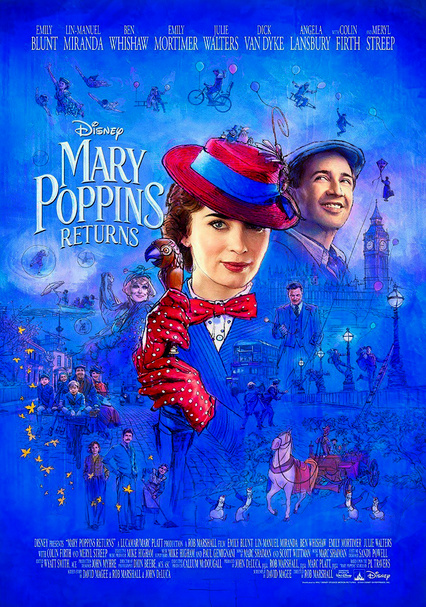
Mary Poppins Returns-2018

Mary Poppins Returns-2018

Director Rob Marshall

Starring Emily Blunt, Lin-Manuel Miranda

Scott’s Review #848

Reviewed December 29, 2018

Grade: A-

Mary Poppins Returns is a charming mixture of reboots and sequels to the immeasurably glorious original, Mary Poppins (1964).

Although it is impossible to live up to the magic of that film, the 2018 version comes quite close with a delightful turn by Emily Blunt, numerous Hollywood stalwarts in small roles, and gleeful musical numbers sure to leave audiences humming upon their exit from theaters.

Events begin to percolate twenty-five years after the original story, and the setting is 1935 London amid the Great Depression. His recently deceased wife, Michael Banks (Ben Wishaw), lives in the house he grew up in with his three children and housekeeper (Julie Walters) in tow.

His sister Jane lives and works nearby as a labor organizer.

Faced with the dreary reality that the historic Banks house may be foreclosed, Mary Poppins (Blunt) arrives elegantly on her umbrella to restore order and save the day.

Though her character does not overtake the film, Emily Blunt is dynamic in the title role. Her prim and proper good British charm and sensibilities crackle with wit and poise. It is tough to imagine anyone but Blunt in the role, as she puts her stamp on it so well.

With a smirk and a quick, matter-of-fact tone, the character is no-nonsense and utterly kind. The casting of Blunt is spot-on as she becomes Mary Poppins.

The London setting is adorable and fraught with good culture and sophisticated manners. Including the storied Big Ben is meaningful to the tale in a significant way and a teachable moment for children unfamiliar with London.

Furthermore, including a negative period in history—the Great Depression—is immeasurably positive.

The supporting characters are rapturous and a treat for elders familiar with the original Mary Poppins film. Meryl Streep plays Topsy, Mary Poppins’s eccentric eastern European cousin to the hilt, but never teeters over the top.

Colin Firth adds snarky charm as the villainous bank president, and Angela Lansbury gives grandmotherly zest as The Balloon Lady, an ode to the original novel.

Finally, Dick Van Dyke is a delight as the heroic Mr. Dawes Jr. who comes to the rescue at the last hour.

The real winners, though, are the enchanting musical numbers. With the lovely London landscape in full view, Mary Poppins Returns gets off to a spectacular groove with “(Underneath The) Lovely London Sky”.

Performed by the charming Lin-Manuel Miranda in the role of Jack the Lamplighter, Mary Poppins’ sidekick, the star has what it takes to keep up with Blunt. This is evident as the duo mesmerizes and entertains with a colorful number, “A Cover is Not the Book”, alongside an animated music hall.

Finally, fans will revel in the naughty and clever “Turning Turtle”, performed by Streep.

The costumes and lighting are both big hits. As Jack lights and defuses the street lights, we see the luminous dawn and sunsets, which give the film a nice touch.

During the film’s conclusion and subsequent race against the stroke of midnight, moonlight is featured, giving the film a warm glow.

The period piece costumes are lush, but not garish, adding flavor and capturing the period perfectly.

Although it lacks the oomph of the original Mary Poppins (but really, who expected that?), Mary Poppins Returns (2018) is nonetheless enchanting and inspiring in every way that a remake or sequel should be.

Given the mixing of humans and animations, the film is polite, polished, and filled with authentic zest: a fine creation and splendid entertainment.

Oscar Nominations: Best Original Score, Best Original Song-“The Place Where Lost Things Go”, Best Production Design, Best Costume Design

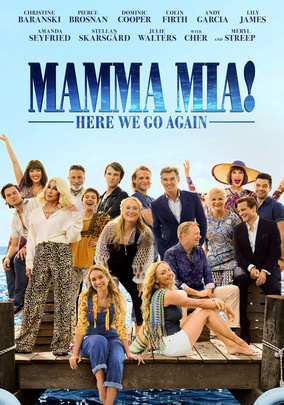
Mamma Mia! Here We Go Again-2018

Mamma Mia! Here We Go Again- 2018

Director Ol Parker

Starring Lily James, Amanda Seyfried

Scott’s Review #797

Reviewed July 31, 2018

Grade: B+

My expectations for Mamma Mia! Here We Go Again (2018) was not lofty, nor was I anticipating drivel. I expected (and was in the mood for) a summer popcorn musical flick with fun and dancing, and little in the way of analysis or requiring too much thought.

I can proudly say that this film fulfilled my expectations —it delivers its intent, and sometimes, that is exactly what the doctor ordered.

The film is enthusiastic and lively, with the musical numbers serving as the standouts.

In an immediate plot twist, it is revealed that the main character, Donna (Meryl Streep), died a year earlier, and her daughter Sophie (Amanda Seyfried) is planning a lavish reopening of her hotel on the beaches of Greece.

The film serves as both a sequel and a prequel, as events also go back to 1979 when a young Donna (Lily James) graduates from college and embarks on a journey to “find herself”.

She travels extensively and meets her three beaus (anyone who saw the 2008 original will be familiar with this plot), and the film is excellent at pleasingly connecting the events of both films.

Mamma Mia! Here We Go Again is hardly high art and not intended to be. Truthfully, it is a bit sub-par to the original, as some of the musical numbers are “secondary” ABBA songs. The biggest hits were used in the 2008 film.

The overall plot feels a bit forced and not exactly compelling, especially since we know the eventual result of Donna’s relationships. The story seems geared towards a bombastic finish.

But the sheer fact that the song and dances are interspersed throughout the film makes it enjoyable enough.

The film plays more like someone’s fantasy than a real-life sequence, and liberties must certainly be taken.  Everything always seems to go Donna’s way, and events merely fall into place- if only real life were that way!

The introduction of Donna’s mother (Sophie’s grandmother)—explained to be a rich and famous singer residing in Las Vegas—is a way to add the legendary Cher to the story. Disappointingly, the star does not appear until the end of the film, more like a cameo appearance.

This leads me to the film’s best parts, which occur during the final thirty minutes. As Sophie’s grand hotel reopening party comes to fruition (a devastating storm thrown into the story is purely for dramatic effect), all details fall into place in magical form.

Hundreds of party guests show up, Donna’s beaus reunite, and the aforementioned absentee grandmother (Ruby) makes a grand entrance via helicopter (in stiletto heels naturally).

In this way, the grand finale is superior to the rest of the film.

Cher, still looking gorgeous at age seventy-two, is the pure highlight of the film, and it kicks into high gear when she appears. Considering all of the hype and press surrounding a film reunion between Cher and Meryl Streep- they starred together in 1983’s Silkwood- it should be no real surprise that Streep’s deceased Donna appears.

The two best scenes come at the end of Mamma Mia! Here We Go Again! As much as the lavish Cher demands the grand finale in terms of glamour and song, Streep’s touching duet with Sophie will bring tears to the viewer’s eyes and capture the emotional element of the film.

As Streep and Seyfried churn out a gorgeous rendition of “My Love, My Life,” the actresses’ mother-daughter relationship is lovely and will fondly remind audiences of the chemistry in the 2008 film.

Regarding Cher, the revelation that Ruby is a long-lost lover of the hotel manager, Fernando (Andy Garcia), is sweet and romantic. Despite limited screen time, the duo shares fantastic on-screen chemistry, so much so that I yearned to know the back story of their relationship.

Do we only know that they were madly in love in 1959? Why did it not work out?  Regardless, Cher’s version of the song “Fernando” is both appropriate and enchanting.

Mamma Mia! Here We Go Again (2018) is a summer film sure to please audiences eager for a fluffy musical.

With bright and cheerful Greek island locales, lavish oceans, and bombastic feel-good pop sensibilities, this film was marketed well and shares enough connection with 2008’s Mamma Mia! to enrapture and please audiences who enjoyed the first version.

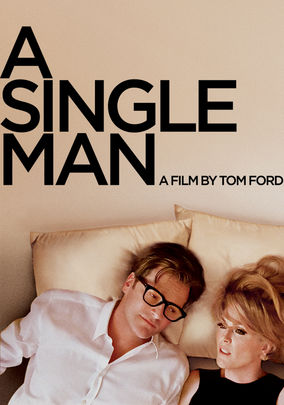
A Single Man-2009

A Single Man-2009

Director Tom Ford

Starring Colin Firth, Julianne Moore

Scott’s Review #577

Reviewed January 1, 2017

Grade: B+

A Single Man (2009) is a dark film fraught with meaning and honesty-it is a very good movie. It is a melancholy film and a bit surreal, but worth seeing.

The acting, especially from star Colin Firth, is first-rate.

The subject matter involves being gay in the 1950s and 1960s and the ramifications of living a forbidden and secretive life.

The intelligent film is based on the novel of the same name, written by Christopher Isherwood.

The film is written as a sad tale of a day in the life of a gay man living in the 1960s.

Firth portrays George Falconer, a British college professor living in liberal-minded Los Angeles. When his much younger lover (presumably a student) dies, George plans to commit suicide.

Moore plays his best friend and confidante, Charley, who is dealing with her demons.

Through flashbacks, we learn about George and his lover Jim’s secret life together and the challenges that ensued. George also had a strange relationship with a male prostitute.

We learn the path of life George leads following Jim’s tragic death- we also see them happy at one time.

A Single Man (2009) is a bit of a downer containing a definite dream-like feel and is heavy on the flashbacks, but this is intriguing to the picture and not a complaint.

A very good, but not an uplifting film.

Oscar Nominations: Best Actor-Colin Firth

Independent Spirit Award Nominations: Best Male Lead-Colin Firth, Best First Screenplay, Best First Feature

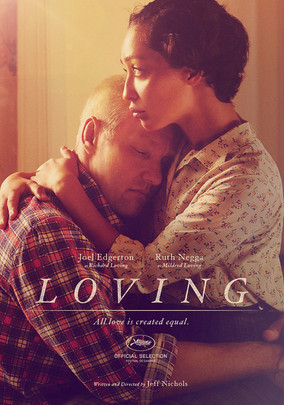
Loving-2016

Loving-2016

Director Jeff Nichols

Starring Joel Edgerton, Ruth Negga

Scott’s Review #527

80099974

Reviewed November 26, 2016

Grade: A

Loving (2016) is a quiet film.

Subdued and poignant, it is an important historical story to tell and jarring to be transported back to the 1950s Southern style, where interracial marriage was not only illegal, but children of interracial couples were barely considered human beings.

This is to say nothing of the views of their parents, specifically of law enforcement.

Sadly, circa 2016, we all should be aware that racism is still alive and well in the United States, and this film is a reminder of how much further we need to go.

The true story of the landmark 1967 Loving vs. Virginia Supreme Court case is the basis for this film.

The time is 1958 in Virginia, and a sweet, working-class couple, Richard and Mildred, are very much in love. Richard-white and Mildred-black are met with some sideways glances around town but generally have a strong, supportive family and friend structure, although both families are pretty poor.

They enjoy spending time with friends in bars and racing cars.

When Mildred becomes pregnant, Richard purchases a plot of land for them and asks Mildred to marry him. Despite the challenges this will create, they are wed in Washington, D.C. Once they return to Virginia, they are arrested for violating anti-miscegenation laws prohibiting interracial marriage.

The couple eventually sued the state of Virginia, leading to a unanimous Supreme Court ruling a decade later.

As a film, Loving is thoughtful and introspective.

The audience questions who we are to decide who someone loves. This can apply to same-sex couples as easily as interracial couples.

The film, led by director Jeff Nichols, creates many quiet scenes of thoughtfulness on the faces of leads Edgerton and Negga.

Furthermore, several scenes of peril encompass the film.

The Lovings constantly threaten to be discovered as they secretly return to their forbidden home state to give birth to their son, only wanting Richard’s mother to perform the birth. The tense scene where Mildred is dropped off on a deserted back road is well shot; the camera constantly focuses on the road and the threat of a car coming by at any moment.

Edgerton, a fantastic actor and director, performs tremendously as a quiet, stoic, blue-collar man who is madly in love with his wife and sees nothing wrong with it simply because it is not the norm.

He is poorly educated, but Edgerton gives him underlying intelligence and a basic understanding of cherished love and more than once calmly utters, “But I love my wife.”

To him, it is that simple. Richard will also use any necessary measures to protect his family, as any man would. Edgerton’s squinting blue eyes portray suspicion, warmth, and love.

Negga is equally compelling as calm and loyal Mildred.

One might expect Mildred to finally explode with rage as she faces obstacle after obstacle, raising three kids in an environment she does not want, yet she never does.

Negga embodies the character with sweetness, wide-eyed passion, and longing for a better life. Mildred tries not to get her hopes up with each impending court date, but Negga successfully portrays the character with many different emotions and complexities.

My favorite scenes of hers involve Mildred gazing at her husband, her eyes filled with love and pride.

Nichols wisely does not spend much time in the courtroom, a positive aspect of the film. Sure, we get the occasional scene of Richard and Mildred facing the court, but the film does not take a different approach than necessary.

Despite a landmark decision coming from Loving’s marriage, the film is a love story between a good man and a good woman who happens to be of different races.

What a lesson every viewer can learn from Loving (2016).

Oscar Nominations: Best Actress-Ruth Negga

Independent Spirit Award Nominations: Best Director-Jeff Nichols, Best Female Lead-Ruth Negga