Category Archives: Jack Dylan Grazer

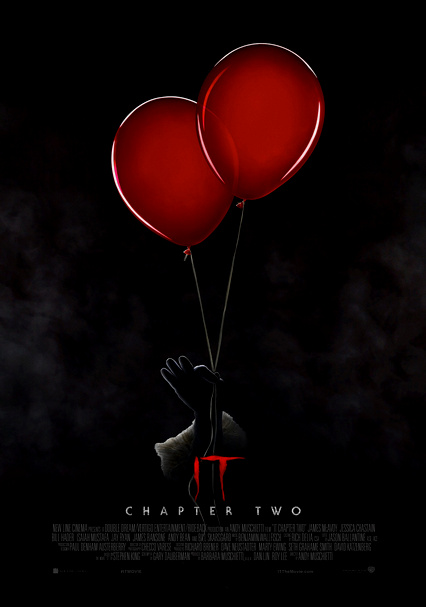
IT: Chapter Two-2019

IT: Chapter Two- 2019

Director Andy Muschietti

Starring James McAvoy, Jessica Chastain, Bill Hader

Scott’s Review #939
Reviewed September 11, 2019

Grade: B+

A companion piece to the first chapter, named It (2017), and an adaptation of the famous and chilling 1986 novel by horror novelist Stephen King, It: Chapter Two (2019) is a successful culmination of the vast story and will please many fans.

A box-office hit mixing straight-ahead horror with the supernatural, and a tad of adventure mixed in, the film is to be appreciated in many ways, though I slightly prefer the first chapter by measure.

Set in present times (2016), twenty-seven years after the first film took place, the Losers’ Club kids are now nearing middle age, in their forties.

The most prominent characters in the group, Beverly Marsh (Jessica Chastain), Bill Denbrough (James McAvoy), and Richie Tozier (Bill Hader) are summoned by childhood chum Mike Hanlon to return to the sleepy town of Derry, Maine, after a series of murders begin at the summer carnival.

Each of them, except for Mike, has fled the small town and found success in bustling cities, living prosperous lives.

Because of a promise made as kids, the entire group reunites except for Stanley Uris, who chooses to fatally slit his wrists in a bathtub rather than return and face evil Pennywise the Clown (Bill Skarsgard).

The six members wrestle with their demons and past mistakes while Pennywise takes the form of human beings and objects to terrorize the group, providing imagined and frenzied scares. At the same time, they scramble to perform a Native American ritual to destroy the beast.

It isn’t easy to write a successful review of It: Chapter Two as merely a stand-alone film since the two chapters are meant to be one cohesive, long film.

Filmed at the same time, the pacing and continuity are what make the experience an enjoyable one. The key is the interspersing of many scenes, a hybrid of childhood and adult sequences, which gives the film a cohesive package.

This style is a treat for viewers who have seen the first chapter two years ago. After the hoopla dies down, patient fans would do well to watch both chapters in sequence in back-to-back sittings for an undoubtedly pleasant experience.

Director Andres Muschietti wisely places focus on the characters so that the film is character-driven rather than plot-driven, a risk with anything in the horror genre.

Each of the six adults resembles the six kids in physical appearance, which makes the story believable. A major strength is the focus on each character individually, both in the present and in the past. Each faces insecurity, guilt, or mistakes, making them complex.

At a running time of two hours and forty-nine minutes, the film can take its time with character exploration and depth.

A nice add-on and deviating slightly from the King novel is a modern LGBTQ presence. It is implied (though I admittedly missed this when I saw the film) that Richie (Hader) is either gay or wrestling with his sexuality.

The pivotal final scenes depict Richie’s undying love for his lifelong friend Eddie, as one saves the other’s life only to sacrifice his own. The fact that the love is unrequited or unrealized is both sad and heartbreaking.

The gay-bashing opening sequence of Adrian Mellon and his boyfriend is quite a difficult watch, as is the lack of any comeuppance for their perpetrators, but the scene is faithful to King’s novel.

It is also a jarring reminder that in 2019, small towns are not always the safest place for the LGBTQ community, as far too often, small towns breed small minds.

The film could contain more jumps and scares than it does, and teeters a bit too long in the overall running time. While the focus on the character is excellent, the final climax and the battle with Pennywise are a slight letdown and feel predictable.

The film is not scary in terms of horror but does have nice special effects and visual razzle-dazzle, especially concerning Pennywise. The creepy clown is less frightening than in the first chapter, but perhaps this is due to becoming more familiar with him.

A treat for eagle-eyed fans is the cameo appearance by legendary author Stephen King. As a cantankerous pawn shop owner, he sells Bill the relic bicycle he had enjoyed in his youth.

For bonus points, Muschietti treats fans to a scene including filmmaker Peter Bogdanovich, who cameos as the director of the film based on Bill’s novel.

It: Chapter Two (2019) offers good entertainment and will please fans of the horror genre and the famous author, as the film is very faithful to the novel.

As a modern horror experience, the film is a solid win, though not without slight missteps. Superior in depth and character development to most films in the same vein, it is a film to be enjoyed and appreciated.
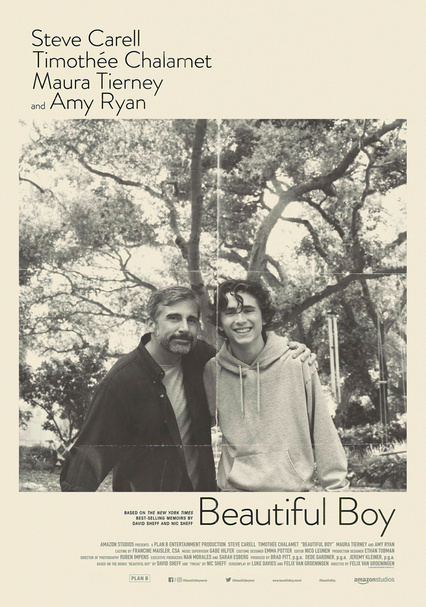

Beautiful Boy-2018

Beautiful Boy-2018

Director Felix Van Groeningen

Starring Steve Carell, Timothée Chalamet

Scott’s Review #835

Reviewed November 23, 2018

Grade: A-

Beautiful Boy (2018) tells a humanistic and vital story about the ravages of drug addiction and how the issue affects not only the person with an addiction but the entire family unit. Nestled within the powerful writing is a lovely father/son relationship and the duo’s trials and tribulations over the years.

The film feels pure and honest, with rich storytelling and many good acting performances.

Beginning in the present, David Sheff (Steve Carell) realizes that his son Nic (Timothée Chalamet) has been missing for two days. When Nic finally arrives at the Sheff household, he is strung out and sick.

David suspects Nic has been abusing drugs, and all parties agree that Nic needs professional help and a stint in a rehab facility. However, nobody realizes the depths of Nic’s addiction.

When Nic checks out early and goes on a bender, the film begins to segue back and forth between periods of Nic’s recovery and his many relapses. It also presents scenes of David and Nic’s relationship during their childhood years.

The best parts are the conversations and moments between father and son, and their enduring love. David’s second wife, Karen (Maura Tierney), and Nic’s mother, Vicki (Amy Ryan), are also in the mix.

The screenplay is based on memoirs written by David and Nic Sheff. The chronicles of their journey include triumph and heartbreak over many years as recovery and relapse become frequent parts of their lives, threatening to tear them apart or result in Nic’s ultimate death.

The road to recovery is not an easy path.

Carell and Chalamet wonderfully portray the primary characters, David and Nic. The fact that the actors do not resemble each other is quickly forgotten as their dynamic is emotional and palpable, and they share easy chemistry.

Carell is a strong actor, capable of infusing his character with strength and calm while slowly falling apart at the seams.

He loves his son and wants him to recover, but he finally accepts that he needs to let him go. This moving realization is Carell’s best scene.

Chalamet, boyish and innocent-looking, is perfectly cast. With kind blue eyes and a mop of raven hair, the actor could easily pass for twelve years old. This only enhances the tragedy of youth ravaged by drug abuse.

These qualities are mirrored by those of his girlfriend Lauren (Kaitlyn Dever). She also possesses a fresh-faced, clean look, which strengthens the message.

Ryan’s and Tierney’s performances in what could easily be throwaway “wife roles” must be mentioned.

For a while, I thought Tierney was in a marginal role until she finally had a wonderful scene in which her frustration reached a boiling point. Fuming with rage, she attempts a car chase with Nic, only to finally crumble into tears, realizing how the mess has changed her as a person.

Ryan also sinks her teeth into a teary role, almost blaming herself for Nic’s problems.

The film wisely presents statistics to hit home further, mainly the low percentage recovery rate of most crystal meth users. A single-digit success rate on this note is frightening; the user requires more and more substance to feel anything close to the first high they experienced.

A pivotal scene occurs at the film’s end as David and Karen attend a support group. As they tearfully listen to a woman’s story of the recent death of her addict sister, we are left to wonder if Nic has also died.

Kudos to a powerful cameo performance by actress Lisa Gay Hamilton.

The sunny California setting benefits the film and starkly contrasts the darkness of New York City, where Nic attends school. With multiple exterior shots of San Francisco and Los Angeles, the metropolitan scope is vast and cruel for drug users.

Easily accessible to anyone with the motivation to obtain drugs, the streets of San Francisco are portrayed as hard and drug-infused, mainly when David drives around desperately looking for Nic.

Featuring a story told before but rarely from the family perspective, Beautiful Boy (2018) does what it sets out to do and does it splendidly.

Careful not to soften the challenges and sufferings of the person with an addiction, the devastation they bring to their loved ones is also showcased. The sound and emotional father/son relationship may be the film’s best part.

It-2017

It-2017

Director Andres Muschietti

Starring Bill Skarsgard, Jaeden Lieberher

Scott’s Review #684

Reviewed September 20, 2017

Grade: A-

An enormous hype has gone into the first big-screen adaptation of the epic-length 1986 Stephen King novel, It.

An above-average mini-series based on the book was released in 1990, but the film version is much more effective.

Officially entitled It: Chapter One (2017), it divides the story in half, only focusing on the characters as children, not as adults decades later.

The film is highly effective, with a fantastic story, visuals, cinematography, and a rocking musical score. Simply put, it is one of the better Stephen King film adaptations.

As rabid Stephen King readers will understand, at over eleven hundred pages in length and spanning thirty years, a two-hour and fifteen-minute film simply wouldn’t encompass the author’s artistic vision.

To be determined is how chapter two will measure up to the glory of the first chapter.

Derry, Maine, is the sleepy little town where the action takes place. The period is 1988, but it is worth pointing out that the novel takes place in the late 1950s.

On a stormy afternoon, seven-year-old Georgie takes a paper boat, constructed by his older brother Bill Denbrough, outside to see if it sails. He meets a clown in the storm drain, who introduces himself as “Pennywise the Dancing Clown.”

Pennywise toys with Georgie turns vicious, and tears the boy’s arm off.

Months later, life goes on as Bill and his group of friends known as “The Losers Club” all separately begin to see variations of Pennywise.

The film is part of a teenage summer adventure balanced with a terrifying horror film, and director Andres Muschietti achieves this mixture seamlessly.

Lighting is one example of how the film goes about in this fashion.

Most of the outdoor sequences are bright, sunny, and airy. Conversely, the terrifying scenes, usually involving the entity of Pennywise, are shot using dark lighting, eliciting fear and a perfect mood.

The casting is terrific—I specifically found actor Jaeden Lieberher as Stuttering Bill, Jeremy Ray Taylor as Ben Hanscom, and actress Sophia Lillis as Beverly Marsh to be wonderful performers and clear standouts among the teenage characters.

Lillis, bright-eyed and with a strong-willed composure, resembles a young Scarlett Johansson and could have a bright future ahead of her. Lieberher’s earnestness and stuttering ability are believable, and his innocence is reminiscent of every kid’s.

Lastly, Taylor fills a pudgy new kid in town, Ben, with comedy and romanticism in his unrequited love for Bev.

Thriving is the portrayal and appearance of the demonic entity Pennywise. Since the fictional clown has over thirty years of interpretation and imagination, bringing him to cinematic life was challenging.

The risk would have been making him either too horrific or cartoon-like- the result is a perfect hybrid. Bill Skarsgard exudes crazy in his brilliant performance, teetering between goofy and playful with Georgie and evil personified as he taunts and terrorizes the kids in his dusty hideaway.

Interestingly, none of the adult characters are written sympathetically. From the creepy Alvin Marsh to the nerdy pharmacist, even the stern librarian and the overbearing Mrs. Kaspbrak are each laden with an unlikable quality.

The closest adult to being “nice,” Bill’s father, finally screams at his son to accept the fact that Georgie is dead.

Two small complaints include the two secondary bullies—the King Bully Henry Bowers cohorts are not given their comeuppance and simply vanish from the screen, never to be mentioned again.

Secondly, the sound exterior shots of Derry, Maine, exude a New England freshness and a small-town mystique. It’s too bad the scenes were not filmed in Maine at all but somewhere outside of Toronto, Canada—more realism would have been nice.

Due to the massive success of the adapted film, legions of fans will undoubtedly hold their breaths waiting for the resurrection of Pennywise and “It” to be unleashed on film fans everywhere- probably in 2019.

I will be one of those fans.