Tag Archives: Bruno Ganz

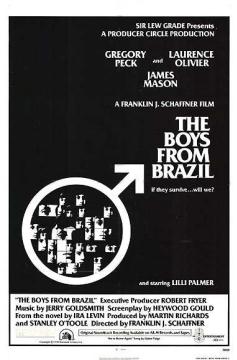
The Boys from Brazil-1978

The Boys from Brazil-1978

Director Franklin J. Schaffner

Starring Gregory Peck, Laurence Olivier, James Mason

Scott’s Review #1,391

Reviewed August 20, 2023

Grade: B+

The Boys from Brazil (1978) is a taut political thriller with a neo-Nazi focus and a weird cloning subject matter. It’s a bit of a tough follow, but quite compelling all the way through, and doesn’t lag at all.

Sometimes political thrillers get overly complicated or drag, but this one doesn’t. The story is slightly hokey and impractical, even bordering on ludicrous, but since it’s so intriguing and action-packed, these adjectives can be overlooked.

Surprisingly, I wasn’t blown away by either Laurence Olivier’s or Gregory Peck’s performance, despite being a fan of both actors. Both actors overact and create stereotypes, but especially Peck’s character is a bit too cartoonish.

It took me half the film even to recognize either man, since both are heavily made up, making them hard to tell apart. It also took until the dramatic conclusion for either character to grow on me truly.

A brilliant one-scene cameo performance by Uta Hagen, a German-American actress, as a former Nazi guard now imprisoned, nearly steals the show and should have earned an Oscar nomination.

The story surrounds Doctor Josef Mengele, played by Peck, who clones Adolf Hitler ninety-five times and raises the boys in Brazil, giving them childhoods identical to Hitler’s in various parts of the world.

His goal is to create a band of Nazi leaders that can continue where Hitler left off, forming the Fourth Reich. Their fathers will be murdered, and the boys will be mothered as Hitler was.

Ezra Lieberman (Laurence Olivier), a Nazi hunter, learns of the plan from a young journalist (Steve Guttenberg) and is determined to thwart it.

The plot is a tough pill to swallow and takes some time to absorb fully, but it’s fresh and unique. I’m not sure if, in 1978, people had had enough of Nazi and World War II films, but both subjects are always worth dissecting again.

I’m not sure why it was so tough to get used to Peck as the evil doctor, but it was. It’s probably because Peck usually plays characters with a strong moral compass, and he was playing way against type.

His character looks weird, and Peck seems to be overacting sometimes, almost like he was playing a James Bond villain. It’s not exactly a role that measures up to Atticus Finch in To Kill a Mockingbird (1962).

Olivier is better and the main protagonist of The Boys from Brazil, but I’m not sure he entirely wins me over. It’s not easy immersing oneself in the prim-and-proper British aristocratic actor playing a Jewish man who kvetches so often.

Still, by the finale, when Mengele meets Lieberman in a deadly showdown involving vicious Dobermans, a gun, and a Hitler clone, I was cheering for Olivier all the way.

Supporting characters played by Guttenberg, Anne Meara (Jerry Stiller’s wife) as Mrs. Curry, one of the Hitler clones’ mothers, and the aforementioned Hagen are excellent. I wish that each character were explored better and given more screen time.

The same can be said for Rosemary Harris in a one-scene performance. While quality, I wanted more from her character of Frau Doring, the wife of one of the murdered fathers of the Hitler clones.

Finally, James Mason has little to do as Colonel Seibert other than serve as second fiddle to Peck.

But The Boys from Brazil is the Olivier and Peck show.

The locales are a big win since they add an international vibe and relevance. Geographies such as Germany, Paraguay, Austria, and rural Pennsylvania, United States, are featured, which greatly elevate the film.

The taught nature of the film provides suspense, an ode to history, and an eerie measure of Trumpism in comparison to Nazi-ism. The Boys from Brazil (1978) isn’t prime steak, but it’s not a bad watch either.

Oscar Nominations: Best Actor-Laurence Olivier, Best Film Editing, Best Original Music Score

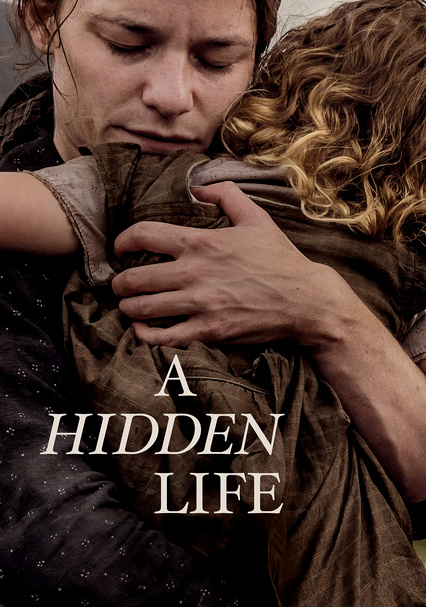
A Hidden Life-2019

A Hidden Life-2019

Director Terrence Malick

Starring August Diehl, Valerie Pachner

Scott’s Review #1,063

Reviewed September 22, 2020

Grade: A

Terrence Malick returns to the big screen with A Hidden Life (2019), a lavish, sprawling beauty with a more structured plot than many of his other films.

His recent offering, The Tree of Life (2011), though marvelous, lost some viewers with its spiritual themes and lack of pacing.

With A Hidden Life, the director presents more substantial writing and a more straightforward story. It seems we can never get enough of World War II Nazi stories and conflict in cinema, as the topic remains relevant and robust.

This one stands out to me in a powerful way because it is based on a real-life figure. Although set in 1940s Germany and Austria, it resonates with great relevance in current United States history, as Malick offers clear parallels to the Donald Trump era—frightening stuff.

He weaves the past with the present, so Trump and Hitler’s personalities are compared, and the supporters of each are portrayed as similar. Again, frightening stuff.

A peaceful peasant farmer, Franz Jägerstätter (August Diehl), lives a quiet life with his wife, Fani (Valerie Pachner), in rural Austria. Over the years, they welcomed three daughters and lived in the idyllic village, popular and well-liked by the townspeople.

Their beautiful life soon turns ugly when the German army recruits Franz for basic training.

Events escalate when he refuses to take a loyalty oath to Hitler, wanting nothing to do with a war he does not support, nor with those who align themselves with the dictator.

This leads to many conflicts for Franz and his family as they face the wrath of once kindly neighbors, and the vicious Nazis.

The artistic details are gorgeous, as frequent scenes of lush landscape erupt in a frenzy. The statuesque mountains in the background, a shot of a running stream, the characters digging, planting, and growing produce —all are exquisite, adding a grandness and spirituality.

It is advisable to watch the film on the big screen, although I did not, and I still marvel at these sequences.

Despite the camerawork, A Hidden Life is not an easy watch, but it is an important one. The film is rich with meaning, texture, and substance. You get the feeling you are watching something of worth, and that means something.

The film is not a work of fiction, and the realism is quite powerful.

To imagine a man like Franz sticking to his values and beliefs in the face of death and peril in real life is astonishing and sobering. Malick does not do glossy or downplay the ordeals that Franz endures in the hideous German prisons.

Treated barely better than Jews were in concentration camps, he was nonetheless mocked, humiliated, and eventually executed.

When Franz is repeatedly advised by a local priest and others to merely take the oath and not mean a word of it, Franz cannot do it. I was left wondering how many other German and Austrian people pretended to support Hitler to save him from death, but did not.

I couldn’t find any studies.

The comparisons to the horrific conditions in the United States present day with a wannabe dictator in the White House are sobering.

Thankfully, the United States remains the land of the brave and the free, and certainly the outspoken. But we have a voice, and Franz did not, nor do the Austrian people whom he presumably represents. He did his best and refused to succumb to the pressures, but the question can be asked if it was worth it.

Oh, how I wish A Hidden Life had a different title, though. Not exactly one that rolls off the tongue, it took me days to remember what the title was.

I kept confusing it with A Better Life (2011), a completely different type of film with a similar name. Something a bit more dynamic would have been preferred, though I get why the word “life” was included. It’s such a profound word. The correlation of titles with The Tree of Life (2011) does make sense.

Malick does it again, offering another left-of-center production that goes against the grain compared to most modern cinema. World War II films are a dime a dozen, but this film stands out for its beauty and characterization.

One needs to see Terrence Malick’s films to truly understand and appreciate what the man is going for here, and props for adding a more concise story to draw viewers.

A Hidden Life (2019) is grand and fraught with meaning, adding relevance to the current state of the United States’ political system.

Independent Spirit Award Nominations: Best Director- Terrence Malick

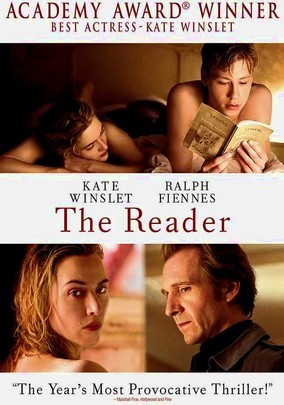
The Reader-2008

The Reader-2008

Director Stephen Daldry

Starring Kate Winslet

Scott’s Review #603

Reviewed January 11, 2017

Grade: A

The Reader (2008) is by far my favorite of all of Kate Winslet’s film roles-and that is saying something!

It is her most challenging and provocative to date and will ruffle some feathers for sure based on the subject matter of the story.

The subject of a grown woman in her thirties involved in a steamy and passionate love affair with a young boy half her age is too much for some, but I found the bravery of the film admirable.

The film is a slow build-up type of story, and it takes a little while to get going, but if you stick with it, it will be worth your time.

Winslet plays a woman (Hanna) in 1950’s Germany, living an ordinary life. She is a poor woman, and a young boy she meets changes her life for the better.

He teaches her to read and other things, and they become inseparable. When she leaves town one day, the boy is devastated.

The film then fast-forwards thirty years to the 1990s and the boy, now grown up and played by Ralph Fiennes, comes upon Hanna in a most unusual, dramatic, and devastating way.

The film is told from the perspective of Fiennes’s character, which is a wonderful decision.

The Reader (2008) is very heavy on sex and nudity (I mean lots!), so if anyone is offended by that, you might want to skip it.

The story is riveting, and the acting is top-notch.

An excellent film.

Oscar Nominations: 1 win-Best Picture, Best Director-Stephen Daldry, Best Actress-Kate Winslet (won), Best Adapted Screenplay, Best Cinematography

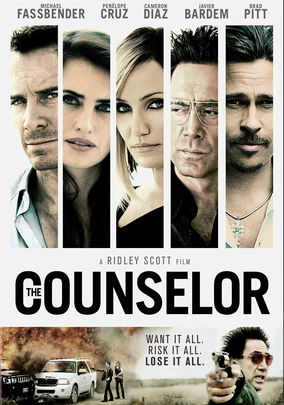
The Counselor-2013

The Counselor-2013

Director Ridley Scott

Starring Michael Fassbender, Brad Pitt

Scott’s Review #18

70276713

Reviewed June 17, 2014

Grade: A-

The Counselor (2013) is a star-studded, unique, drug trafficking thriller set in Mexico and Texas.

The film has met with some debate as viewers either loved or hated it. There appears to be a case made that those who hated it did not understand the movie.

It is not a “by the numbers” or “predictable” popcorn film. It’s much better than that. It’s a thinking man’s movie.

I saw shades of Quentin Tarantino’s influence and parts were reminiscent of the wonderful TV series Breaking Bad (2008-2013).

There are intersecting stories and heavy acting talent (Fassbender and Diaz are the standouts). This is Cameron Diaz’s best role and wish she would go edgy more often.

There are three brilliantly well-done scenes (motorcycle, Brad Pitt on the street, and landfill scene) that are as disturbing as they are artistic.

There are some plot holes, that can be overlooked.

It’s not simply an action film, but a character-driven one.

The viewing of The Counselor (2013) is a unique experience.