Tag Archives: Anne Meara

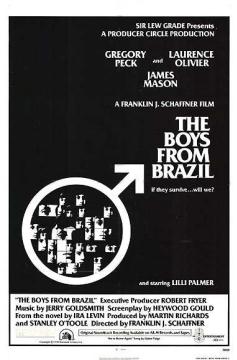
The Boys from Brazil-1978

The Boys from Brazil-1978

Director Franklin J. Schaffner

Starring Gregory Peck, Laurence Olivier, James Mason

Scott’s Review #1,391
Reviewed August 20, 2023

Grade: B+

The Boys from Brazil (1978) is a taut political thriller with a neo-Nazi focus and a weird cloning subject matter. It’s a bit of a tough follow, but quite compelling all the way through, and doesn’t lag at all.

Sometimes political thrillers get overly complicated or drag, but this one doesn’t. The story is slightly hokey and impractical, even bordering on ludicrous, but since it’s so intriguing and action-packed, these adjectives can be overlooked.

Surprisingly, I wasn’t blown away by either Laurence Olivier’s or Gregory Peck’s performance, despite being a fan of both actors. Both actors overact and create stereotypes, but especially Peck’s character is a bit too cartoonish.

It took me half the film even to recognize either man, since both are heavily made up, making them hard to tell apart. It also took until the dramatic conclusion for either character to grow on me truly.

A brilliant one-scene cameo performance by Uta Hagen, a German-American actress, as a former Nazi guard now imprisoned, nearly steals the show and should have earned an Oscar nomination.

The story surrounds Doctor Josef Mengele, played by Peck, who clones Adolf Hitler ninety-five times and raises the boys in Brazil, giving them childhoods identical to Hitler’s in various parts of the world.

His goal is to create a band of Nazi leaders that can continue where Hitler left off, forming the Fourth Reich. Their fathers will be murdered, and the boys will be mothered as Hitler was.

Ezra Lieberman (Laurence Olivier), a Nazi hunter, learns of the plan from a young journalist (Steve Guttenberg) and is determined to thwart it.

The plot is a tough pill to swallow and takes some time to absorb fully, but it’s fresh and unique. I’m not sure if, in 1978, people had had enough of Nazi and World War II films, but both subjects are always worth dissecting again.

I’m not sure why it was so tough to get used to Peck as the evil doctor, but it was. It’s probably because Peck usually plays characters with a strong moral compass, and he was playing way against type.

His character looks weird, and Peck seems to be overacting sometimes, almost like he was playing a James Bond villain. It’s not exactly a role that measures up to Atticus Finch in To Kill a Mockingbird (1962).

Olivier is better and the main protagonist of The Boys from Brazil, but I’m not sure he entirely wins me over. It’s not easy immersing oneself in the prim-and-proper British aristocratic actor playing a Jewish man who kvetches so often.

Still, by the finale, when Mengele meets Lieberman in a deadly showdown involving vicious Dobermans, a gun, and a Hitler clone, I was cheering for Olivier all the way.

Supporting characters played by Guttenberg, Anne Meara (Jerry Stiller’s wife) as Mrs. Curry, one of the Hitler clones’ mothers, and the aforementioned Hagen are excellent. I wish that each character were explored better and given more screen time.

The same can be said for Rosemary Harris in a one-scene performance. While quality, I wanted more from her character of Frau Doring, the wife of one of the murdered fathers of the Hitler clones.

Finally, James Mason has little to do as Colonel Seibert other than serve as second fiddle to Peck.

But The Boys from Brazil is the Olivier and Peck show.

The locales are a big win since they add an international vibe and relevance. Geographies such as Germany, Paraguay, Austria, and rural Pennsylvania, United States, are featured, which greatly elevate the film.

The taught nature of the film provides suspense, an ode to history, and an eerie measure of Trumpism in comparison to Nazi-ism. The Boys from Brazil (1978) isn’t prime steak, but it’s not a bad watch either.

Oscar Nominations: Best Actor-Laurence Olivier, Best Film Editing, Best Original Music Score
Fame-1980

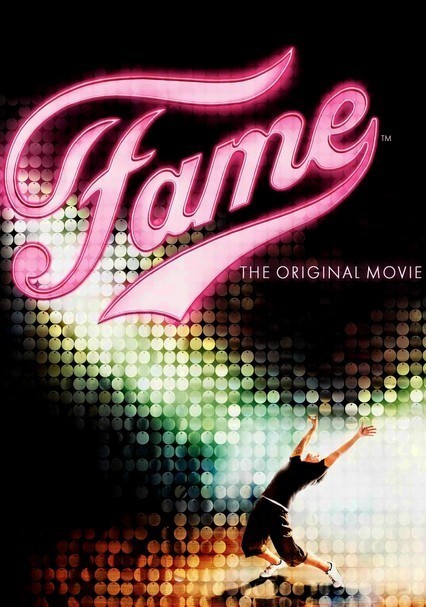
Fame-1980

Director Alan Parker

Starring Irene Cara, Paul McCrane, Maureen Teefy

Scott’s Review #1,143

Reviewed May 18, 2021

Grade: A-

Fame (1980) is a teen high school musical drama centering around the trials and tribulations of gifted New York City kids. Anyone with musical, theatrical, or dance talent can relate to the film.

The rest of us can merely live vicariously through these kids and the potential careers that lie ahead of them wishing we had half of their talent and drive.

This is not your standard musical from the 1950s or 1960s and the pace is quite frenetic. Fasten your seatbelts because there is a lot packed in.

The film oozes with an upbeat musical score and the flavor of New York City, quite gritty and dangerous circa 1980. The now-legendary musical numbers where the cast dances together with faculty and strangers alike atop Manhattan taxi cabs are silly beyond belief but the title song by star Irene Cara is a danceable and hummable classic.

These scenes offset the muscular dramatic scenes with lightness and comedy, but in another way, they diminish the credibility of the serious moments.

Events get off to a chaotic start as we witness a mass of teenagers frenetically scrambling to remember audition lyrics and dance numbers as they vie for entry into the High School of Performing Arts, with free admission for only the cream of the crop.

The film chronicles the lucky lives from their auditions to their freshman, sophomore, junior, and senior years.

The main group features Montgomery MacNeil (Paul McCrane), a closeted gay male; Doris Finsecker (Maureen Teefy), a shy Jewish girl; Ralph Garci (Barry Miller), and Bruno Martelli (Lee Curreri) an aspiring keyboardist whose electronic equipment horrifies the conservative music teachers.

They align with Lisa Monroe (Laura Dean), Coco Hernandez (Irene Cara), and Leroy Johnson (Gene Anthony Ray) a gifted dancer who cannot read.

All have interesting backstories or problems to work through during their four years in school and this is the main appeal of the film. The dance numbers, of course, are fabulous too.

I immediately became enamored with sensitive Doris, whose mother’s (Tresa Hughes) emotions elicit viewer emotion simply with her own emotions. Her passion for her daughter and her talent is infectious.

Alan Parker, who directs Fame, offers extremely heavy topics that the students must face. It’s not all fun and dance. The youngsters grapple with issues such as homosexuality, abortion, interracial dating, class systems, attempted suicide, and illiteracy.

Their pain is readily offered to audiences who become entangled in their worlds.

A negative is that as much as the issues are brought to the forefront, the sheer number of them results in few resolutions.

On top of their unique struggles, the students must deal with the mundane pressures of adolescence like homework, heartbreak, and rejection. Their talent doesn’t make them any more special than anyone else in the growing-up department.

My favorite moments in Fame are the quiet ones. When Doris and Montgomery share a chat on the stairs that skirts around the talk of his absent mother I thought what a delightful couple they would make. Montgomery’s repressed sexuality slowly surfaces while Doris develops a crush on an older popular boy.

As if the heavy topics eventually subside, they don’t. As the student’s age and start to plan careers, Coco is lured by a man claiming to be a director only to realize he is a porn film “director”. He coaxes her into taking off her shirt and photographs her sobbing.

The scene is heartbreaking in its power.

The atmosphere of Fame also works well. There is a strong and suffocating feeling of heat and humidity. Anyone who has spent time in New York City during the summer months knows the stench and thickness of the stuffy weather.

I got the impression the school had no air conditioning as the running perspiration of the music teacher is evidence of.

A coming-of-age film that delivers hard-hitting messages only offset by the climactic dance-celebration numbers, Fame (1980) is a winner and gives teen angst its due.

This film ages well and stands the test of time.

Oscar Nominations: 2 wins-Best Original Screenplay, Best Original Score (won), Best Original Song-“Fame” (won), Out Here on My Own”, Best Film Editing, Best Sound