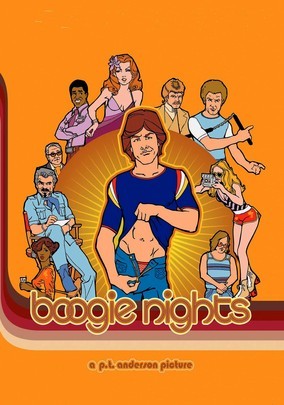
Boogie Nights-1997
Director Paul Thomas Anderson
Starring Mark Wahlberg, Burt Reynolds
Top 250 Films #8
Scott’s Review #312
Reviewed December 31, 2015
Grade: A
Boogie Nights (1997) is a fantastic film about the pornography industry (The Golden Age of Porn) of the 1970s and 1980s, and does an excellent job of portraying the characters as human beings with feelings and emotions, rather than as nymphomaniacs or perverts.
They bond with one another as a family- a group of misfits striving to survive. This, and many other reasons, are why Boogie Nights is one of my all-time favorite films.
Written, produced, and directed by Paul Thomas Anderson (Magnolia, 1999; There Will Be Blood, 2007; Inherent Vice, 2014), he is a master at exploring the underbelly of society and the flawed, desperate characters who inhabit it.
Boogie Nights is no different.
The dysfunctional family is the film’s central theme. Most of his characters are unhappy, but they are survivors who desperately seek a piece of happiness.
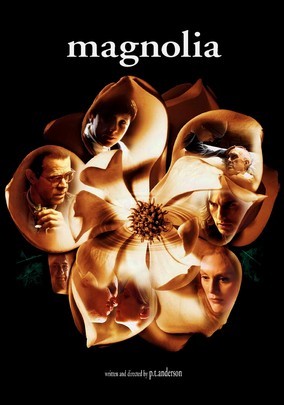
Many of the Boogie Nights cast also appear in Magnolia.
Mark Wahlberg (Eddie/Dirk Diggler), Burt Reynolds (Jack Horner), Julianne Moore (Maggie), Don Cheadle (Buck), William H. Macy (Little Bill), John C. Reilly (Reed Rothchild), Heather Graham (Rollergirl), Philip Seymour Hoffman (Scotty), Malora Walters (Jessie), and Alfred Molina (Rahad Jackson), round out the large cast.
The film is set in Los Angeles and spans the period from 1977 to 1984. Although only seven years pass, much happens to most of the characters, and we experience their trials and tribulations.
The unique thing about Boogie Nights is that I care about every character, thanks to excellent writing and fantastic acting. They succeeded in earning my empathy. Boogie Nights is a highly character-driven film, which is an enormous part of its brilliance.
The cast is an ensemble, but the main character is Eddie Adams, a high school dropout whom we meet working as a dishwasher at a nightclub. He has an abusive mother who kicks him out of the house, leading him to audition for and move in with Jack Horner.
Jack is a patriarchal figure who shares a house with Maggie, the matriarch of the household, and Roller Girl, a fellow high school dropout who is always seen wearing roller skates. Eddie’s talent is his large “manhood”.
We watch Eddie, at first shy and polite, rise to superstardom in the porn industry, becoming rich and living a lavish, drug-fueled lifestyle, where his ego gets the best of him. He, like many of the characters, hit rough times as the early 1980s shift to videotape was the death of many 1970s porn actors’ careers.
The musical soundtrack plays a crucial role in the success of Boogie Nights. Many scenes contain songs that were hits of the time or prior, including “Sister Christian”, “Jessie’s Girl”, “God Only Knows”, “Got to Give it Up”, “Ain’t No Stoppin’ Us Now”, and countless others- so much so that the soundtrack is almost a character of the film.
We look forward to hearing what song might be featured next.
Later in the film, circa 1983, as things begin to spiral out of control for many of the characters, the musical score turns ominous, with low bass and a nighttime setting, and the lighting grows darker. Several stories begin to intersect on a late L.A. night on the streets.
Jack, filming a scene in a limousine starring Rollergirl and a young college jock they pick up off the streets, Dirk, forced to prostitute himself for $10 to a young man in a pickup truck, and Buck, who innocently stops to buy doughnuts for his very pregnant wife Jessie.
Each of these stories ends in brutal violence, and the tone is crucial to the scenes’ success. This lengthy scene bears a resemblance to a Quentin Tarantino scene in its macabre tone.
Particular favorite scenes include the heartbreaking scene when Maggie loses custody of her son, the New Year’s Eve party at Jack’s house, and the ill-fated drug sale at Rahad Jackson’s.
Each is heartbreaking, powerful, fraught with tension, or otherwise empathetic toward the characters, making them each quite powerful in different ways.
Induced in the drug sale scene is some black comedy- Rahad’s presumed Chinese houseboy has a fetish for firecrackers, which startle Dirk, Reed, and Todd, as the fear of possible gunshots fills the air. Maggie’s sob scene elicits an emotional response as we cry with her, and the New Year’s Eve turn of events involving Scotty and Little Bill is tragic.
Boogie Nights (1997) is one of my favorite films because it contains brilliant writing, characters who are fleshed out, damaged, and human, a killer soundtrack, and a dark, mysterious industry (porn) that is both misunderstood and categorized.
Thanks to director Anderson, we see the people in this lifestyle as real individuals with their own issues, yet also with full hearts and kindness.
Oscar Nominations: Best Supporting Actor-Burt Reynolds, Best Supporting Actress- Julianne Moore, Best Screenplay Written Directly for the Screen