Category Archives: Simon Oakland

Psycho-1960

Psycho-1960

Director Alfred Hitchcock

Starring Janet Leigh, Anthony Perkins

Top 250 Films #5

Top 40 Horror Films #1

Scott’s Review #165
879522

Reviewed September 6, 2015

Grade: A

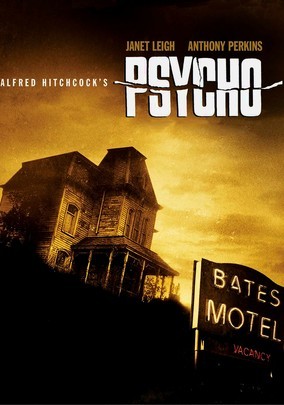
Psycho (1960) is the film to end all films, and not just within the horror genre. At the time of its release, it transcended the art of cinema to a new level and has influenced generations of films since, still holding up incredibly well today.

It is undoubtedly one of the greatest Alfred Hitchcock films and one of the greatest films ever made.

Hitchcock took considerable risks and dove from the thriller to the horror genre with Psycho.

The story revolves around a young woman named Marion Crane, superbly portrayed by Janet Leigh. Marion lives in Phoenix, Arizona, and sees her boyfriend (the dashing John Gavin) for frequent afternoon rendezvous at cheap motels when he is in town because they are both struggling financially.

She is presented with an opportunity, via her job, to steal $40,000 and flee the state to start a new life with her beau. She seizes the opportunity.

On the run, she stops at a run-down Bates motel where she meets owner Norman Bates, hauntingly played by Anthony Perkins.

Perkins and Leigh have fantastic chemistry together, and the audience picks up on it—is it romantic? Is there a mysteriousness to it? Something is odd about Norman. They bond over a quiet meal of sandwiches at the motel while discussing life and his ailing mother.

The famous shower scene and the shocking twist that follows are now almost taken for granted, as most people are already familiar with them. However, I can only imagine the shock viewers felt when they first saw these two delights.

To this day, both are still suspenseful.

Fortunately, when I saw this film for the first time, I didn’t know the ending, and I am glad I didn’t, because it took my breath away.

Killing off the leading actor at the start of the film, halfway through, was a novel idea and mind-blowing at the time of its release (1960).

This act left the audience’s mouths agape in disbelief, prompting them to ask, “What now?” “How can this be followed?” This act later influenced the original Scream (1996) film and surprised audiences again.

According to Hitchcock, no one could enter the film after it had started, and viewers were persuaded not to reveal the ending – oh, how I wish that occurred these days.

An aspect of the success and longevity of Psycho is the chemistry between Perkins and Leigh, who got along famously while shooting Psycho, and more importantly, the likability of Norman Bates. There is a rooting value for him, even though he is the villain.

When Marion’s car is only half-submerged in a lake containing her dead body, we root for it to sink entirely because of Norman. The concerned look on Norman’s face has a sense that affects the audio at this point in the story. Norman is troubled and wo, undead, and the audience does not have history.

Let’s not forget Janet Leigh. The audience sympathizes with her predicament. She is hopelessly in love with her man, steals money, is conflicted, and, at her core, is a friendly, decent, kind woman.

Halfway through the film, Marion’s sister, Lila, played by Vera Miles, is introduced as a detective, and the suspense and mystery intensify as they search for Marion and investigate the Bates Hotel and Norman Bates himself.

Miles then takes center stage as the lead in the film, which is intriguing.

The film then returns to horror at the terrific and terrifying conclusion, which will shock first-time viewers.

The musical score (especially the shrill strings) is incredibly effective and influenced other horror films to come (Friday the 13th immediately comes to mind).

Psycho is a film that can be enjoyed and studied over again.

Oscar Nominations: Best Director, Alfred Hitchcock, Best Supporting Actress-Janet Leigh, Best Art Direction, Black-and-White, Best Cinematography, Black-and-White
West Side Story-1961

West Side Story-1961

Director Robert Wise, Jerome Robbins

Starring Richard Beymer, Natalie Wood

Top 250 Films #12

Scott’s Review #188

1111583

Reviewed November 3, 2014

Grade: A

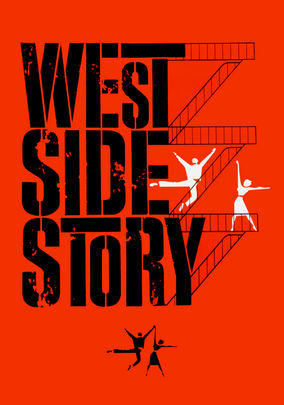
West Side Story is a musical from 1961 (based on the Broadway stage production from the 1950s), during a period in Hollywood where every other film released seemed to be a version of an enchanting musical.

This particular film version is much darker than most of its contemporaries within this genre. The dreary ending, fantastic and compelling in its dramatic elements, does not detract from the rest of the musical and its hum-along tunes.

West Side Story was crowned the 1961 Academy Award winner for Best Picture.

West Side Story is undoubtedly based on the Shakespearean tragedy of Romeo and Juliet- the Capulets and Montagues becoming rival teen street gangs of the Puerto Rican “Sharks” and the Polish”Jets,” with the lovesick teens Tony and Maria serving as Romeo and Juliet.

And yes, spoiler alert, the story does not end happily ever after.

Loads of suspension of disbelief must be taken- How many gangs sing and dance to each other, snapping their fingers in unison to perfectly choreographed beats?

Additionally, some gang characters do not look authentic, with clearly dyed hair, bronzed skin, or some other phony-looking get-up.

The film is a cherished friend, and these can be overlooked for my enjoyment of the film.

The story, set in 1950s New York City, pits the Sharks (a gang led by Bernardo) against the Jets (led by Riff), who have been bitter rivals for the turf of the rough streets of Manhattan’s west side for many years.

The gang’s girlfriends and one female, “Anybodys,” are in tow. She longs for the day when she can join the Jets and fight alongside the boys.

The other supporting characters primarily include various policemen (Lieutenant Schrank and Officer Krupke) who attempt to keep the gangs apart. They also include a local shopkeeper, Doc, who is the story’s moral compass. Doc encourages the gangs to get along and questions the logic of gang fights.

After a scuffle, the gangs decide to fight after an upcoming dance, and the Jets elect Tony to face Bernardo.

The story is surprisingly dark, especially in the inevitable final act. Amid all this darkness, however, lies a musical with cheery, catchy numbers (I Feel Pretty, Jet Song) and love-struck tunes (Maria and Somewhere).

A musical about diversity and rivalry, the story centers on lovesick Maria and Tony, a la Romeo and Juliet, and their struggle to be together despite adversity from their friends and family due to their significantly different backgrounds.

Throughout the film, we get to know other characters well- Anita, the girlfriend of Bernardo, for example, played by Rita Moreno, is the stubborn yet likable best friend of Maria, who thinks that Maria and Tony are wrong for each other and that things just are not supposed to be that way when you mix cultural diversity.

The film moves along quickly, featuring standoffs, fights, and plots to eliminate the other gang, a failed attempt at a dance to bring the two groups together, and Tony and Maria sneaking off to meet.

The lack of chemistry between Natalie Wood (Maria) and Richard Beymer (Tony) is noticeable, primarily upon multiple viewings. Still, decades later, it is also challenging to imagine anyone else in either role—so ingrained is the duo in film culture.

The cultural diversity of much of the cast (Rita Moreno was the only Puerto Rican) is fascinating, as is the fact that most of the singing was dubbed by other singers.

Yet, the film still manages to work very well.

Oscar Nominations: 10 wins-Best Motion Picture (won), Best Director-Robert Wise and Jerome Robbins (won), Best Supporting Actor-George Chakiris (won), Best Supporting Actress-Rita Moreno (won), Best Screenplay Based on Material from Another Medium, Best Scoring of a Musical Picture (won), Best Sound (won), Best Art Direction, Color (won), Best Cinematography, Color (won), Best Costume Design, Color (won), Best Film Editing (won)

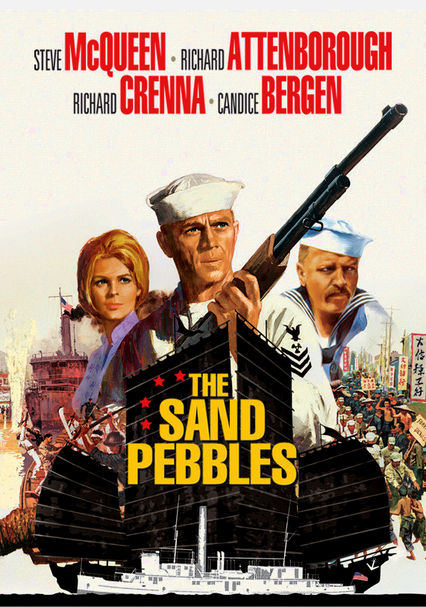
The Sand Pebbles-1966

The Sand Pebbles-1966

Director Robert Wise

Starring Steve McQueen, Candice Bergen, Richard Attenborough

Scott’s Review #1,257

Reviewed May 18, 2022

Grade: A-

The 1950s and 1960s can collectively be defined as the two decades representing the grandiose film epic, instantly recognizable cinematic sprawling, lengthy efforts, frequently encompassing a time.

The Sand Pebbles (1966) safely falls into this category, mainly because it’s a war film and one minute shy of a three-hour extravaganza.

The film was a critical and commercial success at its release and received several Academy Award nominations (see more below). Still, despite being a fantastic watch, it is not remembered as well as one might expect.

Something makes the film fly under the radar, and I’m unsure why. It might be that an anti-war message film was not as typical as it would become. In 1966, a United States movement had only begun to question the government and war in general.

It wasn’t fantastic or acceptable yet.

Robert Anderson adapted the screenplay from Richard McKenna’s 1962 novel, which is very similar.

Robert Wise, famous for directing the memorable The Sound of Music just one year prior in 1965 and the legendary West Side Story in 1961, is at the helm, resulting in superior direction, especially in the exterior and lush, oceanic sequences.

Star Steve McQueen was at the height of popularity when this film was made, which undoubtedly helped get butts in the seats to drool over the blue-eyed actor in his Navy attire.

The Sand Pebbles has a heavier touch and promotes an anti-war viewpoint from its main character. Therefore, it has a solid message that goes with the expected aspects of a war film.

It’s similar to The Bridge on the River Kwai (1957), made nearly a decade earlier.

The Asian locales and the parallels with the controversial Vietnam conflict of the time will not be lost on the viewer.

We go back to 1926 when the USS San Pablo was patrolling the Yangtze River during the clashes between Chiang Kai-shek’s communists and Chinese warlords.

Eight-year veteran machinist Jake Holman (McQueen), new to the self-named “sand pebbles” crew, immediately draws deep suspicion due to his independent streak.

Ordered to protect Americans, including schoolteacher Shirley Eckhart (Candice Bergen), Jake and the gunboat crew are unwittingly drawn into a bitter nationalistic feud that holds grim consequences.

Besides his unforgettable turn in The Getaway in 1972, the role is McQueen’s finest, and I’m not the biggest fan of his, nor do I feel he is the most outstanding actor.

He has tremendous material to work with in The Sand Pebbles and hits all cylinders throughout. The character is rootable and relatable to the audience.

The film also presents a fascinating look at Navy life with the camaraderie and depth of the supporting characters. There is comedy and drama, and the additions of Richard Attenborough and Richard Crenna are stellar.

Naturally, Bergen is McQueen’s romantic love interest, as Shirley and Jake have fledging feelings for each other.

Though the film ends abruptly, there is enough pain, death, and confusion to leave the viewer thinking afterward, and I always champion that aspect of the film.

The Sand Pebbles (1966) is an underrated production that simmers beneath some other classics from the same decade but is a terrific watch for many reasons. Despite being extremely timely, it has an old-world feel, representing a foray into the dangerous early 1970s cinema history that is yet to come.

Oscar Nominations: Best Picture, Best Actor-Steve McQueen, Best Supporting Actor-Mako, Best Art Direction-Color, Best Cinematography-Color, Best Film Editing, Best Original Music Score, Best Sound

Bullitt-1968

Bullitt-1968

Director Peter Yates

Starring Steve McQueen, Robert Vaughn, Jacqueline Bisset

Scott’s Review #660

Reviewed July 7, 2017

Grade: B+

Bullitt (1968) is one of the ultimate “guy movies”, hardly a stretch considering it stars the “regular guy” hero of the time, Steve McQueen.

With his macho, tough-guy persona and his cool, confident swagger, he was a marquee hero during the late 1960s and into the 1970s.

While the film is rife with machismo stereotypes and is not precisely a women ‘s-lib film, it is also a good old-fashioned action thriller with plenty of chase and fight scenes to make most guys (and some girls) happy.

The story is not particularly thought-provoking, but the film works as escapist fare and is an example of good late-1960s cinema.

Set in San Francisco, Lieutenant Frank Bullitt (Steve McQueen) is assigned to watch a Chicago gangster, Johnny Ross, over a long weekend, before the criminal is set to testify against his brother on Monday morning.

Robert Vaughn plays ambitious politician, Walter Chalmers, who is determined to see the case go off without a hitch and see convictions in the organized crime syndicate.

Predictably, the weekend does not go as planned, and hitmen attack Ross. This, in turn,  sets off a cat-and-mouse game of deception and intrigue. As expected, the action is virtually non-stop with many action sequences lighting up the screen.

The plot of Bullitt does not matter, and one does not need to completely understand what is going on to enjoy the film for what it is. The intent of a movie like Bullitt is not good storytelling, but rather good action.

This is not meant as a put-down, but rather good, honest critiquing. One can sit back, relax, and enjoy the testosterone-laden affair.

Bullitt contains some riveting scenes that raise it above an average, middling action flick. The muscle car chase involving a then-state-of-the-art, flashy Ford Mustang and a Dodge Charger is fantastic and one of the film’s high points.

The quick, edgy camera angles as the cars zip down the windy, narrow San Francisco roads build compelling tension.

Will one of the cars careen off the side of the road or blow up? Since one of the cars holds Frank Bullitt and the other car is the bad guy, it is not tough to guess how the sequence will end.

But it’s good fun all the same, and well filmed.

The other spectacular sequence is the finale: as Frank and company overtake a busy San Francisco airport in pursuit of a baddie about to board a transcontinental flight, the chase leads them throughout the airport, onto a taxiing plane, and finally onto the runway as a plane is about to take off.

It is action at its finest and a treat for the viewer, bringing us back to airport days, pre-9/11, when airports were just different—the luxurious flight crew, the innocence, and the glamour- all a distant memory.

The scene is such that it shows all of the airport elements- the people, the employees, the airport, and the planes, giving it a slice-of-life feel, circa late 1960s airport days.

Appealing is the period in which the film is made. 1968 was an excellent year for cinema; Bullitt capitalized on the newly liberal use of blood in films, making it an influential action film.

Dozens of imitators (some admittedly with superior writing) followed, including classics Dirty Harry and The French Connection (both 1971). These contain the exact basic blueprint that Bullitt has.

A negative of Bullitt is the trite way women are portrayed. Female characters are written as dutiful nurses, gasping in fear and helplessly running away when an assailant runs rampant in the hospital, praying for a man to save the day.

Or, they are written, in the case of Bullitt’s girlfriend, as a gorgeous yet insignificant character, given a laughable scene in which she questions whether or not she knows Frank after witnessing the violence in his job- hello?

He is in the San Francisco Police Department after all.

Bullitt is a meat-and-potatoes kind of filmmaking. An early entry into what would become the raw 1970s and the slick formulaic 1980s action genre, the film deserves credit for being at the front of the pack in style and influence.

The story and character development are secondary to other aspects of the film, and Bullitt (1968) is just OK as escapism fare.

Oscar Nominations: 1 win-Best Sound, Best Film Editing (won)