Category Archives: Miriam Karlin

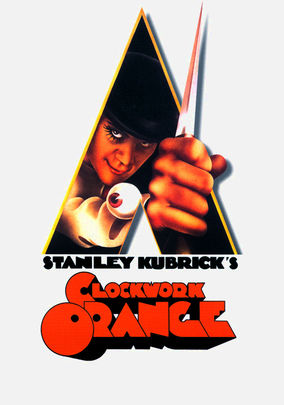
A Clockwork Orange-1971

A Clockwork Orange-1971

Director Stanley Kubrick

Starring Malcolm McDowell, Patrick Magee

Top 250 Films #11

Top 10 Most Disturbing Films #7

Scott’s Review #295
383466

Reviewed December 11, 2015

Grade: A

A Clockwork Orange (1971) is a groundbreaking Stanley Kubrick film, and my personal favorite in his collection, with his movies appearing on my Top 100 Favorite Films list.

Adapted from the 1962 Anthony Burgess novel, once thought unfilmable, it becomes a psychedelic, creative, and fascinating experience from start to finish.

Bizarre and thought-provoking, Kubrick tells the story of a London sociopath living in futuristic London, and the strange behavioral modifications performed on him after he is apprehended by the police, in an attempt to “reform” him and transition him into a valuable member of society.

The film explores profound social and psychological themes, posing thought-provoking questions about them.

Interspersed with classical music and featuring excellent, colorful sets, A Clockwork Orange is a masterpiece in bizarre cinematic artistry.

Alex DeLarge loves classical music (specifically Beethoven), violence, and hanging out with friends. He constantly skips school, beats people up, and parties with his friends. His pet snake is his best friend, and his parents seem afraid of him.

Finally arrested after murdering an odd lady with dozens of cats, Alex is sent away to prison, where he volunteers for an experimental “Ludovico” technique, which Alex assumes is a “get out of jail free” card.

What follows is a freakish, uncomfortable experience for Alex.

The film contains startling and disturbing scenes throughout- when Alex and his team of “droogs” become inebriated from a concoction of milk laced with drugs and embark on an evening of self-proclaimed ultra-violence, they drive to the country where they break into wealthy author F. Alexander’s house and beat him, crippling him for life.

They rape his wife while forcing him to watch, all the while Alex happily sings “Singin’ in the Rain,” timing the beats of the song to acts of violence.

The brutality and creativity of this scene are mesmerizing and certainly unforgettable.

We, the audience, might despise a character like Alex; however, we feel sympathy for him as his “reformation” begins. A disturbing scene, which is forever embedded in my mind, involves the attachment of a contraption forcing Alex’s eyelids wide open.

At the same time, he watches violent scenes and is administered a drug to make him sick, thereby associating the violence with illness.

He becomes psychologically screwed up.

Alex (thanks to an excellent portrayal by Malcolm McDowell) is charismatic and humorous and, in some warped way, quite likable to the audience, despite his devious ways.

A Clockwork Orange continues to disturb me after multiple viewings – who can forget the sinister grin that Alex wears and the creepy eyelash with mascara that he sports?

The film conveys an interesting message about human nature as Alex shifts from predator to prey. We ask: “Are human beings naturally prone to violence?”

The direction of the film is breathtaking – the weird colors, the (as traditional with Stanley Kubrick) long-shot camera angles, and the intense musical crescendos.

The genre of classical music is a fantastic and ominous choice, almost adding a level of sophistication to Alex and the violence.

The weird supporting characters (Alex’s parents, the probation officer, and his parents’ roommate) and the suddenly fast-forwarded sex scenes were unheard of for their time.

With immensely creative, unconventional filmmaking, a moral message, and thought-provoking questions about humanity, A Clockwork Orange (1971) is a groundbreaking, fantastic, trippy experience.

A masterpiece from top to bottom.

Oscar Nominations: Best Picture, Best Director-Stanley Kubrick, Best Screenplay Based on Material from Another Medium, Best Film Editing
Mahler-1974

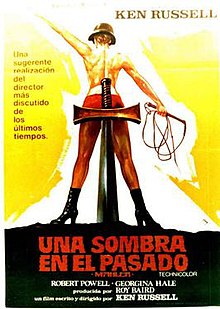
Mahler-1974

Director Ken Russell

Starring Robert Powell, Georgina Hale

Scott’s Review #1,404

Reviewed October 15, 2023

Grade: A

Anyone brave and open-minded enough to expose themselves to a Ken Russell film is in for an experience in great cinema. The British director frequently fuses music, odd visual sequences, and vivid colors into his art.

There is a specific mood one must be in to flourish in the moment and the dream-like perplexities of a film of this ilk, but the result will be an appreciation for creativity in filmmaking.

My personal favorite Russell film, and I’m still getting my feet wet in all things Russell, is Women in Love (1970), followed by The Devils (1971), a journey into madness.

Hardly straight-laced, Mahler (1974) conceptualizes the music of the famous Austro-Bohemian composer and delves into the life and times of the man.

Gustav Mahler (Robert Powell) is returning to his home in Vienna, Austria, following a stint conducting at the Metropolitan Opera in New York. Traveling via train with his wife, Alma (Georgina Hale), he reflects on pivotal moments in his life.

Mahler dwells on memories of his overbearing father, of his once powerful but now failing relationship with Alma, and of the anti-Semitism that forced him to convert to Catholicism.

A garish sequence also reveals the death of his child.

A side story on the train features Alma’s lover, Max (Richard Morant), also on the train, urging her to leave Mahler and get off with him a couple of stops before Vienna.

Russell shifts time quite often, so that at first it’s tough to figure out what is happening and, more specifically, if events are in the past or the future.

But once acclimated, it’s easy to reflect on the stages of life and the various players. Better still is to ruminate on the happenings after the credits roll.

The best films require some pondering after they end, rather than being forgotten fifteen minutes later, and Mahler is one of those films.

Knowing Russell (has anyone seen The Devils?), one sometimes finds religion incorporated into his work. Mahler, a Jew, is forced to relegate his religion to get his work showcased. So, there is religious conflict and debate.

Mahler’s conversion to Catholicism is expressed by a wacky fantasy sequence in which he undergoes a baptism of fire and blood on a mountaintop, presided over by Cosima Wagner (the second wife of the composer, Wagner).

The character wears horrid black lipstick and other odd attire, such as a Prussian helmet and a bathing suit with a cross on the front and a swastika on the back.

The sequence is one of the best and technically brilliant, with fire, rocks, and mountains on display. It’s also choreographed amazingly well and features unique musical compositions.

The style of Mahler (the film) is visual and artistic, but it also offers classical music fans a chance to appreciate the compositions. Also, for novice fans eager to be introduced to quality music, the film is equally important.

I love my rock n roll like any other red-blooded American, but the chance to soak in classical pieces from Mahler and Wagner is a pure treat in cultural goodness.

British actor Robert Powell is cast exceptionally well, bearing a stark resemblance to the real Mahler. Oftentimes morose and sullen, he is a tortured artist. But the expressions in his work, such as the song cycle Songs on the Death of Children, reveal his complexity.

Powell is successful at exposing the audience to the emotional nuances that often pair with great artists.

Georgina Hale as Alma is just as good. Staunchly supporting her husband but yearning for her slice of the happiness pie, she is also conflicted.

Mahler (1974) is a film about filmmaking and art appreciation. Thanks to Russell’s vision, he challenges the conventional viewer with a unique journey through the weird and wild, but more importantly, the chance to revel in something brilliant.