Category Archives: William Sylvester

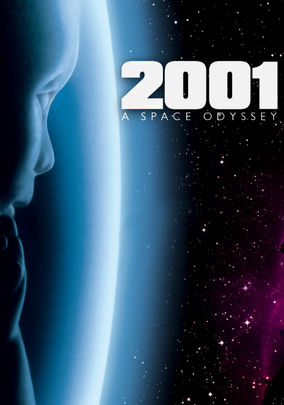
2001: A Space Odyssey-1968

2001: A Space Odyssey-1968

Director Stanley Kubrick

Starring Keir Dullea, Gary Lockwood

Top 250 Films #10

Scott’s Review #314
207856

Reviewed December 31, 2015

Grade: A

In my opinion, 2001: A Space Odyssey (1968) is a masterpiece, pure and simple, and must be seen repeatedly to allow the message and the experience to sink in.

It is one of those films comparable to a fine wine – it just gets better and better with age, and this is palpable in deep thought, allowing the viewer to experience the rich taste of film art.

The delicious quality is meant to be savored and enjoyed- the slow pace and odd elements only enrich the film. Needless to say, it is one of my favorite Stanley Kubrick films.

Simply an epic journey through space.

Made in 1968, and not 2001, the film challenges and breaks down barriers in film, as Kubrick makes a film that he wants to make, and the results are genius.

The film contains no dialogue during the first twenty or the last twenty minutes.

The film begins in the African desert millions of years ago as the evolution of man is apparent- two tribes of ape-men dispute over a watering hole. A black monolith appears, and one of the tribes is guided to use bones as weapons.

Millions of years later, we meet a team of scientists, led by Dr. David Bowman and Dr. Frank Poole, as they embark on a mission aboard the United States spacecraft, Discovery One, on a journey to Jupiter.

The ship is mainly controlled by an intelligent, talking computer named HAL 9000, nicknamed “HAL”. Hal boasts that he is “foolproof and incapable of error”. As events unfold, the film dives into a study of humans versus technology in a cerebral game of mental chess.

The film is very tough to review analytically, as it is so intelligent and visually stimulating – it must be experienced. It challenges the viewer to think and absorb the events occurring.

Visually, it is breathtaking and still holds up shockingly well from this perspective. The use of classical music throughout- especially in dramatic scenes is effective.

The stunning scene where David and Frank converse about their suspicions regarding “HAL”, as the intelligent computer system looks on, is incredibly compelling. The scene is enhanced by the simple presence of an orange light, which seemingly displays a myriad of emotions (surprise, rage) in the viewer’s mind.

2001: A Space Odyssey (1968) is an enduring masterpiece.

Oscar Nominations: 1 win-Best Director-Stanley Kubrick, Best Story, and Screenplay Written Directly for the Screen, Best Art Direction, Best Special Visual Effects (won)
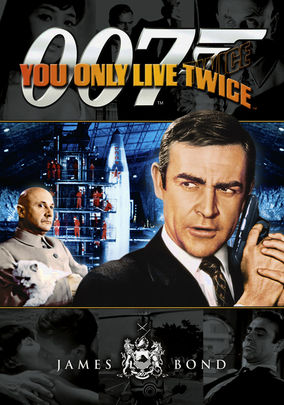
You Only Live Twice-1967

You Only Live Twice-1967

Director Lewis Gilbert

Starring Sean Connery, Akiko Wakabayashi

Scott’s Review #636

Reviewed April 23, 2017

Grade: B+

You Only Live Twice (1967) is the fifth in the James Bond film franchise and the fifth to star iconic Bond, Sean Connery, in the lead role.

Reportedly growing bored with the role and eager to move on to meatier acting challenges, Sean Connery is not quite as mesmerizing in the role this time around, but is still indisputably charismatic and sexy with his delivery of one-liners and various affairs with women.

You Only Live Twice is the last to feature Connery until he is coaxed back into the role four years later with 1971’s Diamonds Are Forever.

The film is not among my favorite Bond films of all time, nor is it even in the top ten, for that matter, but it is still quite an enjoyable watch, and the Japanese locales are undoubtedly the highlight.

The film as a whole suffers from a silly story, dated special effects, and a completely lackluster villain, but it does have Connery to rescue it and a nice little romance between Bond and the main girl, Aki, played by Japanese actress Akiko Wakabayashi- that is, until she is unceremoniously poisoned.

The plot involves the hijacking of an American NASA spacecraft by another mysterious spacecraft. The Americans suspect the Russians of the action, and the British suspect the Japanese since the aircraft landed in the Sea of Japan.

MI6 (Bond) fakes his death in Hong Kong and subsequently begins to investigate who is responsible. His search brings him to Tokyo, where he investigates Osato Chemicals and stumbles upon evidence.

He is aided by both Aki and Tiger Tanaka, leaders of the Japanese Secret Service. Soon, it is revealed that the mastermind is SPECTRE villain Ernst Stavro Blofeld, in this installment played by Donald Pleasence.

Mr. Bond must destroy his enemy and inevitably save the world from a global nuclear war.

Though a timely storyline since 1967 was in the midst of the Cold War, the plot seems somewhat forced and a bit uninteresting. The countries blame each other for the hijacked ship, but this comes across as extremely plot-driven and secondary.

The “swallowing” of the aircraft seems cheesy and preposterous, even given the year the film was made, and the writing is not as rich as in some of the preceding Bond films, like From Russia With Love or Thunderball.

The film also has an overall “cheap” look. However, the film does have plenty of positives worth mentioning.

The gadgets that James Bond fixture, Q (the MI6 technical wizard) creates are state-of-the-art and fun. The mini-flying helicopter Bond uses is creative and offers even more views.

Bond faking his death in the opening sequence is a treat (albeit having been done before), and ceremoniously being cast off into the sea in a coffin, only to be wearing a suit and an oxygen mask inside the casket, is clever and light.

Donald Pleasence, a storied, fantastic actor, is not well cast as the main villain, Stavros, and I am not entirely sure why. The fact that his face is not shown until the last act is not helpful, and the character (though seen in other Bond films) is not compelling and is underutilized.

I would have liked the character to be a bit more visible, though surprisingly, the character was highly influential in the 1990s spoof Austin Powers films. Adorable yet creepy is Stavros, only being seen clutching and stroking a gorgeous white cat.

As for the Bond women, the Aki mentioned above is the best of the bunch. Gone too soon in the story, she is replaced by Kissy Suzuki, who is rather unappealing. Mostly clad in a skimpy white bikini and heels, and wearing a black wig, the character is forgettable and serves no purpose.

Conversely, villainous Helga Brandt, SPECTRE assassin, is very well cast and shares good chemistry with Connery. After an unsuccessful attempt to kill Bond, she is fated with a date with killer Piranhas as payment for her failure.

You Only Live Twice (1967) has a myriad of ups and downs, but it is worth watching for fans of the franchise, and specifically, fans of the classic Bond films featuring Sean Connery.

Some will argue that the film feels dated and chauvinistic, and to some degree, they are correct, but it is also a large part of a treasured franchise and a fun experience.