Category Archives: Elizabeth Wilson

The Easter Promise-1975

The Easter Promise-1975

Director Paul Bogart

Starring Jason Robards, Jean Simmons, Lisa Lucas

Scott’s Review #1,525
Reviewed April 3, 2026

Grade: A

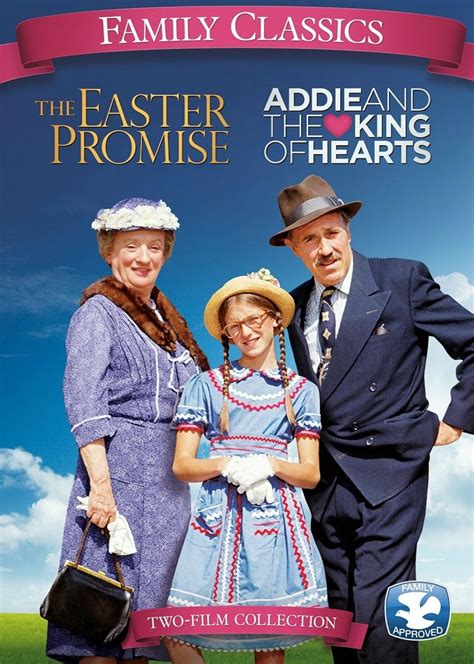
The Easter Promise (1975) is a television movie that is surprisingly powerful and emotional. The umbrella title ‘family classics’ was misleading to me, as I begrudgingly watched what I thought would be an overly sentimental and wholesome affair.

That is not the case at all, as The Easter Promise is laden with dark and strong themes of loneliness and alcoholism mixed with feminism and truth to oneself.

A major win and another surprise is the use of videotape rather than film. This makes the story feel like a stage play or a very good daytime television drama layered with humanity and identification.

This worked in the same successful way for the well-known PBS series Upstairs, Downstairs series, and ups the storytelling and investment in the characters.

Finally, a hint of class distinction and career success versus failure is explored. Characters struggle to decide whether to reach for the stars or be complacent and content with the daily drudgery of ordinary life.

The story is that one day, the townspeople of a small Nebraska town eagerly anticipate the return of a former resident and now famous, glamorous Broadway actress, Constance Payne (Jean Simmons). Constance has returned to town to sell her recently deceased father’s house and quickly return to the Big Apple.

Events are told from the perspective of pre-teen Addie Mills (Lisa Lucas), an aspiring artist who cannot wait to leave the folksy and dull Midwest for the lights of New York City the moment she is old enough to.

She intends to forge a connection with Constance, whom she admires for reaching heights of career success.

But when Addie and her girlfriends bombard Constance with requests for acting lessons and an appearance at a local fashion show, they begin to see a dark side of show business.

Drama also surrounds Addie’s father, Jamie (Jason Robards), a high school classmate of Constance’s, who finds her lifestyle flashy and ridiculous. He prefers the small-town mindset and folksy way of thinking, which clashes with Constance and Addie’s beliefs.

Jamie’s mother, Grandmother Mills, provides a kindly, non-judgmental presence that counters Jamie and is wonderfully portrayed by Mildred Natwick.

The character reminds me of Helen Potts, the sweet-natured older woman from Picnic (1955) who brings a sense of pride and good-naturedness to the image of the Midwest.

Serving up a freshly baked pie or muffins elicits a friendly, welcoming vibe.

Despite the heaviness of the alcohol scenes staged dramatically, the best scenes are the quiet ones over a simple meal. When Addie impulsively invites Constance to dinner at her family home, much to Jamie’s dislike, career and mindset are on the agenda.

Constance and Addie calmly question why people are expected to stay passive and unhappy in an isolated place rather than embrace the hustle and bustle of New York City or the gypsy life of a creative soul.

Culturally, Constance expects a cocktail hour before the meal, whereas the Mills family does not even have wine on hand and serves dinner immediately.

This shows the difference between a good Christian family and the edginess of more creative types and perhaps non-believers.

The scenes involving alcoholism don’t exactly treat the topic as an addiction, or any other message deeper than someone who drinks has a myriad of problems.

But the acting between Lucas and Simmons is top-notch during these scenes.

I was impressed with the scene where Constance teaches the girls about acting and techniques surrounding improvisation and being in the moment of a scene. As a former brief theater major, I found the tips rang true and served as a reminder of my own drama teacher.

A clever, artistic addition is the inclusion of drawings of the characters prior to particular sequences. The drawings come to life as real people, and the scene begins.

The Easter Promise (1975) is a wonderful early-spring made-for-television gem that can be watched year after year.
The Birds-1963

The Birds-1963

Director Alfred Hitchcock

Starring Tippi Hedren, Rod Taylor

Top 250 Films #6

Top 40 Horror Films #2    

Scott’s Review #173

308926

Reviewed September 22, 2014

Grade: A

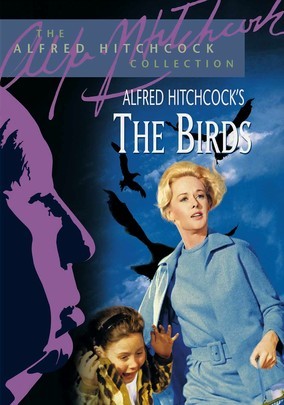
The Birds is one of director Alfred Hitchcock’s finest works.

Made in 1963, following Psycho, it continues Hitchcock’s run of successes, both commercially and critically.

It is set in northern California (in San Francisco and Bodega Bay) and tells the story of unexplained bird attacks in a peaceful small bay town.

Tippi Hedren plays Melanie Daniels, a wealthy socialite from San Francisco who drives to Bodega Bay to pursue a love interest, Mitch Brenner.

Mitch, played by Rod Taylor, is a successful attorney who meets and shares a flirtation with Melanie the day before at a pet store in San Francisco. He regularly visits his mother (Jessica Tandy) and sister (Veronica Cartwright) in Bodega Bay.

Once Melanie arrives in town, birds begin to attack the locals living in the sleepy community periodically.

The Birds is a film that has held up incredibly well and is as exciting and horrifying today as it was in the past.

One intriguing aspect of the film is that it offers no rhyme or reason for the bird attacks, which keeps the viewer guessing when a gull swoops down and attacks innocent Melanie.

It is entirely mysterious and open to interpretation- are birds fed up with being caged?

Are the love birds that Melanie purchased the cause of the attacks? Do the birds hate humans? Why do they attack the children? Why do they peck the eyes of their victims out?

One could spend hours debating these questions.

A major creative success of the film is its decision to eliminate a musical score. The eerie silence and the loud sounds of the birds attacking create a haunting dynamic.

My favorite scene of The Birds features Melanie sitting on a wooden bench in the schoolyard, enjoying a cigarette. Behind her is a deserted jungle gym. She barely notices a tiny bird innocently flying past her and landing on the jungle gym.

She continues smoking her cigarette. The viewer sees what Melanie cannot- as slowly, hundreds of birds land on the jungle gym behind her.

Without music, the scene is deadly silent and dramatic, shifting from close-ups of Melanie to long shots of the birds gathering behind her.

Another interesting aspect of The Birds is the character relationships. Mitch’s mother, Lydia, is afraid of losing her son, so she initially despises Melanie. Mitch’s ex-girlfriend, schoolteacher Annie Hayworth, strikes up a close friendship with Melanie; one might expect them to be rivals.

A hysterical mother lashes out at Melanie, calling her evil and blaming her for the attacks.

During the long periods of calm, one wonders when the next attack will occur—and we know it will. We searched for clues to identify what triggers the attacks, but we found none.

This makes for brilliant and suspenseful filmmaking. They hardly come better than the masterpiece The Birds (1963).

Oscar Nominations: Best Special Effects

The Graduate-1967

The Graduate-1967

Director Mike Nichols

Starring Dustin Hoffman, Anne Bancroft

Top 250 Films #57

Scott’s Review #335

555221

Reviewed January 9, 2016

Grade: A

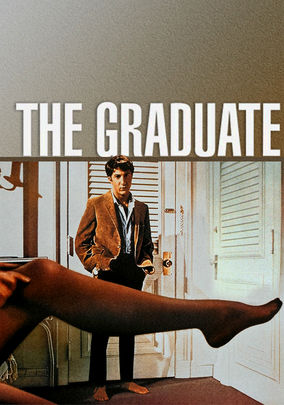
The Graduate is an immeasurable success and highly influential comedy from 1967- a time when films were gaining creative freedoms and pushing the envelope in new, edgy ideas and risqué subject matters.

Almost scandalous at the time of release, the film holds up exceptionally well after all these years and remains fresh and cutting-edge.

It is slick, sophisticated, and quite funny, though peppered with dark humor.

Thanks to Dustin Hoffman and Anne Bancroft, the film succeeds and remains among my all-time favorites.

Hoffman plays Benjamin Braddock, a nervous and insecure recent college graduate who returns home to sunny California, unsure of what his future holds.

His overbearing parents throw a lavish celebration at their home, where Benjamin is flocked by well-wishers, most of whom have a materialistic edge to them. His parents live in a very affluent community where wealth and items are of great importance.

All Benjamin wants to do is be by himself. At the party, Benjamin is pursued by the much older and glamorous Mrs. Robinson (Bancroft), who lives nearby and asks Benjamin for a ride home.

Her attempted seduction of him sets the film’s narrative in motion, as their relationship unfolds, particularly when Mrs. Robinson’s daughter, Elaine (Katharine Ross), enters the picture and captures Benjamin’s heart.

Director Mike Nichols successfully sets the right tone for the film, and we see the style and the sophistication of wealthy California in the 1960s.

Fashion, style, and glamour are prevalent, but they go against what Benjamin and Elaine stand for.

The film is also an exploration of generations. Benjamin’s parents and all their friends are into material things, such as cars, houses, and parties.

The triangle between Benjamin, Mrs. Robinson, and Elaine is the heart of the film. At first, we find ourselves rooting for Benjamin and Mrs. Robinson. There is a sweet nature to their romance. She is the aggressor- mature, in control, and confident, whereas Benjamin is insecure and shy, yet enamored with Mrs. Robinson.

Their awkward exchange in the hotel bar and their liaison in the hotel room are fantastic scenes.

Slowly, once Elaine emerges, Mrs. Robinson becomes more manipulative, taking on a villainous character, as the youngster’s love blossoms, and we begin to root for their happiness.

A fantastic aspect of The Graduate is its musical soundtrack, which was composed entirely by Simon and Garfunkel, a central musical duo of the late 1960s, from the opening chords of ‘The Sound of Silence’, to the appropriate ‘Mrs. Robinson’, the music adds much life and energy to the film and was successful at attracting young viewers at the time.

The featured soundtrack was highly influential to other films released after The Graduate.

Still fresh today, The Graduate (1967) launched the very successful career of Dustin Hoffman and emerged as an inspirational film that, though controversial in its day, seems tame now; however, the writing remains as crisp as it ever was.

A film to watch over and over again.  

Oscar Nominations: 1 win– Best Picture, Best Director-Mike Nichols (won), Best Actor-Dustin Hoffman, Best Actress-Anne Bancroft, Best Supporting Actress-Katharine Ross, Best Screenplay Based on Material from Another Medium, Best Cinematography

Picnic-1955

Picnic-1955

Director Joshua Logan

Starring William Holden, Kim Novak

Top 250 Films #81

Scott’s Review #550

Reviewed December 19, 2016

Grade: A-

Picnic is a classic 1955 film that is wonderful to watch over Labor Day weekend or anytime during the humid summer season.

The film perfectly depicts summertime in a tiny town in Kansas. It is a slice-of-life story about life in middle America during the 1950s, despite its trials and tribulations.

William Holden stars as a “wrong side of the tracks” type of guy who arrives in a quiet Kansas town on Labor Day weekend, disrupting the town’s events and causing scandals for the townspeople.

He is a hunky former college football player and exudes sexuality.

He then falls in love with his best friend’s girlfriend, Madge Owens, played by Kim Novak. The chemistry between the two stars is the film’s main appeal.

The supporting cast makes this film unique (Arthur O’Connell and Rosalind Russell star as townspeople who are in a relationship of their own).

Picnic also contains a gorgeous and lovely musical score, precisely “Theme from Picnic” and “Moonglow”.

It is shot on location in Kansas, mostly in and around Hutchinson, and is considered classic summer enjoyment.

Based on the Pulitzer-award-winning play.

Oscar Nominations: 2 wins-Best Motion Picture, Best Director-Joshua Logan, Best Supporting Actor-Arthur O’Connell, Best Scoring of a Dramatic or Comedy Picture, Best Art Direction, Color (won), Best Film Editing (won)