Category Archives: Anthony Perkins

Mahogany-1975

Mahogany-1975

Director Berry Gordy

Starring Diana Ross, Billy Dee Williams, Anthony Perkins

Scott’s Review #1,492

Reviewed August 20, 2025

Grade: B-

Watching Diana Ross, the ‘Queen of Motown Records’ and the lead singer of the legendary pop group, The Supremes, in a film role holds appeal.

A fabulous singing star, she had her sights set on continued film stardom with Mahogany (1975), having achieved respectability with Lady Sings the Blues (1972).

Ross portrays Tracy Chambers, a struggling Chicago fashion design student who rises from shop girl to popular fashion designer in Rome, after a chance meeting with hotshot fashion photographer Sean (Anthony Perkins) in the department store where she works.

Her love interest is aspiring politician Brian Walker (Billy Dee Williams), a local activist fighting against gentrification in their community.

But will her sudden success and diva antics destroy her relationship as well as her respect in the fashion world?

The highlights of the film are the many exterior sequences in and around Chicago and the swanky Rome locales featuring the Spanish Steps, the Colosseum, and other sophisticated locales.

Also, the soundtrack includes the single “Theme from Mahogany (Do You Know Where You’re Going To)”, sung by Ross, which peaked at number one on the Billboard Hot 100 chart in January 1976.

The song is a gorgeous ballad wisely recreated in different tones and styles throughout the film as well as during the credits.

Ross and Williams have a decent amount of chemistry, making an unlikely pair. Brian yearns to make a difference in the world, caring for the ‘little guy’ while earnestly forging a career in politics.

He puts up with Tracy’s ambitions because he is progressive, and their tender scenes of romance work well. When they spar, the tension builds into a believable crescendo, especially their blow-up fight in Rome.

This showcases the best acting from the pair, and the audience roots for them to reconcile.

It’s inspiring, especially for 1975, to see a black couple featured in a film front and center. Their lives are showcased instead of merely supporting white characters.

Other aspects of Mahogany are affected by various issues.

Ross, a singer, has hits and misses in the acting department. Sometimes she nails a scene, and other times she overacts. This may be the less-than-stellar writing, though, as her character progresses from likeable to diva bitch to likeable again in lightning speed.

It’s wonderful to see Anthony Perkins in another film role besides his signature role as Norman Bates in Psycho (1960). But his character, struggling with his sexuality, is possessive of Tracy, then has a death wish, all with underexplored and unsatisfactory themes.

Was being gay in the fashion industry such a big deal?

I wished for a more substantial role for Nina Foch, famous for her 1951 turn in An American in Paris. Playing a one-note, stuffy character like Miss Evans doesn’t give her much to work with.

It has a soap opera tone and a feeling that Ross is somewhat playing herself. Combined with a nagging, schmaltzy vibe and messy, plot-driven writing, it’s a film that’s all over the place, especially towards the conclusion.

The best example is when Tracy’s new benefactor, Count Christian Rosetti (Jean-Pierre Aumond), also in love with her, agrees without argument to let her give up her entire career and return to Chicago, and Brian.

This follows Tracy’s sudden epiphany that she no longer wants to be the biggest star in the world.

All in the final ten minutes.

Mahogany (1975) is a marginal success with a few highlights and a dismal failure for other reasons, leaving it hovering somewhere around the mid-line for mediocrity.

Oscar Nominations: Best Original Song, “Theme from Mahogany (Do You Know Where You’re Going To”).
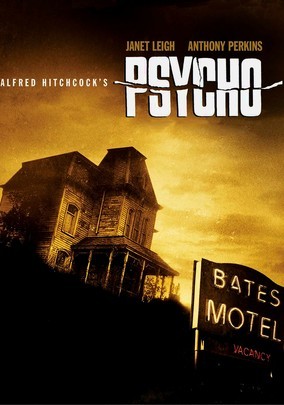
Psycho-1960

Psycho-1960

Director Alfred Hitchcock

Starring Janet Leigh, Anthony Perkins

Top 250 Films #5

Top 40 Horror Films #1

Scott’s Review #165

879522

Reviewed September 6, 2015

Grade: A

Psycho (1960) is the film to end all films, and not just within the horror genre. At the time of its release, it transcended the art of cinema to a new level and has influenced generations of films since, still holding up incredibly well today.

It is undoubtedly one of the greatest Alfred Hitchcock films and one of the greatest films ever made.

Hitchcock took considerable risks and dove from the thriller to the horror genre with Psycho.

The story revolves around a young woman named Marion Crane, superbly portrayed by Janet Leigh. Marion lives in Phoenix, Arizona, and sees her boyfriend (the dashing John Gavin) for frequent afternoon rendezvous at cheap motels when he is in town because they are both struggling financially.

She is presented with an opportunity, via her job, to steal $40,000 and flee the state to start a new life with her beau. She seizes the opportunity.

On the run, she stops at a run-down Bates motel where she meets owner Norman Bates, hauntingly played by Anthony Perkins.

Perkins and Leigh have fantastic chemistry together, and the audience picks up on it—is it romantic? Is there a mysteriousness to it? Something is odd about Norman. They bond over a quiet meal of sandwiches at the motel while discussing life and his ailing mother.

The famous shower scene and the shocking twist that follows are now almost taken for granted, as most people are already familiar with them. However, I can only imagine the shock viewers felt when they first saw these two delights.

To this day, both are still suspenseful.

Fortunately, when I saw this film for the first time, I didn’t know the ending, and I am glad I didn’t, because it took my breath away.

Killing off the leading actor at the start of the film, halfway through, was a novel idea and mind-blowing at the time of its release (1960).

This act left the audience’s mouths agape in disbelief, prompting them to ask, “What now?” “How can this be followed?” This act later influenced the original Scream (1996) film and surprised audiences again.

According to Hitchcock, no one could enter the film after it had started, and viewers were persuaded not to reveal the ending – oh, how I wish that occurred these days.

An aspect of the success and longevity of Psycho is the chemistry between Perkins and Leigh, who got along famously while shooting Psycho, and more importantly, the likability of Norman Bates. There is a rooting value for him, even though he is the villain.

When Marion’s car is only half-submerged in a lake containing her dead body, we root for it to sink entirely because of Norman. The concerned look on Norman’s face has a sense that affects the audio at this point in the story. Norman is troubled and wo, undead, and the audience does not have history.

Let’s not forget Janet Leigh. The audience sympathizes with her predicament. She is hopelessly in love with her man, steals money, is conflicted, and, at her core, is a friendly, decent, kind woman.

Halfway through the film, Marion’s sister, Lila, played by Vera Miles, is introduced as a detective, and the suspense and mystery intensify as they search for Marion and investigate the Bates Hotel and Norman Bates himself.

Miles then takes center stage as the lead in the film, which is intriguing.

The film then returns to horror at the terrific and terrifying conclusion, which will shock first-time viewers.

The musical score (especially the shrill strings) is incredibly effective and influenced other horror films to come (Friday the 13th immediately comes to mind).

Psycho is a film that can be enjoyed and studied over again.

Oscar Nominations: Best Director, Alfred Hitchcock, Best Supporting Actress-Janet Leigh, Best Art Direction, Black-and-White, Best Cinematography, Black-and-White

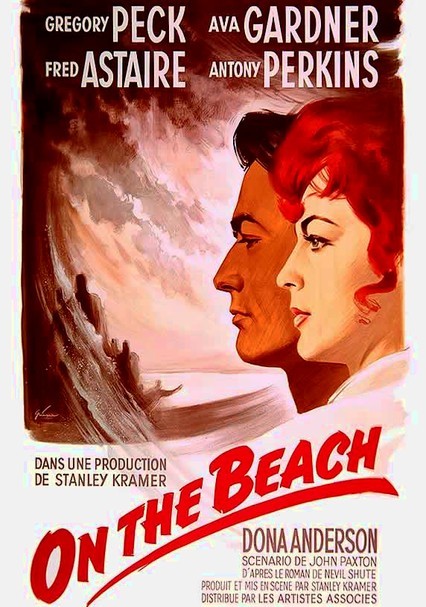
On the Beach-1959

On the Beach-1959

Director Stanley Kramer

Starring Gregory Peck, Ava Gardner

Scott’s Review #1,179

Reviewed September 19, 2021

Grade: A-

On the Beach (1959) is a film that showcases a grim subject matter but remains relevant considering the period in which it was made. The Cold War era kept most people on edge with the threat of nuclear war as they rolled into the 1960s.

The lavishness of the 1950s turned into a more distrustful time as countries gained modern technological advances, making nuclear weapons a real possibility.

The film was not met with much praise or popularity at the time.

Indeed, people were content in the cinematic bubbles of nice, comforting films that largely emerged during the 1950s, but On the Beach was a fantastic discovery decades later.

I suppose people expected a sweeping epic romantic adventure, but they received a harsher tale. It’s not nearly as dark as it could have been.

The black and white cinematography is highly effective at relaying a cold and stark world that is left for the film’s characters. Another success is that the film is set in the future, 1964 to be exact, while the film was made in 1959.

The film is hardly a downer. While the subject matter of nuclear disaster and devastation sounds heavy, there is as much romance as social storytelling. The romance between Peck and Gardner is compelling and the best part of the film experience.

As the story begins, we learn that World War III has already occurred, leaving Australia the only remaining safe place for survivors. However, wind currents carrying lingering radiation are headed their way, condemning those on the continent to certain death.

When the survivors receive a strange signal from San Diego, California, Commander Dwight Towers (Peck) must embark on a mission with Lieutenant Peter Holmes (Anthony Perkins) to see if humanity still has hope. They leave behind Moira (Gardner) and Mary (Donna Anderson), the women they love.

Director Stanley Kramer knows his way around a message movie. In 1967, he directed the racially significant Guess Who’s Coming to Dinner, starring Spencer Tracy and Katharine Hepburn.

The romance between Dwight, Moira, Peter, and Mary is my favorite aspect of the film. Dwight has lost his wife and two children, so out of loneliness, he falls for Moira, who has never married and has no one. Their soon-to-be doomed romance is fraught with complications as they tenderly cling to each other, knowing their time is limited.

Peter and Mary, on the other hand, are married with an infant young daughter. A significant conflict the couple deals with is whether to take suicide pills rather than get sick and die a slow and painful death.

There is enough chemistry between Peck and Gardner to keep the viewer engaged, but it’s tough to watch Perkins, a known gay man, play a macho father figure with a newborn. For some reason, it’s also hard not to see Norman Bates from Psycho (1960). I half-expected Peter to attack Mary in the shower with a butcher knife.

Still, the acting is good.

On the Beach states a powerful message in its conclusion. Ultimately, within just a few days of the shifting winds bringing the toxins to Australia, the last pockets of humanity are dead.

Melbourne’s empty, windblown streets are filled with dramatic music over a single powerful image of a previously seen Salvation Army street banner that reads, “There is still time .. Brother”.

Indeed, there is.

This leaves the viewer pondering their fate and the terrible dangers of nuclear war. Decades later, On the Beach (1959) still frightens and teaches about the ravages of world conflict and the plea for a peaceful society.

Oscar Nominations: Best Scoring of a Dramatic or Comedy Picture, Best Film Editing

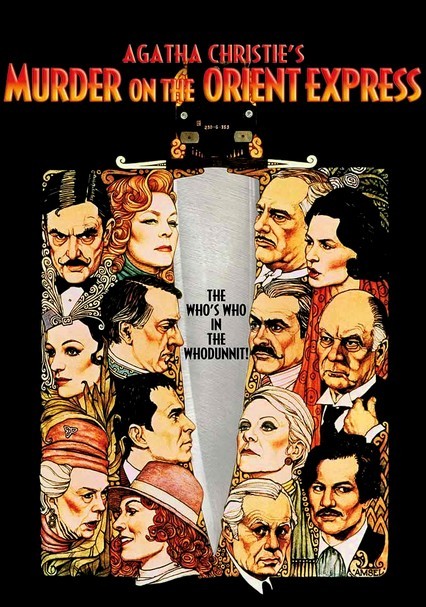
Murder on the Orient Express-1974

Murder on the Orient Express-1974

Director Sidney Lumet

Starring Albert Finney, Lauren Bacall, Ingrid Bergman

Scott’s Review #928

Reviewed August 7, 2019

Grade: A-

Based on the 1934 novel of the same name written by famous author Agatha Christie, Murder on the Orient Express (1974) brings the story to the big screen with a robust and eccentric cast of characters all drizzling with suspicion.

The classic whodunit of all whodunits, the film adds a Hollywood flair with rich costumes and an authentic feel to a budget-blasting extravaganza that keeps the audience guessing as to who the killer or killers may be.

The film was recognized with a slew of Oscar nominations that year.

The hero of the film is Hercules Poirot (Albert Finney), a well-respected yet bumbling Belgian detective, who is solicited to solve the mysterious death of a business tycoon aboard the famous and luxurious Orient Express train.

On his way to the train’s destination, he encounters such delicious characters as the glamorous Mrs. Hubbard (Lauren Bacall), the nervous Greta Ohlsson (Ingrid Bergman), and his friend Bianchi (Martin Balsam), the director of the company who owns the enormous vessel.

Many other characters are introduced to the layered story.

As the complicated plot is unraveled, most of the characters have something to hide or a connection to another character or characters.

The fun for the viewer is to live vicariously through Poirot and await the big final reveal after the film that, unless already viewed the film or read the novel, one will not see coming.

With a film of this type, a detective thriller, the audience can be assured of a resolution, like a big murder mystery dinner theater production brought to the big screen.

Formulaic, the film never drags nor feels dull.

Amid the first few minutes of Murder on the Orient Express, the intrigue is unleashed at full-throttle speed leaving one bedazzled and hooked.

The sequence is brilliantly done and thrusts the audience into a compelling back story of plot and the wonderment of what these events have to do with a train pulling out of the Orient.

Quickly edited film clippings of a news story explain the mysterious Long Island, New York abduction and murder of the infant daughter of a famed pilot.

It is suggested that the Orient Express trip embarks from Istanbul, Turkey, and is destined for London. This means that several countries will be included in the trek, creating possibilities for both geographical accompaniments and new cultural experiences which director Sidney Lumet offers generous amounts of.

Moments following the murder, the train has the unfortunate fate of colliding with an avalanche, leaving the passengers in double peril, with a killer on the loose and cabin fever to contend with.

To the compelled viewer this is snug comfort as the atmospheric locales are gorgeous and the thought of a dozen strangers trapped together with so much to hide brings the story to a frenzy.

Who did what to the murder victim is slowly revealed as several red herrings (or are they?) are revealed. Who is the mysterious woman strutting down the corridor shortly before the murder, spotted by Poirot? Is she a staged pawn or merely an innocent victim? Could she be the murderer?

The wonderful part of Murder on the Orient Express is the number of entangled possibilities.

The conclusion of the film turns the thriller into a moralistic story, to its credit. The fact that the murder victim was hateful and diabolical is a key part of the story and makes the viewer wonder if the killer or killers are justified in their actions.

Does the fact that Ratchett was stabbed a dozen times with varying degrees of severity play into the motivation?

A very compelling, and unrecognizable Finney does a fantastic job of carrying the film among such a troupe of good actors.

Murder on the Orient Express (1974) sets out to entertain and succeeds on every level, bringing the book to the silver screen with a fresh interpretation that still honors the intent that Christie had.

Stylistic and thought-provoking, the film has gorgeous costumes, a good story, and fine acting. The knowledge of who the killer is does little to take away any enjoyment that a repeated viewing will provide.

Oscar Nominations: 1 win-Best Actor-Albert Finney, Best Supporting Actress-Ingrid Bergman (won), Best Screenplay Adapted from Other Material, Best Original Dramatic Score, Best Costume Design, Best Cinematography