Tag Archives: Miles Malleson

The Thief of Bagdad-1940

The Thief of Bagdad-1940

Directors Michael Powell, Ludwig Berger, Tim Whelan

Starring John Justin, June Duprez

Scott’s Review #1,555
Reviewed September 28, 2026

Grade: A

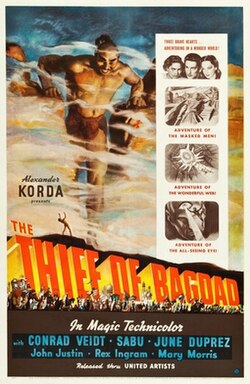
The Thief of Bagdad (1940) is an uplifting, heartwarming, and endearing adventure tale. It leaves you feeling good and believing life can have a happily-ever-after.

Made early in cinema history, it’s fascinating to watch the creativity from a special effects perspective and see how limited resources could somehow churn out magic.

Believe it or not, it’s a remake of a 1924 silent film and is marketed toward children; it still works for anyone.

Tricked and deposed by his sinister adviser, Jaffar, played by Conrad Veidt, Ahmad (John Justin), the King of Bagdad, must find a way to reclaim his throne before he is executed.

He enlists the unlikely assistance of a thief named Abu (Sabu). Ahmad soon meets a beautiful princess (June Duprez) when he poses as a genie, and the pair instantly fall madly in love.

He embarks on a series of adventures involving a real genie, a flying carpet, and other fantastical elements as he determinedly makes his way back to his love.

Ahmad and Abu must then face off against Jaffar and keep him from his desire for unlimited power.

In 2026, as it approaches 100 years since its release, The Thief of Bagdad remains a joyous experience.  It’s amazing to realize its influence, since the Disney film Aladdin (1992) borrows freely from it.

Both Jaffar and the dimwitted, toy-obsessed, yet kindly sultan, played by Miles Malleson, are recreated all those years later.

Pretty amazing.

The characters’ appeal is a main draw. Ahmad is easy to like as a benevolent, kind-hearted man. He wants to hear what the townspeople think and how they interpret their lives and surroundings.

A decent man, even when blinded by a curse put on him by the devious Jaffar, he does not become ruined.

Conrad Veidt, who deserved an Oscar nomination for playing Jaffar, makes the character stone-hearted and menacing. With his intense, steely eyes, he undoubtedly gave kids nightmares and maybe some adults.

Finally, Abu is a lovable character. Sure, he’s a thief from a generation of thieves, but we know it’s out of necessity alone. A good kid, he does what he must to survive.

His best sequence is a dazzling journey on a deserted beach. He finds a bottle and opens it, releasing an enormous genie whom he tricks into submitting to him and granting him three wishes.

Wisely, he makes the genie help Abu steal a magical jewel, the “All-Seeing Eye”, that enables him to find and reunite with Ahmad.

He’s a true friend and a wonderful character.

With hundreds of extras, filmmakers must have taken some liberties. Many appear to be inauthentically Middle Eastern, likely coated with bronzer. Some are black or Hispanic men.

The film makes up for the extras issue with brilliant sets and art design.

For 1940, the sets are impressive. Pinkish, blue buildings appear in the background during village scenes, but the palace is the most impressive set. With sophisticated pillows and linens, not to mention the colorful women’s dresses, it’s a visual treat.

The musical score is lovely and teeters between dark, sinister, tritonic music when Jaffar is in a scene and playful, mischievous music when it focuses on Abu.

One of the best fantasy movies of the 1940s, The Thief of Bagdad (1940) offers great special effects without any CGI.

Oscar Nominations: 3 wins-Best Original Musical Score, Best Cinematography (Color) (won), Best Art Direction (Color) (won), Best Special Effects (won)
Peeping Tom-1960

Peeping Tom-1960

Director Michael Powell

Starring Nigel Davenport

Top 250 Films #47

Top 40 Horror Films #10

Scott’s Review #127

848669

Reviewed July 22, 2014

Grade: A

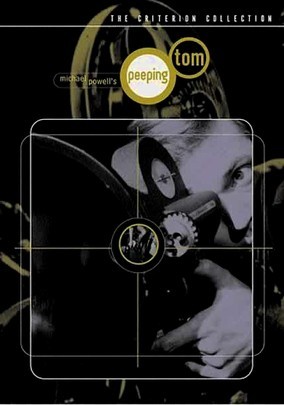
Peeping Tom is a brilliant 1960 horror film directed by Michael Powell.

It is a British film released the same year as Psycho. The two films share similarities in that they both feature more character-driven villains than many other contemporary horror films.

Both feature male killers with a sympathetic (to them) female.

Set in London, it tells the story of an assistant cameraman who kills his victims by using a camera with a spike on the end of it as he is videotaping the fear in their eyes, which he later plays back for his own psychological needs.

The killer has emotionally damaged himself, and the film explores this aspect in depth; his father tormented him as a child with weird, traumatic experiments used on the boy for research.

I love this aspect of the film compared with other films of the genre, where the killer typically has no sympathetic aspects and whose motivations are usually explored minimally.

The audience has sympathy for this killer, which, strangely, is absurd and shocking.

Ahead of its time, viewers were initially turned off by the film upon its release. Director Michael Powell’s (ironically playing the terrible father in videotape scenes) career was ruined.

Anna Massey (later to appear in the Hitchcock masterpiece Frenzy, 1972) plays the sweet-natured girl next door who develops a crush on the killer. Her blind and boozy mother is a fascinating character as she suspects and strangely bonds with the killer.

The film has an erotic and voyeuristic quality that has been unmatched in horror.

Peeping Tom (1960) is now widely regarded as a masterpiece, and I concur with that assessment. It is one of the most interesting and unique horror films ever made.

The Phantom of the Opera-1962

The Phantom of the Opera-1962

Director Terence Fisher

Starring Herbert Lom, Michael Gough, Heather Sears

Scott’s Review #1,254

Reviewed May 12, 2022

Grade: B+

It’s not the best-known film adaptation of Gaston Leroux’s famous 1910 French novel, but it is the most horrific.

Hammer Horror Productions’s acquisition of this is a significant win since the story is ideally suited for the horror genre.

I’ve not yet seen the 1925 silent film version of The Phantom of the Opera starring Lon Chaney, which I hear is terrific, so I cannot compare that to this.

The possibilities for a macabre telling are endless. Terence Fisher, a familiar director in Hammer films, is back at the helm to mix the dreariness of a musty London theater with the creepy face mask of its lonely and wounded inhabitant.

I’ve said it before, but it bears repeating in this review: The horror films achieved astounding achievements by making lemonade out of lemons budget-wise. The limited funds necessitated creativity, seen in every series frame, especially the colorful sets and costumes.

The Phantom of the Opera (1962) is no different and even better than some others in the brilliant mix of mood and sympathy for its primary victim, specifically the luminous and disfigured ‘phantom’ played by Herbert Lom.

Dastardly Composer Lord Ambrose D’Arcy, wonderfully played by Michael Gough, and his bullied backer, Harry Hunter (Edward De Souza), struggle to find a replacement for the female lead in their new opera after she quits and flees town in the wake of a gruesome theater murder.

When a new prospect, the virginal Christine Charles (Heather Sears), disappears after the advances of Ambrose, Harry cautiously investigates, unaware that there is a lonely figure inhabiting the theater.

Meanwhile, a mysterious masked man (Lom) who is eerily familiar with the opera holds Christine captive and offers to groom her to play the part.

He is a mix of crazy and passionate, and his plight is sympathetic when what he’s been through is finally explained.

The atmosphere sets The Phantom of the Opera apart from similar films of the 1960s, even Hammer films.

This is never more evident than in an early scene when the camera follows the characters on the misty streets of London. The darkness and shadows become prominent as they walk through the streets and dark alleys.

Five years into his association with the production company, Fisher has hit his stride. A limited budget might reduce another director to a fretting basket case, but the result and ease he parlays to The Phantom of the Opera is quite beautiful.

Many scenes are set in the theater, adding a foreboding element to the events. Dusty yet brimming with musicianship and artistry, it’s fun to watch the characters sneak around and scheme within the confines of this structure.

Therefore, the mood and trimmings are exquisite without actually being so.

The music sequences are impressive without going on for too long. Although the locale is switched from Paris to London for obvious reasons, the foremost being that the actors are British, this doesn’t hamper the overall experience.

The best and most gruesome scene occurs when a poor chap swings across the theater stage in a neck rope, dead as a doornail. The creaking sound of the rope as the man swings back and forth is chilling and dubious.

Lom is my favorite actor in the film. His character’s backstory is impressive and humanistic. Who can’t relate to being cheated out of work that is rightfully theirs?

Gough, also familiar to Hammer Horror fans, is tremendous as the treacherous main villain.

Sears is okay, but perhaps not the greatest actress or best choice for the role. She’s rather bland and unmemorable.

The Phantom of the Opera (1962) falters when its ending is too sudden, and many Hammer films suffer the same fate.

This film is not for those expecting a grandiose Andrew Lloyd Webber-style musical, but for fans of down-and-dirty horror, it’s just what the doctor ordered.

The 39 Steps-1935

The 39 Steps-1935

Director Alfred Hitchcock

Starring Robert Donat, Madeleine Carroll

Scott’s Review #1,212

Reviewed December 26, 2021

Grade: A-

Before Alfred Hitchcock conquered American audiences in the 1950s and 1960s, he made many British films, many of which are overlooked gems.

The 39 Steps (1935) is a film nestled among that category, providing thrilling escapism and a spy-tinged subject matter that has an everyman on the run.

The plot pattern is very familiar because Hitchcock used it later in his American films, such as The Man Who Knew Too Much (1956) and The Wrong Man (1956).

Rather than a carbon copy, The 39 Steps is a pure delight for any Hitchcock fan because the viewer can see facets and ideas the director would later bestow on his other films. There is enough originality to please anyone looking for a good thrill.

It is very loosely based on the 1915 adventure novel The Thirty-Nine Steps by John Buchan.

The story centers on Richard Hannay (Robert Donat), a Canadian civilian on holiday in London. He unintentionally becomes involved in preventing an organization of spies nicknamed “The 39 Steps” from stealing British military secrets.

After being mistakenly accused of the murder of a counter-espionage agent, Richard flees to Scotland. He becomes tangled up with an attractive woman named Pamela (Madeleine Carroll) while hoping to stop the spy ring and clear his name.

It’s a simple story that immediately compels viewers to root for Richard since we know he is innocent. Perhaps he can find romance along the way with Pamela and stop the bad guys. So, there is little ambiguity with how the story is supposed to wind up.

The fun is getting there.

Assuming this isn’t one’s first time watching a Hitchcock film, and it has been nearly a hundred years since The 39 Steps was made, I sincerely doubt it. There are oodles of sequences to enjoy. If one asks, “Does this scene seem familiar?” it is because many of them are.

The London Music Hall Theatre and the London Palladium brim with recognition, especially after a catchy tune that Richard cannot forget comes into play. It’s too easy not to think of Doris Day’s hit “Que Sera, Sera (Whatever Will Be, Will Be),” featured as a key element of The Man Who Knew Too Much or even the London setting itself.

To switch for a moment to another Hitchcock masterpiece, North by Northwest (1959), the frequent dashing across the lands by foot or locomotion comes into play in a big way in The 39 Steps.

I loathe making comparisons because The 39 Steps delivers some goods on its own merits. The action in the Scottish Highlands is fantastic and a treat for anyone who has visited the lovely and picturesque area.

Richard’s daring trip aboard the Flying Scotsman expresses that the train to Scotland is a compelling adventure.

The chemistry between Richard and Pamela is decent but not great. It’s not the focal point of the film, so I didn’t necessarily mind that. The clear intent was for her to first fear him but then have the characters fall in love. We never really get there, but it seems to be the purpose.

The main villain is Professor Jordan (Godfrey Tearle), who Richard tries to prevent from sending secrets out of the country.

Sure, there are better-quality Alfred Hitchcock films to bask in once he got his groove decades later, and one can assuredly boast that Vertigo (1958) and Psycho (1960) are superior films.

But The 39 Steps (1935) is a blueprint of the brilliance the director had in his head at this time, and it is a pure treat to witness.

Stage Fright-1950

Stage Fright-1950

Director Alfred Hitchcock

Starring Jane Wyman, Marlene Dietrich, Michael Wilding

Scott’s Review #1,160

Reviewed July 9, 2021

Grade: A-

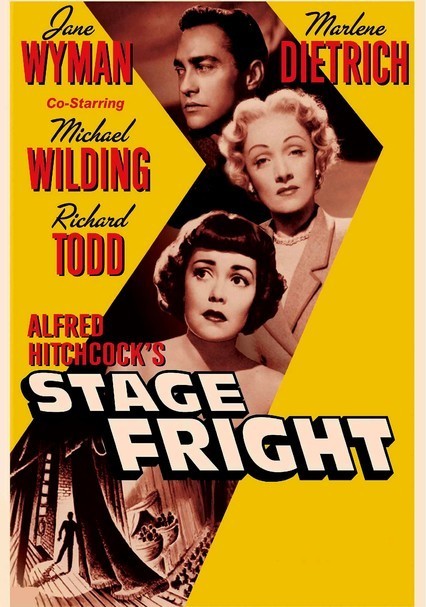
Stage Fright (1950) is a British film directed by Alfred Hitchcock before his American invasion.

The film feels like a hybrid British/American project with the leading lady, Jane Wyman, being American, but otherwise, it is set in London with many British actors.

Hitchcock mixes plenty of film noir influences with the typical thrills and suspense, creating an excellent film that flies under the radar compared to his other films.

Wyman is cast as an attractive aspiring actress who works on her craft by going undercover to solve a mystery. The film has elements of Nancy Drew, and it’s fun to watch Wyman, who would become Mrs. Ronald Reagan before he entered politics and later became President of the United States.

She reportedly divorced him because she had little interest in entering the political spectrum by association.

The action gets off to a compelling start with two characters driving in a car in apparent peril. Hitchcock loved driving scenes like these. It is learned that the police think actor Jonathan Cooper (Richard Todd) is a murderer, and now they’re on his tail.

He seeks shelter with his ex-girlfriend Eve (Wyman), who drives him to hide with her father, Commodore Gill (Alastair Sim).

He explains that it was his lover, the famous and snobbish actress Charlotte Inwood (Marlene Dietrich), who killed the victim (not coincidentally, her husband). Convinced that Jonathan is innocent, Eve plays detective and assumes multiple disguises, slowly developing feelings for Detective Inspector Wilfred O. Smith (Michael Wilding).

Once embroiled in a web of deception, she realizes that Shakespeare was right and that all the world is a stage.

Wyman is the Hitchcock brunette as opposed to his later fascination with the blonde bombshell. Therefore, her role is more sedate and astute than the sex appeal that would come with Hitchcock’s later characters.

Eve closely resembles Charlie, the character Teresa Wright played in 1943’s Shadow of a Doubt. They are both astute and investigative, with a mystery to unravel. Interestingly, they both fall for detectives.

All the glasses! Hitchcock’s fetish for women wearing glasses is on full display, especially with the character of Nellie, a cockney opportunist played by Kay Walsh. Look closely, and one can spot several minor or background ladies sporting spectacles, and even Eve dons a pair as a disguise.

The director’s daughter, Pat Hitchcock, plays a small role as she would in Strangers on a Train (1951) and Psycho (1960).

Speaking of Strangers on a Train, there are similarities to mention.

Both involve a tit-for-tat exchange in which one character requests another kill someone for a payoff or other motivation.

Marlene Dietrich is as sexy as ever in Charlotte’s pivotal role. She is also self-centered, self-absorbed, and thoughtless. She constantly mispronounces Eve’s fictitious name and barely notices that she is covering for her regular maid/dresser.

But is she evil and capable of killing her husband?

Stage Fright has a thrilling finale. In the climax, the audience finally finds out who has been telling the truth, who has been lying, and what explanations are revealed. There is a pursuit, an attempted killing, and a shocking death by way of a falling safety curtain in the theater, naturally.

What one would expect from a Hitchcock final act.

The focus on theatrical stage actors is a nice topic and adds to the existing drama, as the implications of playing various roles are prominent. So is the prominence early on of the Big Ben landmark in London and other location trimmings.

Stage Fright (1950) doesn’t get the love saved for other Hitchcock masterpieces, and that’s a shame because the film is excellent.