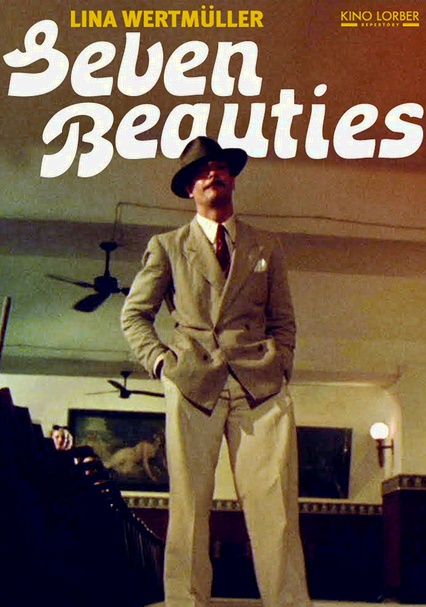
Seven Beauties-1975

Seven Beauties-1975

Director Lina Wertmüller

Starring Giancarlo Giannini, Shirley Stoler, Fernando Rey

Top 250 Films #194

Scott’s Review #1,364
Reviewed June 3, 2023

Grade: A

Italian Director Lina Wertmüller was the first female ever nominated for the coveted Best Director Oscar. She did not win the award, but the nomination is a bold victory for women artists in 1975 and a testament to her visionary approach to filmmaking.

With Seven Beauties (1975), she tackles the painful subject of concentration camps during World War II with artistic merit and a powerful message of survival by her lead character, Pasqualino, brilliantly played by Giancarlo Giannini.

Through Pasqualino’s backstory, Wertmüller provides comic relief and a sizzling Italian style. This counterbalances the terrifying German elements with cultural and sometimes humorous sequences set in Italy. Pasqualino’s family hijinks are explored.

Back in the 1930s, Italy, Pasqualino is a struggling low-level Sicilian thug who accidentally kills a man who disgraced his unattractive and vulnerable sister, Concettina (Elena Fiore). He escapes imprisonment by joining the military, but goes AWOL when things get too severe.

Eventually, Pasqualino is captured and sent to a concentration camp, where he vows to do anything to survive. He attempts to seduce an evil and obese female German camp commander (Shirley Stoler), but this comes at a deadly price.

I’ll argue that Stoler should have received a Best Supporting Actress Oscar nomination. Her callous nature only deepens as her character is peeled back, and Pasqualino’s hope that she has a glimmer of kindness in her is dashed. She is one of the best screen villains of all time.

Seven Beauties is an art film with gorgeous visuals, especially potent in the concentration camp and the surrounding forest. The greyness of the camp is the perfect opposite of the pizazz of Italy.

As Pasqualino and comrade Francesco wander through the looming German forest, the camera looks up at the sky in a blurry, dizzying way.

At the start of the film, black and white footage of World War II encompasses the screen, and slivers of the tyrants Mussolini and Hitler are displayed.

If not for the macabre dark humor we see in Italy, Seven Beauties might be too much of a downer. Pasqualino’s seven sisters are unattractive, and one is living the life of a struggling stripper and prostitute. He also manages to cleverly chop a body to bits and stuff the body parts into suitcases.

Back in Germany, the scenes between Pasqualino and the female commander are frightening. He is forced to provide sexual pleasures in exchange for his survival, but when she callously orders him to select six mates to be executed, her viciousness is apparent.

Giannini is a fabulous actor and heartbreakingly reveals Pasqualino’s vulnerabilities as the film plows forward. His good-natured innocence is lost forever, and the man he becomes is darker.

But the caveat is that the character is never purely good; rather, they are layered with complexities. Always, Giannini emotes deep expressionism through his powerful green eyes.

Similarities between Seven Beauties and Fellini’s Amarcord (1973) or Fellini’s Roma (1972) are evident.

Had I not known Wertmüller directed the film I would have thought Fellini had. This is more so because of the Italian sequences featuring a bevy of zany, homely characters, which adds flavor and humor.

Fernando Rey, well-known for playing the villain in The French Connection (1971), appears as a doomed prisoner who ends up in a large tub of shit rather than suffer a forced execution.

The executions are sob-inducing as lines and lines of prisoners being callously shot and killed are tough to watch. But the film’s core is the viciousness of humanity, and this must never be forgotten.

Wertmüller delivers a masterpiece that I’ve now seen only twice. I plan to watch this film again and again for the content to sink in more.

The comic elements of Seven Beauties (1975) never diminish or lighten the horror of the Nazi’s actions since they are not done in parallel. The back-and-forth between periods only adds value and balance to a powerful subject.

Oscar Nominations: Best Foreign Language Film, Best Director-Lina Wertmüller, Best Actor-Giancarlo Giannini, Best Screenplay-Written Directly for the Screen
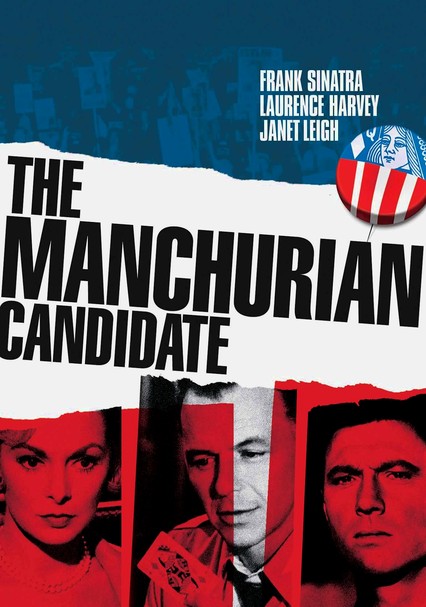
The Manchurian Candidate-1962

The Manchurian Candidate-1962

Director John Frankenheimer

Starring Frank Sinatra, Laurence Harvey

Top 250 Films #195

Scott’s Review #852

Reviewed January 3, 2019

Grade: A

The Manchurian Candidate (1962) is an enthralling film that perfectly captures the political landscape of the time and continues to be relevant in present-day politics. Taut mysterious and filled with great twists and turns, the film flows nicely and climaxes with a shocking crescendo.

With compelling performances by all and a brilliant musical score, the film fires on all cylinders and can be watched and enjoyed repeatedly.

Events began in 1952 during the bloody Korean War. A United States platoon consisting of several men is accosted by the Soviets and sent to communist China for experimentation.

Three days later, the men return as if nothing happened, and Sergeant Raymond Shaw (Laurence Harvey) is proclaimed a hero and awarded the Medal of Honor for saving the men’s lives. When the war ended, the men returned to the United States to resume their everyday lives.

Years later, Captain Bennett Marco (Frank Sinatra) suffers from recurring nightmares in which Shaw murders two missing soldiers in front of a panel in a bizarre brainwashing demonstration. When another soldier in the platoon has the same nightmares, Army Intelligence begins an investigation.

Further complicating the plot is Raymond’s ambitious mother, Eleanor Iselin (Angela Lansbury), and her attempt to use any means necessary to guide her husband, Senator Iselin (James Gregory), to further power.

The Manchurian Candidate is a film that requires attention to appreciate and understand.

The plot is highly complex, but that is a testament to the film’s composition and hardly a complaint. The viewer must stay on course to appreciate the intricate details.

Director John Frankenheimer is fantastic at adding unique dramatic effects and imaginative film-making. A prime example is the brainwashing sequence, as dialogue is interspersed between what the soldiers think is happening (a peaceful grandmotherly horticulture demonstration) and reality (a dastardly experiment involving murder and programming).

Despite Sinatra being billed as the lead in the film, the most treasured props go to Lansbury as Eleanor and Harvey as Shaw. Raymond is the most developed character, and he has several sides. He is primarily a loner who appears cold and harsh due to his being programmed to assassinate.

A sequence involving the love of his life, Jocelyn (Leslie Parrish), and a romantic summer they share is beautiful and innocent, contrasting with the dismal and manufactured “new Raymond.”

Lansbury has never been cast in a more challenging role. Eleanor is determined to stop at nothing to ensure her husband will reach the presidency and connives and cheats her way to the top. Still, the part is written as such to avoid making her a complete one-note character despite her ways.

In an eerie scene close to the finale, she vows payback for what has been done to Raymond and then plants an incestuous kiss on his lips. An odd and disturbing moment, the scene also justifies in her mind the lengths she has gone to get what she wants.

The musical score is lovely and contradicts the dour backstabbing and espionage throughout. Romantic and sweet melodies abound, and classic hymns like The Twelve Days of Christmas and The Star-Spangled Banner are included in the film.

As a result, The Manchurian Candidate’s score feels multi-faceted, patriotic, and artistic with enchanting results.

The Manchurian Candidate (1962) is a stellar film with a perfect blend of thrills, deceit, politics, and creative filmmaking to make it a bold classic. The final sequence is jaw-dropping in its finality and brutality.

Remade in 2004 with a great cast yet a poor script, avoid that one at all costs and enjoy the power and lasting effects of the original.

Oscar Nominations: Best Supporting Actress-Angela Lansbury, Best Film Editing

The Silent Partner-1978

The Silent Partner-1978

Director Daryl Duke

Starring Elliott Gould, Christopher Plummer, Celine Lomez

Top 250 Films #196

Scott’s Review #1,120

Reviewed March 10, 2021

Grade: A-

The Silent Partner (1978) is an exceptionally thrilling film that is relatively unknown to most moviegoers but is well-regarded by cinema lovers, especially fans of 1970s relics.

Watching the film alongside Brian De Palma’s clever and steamy Dressed to Kill (1980), one immediately notices similarities and can draw comparisons.

Might have DePalma even patterned his film after The Silent Partner?

Even the finest of directors borrow snippets of greatness from other directors. That’s the way it works.

It’s a shame that so few realize that the film even exists.

Starring Elliott Gould and Christopher Plummer, the late 1970s were not the best-known period for Plummer, but they were Gould’s heyday.

The film is also peppered with notable sequences reminiscent of Frances Ford Coppola’s 1974 masterpiece, The Conversation.

I can best describe the film as a Canadian heist film, but that might imply it’s cookie-cutter or generic. It’s not. It’s not even a “guy film”- it’s way more cerebral than that.

There is a style and momentum in The Silent Partner that is individual, with unique and unexpected trimmings along the way. The cat-and-mouse dynamic adds trickery and a murky nature that makes the film work.

Daryl Duke, unfamiliar to me and primarily known for television work, is at the helm as director, crafting the film from a screenplay by Curtis Hanson.

Hanson adapted his work from a Danish novel and should be familiar to movie fans for his participation in the thriller The Hand That Rocks the Cradle (1992) and the neo-crime thriller L.A. Confidential (1997).

Miles Cullen (Elliott Gould) plods along during the holidays at his bank teller job at the local mall. It’s Christmastime, and Miles is down because he attempted to ask out his co-worker Julie Carver (Susannah York), who is more interested in dating their married boss- for now!

After discovering a secret plot by the mall Santa Claus (Christopher Plummer) to rob the bank at which he works, Miles cunningly hides a large portion of the cash in his safe deposit box.

After the robbery, it is discovered that Santa is a deranged master criminal named Harry Reikle.  He discovers that he’s been duped by Miles and puts horrific pressure on Cullen to hand over the money.

I adore the added romantic angle that blossoms amid the cat-and-mouse antics between Miles and Harry. No sooner has Julie softened toward Miles than a mysterious and gorgeous woman enters the scene, claiming to know Miles’s father.

Elaine (Celine Lomez) is flirtatious and immediately wants to bed Miles, but what is she up to?

From a character perspective, Miles and Harry are great studies. Related to the aforementioned films, Miles exhibits qualities similar to Harry Caul in the brilliant The Conversation. Suspicious, paranoid, and intelligent, he is the perfect counterpart to Harry.

Michael Caine played a transvestite in Dressed to Kill (1980), and Harry’s mascara, long nails, and fishnet top made me feel he possessed those qualities, though the film never confirms this.

Psychologically speaking, Harry is disturbed by his treatment and the perceived hatred he expresses towards women. He picks up and beats a young prostitute unconscious.

Is there a gay vibe? Most certainly, especially when Harry looks longingly at Miles during more than one scene as he watches Miles in his apartment and proclaims, “You know we are partners, right?”

Plummer is great, and I can’t recall seeing any of his roles so villainous; he plays it superbly.—afar cry from the musical patriarch in The Sound of Music (1965).

The Silent Partner contains one of the most gruesome murder scenes I’ve witnessed in the cinema. It involves decapitation and a fish tank and is so shocking and unexpected that viewers may audibly gasp during the scene.

Nearly rivaling this is the great finale and a justified death on the mall escalator. It is fun to revisit the time when malls were flocked to, especially during the Christmas holidays.

The Santas, decorations, big crowds, and music made The Silent Partner walk down memory lane.

A great and sadly lost gem, The Silent Partner (1978) is a film for movie lovers to check out, embrace, and fall in love with. A perfect watch would be around the Christmas holidays.

Hopefully, with word of mouth, this film will be rediscovered.

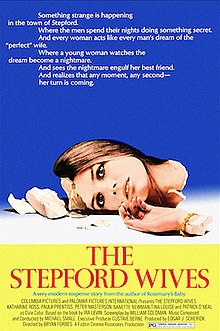
The Stepford Wives-1975

The Stepford Wives-1975

Director Bryan Forbes

Starring Katharine Ross, Paula Prentiss, Peter Masterson

Top 250 Films #197

Top 40 Horror Films #26

Scott’s Review #1,395

Reviewed September 4, 2023

Grade: A

The Stepford Wives (1975) is a film that has deservedly achieved cult status over the years and its title became iconic in meaning.

Everyone knows what a ‘Stepford wife’ is and what it depicts. Usually, a tall, leggy, brainless rich white woman from Connecticut is a sufficient enough image.

The film is a personal treasure to me since I am a resident of said state. The fact that ‘Stepford’ sounds like ‘Stamford’ where I live is uncanny and ironic. The film was shot in various areas of Connecticut so it’s fun to see the towns, grocery stores, and houses in the mid-1970s.

It also resonates quite well with my husband who lived in Manhattan for many years and then transplanted to nearby Connecticut just like the main characters do.

Besides my fondness, it’s a damned good thriller. It paces nicely and takes its time getting to the stunning conclusion.

The film was written by William Goldman (All the Presidents Men-1976), who based his screenplay on Ira Levin’s 1972 novel of the same name. Levin also wrote Rosemary’s Baby which was turned into a 1968 film.

The Stepford Wives and Rosemary’s Baby would make an outstanding double feature.

Joanna Eberhart (Katharine Ross) moves to the quiet town of Stepford, Connecticut, with her husband Walter (Peter Masterson) and children. The town seems idyllic and maybe just a little too perfect for her tastes.

Along with best friend and fellow Stepford resident Bobby (Paula Prentiss), the women notice that the other housewives are not quite ‘normal’. They obsess over housework and are willingly subservient to their husbands.

Joanna and Bobby are determined to solve the mystery especially when they realize there used to be a large women’s liberation group in Stepford.

In a lesser film, the final product could dive headfirst into campy horror. A tepid remake made in 2004 and starring Nicole Kidman did. But the original version stays the course and provides thrills and psychological facets.

The audience knows pretty soon that the men have a secret club that women are not permitted to attend. Named the Men’s Association, a major clue surfaces when Walter invites the men over to his house and they secretly look Joanna up and down.

What we don’t know is the how. Joanna, Bobby, and another neighbor Charmaine Wimperis (brilliantly played by Tina Louise) are the only ‘normal’ wives. Realizing which one of them is the next intended victim is part of the fun.

The women’s portraits are drawn by one of the men and we learn that the previous women have ‘turned’ after going away on a romantic weekend with their husbands.

What’s inside the creepy mansion that holds the Men’s Association meetings? Will Joanna sneak inside? What will happen next?

Delicious sequences occur that reveal that housewives are robots. After a minor fender bender in the local shopping center parking lot, Carol (Nanette Newman) begins acting strangely at an outdoor cocktail party. She repeatedly frets and repeats the same line over and over again.

Her husband blames her odd behavior on alcohol but the audience knows better.

Unforgettable is the stellar grocery store finale when the women are dressed to the nines and robotically shuffle through the aisles. They absent-mindedly take items off the shelves and place them into their carts while acknowledging each other with a pleasant ‘Hello, Charmaine”, or “Hello, Carol”.

My favorite scene is close to the finale between Bobby and Joanna. Horrified at Bobby’s transition to an uptight, well-dressed housewife obsessed with a clean kitchen, Joanna impulsively plunges a butcher knife into Bobby’s midsection.

With no bloodshed proving Bobby is a robot, Bobby calmly scolds Joanna by saying over and over again, “Now why would you do a thing like that?”

The scene is creepy, startling, and powerful given the close relationship between the women.

These scenes and others make The Stepford Wives (1975) part of pop culture and a reason I can watch the film several times over.

Featuring a cast of good actors led by Ross who successfully provides Joanna with both likability and sensibility the film is never over the top or ridiculous.

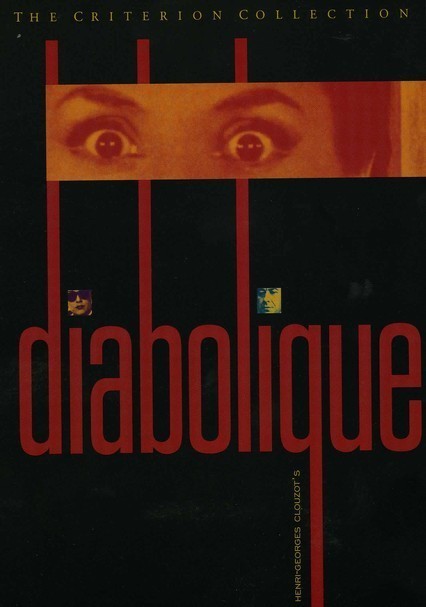
Diabolique-1955

Diabolique-1955

Director Henri-Georges Clouzot

Starring Simone Signoret, Vera Clouzot, Paul Meuisse

Top 250 Films #198

Top 40 Horror Films #27

Scott’s Review #878

Reviewed March 16, 2019

Grade: A

Diabolique (1955) is a masterful French thriller as compelling as frightening. It will have an insurmountable influence on future generations.

Shamefully remade and Americanized in 1996, starring Sharon Stone, a waste of time if you ask me, the original is the one to discover.

The film perfectly blends psychological intrigue, never-ending suspense, and even a good mix of horror that Hitchcock would find impressive (more about him later). Its pacing and frequent twists and turns make it brilliant.

Directed by Henri-Georges Clouzot, Les Diaboliques is set in a crumbling boarding school in Paris. Sadistic headmaster Michel Delassalle (Paul Meuisse) runs a tight ship but works for his Venezuelan wife, Christina (Vera Clouzot), who owns the school.

Michel is immersed in a torrid affair with schoolteacher Nicole Horner (Simone Signoret) and regularly abuses both women as well as his students. The two women embark on a plot to kill Michel, but when they succeed in their plan, Michel’s body goes missing.

The women panic.

In a few fun trivia tidbits, director Clouzot optioned the screenplay rights right after finishing Wages of Fear (1953), preventing Hitchcock from making the film. This movie helped inspire Hitchcock’s Psycho (1960).

Robert Bloch himself, the author of the novel version of Psycho, has stated in an interview that his all-time favorite horror film is Diabolique. If the film displays nuances incorporated in Psycho, this is undoubtedly the reason.

Clouzot also directs his wife, Vera, in the prominent role of Christina.

Hitchcock could have made the brilliance since the entire experience has his stamp and influence even though his best works lay ahead of him in 1955.

Still, from the Gothic mood to the “can’t believe your eyes” twisted, blood-curdling ending, the director immediately comes to mind every time I watch the film. The “shock” ending only exceeds expectations with a fantastic delivery.

The film takes an unusual stance on the dynamic between the two women, Christina and Nicole. Rather than take a traditional route and make the women rivals for the man’s affections, Clouzot makes the pair co-conspirators.

This only deepens their relationship as events unfold and take a darker and more dire turn.

They rely on each other as teammates rather than despise each other over their love for another man. Intelligently, they spend their energy ensuring the insipid man gets his just comeuppance for his dirty deeds.

Nicole leads Christina in the direction she needs to go.

The black-and-white cinematography is highly influential on the mood. With each unexpected twist or scene of peril, the lighting radiates suspense. The camera juxtaposes the frequent glowing of the white against the dark black, exuding a frightening, ghost-like presentation.

The entire setting of the school is laden with dark corners that provide good elements of foreboding and sinister moments to come.

As the women become more and more unnerved by the limitless possibilities that the missing body presents, many questions are asked but are impossible to answer. “Where is the body?”, “Could Michel be alive?” “If he is alive, is he hell-bent on revenge?” The viewer will also ask these questions throughout most of the final half.

When an unknown person begins to call the women, the questions multiply.

Clouzet uses frequent shots of objects to enhance the tension even further. There are close-ups of a dripping bathtub, a typewriter with a man’s hat and gloves, a woman’s feet as she removes her shoes, and a woman running in terror through the school.

These facets only enhance the overall experience as the suspense and the terror begin to mount.

Diabolique (1955) is considered one of the greatest thrillers of all time, and I concur with this assessment. A French version of Psycho (1960) that combines an acclaimed director’s ingenious subtle ideas into a giant web of delicious filmmaking.

The surprise ending is never seen coming, even if the viewer thinks they have the plot figured out. This point alone is reason enough for the film to realize its greatness.

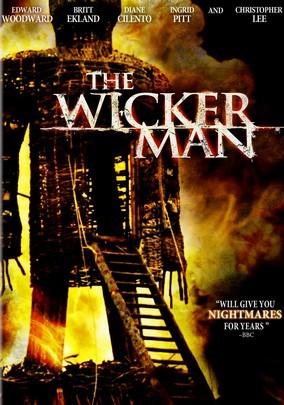
The Wicker Man-1973

The Wicker Man-1973

Director Robin Hardy

Starring Edward Woodward, Christopher Lee

Top 250 Films #199

Top 40 Horror Films #28

Scott’s Review #245

60021185

Reviewed May 31, 2015

Grade: B+

The Wicker Man is a cult horror film from 1973 that is considered one of the finest by horror critics.

While the film does not enamor me quite as much as some other favorites in the horror genre (Halloween, Rosemary’s Baby, The Shining, Dressed to Kill, and Suspiria) immediately spring to mind while thinking of 1970s-style horror gems, I cannot help but admire The Wicker Man’s creativity and religious overtones.

Despite not awarding the film a solid “A” rating, I look forward to viewing it again, and perhaps, over time, as some films do, it will see an adjustment in its scoring.

Set on an island in the Scottish Hebrides, named Summerisle, a devout Christian (Edward Woodward) named Sergeant Howie travels to the island in search of a missing young girl named Rowan Morrison, thought to have disappeared under mysterious circumstances.

The inhabitants are vague, aloof, or hostile towards the policeman. He is immediately disturbed to notice the group worships Celtic gods and notices other strange acts of worship and sexual behavior (a naked dance), which he resists and disapproves of.

He is tempted by a gorgeous seductress, Willow, played by Britt Ekland, most notably known as a Bond girl in The Man with the Golden Gun, and butts heads with the island leader, Lord Summerisle, played by horror legend Christopher Lee.

As he attempts to locate the missing girl, he uncovers some very dark goings-on around the island as the annual Mayday harvest celebration approaches. He deduces that Rowan is slated to be the sacrifice at the celebration, and he races to find her before it is too late.

But is there more to the island than meets the eye?

The Wicker Man is not mainstream fare, and that is what I admire most about it, as well as its British flair. It strives to challenge the norm in horror and to question who is right, who is wrong, and who the audience should champion.

Religion and the occult have been portrayed in horror films for eons, but rarely given a normal face. Typically, the villains are scary, horrid, or even cartoonish, clearly defined as bad.

Despite all the townspeople being in on the sacrifice, they seem ordinary. They raise their kids, farm, run stores, and teach the kids in a classroom setting.

On the surface, they appear wholesome, and that is part of what makes The Wicker Man so scary. Rosemary’s Baby did the same thing.

Typically, any sort of satanic overtones or human/animal sacrifices frighten audiences, especially if the culprits could be their neighbors, friends, or even loved ones. The realness is unnerving.

Differing, controversial, religious beliefs are a prevalent theme throughout The Wicker Man, as are elements of good vs. evil.

The film is not predictable. It delves into questions of morals and beliefs- for example, Howie is a virgin- saving himself for marriage and trying to be a good, decent person.

He is the moral center of the film and, in his belief, everyone on the island is either perverted, crazy, or a sinner.

By this logic, Howie looks down on others who are dissimilar to him and comes across as preachy. I do not get the impression that the film wants the audience to love Howie- or hate him.

The balance between the old gods (Christianity) and the new gods (Celtic paganism) makes the film interesting.

The shocking conclusion involving an enormous, life-sized, burning wicker man is terrifying beyond belief and, by far, the best part of the film, as the hero must come to terms with his fate.

The final thirty minutes are quite spectacular, from the final twist to the ending.

My lack of an exceptional grade for The Wicker Man stems from it being a tad too slow-moving. Perhaps a few additional jumps or frights along the way would have been beneficial, but, on the other hand, it is not a scary film, nor does it try to be.

It is, however, quite intelligent and, I suspect, will increase my enjoyment with each subsequent viewing.

A fine addition to the relics of classic horror, The Wicker Man (1973) is a creative, mysterious, and left-of-the-center film.

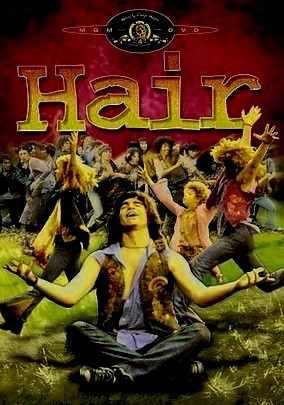
Hair-1979

Hair-1979

Director Miloš Forman

Starring John Savage, Treat Williams, Beverly D’Angelo

Top 250 Films #200

Scott’s Review #664

Reviewed July 14, 2017

Grade: B+

Hair is a 1979 musical film that, in addition to catchy singing and dance numbers, explores a serious theme: the Vietnam War.

This film is not your typical Metro-Goldwyn-Mayer-style musical from the 1950s. Rather, the entire experience is a unique, with an underlying dark tone, and is presumably a message film with a liberal slant.

Made in 1979, set in the late 1960s, Hair centers primarily on two young men and a bevy of hippie friends, with most of the action in New York City.

Despite the time, the film does not always succeed in the authenticity category- many of the costumes and hairstyles scream the late 1970’s.

The film also has the late 1970s “look”, on the cusp of the 1980s, with poofy hair associated with the times.

This forces the viewer to escape into a world largely of make-believe.

Claude (John Savage) is a naïve young man from folksy Oklahoma, having lived a sheltered, religious life, proper and away from big-city living.

He is drafted and sent to the Big Apple, where he will await his assignment.

Charismatic Berger (Treat Williams) and company befriend Claude after he gives them spare change, soon becoming the best of friends. Claude falls in love with socialite Sheila Franklin (Beverly D’Angelo), who is in town from neighboring Westchester County, NY, and a love story ensues.

When Claude, Berger, and company interrupt a lavish dinner party hosted by Sheila’s parents, a hilarious yet informative scene develops.

While Sheila is secretly gleeful at the arrival of her new friends, her parents are none too pleased, resulting in a standoff between Berger and Sheila’s family.

Partly comical, this scene also reveals the stark class distinctions among many of the characters.

The rest of the film centers on the friend’s antics involving drug use, relationship trials and tribulations, and culminates in a cross-country drive to see Claude before he is shipped to Vietnam desperately.

Multiple scenes involve songs concerning the turbulent race issues of the times- my personal favorites are the opening number, “Aquarius”, and the scandalous, “Black Boys” and “White Boys”, performed by Nell Carter.

Never one to be disappointed with a film set in Manhattan, Hair is a film basking in fantasy, and the entire production seems to be one big dream as the carefully crafted musical numbers are interspersed with the more dramatic elements.

Still, much of the film consists of the group prancing around Manhattan, with wonderful areas such as Washington Square Park featured, as well as several changes of season, giving the film a slice-of-life feel.

My favorite performance is that of Treat Williams as Berger. Part showman, part jokester, and part earnest, he fills the role with dynamic energy that comes full circle in the last act when he drastically changes his appearance for the sake of a friend.

The film’s ending is melancholy and an inevitable reminder of the coldness and finality of war in human life.

The encompassing song is “Let the Sunshine In”, a powerful and worthy conclusion to the film as the gang visits Arlington National Cemetery, to join an anti-war peace rally and say goodbye to a friend.

The film version of Hair (1979) may be drastically changed from the stage musical version,  a version I shamefully have yet to see. Still, on its own merits, the film is a poignant, powerful, and wholly entertaining musical adventure.

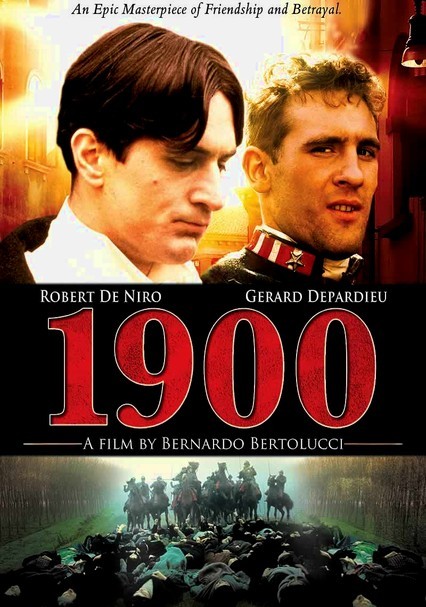
1900 (Novecento)-1977

1900 (Novecento)-1977

Director Bernardo Bertolucci

Starring Robert De Niro, Gerard Depardieu, Dominique Sanda

Top 250 Films #201

Scott’s Review #984

Reviewed January 28, 2020

Grade: A

An epic to rival all epics, 1900 (Novecento) (1977) is a grandiose offering of monumental proportions featuring legendary actors and created by a brilliant director.

With a running time of a whopping 317 minutes in its original version, 1900 is known as one of the longest commercially released films ever made.

The cinematography is breathtaking, and the historical themes, such as friendship, class distinctions, and rivalry, are explored in depth.

The key is to let the experience marinate and blossom through a slow, patient build.

Brilliant director Bernardo Bertolucci’s tale follows the lives of two Italian men, a peasant named Olmo (Gerard Depardieu) and landowner Alfredo (Robert De Niro), both ironically born on January 1, 1900.

Inseparable as children, the two become estranged as their differing social statuses pull them apart. Their conflicts mirror the political events in Italy, as both fascism and socialism gained prominence there.

Here is a bit of background on the film.

Due to its length, the film was presented in two parts when originally released in many countries, including Italy, East and West Germany, Denmark, Belgium, Norway, Sweden, Colombia, Pakistan, and Japan.

In other countries, such as the United States, a single edited-down version of the film was released.

The latter is not the way to watch this film. I do not like heavily edited films, especially in an epic like 1900, so the full-length version is highly recommended.

The film opens on April 25, 1945, the day Italy is liberated from the fascists, and this is key to the political message Bertolucci crafts. As peasants revolt against the landowner, Alfredo (De Niro) and female laborers wield deadly pitchforks, creating an atmosphere of chaos.

We know nothing of Alfredo yet, but we know enough to realize he is rich and perceived as a tyrant. The natural reaction is to sympathize with them because they are oppressed.

As the film backtracks to the turn of the century, a more elegant scene emerges: the births of two infants, Alfredo and Olmo. The sequence is sweet, and both babies are bright and filled with promise.

Sadly, this is not meant to be.

A railway track is an important addition to the film, culminating in the finale.

The most interesting aspect of the film is the dynamic development of Alfredo and Olmo as they grow. Alfredo resents his family’s wealth and sides with Olmo, a socialist. Alfredo sees his family as false and Olmo and his family as genuine.

This aspect is timeless and can be related to by any viewer with any intelligent sense of the world today. The obvious analogy between the haves and have-nots is clearer than ever in this film. Frightening is that some have-nots are convinced they will one day become the haves.

The messages and feelings elicited in 1900 are strong and emotional. Aren’t all men created equal? On the surface, they are, but Alfredo and Olmo are not equal. As the birth scene reveals and as Bertolucci makes clear, they are born with advantages and disadvantages.

These characteristics are what they are, and as human beings grow and learn social norms, financial differences become more pronounced and humanistic connections weaker.

If the social aspects of the film or the brilliant cinematography are not enough to please a viewer, the historical lessons presented are second to none. One can revel in the political and historical excitement that characterized Europe throughout the forty-five years the film is set.

I wish Hollywood made more films like this.

1900 (Novecento) (1977) can be enjoyed as both a grandiose, dramatic period piece, revered for its majestic and flourishing design, and as a thought-provoking film about unresolved social class distinctions in the world.

I found the film a treasure that works on all levels and showcases just how good a director Bertolucci is.

This film is not his best-known work, but for fans of cinema as an art form, this is a must-see.

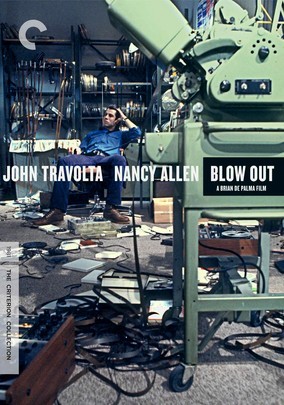
Blow Out-1981

Blow Out-1981

Director Brian De Palma

Starring John Travolta, Nancy Allen

Top 250 Films #202

Scott’s Review #574

Reviewed December 31, 2016

Grade: A-

The follow-up to the 1980 masterpiece Dressed to Kill, Blow Out is a Brian De Palma film that carves a web of intrigue and mystery, starring some of the same cast members as Dressed to Kill (1980) and Carrie (1976).

Comparisons can be drawn to the trio as they are all in the psychological thriller/horror vein; notwithstanding, the predecessors are the superior films.

Blow Out is not quite on the level with those masterpieces, but it is still a worthy effort and a must-see for fans of De Palma’s work.

John Travolta and Nancy Allen are the stars of the film, recreating the chemistry they had in Carrie. In that film, the pair are the clear villains, but in Blow Out, they are the heroes and have a rooting value.

Dennis Franz appears as a shady thug, and John Lithgow is superb as the dastardly Burke, hired to commit a crime and enjoying it all too much.

Travolta plays Jack Terry, a sound effects technician who works and lives in Philadelphia, Pennsylvania. He works on low-budget horror films and is highly respected for his craft. Alone in a remote park, recording sound and video, he records a car careening off a bridge into a creek.

He saves Sally (Allen) from the sinking car, and this is the point in the film where the intrigue takes off. The driver of the car is a governor, and he has died. Sally was having an affair with the governor, and his aides are intent on covering this up.

To make matters more complicated, Jack has detected a gunshot on his recording, just before the crash, leading to obvious foul play.

I adore the beginning sequence of the film- my favorite. The film begins as a slasher film, unbeknownst to the audience. A collection of dizzy college girls dance, drink, and shower, as the cameras are placed outside of the dorms.

We see all of the action through the glass windows, then the Steady Cam is used from the killer’s point of view. This is a highly effective scene and rather humorous too. Inevitably, a creepy killer appears in the shower to butcher one of the college girls until the real beginning of the film starts.

This aspect is clever on De Palma’s part. Why not trick the audience early and keep them guessing?

Also compelling is the film’s villain, Lithgow. Typically playing sweet-natured characters, it was interesting to see him as a maniacal killer- and reminiscent of the crazed killer from Dirty Harry, in his harried, grotesque facial features.

One particularly chilling scene involves the murder of a prostitute at the train station. I like this scene because the audience gets to know her a bit before she meets her fate- adding a level of empathy for the victim.

The Philadelphia location sequences are enjoyable and lend authenticity to the film, particularly the train station. Grizzled, dirty, and bustling, the locales set the film’s tone.

The chemistry between Travolta and Allen is decent, though I found more of it in Carrie. I did not care for Allen’s use of an accent- intended to be a Philadelphia accent, it seemed a New Jersey one to me, and does not work at all in the film.

This distraction is the film’s only weak point.

All in all, Blow Out is a very good film. It combines mystery, political intrigue, and the famed De Palma stamp, which in itself is worthwhile enough to watch.

Blow Out (1981) contains a dreamlike element, as Carrie and Dressed to Kill did before it, which only enhances the mystique. The not-so-happily-ever-after ending is superb.

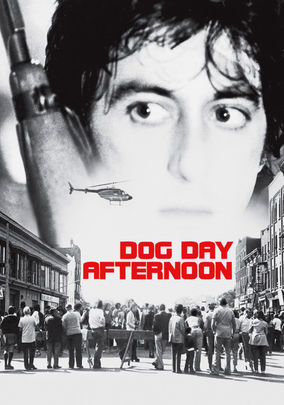
Dog Day Afternoon-1975

Dog Day Afternoon-1975

Director Sidney Lumet

Starring Al Pacino, John Cazale, Chris Sarandon

Top 250 Films #203

Scott’s Review #185

450423

Reviewed October 13, 2014

Grade: A-

Director Sidney Lumet successfully sets the smoldering hot summer afternoon in New York City for his 1975 film Dog Day Afternoon.

Al Pacino plays Sonny, an unemployed, desperate man who, while married with two kids, has a gay lover, Leon (brilliantly played by Chris Sarandon), whom he is attempting to help finance a sex change operation.

Based on a true story, Sonny, along with his dimwitted friend Sal- played by John Cazale- decides to rob First Brooklyn Savings Bank.

Predictably, their plans go awry when Sonny burns a ledger during the robbery attempt, and a pedestrian sees the smoke and alerts the police.

As the police become aware of the attempted heist, a standoff ensues between Sonny and the cops, led by Detective Moretti (Charles Durning), and the robbery receives media coverage.

Most of the action is set inside the stifling hot bank and directly outside on the street, and gradually the supporting characters come into play- the hostages, Sonny’s mother, wife, and lover all make contact with Sonny in some way or another, and his motivations become clearer to the audience.

Dog Day Afternoon is an anti-establishment movie, in this case anti-police, questioning the government and the financial establishment (Lumet also directed Network, challenging the establishment).

This is evident when, after a standoff with police, the crowd sides with Sonny as he chants “Attica!” Attica!, which is a direct reference to a recent prison riot.

Sonny speaks for the working class- the poor, struggling, underpaid workers who cannot afford to feed or adequately take care of their families.

The heat and humidity compare perfectly to the pressure felt by most middle-class people that still resonates today and leaves the viewer contemplating their life.

Sonny relates to the bank tellers who do not earn much. Besides, Sonny is sympathetic to the audience in another way. Leon, recently hospitalized at Bellevue Hospital, is emotionally dependent on Sonny. He would be lost without him.

They share a lengthy and heartfelt phone conversation that is the heart of the film- gay romance had not been explored this way by 1975 in cinema, and the romance was neither shoved down the audience’s throat nor was it looked past entirely.

Their relationship is tender and deep, yet still somewhat ambiguous.

Would they stay together? What would become of Sonny’s wife and two children? Would he leave them for Leon in a world that was not ready to accept two homosexual men together? Is that the reason for Leon’s desire for a sex change operation?

Chris Sarandon, in too small a part, is wonderful as the gay lover, struggling with a sexual identity crisis. Al Pacino gives, per usual, a brilliant portrayal as he takes on a complex character who is far from one-dimensional.

Perhaps not a masterpiece, Dog Day Afternoon is a very good film, but neither is it strictly a gay-themed movie nor an action/thriller- it’s more complex than that.

Ironically, Sonny is portrayed as the hero of the film, as it is not a standard good police versus bad bank robber type of film- quite the contrary. It is much, much more than that.

Oscar Nominations: 1 win-Best Picture, Best Director-Sidney Lumet, Best Actor-Al Pacino, Best Supporting Actor-Chris Sarandon, Best Original Screenplay (won), Best Film Editing

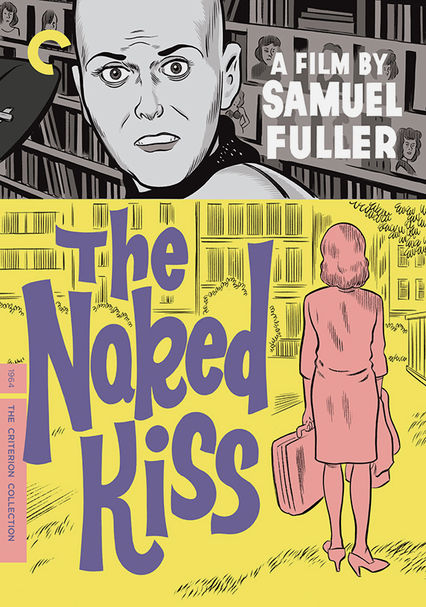
The Naked Kiss-1964

The Naked Kiss-1964

Director Samuel Fuller

Starring Constance Towers, Michael Dante

Top 250 Films #204

Scott’s Review #1,346

Reviewed February 25, 2023

Grade: A

A pure treat for me is seeing a film, especially a classic film, that exudes creativity and a left-of-center approach. In the 1960s, cinema films started to break away from the tried-and-true and safe, telling sinister stories of macabre and unusual human behavior.

Samuel Fuller bravely created The Naked Kiss (1964), a film that goes beyond well-meaning but straightforward offerings. Dusting off the film noir genre, it is riddled with perfections like the tarnished glitter of small-town Americana and the secrets beneath the surface.

It also dares to delve into the lustful and perverse depths of abnormal human psychology, a feat few films achieved in the old days.

The film is a B-movie with black-and-white filmmaking, enhancing its power and lurid nature.

Eager to start a new life, a prostitute named Kelly (Constance Towers) arrives in a small town but finds the sunny veneer and the residents’ cheery, wholesome dispositions to be a sham.

Kelly meets the handsome town sheriff, Griff (Anthony Eisley), and her eventual fiancé, Grant (Michael Dante), but ultimately, both men have something to hide.

Hard to believe, but we do anyway, is the haughty incorporation of a secret small-town brothel with one gorgeous prostitute after another. It is led by the evil madame Candy, portrayed by Virginia Grey.

Constance Towers easily carries the film as Kelly. Towers did not make many films, but later became well-known in theater circles before becoming a legendary villainess on the ABC daytime drama General Hospital.

Kelly is sultry yet highly learned and intelligent. She is not afraid to use her smarts to get ahead. She calculates and wisely pursues opportunities to stay on the straight and narrow while using a man or two to get what she wants and needs.

Despite this, she is kind and revels in caring for children of all colors and backgrounds. She also watches out for her fellow nurses. One of them, Buff, nearly stumbles into a life of prostitution if not for Kelly daringly describing what her new glamorous life would ultimately become.

Thanks to Towers, Kelly relays every possible emotion to the audience, from comedy to love, horror, and controlled manipulation.

I don’t think I’ve seen any other projects by director, writer, and producer Fuller, but I want to. Perhaps only a coincidence since the films were made in the same year, but comparisons to Alfred Hitchcock’s Marnie (1964) are noticed.

Kelly briskly combs her blonde hair while looking into a mirror and smirking, reminiscent of Marnie doing more or less the same in Hitchcock’s classic. Both characters are tall and leggy blondes with a secret or two to hide and damaged psyches to preserve.

They also each arrive in a new town, presumably to start over. Boldly carrying a suitcase and wearing a bright grey business suit, they proudly walk down a suburban street with possibilities ahead.

The Naked Kiss is a very progressive and feminist film.

During the first scene, Fuller shows what few directors ever would- a female character with a shaved head. Kelly has been humiliated for the last time and takes her owed $75 from her pimp. Kelly’s honest personality is revealed in this scene since she could have quickly taken $900 from him and fled.

The cagey and spiteful underbelly of suburban life is exposed. A  pointed critique of small-town hypocrisy and the exploitation of women is nearly at every turn.

Another comparison to the masterpiece The Night of the Hunter (1955) is worth mentioning since the use of child characters in haunting form appears in both films.

The theme of pedophilia is powerful and sickening, but portrayed with a warped sense of a fairy tale.

Finally, the cinematic use of harsh, glowing white light makes many characters appear angelic, which works tremendously well.

Because of Fuller’s direction and Towers’s great acting, Kelly’s character is portrayed well. As a result, we get a character study to savor and a strong female character to root for. Both aggressively champion their respective areas of expertise.

The Naked Kiss (1964) challenges the rules of early 1960s filmmaking and storytelling. It is a brave journey through humankind’s dark natures, breaking every rule as it progresses.

East of Eden-1955

East of Eden-1955

Director Elia Kazan 

Starring James Dean, Julie Harris, Jo Van Fleet

Top 250 Films #205

Scott’s Review #1,092

Reviewed December 17, 2020

Grade: A

James Dean wasn’t with us for very long, tragically dying at the tender age of twenty-four, but he made three films: Rebel Without a Cause (1955), Giant (1956), and East of Eden (1955), all-powerful showcases and unique.

Dean gives a brilliant, humanistic, and sometimes tragic performance.

East of Eden, his first film, is the only one he got to preview. I hope he liked it because it will live forever as a gem.

Based on the John Steinbeck novel of the same name, the story is also a biblical retelling of Cain and Abel, brothers who clash and spar. Director Elia Kazan, famous for supporting and using Method actors in his films, gave a tremendous performance as Dean, which was key to the film’s empathetic nature.

The key to East of Eden is that it reflects on several characters, who are both good and bad, possessing qualities of both, detailing their struggles.

Nobody is completely good or completely bad. The story analyzes good versus evil and the multitude of layers between both extremes, making the experience juicy, truthful, and brilliant.

Set in 1917, during World War I, two sunny coastal California towns are the backdrop for the action. Cal Trask (Dean) perceives his father, farmer Adam (Raymond Massey), as favoring Cal’s brother, Aron (Richard Davalos). This leads to much resentment, jealousy, and conflict. Aron is the apple of Adam’s eye, and we wonder why.

Furthering the drama is Cal’s love for Aron’s girlfriend, Abra (Julie Harris), who doesn’t rebuff any advances. Cal and Aron’s mother, Kate (Jo Van Fleet), who they think is dead, is alive and well and running a brothel in a nearby town. Assuming a different name, she harbors secrets.

Before you get the impression this is some cheesy soap opera, East of Eden, like the novel, is heavily character-driven and nuanced with development. It ultimately draws the audience in and envelops everyone in its simmering qualities.

East of Eden is packed with powerful scenes after powerful scenes, and in more than one, the allegiances and rooting values shift from character to character.

Some of the best moments are when Cal self-destructs after his father refuses his birthday gift, or when Cal cruelly reveals the true nature of their mother’s profession to the innocent and unsuspecting Aron.

Finally, Cal and Abra’s kiss atop a Ferris wheel is filled with smoldering desire and deadly consequences.

The acting was tremendous across the board. Much of the credit must go to Kazan for pulling fabulous performances out of the players, a talent only a Method acting director can achieve.

While the cast is exceptional, the film belongs to Dean, who provides enough emotion and vulnerability to sustain his character’s topsy-turvy, tortured existence. Knowing that the actor died soon after filming gives the film an eerie and sentimental feel.

This is comparable to a more modern-day example when Heath Ledger died after giving a brilliant performance in The Dark Knight (2008).

This is hardly a war film or a guy’s film, as the ladies also get to shine with rich characters. Julie Harris and Jo Van Fleet portray flawed characters in juicy roles rife with meaty scenes filled with conflict.

As with most of Steinbeck’s works, specifically The Grapes of Wrath, the landscape is a character, and East of Eden is no exception. With dusty roads and mountainous backgrounds, events ooze with atmosphere and beauty.

The lush northern coastal California landscape portrays a grandiose magnificence that counterbalances the conflict its inhabitants are experiencing.

The central note to take away from East of Eden (1955) is that we are complex creatures with a mixture of good and evil. We sometimes want to do the right thing, but in doing so, we hurt those we love. The main characters suffer from pain, regret, good intentions, poor decisions, and loss.

The rich dialogue, adaptation, acting, and cinematography make the film near perfection.

Oscar Nominations: 1 win-Best Director-Elia Kazan, Best Actor-James Dean, Best Supporting Actress-Jo Van Fleet (won), Best Screenplay

Spellbound-1945

Spellbound-1945

Director Alfred Hitchcock

Starring Ingrid Bergman, Gregory Peck

Top 250 Films #206

Scott’s Review #1,015

Reviewed April 24, 2020

Grade: A-

One of Alfred Hitchcock’s early American films, after his voyage from his home base in London to the United States soil, proved profitable and critically acclaimed.

Spellbound (1945) followed Rebecca’s box office and awards success (1940).

Probably the most spoofed of all the Hitchcock works in the 1977 Mel Brooks parody High Anxiety, Spellbound provides a psychological storyboard that uses enough vehicles like amnesia, hypnosis, and danger to impress any daytime soap opera writer.

Not in the director’s top arsenal or remembered well, but a stellar effort.

Youthful Doctor Anthony Edwardes (Gregory Peck) arrives one day at the sprawling Green Manors Mental Asylum as the new director.

After falling for each other immediately, the beautiful Doctor Constance Petersen (Ingrid Bergman) discovers that Edwardes is not who he claims he is. Instead, he is a paranoid amnesiac impostor, more reminiscent of a patient. This gives new meaning to the phrase “the inmates are running the asylum.”

Constance becomes obsessed with answering the following questions: What happened to the real Dr. Edwardes? If Edwardes has been kidnapped or murdered, who is responsible? Who is the gorgeous man she has just fallen head over heels for?

The intelligent psychoanalyst must practice what she preaches by becoming a sleuth and figuring out what is happening. The action occurs in bustling New York City and snowy Rochester, New York.

I love the progressive nature of the story.

To have a leading female character with a lofty professional status is admirable, given the year 1945, when female roles were beginning to evolve.

While most of the roles that Hollywood heavyweight Bette Davis portrayed in the 1930s and 1940s were vital and substantial, this was the exception and not the norm.

Bergman, quite beautiful, does not need to play sex kitten to make her character sexy. She does well with that by wearing glasses and a lab coat, using her character’s intelligence to her advantage.

In 1945, Alfred Hitchcock was still considered a “new” director by most and was only beginning to make his mark on audiences unfamiliar with his work. His cunning and masterful use of lighting and shadows to produce suspense is evident in Spellbound.

The faces of Constance and Anthony glow with a combination of warmth and suspicion, and both are wonderful at eliciting emotion through subdued facial expressions. While Peck is slightly wooden, it does add a dimension to his uncertain character.

With Hitchcock, the atmosphere is everything. The treats are magnificent, like shots of the old Penn Station and Grand Central Station, monumental parts of everyday New York City life. They provide a glimpse of bustling commuter life in the 1940s before most of us were born.

Undoubtedly, many extras and non-actors were used to enrich the scenes and offer what regular people looked like in those days.

As Constance and Anthony team up to determine what secrets lie beneath his subconscious, they board a train for the seclusion of upstate New York, where more secrets are revealed. A heavy dose of psychoanalysis and hypnotism allay the film’s best scene.

Anthony sinks into a dreamlike world where he sees strange objects fraught with symbolism: a man with no face, scissors, playing cards, eyes, and curtains. What do they all mean? Fans will have fun piecing together the clues to solve the mystery.

The works of Salvador Dali, a famous surrealist artist known for bizarre and striking images, are displayed during the dream sequence. Though limited, they envelop the scene with fright and mystique and are a perfect addition to the odd sequence.

Shot in black and white, the final scene adds a blood-red image as a character turns a revolver on themselves and commits suicide. When Anthony drinks a glass of milk, the camera is inside the bottom of the glass, creating a hallucinogenic effect.

While Peck does his best with a peculiar character, Anthony is not as interesting as Constance, Doctor Alex Brulov (Michael Chekhov), or Doctor Murchison (Leo G. Carroll). I would have loved more scenes or a backstory for Brulov, as it would have allowed me to get to know him better.

Anthony has some light annoyances, such as when he inexplicably passes out whenever events become too much for him.

Spellbound (1945) is the perfect accompaniment for a snowy winter night, with its warm and cozy look, soothing atmosphere, and musical score.

Perfect to watch in tandem with High Anxiety (1977) for a double punch of suspense and appreciation for the film, with the humor and satire it furnishes. While not the best of Hitchcock films, it stands proudly on its merits.

Oscar Nominations: 1 win-Best Motion Picture, Best Director-Alfred Hitchcock, Best Supporting Actor-Michael Chekhov, Best Scoring of a Dramatic or Comedy Picture (won), Best Cinematography, Black-and-White, Best Special Effects

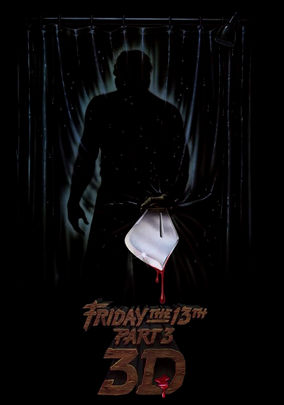
Friday the 13th: Part III: 1982

Friday the 13th: Part III: 1982

Director Steve Miner

Starring Dana Kimmell, Paul Kratka

Top 250 Films #207

Top 40 Horror Films #29

Scott’s Review #743

Reviewed April 17, 2018

Grade: A-

By 1982, the Friday the 13th installments were becoming an almost annual event, which would continue until the late 1980s.

Still popular and fresh at the time (the novelty would soon wear thin), Part III has the distinction of being released in 3-D, a highly novel concept and just perfect for a slasher film, including sharp weapons to shove at the camera at every turn.

Directed once again by Steve Miner, who also directed Part II,  the film charts familiar territory that will certainly please fans of the genre.

The horror gem still feels fresh to me decades after its original release.

The plot was originally intended to copy 1981’s successful Halloween II, capitalize on the return of one central character, Ginny (Amy Steel), and continue her night of terror as she is whisked away to a local hospital following her ordeal at Camp Crystal Lake.

While this plot seems laden with good, gruesome “kill” possibilities (think syringes, scalpels, and other neat medical objects), unfortunately, this was not to be after Steel balked at a return appearance.

Directly following the bloody events the night before, a new batch of teenagers- oblivious to the recent killings- except for tortured Chris (Dana Kimmell), who was once attacked by the crazed killer, travel to Camp Crystal Lake for a weekend of fun and partying.

As Chris teeters between imagining sounds and shadows, traumatized by her past, Jason lurks nearby waiting to pounce on unsuspecting victims. In this installment, Chris is most certainly the “final girl”, a fact that is obvious with the immediate backstory.

The other characters fall in line with traditional slasher stereotypes- the lovelorn couple, the prankster, and a stoner couple. Also, a rival biker gang is thrown in for added drama, as they vow revenge against the group after an incident at a convenience store.

A few main differences between Part III and Parts I and II follow: Part III incorporates fewer “point of view” camera shots from Jason’s perspective and more from the victims’ viewpoint.

The result is neither better nor worse- just different.

This is the first installment in which Jason dons his trademark hockey mask, giving the film a slicker feel and a stronger identity than Part II, where Jason mostly wore a burlap sack.

Cleverly, Jason steals the hockey mask from one of his victims.

Finally, as evidenced by the soundtrack, Part III adds a disco/techno beat to the famous “chi chi chi” sounds, giving the music a distinct 1980s feel that the two preceding installments do not have- those feel more like 1970s films.

Memorable slayings include a knife shoved through a victim’s chest while resting on a hammock, electrocution via a basement fuse box,  and death via a shooting spear gun.

The main draw to the kills and thus the film itself is the clever use of 3-D technology, which makes the audience feel like the center of the action.

What a treat to see the implements used in the killings coming right at me!

Credit must be given to the added diversity that Friday the 13th: Part III incorporates. For the first time (a glorified black extra in Part II does not count), minority characters are featured.

Bikers Fox (Hispanic) and Ali (Black), as well as pretty Vera Sanchez, are included, giving the film more of an inclusive feel- though each of these characters is killed off.

Also enjoyable is the inclusion of a quick recap of Part II, similar to what Part II did with the original, so that the climax of the preceding film gives the viewer a good glimpse of where the action left off.

The screenwriters add a few comical characters, admittedly killed off rather quickly.

I would have loved to see a bit more of junk-food-eating Harold and his nagging wife, Edna, for example, before they meet their maker.

Hardly high art, Friday the 13th: Part III (1982) is mostly remembered for some cool, innovative technology, a tiny bit of camp that does not overwhelm the straightforward horror flavor, and for still seeming fresh before the franchise got old, stale, and tired.

Part III, along with I and II, makes for a wonderful trio in one of horror’s finest franchises.

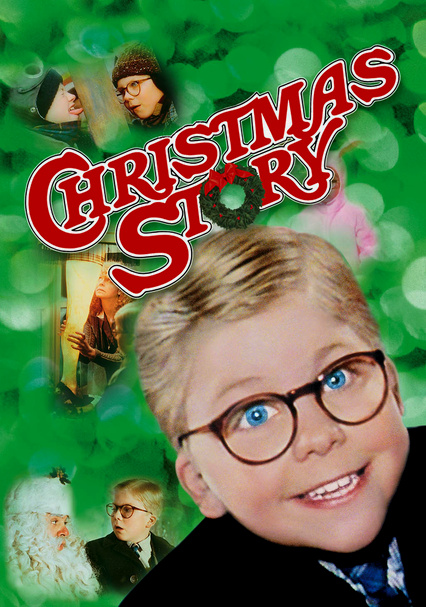
A Christmas Story-1983

A Christmas Story-1983

Director Bob Clark

Starring Peter Billingsley, Darren McGavin, Melinda Dillon

Top 250 Films #208

Scott’s Review #968

Reviewed December 16, 2019

Grade: B+

A festive holiday film sure to be watched during late December, A Christmas Story (1983) is a wholesome family treat with heart and a good slice of Americana.

A clever gimmick of an adult narrating his childhood holiday experience feels both fresh and nostalgic.

Some hairstyles, looks, and camera styles feel more like the 1980s than the 1940s, and the subject matter of a gun becomes questionable with the passing years, but the film enchants and warms the soul with famous cult-classic moments mixed in, making it memorable.

The central character is Ralphie Parker (played as a child by Peter Billingsley and voiced as an adult by Jean Shepard). Nine years old and clad in distinguished eyeglasses, he anticipates the approaching Christmas holiday with both excitement and trepidation.

He longs for his dream gift, a Red Ryder Carbine-Action 200-shot Range Model air rifle, which every adult he meets hazards “You’ll shoot your eye out.” Determined, he schemes to find a way to make his dreams come true and to get his parents to buy that gun, while avoiding the neighborhood bully.

The film has mass appeal in its casting, with each principal actor adding value, and the story feels warm. With the lesser talent, the results may have been over-the-top, forced, or too melodramatic.

Accolades are especially deserved by Billingsley, who carries the film with his sincerity and giant blue eyes.

He is a natural and fantastic actor, especially during the more emotional scenes. Ralphie’s mother, father, and teacher are wonderful in their respective roles, adding the right level of earnestness and pizzazz in the supporting cast.

A Christmas Story gets props for avoiding the silly romantic storyline common in “feel-good” films of a similar ilk. The plot is clearly defined, and the antics of Ralphie make the film fun, but not too sentimental or corny.

Cringe-worthy is the thought of a little neighborhood girl whom Ralphie might want to impress. The little boy’s somewhat infatuated state with his teacher is innocent and whimsical, not to be taken too seriously.

The incorporation of now-legendary props and story points adds texture and comfort to the viewing experience, especially the lamp shaped like a woman’s leg and a high-heeled shoe.

The garish prize Ralphie’s father wins after entering a contest becomes his pride and joy, making his wife and the neighbors cringe. Assuming the piece is a lavish work of art, mistaking the word “fragile” for a fancy Italian word makes the scene humorous.

The final scene, with the family reduced to eating Christmas dinner at a Chinese restaurant after their turkey is ruined, still elicits a smile.

As the years pass, the scene teeters on racism and has been changed during stage productions to avoid controversy. The Asian characters possess too many cliched stereotypes for my taste, but the intent is innocent and wraps the film nicely.

Peculiar and noticeable with each viewing is the glaring locale of Hammond, Indiana, even though the film is shot in and around Cleveland, Ohio.

The famous Higbee’s Department Store in downtown Cleveland is pivotal to the story and world-renowned, so the Indiana locale is perplexing and out of place.

Many may not realize the Cleveland surroundings, but eagle-eyed viewers will take notice. The exteriors look nothing like Indiana.

Known for having aired since 1997 on television stations TNT or TBS in a marathon titled “24 Hours of A Christmas Story”, the event has consisted of twelve consecutive airings of the film on both Christmas Eve and Christmas Day each year.

This has resulted in it being deemed one of the best Christmas movies ever made and in exposing new generations to the work.

I’m not convinced it is “the best”, but nothing feels cozier on a cold holiday night snuggled by the fire than this cult classic. 

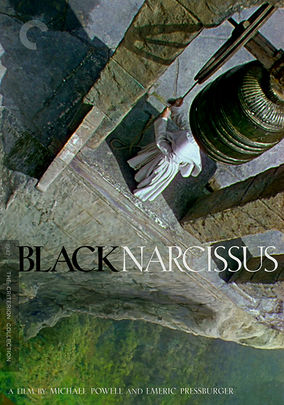
Black Narcissus-1947

Black Narcissus-1947

Director Michael Powell, Emeric Pressburger

Starring Deborah Kerr

Top 250 Films #209

Scott’s Review #688

Reviewed October 5, 2017

Grade: A

A British film made in 1947 that is way ahead of its time, Black Narcissus is a brilliant foray into the mysterious entity of nuns and the bitterness, both from humanity and from the elements, that a group of nuns must face as they attempt to establish a new school atop the hills of the Himalayas.

The film’s look is as fantastic as its story, with incredible cinematography and a foreboding, eerie quality.

Black Narcissus is one of the great treasures of classic cinema.

Based on the 1939 novel by Rumer Godden, Black Narcissus tells the story of revolving jealousy, rage, lust, and tension amid a convent of nuns living in isolation.

Deborah Kerr, fantastic in the lead role of Clodagh, Sister Superior and leader of the group, faces the temptations and anger of men while dealing with an unbalanced nun, Sister Ruth, played terrifically by Kathleen Byron.

The cinematography and the art direction must be praised as the lavish sets are just that- sets. However, the average viewer will be whisked away on a magical experience where it seems the sets are real locales, high atop the Himalayan mountains.

Scenes depict howling wind, mist, and fog in a believable manner. All sets are built and structured, and Black Narcissus was filmed entirely on a set. This tidbit is unbelievable, given the realism, especially since the film was made in 1947.

The lighting in the film is unique, precisely the vibrant colors of the pink flowers and, later, the close-ups of Sister Ruth. A fantastic example of this is her descent into madness during the final act, as her face, maniacal yet lovely, is heavily featured. Her face appears bright and hypnotic.

The main event, though, is the tales the film tells, which are pretty edgy for the year the film was made. Religion is always risky, and the treatment of the nuns as real human beings with actual emotions, even lustful ones, is brazen.

Specifically, Clodagh (Kerr) is a fascinating study as the character teeters on a romance with the charismatic, handsome, local British agent, Mr. Dean (David Farrar), while attempting to forget a failed romance during her youth in Ireland.

Meanwhile, Sister Ruth spirals out of control, leading to a dire climax involving an enormous church bell atop the restored structure.

A slight misstep the film makes is mainly casting white actors with heavy makeup in the Indian roles instead of actors with authentic ethnicity.

This detail is glaring because the makeup used is not overly convincing, and the casting of the gorgeous Jean Simmons as Kanchi, a lower-class dancing girl whom the Prince becomes infatuated with in a subplot, is incredibly guilty.

Still, this pales in comparison to the fantastic story and look of the film.

Black Narcissus is a classic film that contains a bit of everything—drama, thrills, intrigue, gorgeous sets, lavish design, and even a bit of forbidden passion—and brilliantly executes all aspects of the film.

A film admired by critics and directors throughout the ages and explicitly championed by Martin Scorsese, it has the unique quality of getting better with each viewing.

Oscar Nominations: 2 wins-Best Art Direction-Set Direction, Color (won), Best Cinematography, Color (won)

The Killing of Sister George-1968

The Killing of Sister George-1968

Director Robert Aldrich

Starring Beryl Reid, Susannah York

Top 250 Films #210

Scott’s Review #228

220px-Original_movie_poster_for_the_film_The_Killing_of_Sister_George

Reviewed March 13, 2015

Grade: A-

The Killing of Sister George is a British film drama, adapted from a 1964 stage production that was a risky subject matter to tackle for the times- lesbianism- in the late 1960s.

Directed by Robert Aldrich, well known for Whatever Happened to Baby Jane, The Killing of Sister George is a similarly dark tale of loneliness, desperation, and an actress who falls from former grace and success into despair, confusion, and anguish.

It also has some witty, crackling, comedic moments to avoid being a true downer.

Sister George is a successful, well-regarded actress on a popular soap opera named Applehurst. Her character is the wholesome presence in a town fraught with manipulation and drama. She is the moral focal point of the show.

In real life, however, George (interestingly called by her character’s name), is troubled.

She is bitter, angry, and a person with alcoholism, and she frequently berates and even abuses her partner, Childie, played by Susannah York. A third central character in the film is TV Producer Mercy Croft, who is powerful and confused about her sexuality.

When the soap opera powers-that-be decide to kill off the beloved Sister George, the real George’s life begins to spiral out of control.

As enjoyable a film as it is and certainly featuring the competent talents of Beryl Reid in the title role, I cannot help but ponder and fantasize how wonderful the casting of Bette Davis- reportedly considered for the role and inexplicably not cast- would have been.

Davis, famous for playing grizzled, mean, unsympathetic characters, would have knocked this role out of the park, and, sadly, she did not have the chance.

At its core, the film is a sad character study of one woman’s pain and anguish at being discarded. Presumably unable to be hired anywhere else, her soap opera character is her life.

She loves Childie but is not entirely fulfilled by her, either, and the vibrant, polished Mercy threatens that relationship.

This is an interesting triangle as George does not always treat Childie well, but loves her all the same. Childie is a simple character, childlike, and needs a strong mate to counter-balance the way she is- someone to take care of her.

Without a job or prospects, this would be difficult for George. Does Childie love George or want a meal ticket?

The film is understandably rated X for content, presumably for a very explicit sex scene between Mercy and Childie, and when a drunken George molests two nuns in the back seat of a London taxi cab.

These scenes are both cutting-edge and admirable in their risk-taking.

The scene set at the real-life London lesbian club (the Gateway Club) and featuring mostly real-life lesbians is excellent. It provides a real-life glimpse into the gay/lesbian world and lifestyle during the period.

A brave, groundbreaking, risk-taking film with bravura direction from Aldrich, The Killing of Sister George (1968) is a forgotten gem that needs to be rediscovered by film fans everywhere and is an early journey into gay and lesbian cinema.

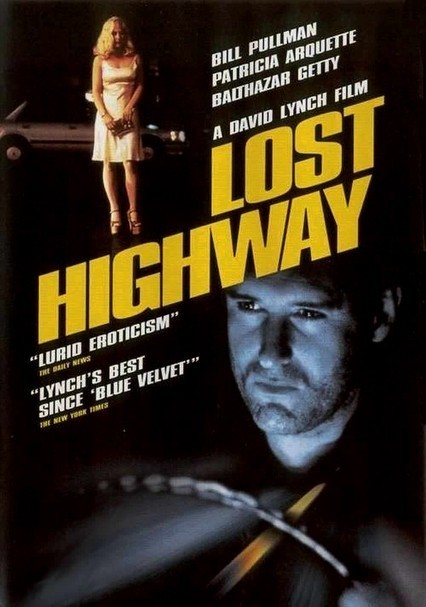
Lost Highway-1997

Lost Highway-1997

Director David Lynch

Starring Bill Pullman, Patricia Arquette

Top 250 Films #211

Scott’s Review #868

Reviewed February 17, 2019

Grade: A-

David Lynch, forever known for his odd and mind-boggling productions, released what might be his most bizarre offering, Lost Highway (1997).

Dreamlike and downright hallucinogenic, the film is impossible to dissect and is open to endless interpretation.

Characters morph into younger or different versions of themselves, or even into different characters entirely, making the film best experienced rather than overanalyzed.

The most enjoyment comes from the fabulous atmospheric elements.

Lost Highway is set in Los Angeles, where we meet saxophonist Fred Madison (Bill Pullman), a nightclub employee who lives with his glamorous wife, Renee (Patricia Arquette), somewhere in the Hollywood Hills.

The couple begins receiving envelopes containing VHS tapes of footage of their house, followed by more invasive tapes of them being filmed while sleeping in their bedroom.

Spooked, they enlist the help of a pair of incompetent detectives.

The events begin to grow more complex with the introduction of a menacing mystery man (Robert Blake) and sequences involving a dismembered Renee, and Fred’s subsequent incarceration for her murder.

Fred suddenly morphs into a young auto mechanic named Pete Dayton (Balthazar Getty), who is released into his parents’ care while being followed by the two detectives.

Pete embarks on an affair with Alice Wakefield, a mirror image of Renee, who is the mistress of powerful Mr. Eddy (Robert Loggia). Pete and Alice plan to escape together, leaving their troubled lives behind.

Any attempt to make more sense of the story than outlined above is fruitless, as a torrent of questions could be raised. The obvious ones are why does Fred turn into Pete (looking completely different), and why does Renee turn into Alice (looking similar)?

What do random scenes of a burning desert cabin mean? What does the bizarre and hazy lesbian sequence with Marilyn Manson have to do with anything?

Discerning the logic and attempting to unravel the mystery will lead to frustration.

The best advice is to immerse yourself in the film and let it manifest in your mind. The terms “dreamlike” and “hallucinating” are often used to describe films, but they are perfect adjectives for Lost Highway.

The stories do run parallel, so the challenge is not following each of them but rather understanding how they connect. The stories also merge in a circular pattern with a rhythmic effect and a satisfying ambiance that lured me immeasurably.

My favorite characters are Alice and Pete, largely because of the actors who portray them. Not appearing until the second half, Getty and Arquette infuse their roles with passion and energy.

I immediately rooted for them as a couple, as their tender and smoldering chemistry was immediately felt. Arquette blazes as a sexy temptress and Getty as the handsome and earnest man submitting to her prowess.

Eagle-eyed viewers may notice comparisons to Russ Meyer’s devilish sexploitation film Supervixens (1975).

The most notable are the dual character representations, the auto mechanic occupation, the locales (more than a few Los Angeles roads seem identical), and various sequences featuring a weightlifter, a gas station drive-up, or other eerily similar scenes.

Whether there is a direct correlation between the films is unknown, but it’s fun to observe.

The musical score and soundtrack are high points, adding both mystique and aggression through the featured hard rock songs. Marilyn Manson’s “I Put a Spell on You”, Rammstein’s “Heirate Mich”, and The Smashing Pumpkins “Eye” are used in important scenes.

The soundtrack release was a huge success on modern rock radio, achieving Gold record sales status.

At the time of Lost Highway’s release, the film was not well-regarded by critics and was dismissed as not making much sense.

In the decades following, the film has garnered more acclaim and, as with a fine wine, has aged well. The beautiful cinematic tone, creative design, and images have become more revered over time.

For a perplexing and cerebral experience, look no further than Lost Highway (1997), a delicious companion piece to the Lynch masterpiece, Mulholland Drive (2001).

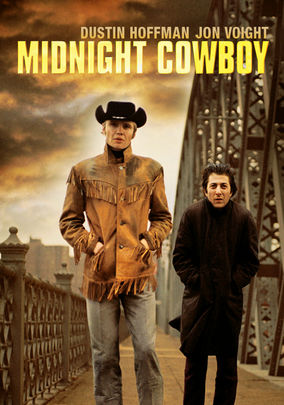
Midnight Cowboy-1969

Midnight Cowboy-1969

Director John Schlesinger

Starring Dustin Hoffman, Jon Voight

Top 250 Films #212

Scott’s Review #24

759322

Reviewed June 17, 2014

Grade: A

Midnight Cowboy is a masterpiece from 1969 that remains the only Best Picture Oscar winner to be rated “X” and, sadly, would probably not be made today.

It tells the tale of a friendly, trusting cowboy who moves from Texas to New York City and is challenged to survive the brutal streets any way he can.

Throughout the film, he meets several interesting, unsavory characters and experiences life in the bowels of NYC as drug use and prostitution are explored.

I did not find this to be as much of a downer as many others did, but rather a story of survival.

The grittiness of NYC is wonderfully portrayed, with many locales featured (Times Square).

Jon Voight and Dustin Hoffman are exceptionally cast and have great chemistry, though the film is by no means a “buddy movie”.

Sylvia Miles has a memorable one-scene feature.

It’s bleak, raw, and intense at times, and Midnight Cowboy (1969) is great filmmaking.

Oscar Nominations: 3 wins-Best Picture (won), Best Director-John Schlesinger (won), Best Actor-Dustin Hoffman, Jon Voight, Best Supporting Actress-Sylvia Miles, Best Screenplay Based on Material from Another Medium (won), Best Film Editing

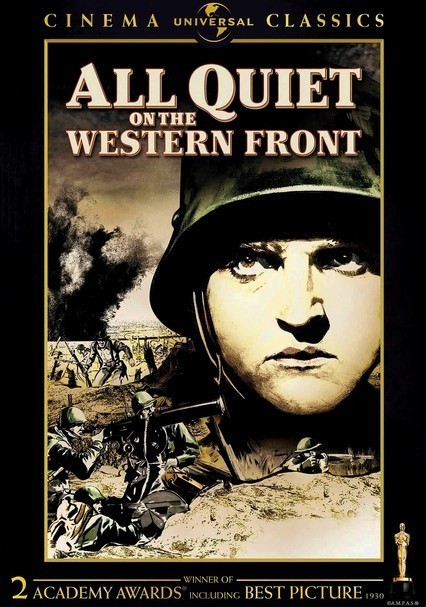
All Quiet on the Western Front-1930

All Quiet on the Western Front-1930

Director Lewis Milestone

Starring Lew Ayres

Top 250 Films #213

Scott’s Review #820

Reviewed October 12, 2018

Grade: A

All Quiet on the Western Front (1930) is one of the oldest films I have seen. It is a masterpiece that resonates in present times just as much as it did nearly one hundred years ago.

The work of art presents an astounding Anti-war message that is a timeless lesson in humanity, idealism, and despair.

Based on the banned novel by Erich Maria Remarque, much of the action takes place on the front lines during World War I.

The cameras follow an anxious group of spirited young men as they sit in a classroom and listen to a passionate speech given by their professor.

He is pretty “pro-war,” instilling patriotism in the boys and emphasizing the importance of serving the Army and their country. At his urging, the group, led by Paul Baumer (Lew Ayres), joins the Second Company. Once enlisted, the youths are enlightened that war is not fun, and their romantic delusions are smashed.

Paul is the film’s hero, and events are told through his eyes, offering his perspective. Beginning as a young recruit, he ages quickly and sees friends and allies slaughtered senselessly.

One recruit, frightened to death, is blinded by shrapnel and hysterically runs into machine-gun fire, resulting in his death. Other scenes involving the soldiers forced to go without food only to finally be offered more food, simply because there are so many dead, are heart-wrenching.

Paul is portrayed as a good man, conflicted by how he is supposed to feel towards the enemy and how he sees people as human beings. At the young age of nineteen, he possesses an innocence toward the world.

When he returns home on leave, the townspeople do not acknowledge the ravages of war. When Paul recounts the brutal situations on the front line, he is derided as a coward.

In an excruciating scene, Paul is trapped overnight in a foxhole with a dying French soldier whom Paul has stabbed in a cemetery. He desperately tries to save the man’s life, but to no avail.

In this crucial scene, Paul sees the enemy soldier as a human being rather than someone to hate. He crumbles into tears for the dead soldier, begging him to speak. The scene is incredibly poignant and meaningful.

The final scene of All Quiet on the Western Front is lovely and memorable. It is the film’s most remembered scene and is firmly ensconced in cinematic history.

As a wounded Paul lies hiding from German soldiers, he spots a beautiful butterfly peacefully circling. Paul smiles, enamored with the pretty creature amid all the horror. He desperately tries to reach for the gorgeous insect.

What happens next is heartbreaking and fraught with the unfair ruining of life—the scene is of the utmost importance.

The film is both sad and poignant, as we are well into the twenty-first century, and wars continue.

Have we learned nothing?

Director Lewis Milestone brazenly and tragically paints a portrait of war’s foolishness and the senseless loss of life it results in. It is tough to think of an equivalent film that depicts this message more clearly.

Many European leaders and countries, including Germany’s Adolf Hitler, banned All Quiet on the Western Front throughout the 1930s and 1940s.

The film has remained controversial in its blatant depiction of war since its release.

All Quiet on the Western Front (1930) is a groundbreaking film that should remind us how precious life is.

The novel and film were both made after World War I—how profound to think that since this film was made, wars such as World War II, the Korean War, and the Vietnam War have occurred. Is war ever really the answer?

Anyone who watches this terrific film will find out.

Oscar Nominations: 2 wins-Best Picture (won), Best Director (won), Best Writing, Best Cinematography

Friday the 13th: Part II: 1981

Friday the 13th: Part II: 1981

Director Steve Miner

Starring Amy Steel, John Furey, Adrienne King

Top 250 Films #214

Top 40 Horror Films #30

Scott’s Review #742

Reviewed April 15, 2018

Grade: A-

Hot on the heels of the surprising success of the low-budget slasher film, Friday the 13th, a sequel to the 1980 film was immediately ordered.

The film was released merely a year later and is nearly as good as its predecessor, but not quite to the level of that horror masterpiece.

Part II (1981) is a well-above-average sequel with a fun style all its while wisely keeping facets that made the franchise adored by horror fans everywhere.

Gushing fans must have been chomping at the bit for a follow-up film with an opening sequence that is quite lengthy.

The heroine of the first Friday, Alice Hardy (Adrienne King), takes center stage, eliciting a clever twist that must have shocked fans as she is offed less than fifteen minutes into the film- think the sequence with Drew Barrymore in 1996’s Scream for comparison.

Regardless of the reasons King would not be the star of the film (money demands or a rumored stalker), the fact is that this improves the film overall, adding an immediate surprise.

After this compelling opening number, things become much more familiar and predictable as the viewer is ensnared in the antics of young and horny camp counselors rushing to sunny Camp Crystal Lake (or in this installment, a neighboring camp) to set up for the impending arrival of kids.

The young adults are all beautiful, fresh-faced, and ready to be sliced to ribbons or dismembered in some fashion, as the case may be.

As any horror aficionado knows, this is a major part of the appeal of slasher films, and Friday the 13th: Part II follows a familiar formula.

Paul (John Furey) and Ginny (Amy Steel) are the lead counselors- a bit more adult and responsible than the others, thus they ignore the authority’s warnings not to reopen the camp since it has only been five years since the original massacres.

As the day turns into evening, Paul teases the group with the story of the legend of Jason and how he survived his drowning only to live in the woods fending for himself and avenging the death of his mother.

Little do they know that the legend is real and that Jason is lurking among the trees, ready to take the group on individually.

Besides Paul and Ginny, the supporting characters include sexy Terry, known to wear skimpy attire, sly Scott, who has designs on Terry, Mark, who uses a wheelchair, sweet and innocent Vickie, jokester Ted, and, finally, madly in love, Jeff and Sandra, who are curious about the history of Camp Crystal Lake.

Delightfully, the character of Crazy Ralph (Walt Gorney), the comic relief of the original film, makes a heralded return to warn the youths of impending doom and gloom.

Friday the 13th: Part II mixes pranks and flirtations among many of the characters, but the audience knows full well what’s in store for each of them- save for the honorable “final girl”.

With Ginny receiving this title, the others meet their fates in bloody style with interesting kills such as a throat slit by a machete while in a rope trap, a duo impaled with a spear as they engage in sex, and bludgeoning with a kitchen knife.

The final twenty minutes are quite engaging as Ginny must flee from the camp while facing repeated obstacles that threaten her safety, such as a run through the woods, a trip and fall, and a failed barricade in a cabin.

A wonderful touch within this sequence is the return of Betsy Palmer (Mrs. Voorhees) in a cameo appearance as Jason sees a vision of his mother. This move successfully creates a tie-in to the original that works quite nicely when coupled with the opening sequence.

The final “jump out of your seat” moment is highly effective as Jason, thought to be bested, leaps through a window for one final attack.

Interesting to note are the identical camera angles throughout much of the film, as the camera uses the killer’s point of view numerous times to elicit scares, and the viewer serves as the killer, reminiscent of the first film.

Additionally, daytime shots of the peaceful, sunny camp and lake are used, in contrast to the violence occurring at night.  Even the approaching car the counselor drives (a truck) is shot the same way as we see them arriving at the camp in full anticipation of a fun time.

Friday the 13th: Part II (1981) is a fun follow-up to one of the most celebrated slasher films and a perfect counterpart to the original.

A viewing tip is to watch both films in sequence, perhaps as part of a late-night horror extravaganza.

Subsequently followed by a slew of not-so-great sequels as the franchise became dated by the late 1980s, Part 2 serves as an excellent follow-up to the original, using a similar style that will please fans.

Straw Dogs-1971

Straw Dogs-1971

Director Sam Peckinpah

Starring Dustin Hoffman, Susan George

Top 250 Films #215

Scott’s Review #733

Reviewed March 19, 2018

Grade: A

Straw Dogs (1971) is famed director Sam Peckinpah’s most startling and most controversial film.  Hardly an easy watch, it will provoke disturbing and uneasy reactions, but it is a work of art, teetering on the edge of being an all-out art film.

Viewers will cringe during intense scenes but will also marvel at the film’s mastery of this classic, bringing on a whirlwind roller coaster ride as story elements spiral out of control to a frenetic, powerful climax.

Intellectual American mathematician, David Sumner (Dustin Hoffman), moves with his sexy British wife, Amy (Susan George), to a Cornish countryside, the town in which she grew up, where they proceed to encounter problems, both within their marriage, and external factors, as an angry mob of blue-collar workmen, threaten their home life.

When non-violent David is pushed to the limit, questions of morality are brought to light, as Amy faces her demons and bouts with brutality and victimization.

The film, made in 1971, pushes the envelope significantly in its display of violence.

Several years earlier, 1967’s Bonnie and Clyde and Peckinpah’s own The Wild Bunch (1969) were the films that really got the ball rolling. Still, Straw Dogs continues the trend of the brutal violence that overtook American cinema at the time.

While watching the film for the second time, I was struck hard by the feeling that I was watching something important.

Amy’s rape scene is the most brutal scene of all to watch for the sheer way in which it can be interpreted. Later, when Amy replays the scene in her mind, the audience is forced to relive the experience.

Not content to only include the rape scene, Peckinpah wants the viewer to dissect the scene- the fact that Amy is assaulted by not one, but two men, and reacts differently to each of them, is the key here.

The scene is complex in that Venner, the first assailant, is hunky and presumed to be a former beau, and she eventually relents to his advancesbut does she enjoy the act? When Scutt enters the picture, however, things turn from tender and ambiguous to violent and dirty.

Undoubtedly, an influence on director Quentin Tarantino is the final sequence of the film- a scene fraught with tension, violence, and grit.

Now trapped in their house amid a mob of angry, drunk men, hell-bent on revenge, David and Amy must both bond with each other and match antics with the men.

I experienced visions of 2015’s The Hateful Eight through the claustrophobic, cabin-like setting and the quick edits that Peckinpah uses throughout the film.

A sad scene, and at least a portion of the reason for the townsfolk’s rage, is a scene reminiscent of Frankenstein when a hulking and mentally challenged man accidentally harms a young girl. Not knowing his strength and meaning to protect the girl instead of killing her, the menfolk of the town respond in a nightmarish and witch-hunt manner.

Suddenly, David becomes the defender and protector of this man.

David’s character change is interesting, and the great Hoffman adds layer upon layer of complexity to the role. At first, a peaceful man, due to circumstances, he soon becomes the assailant, creating traps and weapons, intent on maiming his prey.

Hardly a violent man, this change of character is evident in our earlier scene, where David nurses a wounded bird.

In addition to Hoffman’s traditionally outstanding performance, Susan George delivers the perfect blend of bitchiness, spoiled-brat tantrums, and, later, guilt-ridden angst and fear.

The villains are perfectly cast and believable as bored, simple-minded, and horny, small-town boys just itching for trouble.

Lush is the gorgeous United Kingdom countryside featured in Straw Dogs, as frequent exterior scenes are shot, revealing lavish and plush mountainous areas- the sweeping beauty of the landscape counterbalancing the brutality shown in other sections of the film.

Mixing super quick editing with a dark, compelling screenplay, with underlying themes of questioning one’s manhood, Straw Dogs is a provocative and edgy tale of violence and revenge in a small town, that gives new meaning to the fear of “home invasion” and feeling vulnerable.

Thanks to a great cast and lots of other facets, Straw Dogs (1971) is a timeless (and brutal) treasure.

Oscar Nominations: Best Original Dramatic Score

Bridesmaids-2011

Bridesmaids-2011

Director Paul Feig

Starring Kristen Wiig, Maya Rudolph

Top 250 Films #216

Scott’s Review #784

Reviewed July 6, 2018

Grade: A

Despite the raunchy romantic comedy genre not being my favorite, and despite not being such a fan of Judd Apatow (famed producer of several of these types of films), Bridesmaids (2011) is easily the best of its kind.

Influential in a multitude of female empowerment-themed comedies that followed, this one is witty, genuine, and funny because of its star, Kristen Wiig, who also co-wrote the film.

It is one of the best comedies (if not the best) of the decade.

Apatow is known mainly for producing comedy films that mix in the standard potty humor for cheap laughs. He is responsible for This Is 40 (2012) and Trainwreck (2015), both of which I found moderately funny, but they are also needlessly gross-out and tired.

My point is that minus the talents of Wiig (both in front of and behind the camera), Bridesmaids would likely have been mediocre like these films. Instead, Bridesmaids is a wonderful, uproarious experience with a star who captures a moment.

My one gnawing gripe is that a woman shouldn’t direct a film about women.

Annie (Wiig) has been asked to serve as the maid of honor at her best friend, Lillian’s (Maya Rudolph), upcoming wedding. Rather than being thrilled, Annie is depressed due to an ongoing string of bad luck.

Her bakery business fails, she loses her unfulfilling job at a jewelry store, she is dating a jerk (Jon Hamm), and her car is about to die. She has difficult roommates and is on the verge of having to move back in with her mother at age thirty-five.

The story hilariously follows Annie’s rivalry with Helen (Rose Byrne), Lillian’s soon-to-be husband’s boss’s controlling wife. Helen is intent on taking over the handling of the wedding events, much to Annie’s chagrin.

The ladies compete to one-up each other throughout the film- Rose is the perfect princess for Annie’s grit and cynicism.

Annie struggles through her issues, unhappy with the state of her love life, when she meets police officer, Rhodes (Chris O’Dowd), and they begin a tender friendship. However, their attraction is put to the test because of Annie’s shenanigans.

Annie must then fly to Las Vegas with the other bridesmaids despite being terrified of flying.

Despite the story being nothing not seen dozens of times before in romantic comedy history (the setups), the film is a laugh-out-loud riot. In addition to Wiig, Rudolph, and Byrne, the remaining cast of ladies all have tremendous chemistry with each other.

Special kudos go to Melissa McCarthy in her fearless role of Megan, a tomboy misfit who somehow is part of the wedding party. With her “tell it like it is” attitude, the actress sinks her teeth into this fabulous role without taking it too far across the line into ridiculousness.

In rip-roaring fashion, multiple scenes are permanently etched in my mind.

After Annie suggests a Brazilian steak restaurant for lunch, followed by a fitting at a chic dress shop, the girls suffer from food poisoning. This results in torrents of diarrhea scenes and one unlucky character being reduced to going to the bathroom in the middle of the street.

The scene, while super raunchy, is hilarious and fraught with perfect comic timing.

Not to be outdone, the airplane scene is equally tremendous; however, the scene belongs to Wiig rather than the entire ensemble. Being forced to fly coach while everyone else is treated to first-class, Annie unwisely accepts a pill from Helen to calm her during the flight.

Instead, Annie becomes belligerent and wild when she mixes the sedative with alcohol.

As good as the supporting cast is, Wiig owns the film through and through. Every scene she is in and each line she utters is perfectly timed. The fact that Wiig did some improvisation (the scene in the jewelry store) is evident and only adds to the genuine feel of the film.

Subsequently, to Wiig’s credit, she has been careful to choose more complicated roles to avoid the risk of being typecast. And a sequel was wisely never made- this would have ruined the appeal.

Bridesmaids (2011) is an authentic story rich with hilarity and crisp dialogue. The film is enhanced in that it’s a female-centered film written by women (though the direction and producers, too, would have been better).

Because of the tremendous cast led by Wiig, the film is blazing with humor and led a firestorm of similar “girl power” films (mostly bad) well into the decade.

Oscar Nominations: Best Supporting Actress-Melissa McCarthy, Best Original Screenplay

Invasion of the Body Snatchers-1978

Invasion of the Body Snatchers-1978

Director Philip Kaufman

Starring Donald Sutherland, Brooke Adams, Veronica Cartwright

Top 250 Films #217

Top 40 Horror Films #31

Scott’s Review #1,434

Reviewed July 22, 2024

Grade: A-

Even though this film is a remake and remakes are usually not as good as the original, I am partial to the 1978 version of Invasion of the Body Snatchers versus the 1956 release.

This might even be one of the best remakes ever.

The 1950s version has a campy science-fiction element popular in the decade, featuring frightening, otherworldly elements like The Day the Earth Stood Still (1951) or Invaders from Mars (1953), which were meant to promote the idea of invaders taking over Earth.

This was enough to scare the bejesus out of middle America, USA, and their white picket fence-encased neighborhoods.

The 1970s version eschews camp in favor of a straight-ahead sci-fi/horror hybrid. A glamorous, artistic approach oozes from the 1970s and from various exterior sequences in San Francisco, making it superior to the original.

It’s a more polished and mainstream-ready product that works better for this film.

By far the best scene is the final scene between a perfectly cast Donald Sutherland and Veronica Cartwright, which left chills going up and down my spine.

I won’t spoil the fun, but suffice it to say that the actor’s facial expressions make the scene exceptional, especially when paired with the creepy sound effects.

Director Philip Kaufman also toys with his audience when he teeters ambiguously between his leading ladies. Is Cartright the ‘final girl’ or is it Brooke Adams? In parallel to Hitchcock’s Psycho (1960), the lead may not be who you assume it to be.

Matthew Bennell (Donald Sutherland) is a health inspector who assumes that when his friend and colleague Elizabeth (Brooke Adams) complains of her husband’s strange mood, it’s a cheating husband or an exaggerated concern.

He begins to worry, however, as more people report similar observations about their loved one’s strange behavior.

His concern is confirmed when writer Jack Bellicec (Jeff Goldblum) and his wife (Veronica Cartwright) discover a mutated corpse that creates a citywide epidemic in which humans are replaced by alien doubles devoid of humanity or emotion.

The casting is first-rate, especially because Sutherland is front and center. The actor does wonders with his bulging blue eyes and a spacey demeanor. This works well in a film where we wonder whether his character is ‘one of them’.

He’s also a good actor and easily carries the film along with Adams and Cartright.

Kaufman peppers the film with eerie atmospheric elements like the mysterious parasitic alien race scurrying to harvest before their planet dies, and small seed pods amid hallucinogenic pink flowers.

The success is mainly due to the audience being left uncertain about whether to hate the aliens or feel sorry for them. Since they are ambiguous, this leaves confusion and, therefore, a sense of empathy.

Speaking of the exterior sequences, a great one takes place on the streets of San Francisco, where a hysterical man warns Elizabeth and Matthew of danger as a mob pursues him. He is then killed in a hit-and-run, surrounded by emotionless onlookers.

Eagle-eyed viewers will spot Kevin McCarthy, the leading man in the 1950s film, and director Don Siegel.

When this scene plays, it is eerie and underscores that the small group of friends must stick together against a mob of clones.

Wisely, Kaufman assures readers that the story does not play for laughs or appear over-the-top or silly. The gritty camera angles, superior makeup crew, and wonderfully practical sound effects confirm that he is making a film to be remembered.

Taking what the 1950s version created but only scratched the surface of the potential during a cinematically safe decade, the 1978 Invasion of the Body Snatchers has muscle and compels from start to finish.

Years later, it still holds up wonderfully well alongside similar stylistic and popular horror films such as Jaws (1975), Carrie (1976), Dawn of the Dead (1978), and Halloween (1978).

On a larger level, it also confirms the 1970s as the greatest decade for horror films.

The Last House on the Left-1972

The Last House on the Left-1972

Director Wes Craven

Starring Sandra Peabody, Lucy Grantham, David Hess

Top 250 Films #218

Top 40 Horror Films #32

Scott’s Review #1,387

Reviewed August 6, 2023

Grade: A

Heavily influenced by Ingmar Bergman’s 1960 masterpiece The Virgin Spring, The Last House on the Left (1972) is essentially the same story.

The time is modern, the locale is switched from Sweden to New York, and the religious exploration is absent. But rest assured, both films are brutal and not for the faint of heart.

It’s not violence for violence’s sake, though, and a powerful revenge tale emerges amid unique camera styles and settings.

Wes Craven, who put the horror genre back on the map in 1996 with Scream, writes and directs the raw, independent The Last House on the Left.

He was accused of going too far in the film and exploiting pain and suffering, mostly by victimizing female characters, but the truth is, the situation can and has occurred in real life.

The film brings powerful realism to the terrifying actions of horrible people; if that’s too much for some, they shouldn’t watch it.

But lovers of experimental cinema should.

Craven’s genius is mixing sunny, cheery sequences, poppy music, and comic relief with uncomfortable scenes of rape and torture so well that the audience’s reaction is guttural and rage-infused. The dark scenes unfold on a sunny afternoon in the woods, set to upbeat music, making what would otherwise be a pleasant day feel unsettling.

Many horror sequences use darkness, thunderstorms, or other special effects to set the right mood, but Craven goes way off center.

Perky teenagers Mari (Sandra Peabody) and Phyllis (Lucy Grantham) head into New York City for a concert where they look for some marijuana. They stumble upon a foursome (three men and one woman) of escaped convicts who force them to endure a night of rape and torture.

The following day, the gang kills the girls in the woods, not realizing they’re near Mari’s house. When they pose as salesmen and are taken in by Mari’s mother (Eleanor Shaw) and father (Richard Towers), the parents quickly figure out their identities and plot revenge.

A side story involves two incompetent police officers who unsuccessfully try to pursue the escaped convicts.

I was immediately made aware of the very low-budget filmmaking, with muted, grainy visuals. The cinematography is what makes The Last House on the Left work so well. With high caliber and glossy texture, it would seem too polished.

The acting isn’t brilliant, and the overall look and feel is reminiscent of a John Waters film. Again, this only enhances the bare bones, late-night viewing experience.

There are warnings galore. The pain and suffering endured by Mari and Phyllis are hard to watch, and I felt their degradation in my bones. I won’t go into gory details, but it isn’t fun.

However, there is some satisfaction to be had. When Mari’s parents cleverly set traps inside their house for the murderers to fall into, there are cheer-out-loud moments of celebration for the audience.

One murderer even gets his penis bitten off.

Suspension of disbelief must be given to justify how this chain of events could occur. What are the chances the convicts would happen to bring the girls to Mari’s house in the middle of nowhere?

Wouldn’t the parents be in shock or have a meltdown over the realization of Mari’s death? Somehow, they find the wherewithal to construct a stagey revenge plot on the fly.

The dumb cops will do no favors for police officers looking for some respect.

Still, the utter depravity and brutality of The Last House on the Left (1972) make it one of the most genuine-feeling horror films of all time. Add the fact that the situation could happen, and the result is a frightening one.