Tag Archives: Josef Sommer

Dirty Harry-1971

Dirty Harry-1971

Director Don Siegel

Starring Clint Eastwood, Andrew Robinson, Reni Santoni

Top 250 Films #42

Scott’s Review #443
445522

Reviewed July 4, 2016

Grade: A

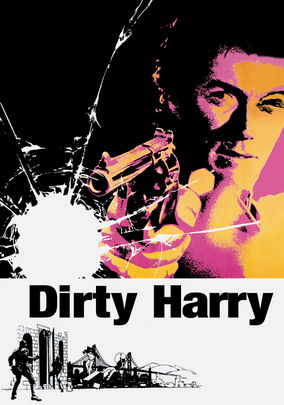
Dirty Harry (1971) is a classic crime drama that became a signature role for Clint Eastwood as the title character, a role he has played four more times.

Dirty Harry set the tone for the plethora of crime thrillers and police action films that filled theaters throughout the 1970s and 1980s. This film still holds up very well and is a masterpiece of the cat-and-mouse/detective genre.

Quiet and controlled, but filled with anger below the surface (we learn a drunk driver killed his wife), Harry Callahan is a tough cop in San Francisco who has seen it all. He is a red-blooded American good guy, though he is brooding and has a mind of his own, oftentimes disagreeing with his superiors and their rules.

He epitomizes good versus evil.

A vicious killer named Scorpio (based on the real-life Zodiac killer) is on the loose, having killed two people already. His motives are unclear, but that is relatively unimportant. What is important is that he threatens to kill one person per day unless his demands of $100,000 are met.

Harry is immediately assigned to the case despite his reputation for being difficult and violent. This leads to a cat-and-mouse game between Harry and Scorpio as Harry pursues the criminal.

Scorpio is played by Andy Robinson, who is a fantastic villain- perhaps one of the most frightening in film history. His dirty blonde locks and angelic face, combined with maniacal expressions, make his portrayal quite scary.

He is a sniper, so he is continually perched on rooftops seeking his next victim. As he watches a couple eating ice cream in the park or a woman swimming in a rooftop pool, we feel a sense of voyeurism and dread.

His disturbing sense of humor and sadistic personality make him quite scary.

The film succeeds in large part because of its grit and violence.  And it is a very masculine film. Harry is a take-no-prisoners kind of guy, and he is hell-bent on stopping Scorpio from killing- no matter what.

In a very effective scene, Harry chases Scorpio to a vast football field and uses torture to elicit a confession from Scorpio. It is a bloody and intense scene, but quite necessary for who Harry is.

Of course, this tactic backfires as Scorpio is released from the hospital and set free. This leads to a further feud between the two men.

A bonus of Dirty Harry, and one aspect that gives so much authenticity, is the on-location setting of San Francisco. From the Golden Gate Bridge to the illustrious mountains outside the city and the Pacific Ocean, these elements add a touch of realism to an already gritty film.

Chinatown and Dolores Park are also featured.

Highlighting all of this is a sequence where Scorpio forces Harry to go from locale to locale on foot in part of a wicked game to save a victim.

Harry’s famous lines as he points his gun at the perpetrators and mocks them by asking them if five or six bullets in his gun are now legendary, as is his “Do I feel lucky? Well, do you, punk?”

On the surface, these catchphrases are a bit silly and gimmicky, but they still work.

The school bus finale, as Harry and Scorpio once again square off, is grand. As Scorpio hijacks a bus filled with grammar school students, he tricks the students, unaware of his intentions, by engaging them in children’s song sing-alongs as the harried bus driver drives out of the city.

When one child catches wind of the situation, Scorpio turns nasty, scaring the children into a frenzy.

Dirty Harry (1971) is a classic cop film that I never tire of watching. For the genre, it is as good as it gets and holds up well. After all of these years, it is tough to disassociate Clint Eastwood from the role of “Dirty Harry”.
The Stepford Wives-1975

The Stepford Wives-1975

Director Bryan Forbes

Starring Katharine Ross, Paula Prentiss, Peter Masterson

Top 250 Films #197

Top 40 Horror Films #26

Scott’s Review #1,395

Reviewed September 4, 2023

Grade: A

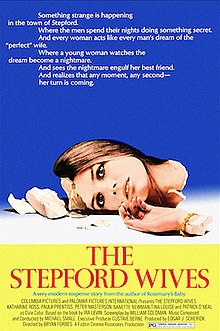
The Stepford Wives (1975) is a film that has deservedly achieved cult status over the years and its title became iconic in meaning.

Everyone knows what a ‘Stepford wife’ is and what it depicts. Usually, a tall, leggy, brainless rich white woman from Connecticut is a sufficient enough image.

The film is a personal treasure to me since I am a resident of said state. The fact that ‘Stepford’ sounds like ‘Stamford’ where I live is uncanny and ironic. The film was shot in various areas of Connecticut so it’s fun to see the towns, grocery stores, and houses in the mid-1970s.

It also resonates quite well with my husband who lived in Manhattan for many years and then transplanted to nearby Connecticut just like the main characters do.

Besides my fondness, it’s a damned good thriller. It paces nicely and takes its time getting to the stunning conclusion.

The film was written by William Goldman (All the Presidents Men-1976), who based his screenplay on Ira Levin’s 1972 novel of the same name. Levin also wrote Rosemary’s Baby which was turned into a 1968 film.

The Stepford Wives and Rosemary’s Baby would make an outstanding double feature.

Joanna Eberhart (Katharine Ross) moves to the quiet town of Stepford, Connecticut, with her husband Walter (Peter Masterson) and children. The town seems idyllic and maybe just a little too perfect for her tastes.

Along with best friend and fellow Stepford resident Bobby (Paula Prentiss), the women notice that the other housewives are not quite ‘normal’. They obsess over housework and are willingly subservient to their husbands.

Joanna and Bobby are determined to solve the mystery especially when they realize there used to be a large women’s liberation group in Stepford.

In a lesser film, the final product could dive headfirst into campy horror. A tepid remake made in 2004 and starring Nicole Kidman did. But the original version stays the course and provides thrills and psychological facets.

The audience knows pretty soon that the men have a secret club that women are not permitted to attend. Named the Men’s Association, a major clue surfaces when Walter invites the men over to his house and they secretly look Joanna up and down.

What we don’t know is the how. Joanna, Bobby, and another neighbor Charmaine Wimperis (brilliantly played by Tina Louise) are the only ‘normal’ wives. Realizing which one of them is the next intended victim is part of the fun.

The women’s portraits are drawn by one of the men and we learn that the previous women have ‘turned’ after going away on a romantic weekend with their husbands.

What’s inside the creepy mansion that holds the Men’s Association meetings? Will Joanna sneak inside? What will happen next?

Delicious sequences occur that reveal that housewives are robots. After a minor fender bender in the local shopping center parking lot, Carol (Nanette Newman) begins acting strangely at an outdoor cocktail party. She repeatedly frets and repeats the same line over and over again.

Her husband blames her odd behavior on alcohol but the audience knows better.

Unforgettable is the stellar grocery store finale when the women are dressed to the nines and robotically shuffle through the aisles. They absent-mindedly take items off the shelves and place them into their carts while acknowledging each other with a pleasant ‘Hello, Charmaine”, or “Hello, Carol”.

My favorite scene is close to the finale between Bobby and Joanna. Horrified at Bobby’s transition to an uptight, well-dressed housewife obsessed with a clean kitchen, Joanna impulsively plunges a butcher knife into Bobby’s midsection.

With no bloodshed proving Bobby is a robot, Bobby calmly scolds Joanna by saying over and over again, “Now why would you do a thing like that?”

The scene is creepy, startling, and powerful given the close relationship between the women.

These scenes and others make The Stepford Wives (1975) part of pop culture and a reason I can watch the film several times over.

Featuring a cast of good actors led by Ross who successfully provides Joanna with both likability and sensibility the film is never over the top or ridiculous.

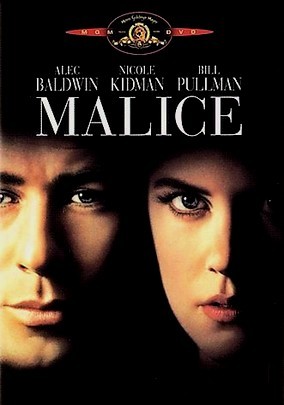
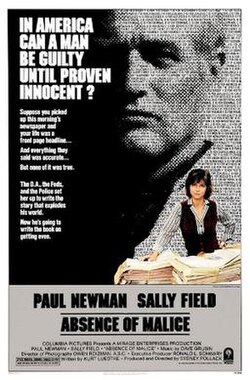
Absence of Malice-1981

Absence of Malice-1981

Director Sydney Pollack

Starring Paul Newman, Sally Field

Scott’s Review #1,055

Reviewed August 20, 2020

Grade: A-

Absence of Malice (1981) is a terrific, slick crime thriller that, while compelling and way above average in content, feels like a studio creation and a starring vehicle for its two A-list stars.

There is little wrong with this since Paul Newman and Sally Field are top-notch talents, and the resulting project has tension, thrills, and a relevant concept.

I loved the Miami locales, as the hot, steamy atmosphere set the right tone for sizzling romance and intrigue. Despite feeling manipulated by the casting, the film nonetheless feels fresh and authentic.

The film compares with 1976’s magnificent All the President’s Men in terms of story and look, though Absence of Malice is much more mainstream.

The former has more grit and dirt, while the latter adds some romance that may or may not have been a wise decision. The chemistry between Newman and Field is mediocre, but it’s the story that works.

In rock n roll terms, Absence of Malice is the opening act to All the President’s Men’s headliner. They make a perfect double-bill.

Field plays Megan Carter, an ambitious young journalist who writes a scathing article implicating Michael Gallagher (Newman), a successful liquor wholesaler with ties to a criminal family, in the disappearance of a labor leader.

When he confronts Megan, she sees his side, and the duo team up to find the truth. Complicating matters is their mutual attraction, which leads to romantic interludes.

The initial setup seems like a ploy to put Megan and Michael at odds, only for them to fall madly in love. Fortunately, the story has more depth than that.

Any trite 1980s or 1990s romantic comedy uses the same trick. No, not only do sparks fly, but the characters realize that Megan was duped into writing the article. This sets off a series of events to figure out who wants to frame Michael and why. And why Megan has been “chosen” to help see this through.

There is plenty of political espionage and other things to keep the audience engaged. Similar genre films would flood movie theaters throughout the decade, becoming watered down.

If Absence of Malice were released in 1988 or 1989, it would not have had the same effect as it did upon release in 1981.

The soggy 1980s style of filmmaking had not yet appeared, so I like to think of Absence as more of a 1970s film.

Sally Field is a Nancy Drew type, a sleuth determined to solve a mystery. She is assertive, yet feminine, with a trendy hairstyle.

Newman is, well, Newman. Aging handsomely with his dazzling blue eyes, he can charm the pants off any woman. I didn’t quite buy the romantic element, not because he is at least twenty years older than she. He is suave and charming, and she is so strait-laced that the romance doesn’t work.

The film would have been better as a buddy film with a male and a female buddy.

Supporting stars flesh out the film nicely, especially Melinda Dillon, who is fabulous as Teresa Perrone, Michael’s conflicted friend who serves as his alibi.

In a nicely crafted side story, she suffers because her abortion is revealed to the public. Teresa, a devout Catholic, must decide between life and death. It is admirable to give a supporting character a good, juicy story.

Pollack is the right director for the job, and he successfully crafts a thriller laden with liberal beliefs that serves up a message film without losing tension.

Absence of Malice (1981) has snippets of style and tone reminiscent of his other films, such as They Shoot Horses, Don’t They (1969), The Way We Were (1973), and The Electric Horseman (1979).

My mind wanders, thinking about a potential Robert Redford/Jane Fonda pairing instead of Field and Newman, or some combination of a Barbra Streisand/Newman/Redford/Fonda mix.

I am not sure if Absence of Malice (1981) is still on anyone’s radar, but some forty years later, the message couldn’t be timelier.

When government officials regularly attack journalists for providing “fake news” or “alternate facts,” this film is a refreshing reminder that, more often than not, they seek to uncover corruption and get to the truth.

Oscar Nominations: Best Actor-Paul Newman, Best Supporting Actress-Melinda Dillon, Best Original Screenplay

Witness-1985

Witness-1985

Director Peter Weir

Starring Harrison Ford

Scott’s Review #754

Reviewed May 7, 2018

Grade: A-

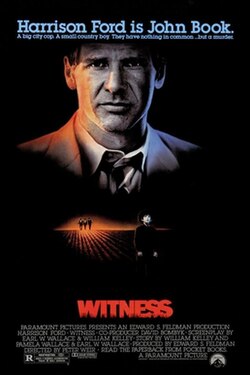
Witness (1985) is a slick crime thriller that may at first glance seem like a by-the-numbers genre film, but instead is well above average.

As the plot unfolds, there are key nail-biting, edge-of-your-seat scenes that build tension in a way that the suspense master himself, Alfred Hitchcock, would be proud of.

Decades later, it is tough to watch the film without noticing a slightly dated quality, but at the time, it was well regarded and terrifically paced.

Charismatic Harrison Ford and novice child actor Lukas Haas make the film more than it could have been.

The film’s setting is twofold, presenting two distinct cultures: rural Pennsylvania’s Amish country and bustling metropolitan Philadelphia.

The death of her husband leads Amish woman Rachel (Kelly McGillis) and her son Samuel (Haas) to the big city to see her sister. While transferring trains, Samuel witnesses a brutal murder in the men’s room- unbeknownst to the killers.

This riveting scene (explained in more detail below) sets the rest of the story in motion.

When Detective John Book (Ford) is assigned to the case and questions Samuel, he is unable to determine the assailants’ identities. After Samuel’s fingers, an unthinkable suspect, events escalate, and John uncovers a mighty corruption circuit within the police force.

John, now targeted, must assimilate into the Amish culture as he strives to protect both Samuel and Rachel (as well as keep himself alive) while embarking on a relationship with Rachel.

The story wisely focuses on the differing lifestyles of the principal characters.

What I enjoy most about Witness is the nice mix between both types of people and different cultures, and how they can learn from one another. John is so used to and desensitized by being in the midst of the rat race that he often forgets the nicer things in life- peace or even love.

Rachel and Samuel, of course, are highly sheltered, living in a bubble, and are fish out of water amid the bustling streets of Philadelphia. The counter-cultures offer a nice balance to this masculine film, bringing female sensibilities.

Not to be usurped by pure romance, Witness is, at its core, a fleshy, male-driven crime thriller. Adding some softer edges, Weir pleases both male and female audience members and appeals to the masses.

John’s precinct, filled with detectives, police officers, and criminals, gives the film appropriate “guy elements”.

So director Peter Weir offers a good balance here.

I like how Weir chooses to portray the Amish- not caricatures, stereotypes, or to be made fun of, they are sweet, stoic, and intelligent, accepting of John in their lives.

As John learns more about the Amish culture and becomes one of them, this is even more prevalent as an immersion in different cultures- a good lesson to even apply to other differences between people.

The acting is a strong component of Witness.

Charismatic and handsome, Ford is believable as a fast-paced, busy detective.

To add further substance, Ford transforms his character (often written as one-note in typical films of this nature) into a sympathetic and inspiring man as he slowly becomes a father figure to the wide-eyed youngster Samuel and falls in love with Rachel.

Ford is the standout, but the film would not work with fewer supporting actors. Both innocent and gentle characters, McGillis and Haas add layers to their roles with pronounced toughness and resilience- saving John as much as he saves them.

Two scenes are pure standouts and successfully elicit tension and dramatic effect.

As Samuel witnesses the murder in the bathroom, he is seen in a stall, peeking through a crack with only one eye exposed. When he makes a slight noise, the assailant violently goes through each stall, intent on shooting whatever he finds.

Samuel must think quickly to avoid being caught. The camera goes back and forth between Samuel’s looks of panic and the assailant getting closer and closer to catching him.

The viewer’s heart will pound during this scene.

Later, as Samuel sees a newspaper clipping framed among a case of awards, he recognizes one man as the assailant. Weir shoots it in slow motion so that the reactions of John and Samuel’s characters are palpable and effective.

The scene is tremendously done and cements the bond and trust between these characters.

Thanks to a wonderful performance by Ford and the cast surrounding him, Witness (1985) successfully widens the traditionally one-dimensional masculine crime thriller into something deeper.

Providing slick entertainment with a great story and substance, the film crosses genres and offers a substantial cinematic experience woefully needed in the mid-1980s.

Oscar Nominations: 2 wins-Best Picture, Best Director-Peter Weir, Best Actor-Harrison Ford, Best Screenplay Written Directly for the Screen (won), Best Original Score, Best Art Direction, Best Cinematography, Best Film Editing (won)