Bonnie and Clyde-1967
Director Arthur Penn
Starring Warren Beatty, Faye Dunaway
Top 250 Films #89
Scott’s Review #628
Reviewed March 25, 2017
Grade: A
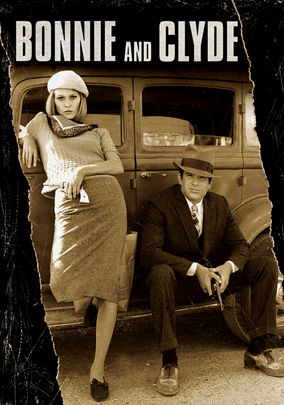
Bonnie and Clyde is an excellent 1967 crime drama that is not only a great film but also successfully and surprisingly influenced an entire generation, becoming something of a rallying cry for the youth of the time.
Released in a tumultuous period in history (the Vietnam War, the Sexual Revolution, and Civil Rights), the film fits the times and was groundbreaking in its use of violence, blood, and sex.
The film holds up tremendously well to this day and is beloved by intelligent film lovers everywhere.
The film begins with snapshots of the honest Bonnie and Clyde- a duo of bank robbers who rampaged the Southwest during the Great Depression.
Set in steamy 1930s Texas, the film tells their story.
Clyde Barrow (Warren Beatty) meets Bonnie Parker (Faye Dunaway) when he tries to steal her mother’s car one hot day. Instantly infatuated with each other, the steamy duo team up and become partners in crime.
Over time, they enlist others and become more successful bank robbers, with the stakes rising with each heist.
Rounding out the crew of criminals are gas-station attendant C.W. Moss and Clyde’s older brother Buck, played by Gene Hackman, along with his wife, Blanche (Estelle Parsons), an innocent-minded and sometimes hysterical preacher’s wife.
Bonnie and Clyde is a unique film in many different ways- the quick-cut editing style influenced Sam Peckinpah in his movies to come, and the film uses a fast-paced rat-a-tat-tat style that symbolizes the gunfire, a significant element of the film.
Blood spurts from victims’ bodies in a style never before seen on the big screen, which led to many filmmakers’ comfort with using increased violence.
You could say that Bonnie and Clyde took away the innocence of Hollywood films and shook all of the traditional elements inside out.
The film’s conclusion is one of the greatest in cinematic history.
Far from an idyllic, happy ending- the traditional one in those days- the law finally catches up with Bonnie and Clyde, with grim results for the pair, and their demise is gruesome but true to form.
We have fallen in love with the characters, so their hasty exit from this world is tough to stomach, and as they writhe and twitch with each gunshot wound, the bullets pummeling the bodies, the scene is a difficult one to watch.
The love story between Bonnie and Clyde is intense yet sweet, and Beatty and Dunaway’s casting is spot-on. Smoldering with sexuality- as Bonnie fondles Clyde’s gun, which he does not see as a phallic symbol- their relationship is fraught with stamina and emotional energy.
The two actors feed off of each other and fill the scenes with gusto. Their chemistry is part of what makes the film so great.
One of the best scenes is the shoot-’em-up showdown at a ranch where the robbers are hiding out. The scene is intense and violent.
As Buck is mortally wounded, Blanche is blinded and captured, soon to make a grave mistake in revealing one of the others ‘ identities.
Bonnie, Clyde, and C.W. barely escape with their lives, and their antics from this point become bloodier and bloodier. The cat-and-mouse play during this scene makes it the most suspenseful of them all.
Amid all the violence, a fantastic scene unfolds when Bonnie and Clyde meet Bonnie’s mother at a secret location. A local townswoman, not an actress, was cast in the pivotal role of Bonnie’s mother, and the scene is emotionally charged.
The woman’s kindness and sensibility, and the sheer “regular person” she embodies, humanize Bonnie and Clyde, and ominously, their downfall is imminent.
A highly influential film, Bonnie and Clyde is a film that is still quite relevant, especially for those who appreciate good movies and rich, intelligently written characters who are flawed yet humanistic, layered with complexity.
This is what director Penn carves out, and the film is an all-time Hollywood classic.
Oscar Nominations: 2 wins-Best Picture, Best Director-Arthur Penn, Best Actor-Warren Beatty, Best Actress-Faye Dunaway, Best Supporting Actor-Gene Hackman, Michael J. Pollard, Best Supporting Actress-Estelle Parsons (won), Best Story and Screenplay Written Directly for the Screen, Best Costume Design, Best Cinematography (won)
Golden Globe Nominations: Best Motion Picture-Drama, Best Director-Arthur Penn, Best Actor-Drama-Warren Beatty, Best Actress-Drama-Faye Dunaway, Best Supporting Actor-Gene Hackman, Michael J. Pollard, Best Supporting Actress-Estelle Parsons, Best Screenplay, New Star of the Year-Actor-Michael J. Pollard