Sisters-1973

Sisters-1973

Director Brian De Palma

Starring Margot Kidder, Jennifer Salt

Top 250 Films #119

Top 40 Horror Films #22

Scott’s Review #178
60002455

Reviewed September 29, 2014

Grade: A-

Directed by stylistic film genius Brian De Palma, Sisters (1973) is an early entry in the famed director’s repertoire and a direct homage to the classic films of Alfred Hitchcock.

The film stars Margot Kidder as a French-Canadian model named Danielle Breton, who shares an apartment a Staten Island, NY, with her demented twin sister, Dominique. For many years, Danielle and Dominique were conjoined twins and were only recently surgically separated.

After a romantic date with a new acquaintance, Danielle begins to feel ill and Dominique murders the new boyfriend after he surprises, who he thinks is Danielle, with a birthday cake.

But is it Dominique or is it Danielle?

Meanwhile, a neighbor, Grace Collier, played by Jennifer Salt, witnesses the murder from across the alley. In a theatrical scene in which the victim attempts to scrawl “help” on the window, Grace calls the police.

The authorities are skeptical and unsympathetic to Grace’s claims, as she works as a newspaper reporter and frequently challenges the police department in her articles.

Finally, when the police search Danielle’s apartment, no dead body is found. This sets off the plot for the remainder of the film as Grace looks for the missing body on her own (in Nancy Drew’s style) with the help of a detective she hires, Joseph Larch, comically played by Charles Durning.

One point to mention about Sisters is that the film serves as a blueprint for De Palma’s future movies, but that does not mean it is not engaging on its own merits; it pales in comparison to other De Palma gems that followed, such as Carrie (1976) and Dressed to Kill (1980), my two faves.

It feels raw and slightly underdeveloped compared to those films mentioned above.

Danielle’s ex-husband and doctor, Eli, while creepy and sinister, is not fully explored, and his relation to the events taking place is a bit vague throughout much of the film.

Techniques such as the split-screen, which often show simultaneous action relating to each other, are introduced in this film and are a marvel to watch, as much of the plot is revealed in these sequences.

The activity in Grace’s apartment contrasts with and interchanges perfectly with the action in Danielle’s apartment, making for highly effective and suspenseful scenes.

DePalma uses many Hitchcock influences, but in no way steals them- the idea of a set of conjoined twins with mental illness was taken from a real-life story of Soviet twins.

Viewers familiar with Psycho will smile during the murder scene as influences are apparent- Rear Window is certainly referenced as countless scenes of the camera looking into Danielle’s or Grace’s apartment, or the camera looking out onto a street scene, or someone with binoculars spying out of their apartment and into someone else’s apartment across the street- very visually oriented.

The Hitchcock similarities continue with the musical score, composed by Bernard Hermann, a frequent collaborator on Hitchcock’s films—think Vertigo.

After all of the psychological build-up throughout the first hour of the film, the final thirty minutes or so, taking place within the confines of a mental asylum, is confusing and unrealistic, as various flashbacks and dream sequences are used, even using one character taking the place of another in a dream- edgy and unique, but tough to follow and organize properly.

Grace is assumed to be a newly admitted mental patient, which seems far-fetched. What exactly transpired between Danielle and Dominique present and/or in the past?

Even though events are explained, I found myself scratching my head a bit after the film.

For fans of Brian De Palma films, Sisters (1973) is a perfect movie experience that showcases the influence to come, and it’s not a bad film on its own, either.
Dial M for Murder-1954

Dial M for Murder-1954

Director Alfred Hitchcock

Starring Ray Milland, Grace Kelly

Top 250 Films #120

Scott’s Review #995

Reviewed February 28, 2020

Grade: A

A fabulous offering by stylistic director Alfred Hitchcock, Dial M for Murder (1954) arrived on the scene when the cinematic genius was at the height of his success in the United States, following his success in England.

The late 1950s and early 1960s revealed his best offerings, but this is no slouch. The film mixes thrills, double-crosses, and murder in a way only Hitchcock can —perfectly.

It is fast-paced and shot almost like a play, using primarily one set. It is based on the Broadway hit, which came first.

An English former tennis champion, Tony Wendice (Ray Milland), hatches a scheme to kill his wealthy but unfaithful wife, Margot (Grace Kelly), who’s embroiled in a liaison with handsome writer Mark Halliday (Robert Cummings).

When Tony’s plans go awry, he attempts the second act of deceit, but events spin out of control when Margot, Mark, and a sly Scotland Yard inspector (John Williams) begin putting the pieces together.

The film is popular because of its conventional, pure Hitchcock story. The viewer immediately knows who the killer is and his motivations—his hunger for wealth and jealousy of another man.

The most fun is when hiccups begin to form, and Tony must fly by the seat of his pants to cover his tracks and think of another way to seal Margot’s fate. If he cannot murder her, why can’t he send her to prison?

Milland is perfect in the role with eye shifts and head turns.

Set pieces, such as a key and a handbag, add zest to the film. The plot gets juicier and juicier when it is revealed that there are multiple keys. The flat where Tony and Margot reside is beautifully designed with state-of-the-art furniture and decorations, making the set a character.

Lavish curtains and French doors are utilized during the late-night attempted murder scene, which is thrilling to witness, leaving the viewer with heart palpitations.

The brilliance is that the viewer does not intend to hate Tony, at least not this viewer. While he is not likable, his motivations can be somewhat understood. Conversely, Margot and Mark are not heroes; their shenanigans come back to haunt them.

I dare say that Grace Kelly has had better roles in Hitchcock films. To Catch a Thief (1955) immediately comes to mind. Margot is not a particularly strong character and is relatively weak.

Dial M for Murder has commonalities with two other Hitchcock gems. As with Strangers on a Train (1951), a tennis star is utilized as a significant character, and twisted strangulation is the game. Also, a tit-for-tat technique is used.

Like the underappreciated Rope (1948), the one-take sequence style and the film’s potential as a stage play are noticeable traits. Those films are good ones to be in the same company with.

The final thirty minutes pass at breakneck speed as we wonder what will happen next. The cat-and-mouse activities are delightful and remind us that the film is essential and stripped down compared to his later films.

One set, good actors, and a full-throttle story do wonders to satisfy a fan. The camera movements and techniques are key to the entire film, as a shot here or there is timed with flawless precision. Hitchcock used 3-D filming, which was inventive for the time.

Although perhaps not as famous as Hitchcock’s delights like Psycho (1960), Vertigo (1958), or North by Northwest (1959), Dial M for Murder (1954) serves as much more than a warm-up act for those classics.

This film is one to remember with a fast pace, twists and turns, and good British sensibilities. Its setting is a stylish London flat, and the sophistication is suitable.

The Last Picture Show-1971

The Last Picture Show-1971

Director Peter Bogdanovich

Starring Timothy Bottoms, Jeff Bridges, Cybill Shepherd

Top 250 Films #121

Scott’s Review #1,349

Reviewed March 9, 2023

Grade: A

1971 was a great year in American cinema, from The French Connection to Willy Wonka and the Chocolate Factory to Fiddler on the Roof to Dirty Harry.

The list goes on and on.

The brilliantly filmed and directed The Last Picture Show is easily ensconced in the year’s top ten, featuring an embarrassment of riches across the board. An important thing to promote is the successful use of the dusty setting and time, which is the film’s secret sauce.

Peter Bogdanovich crafts a dreary coming-of-age tale set in landlocked Texas. The film is loosely based on a 1966 novel of the same name written by Larry McMurtry.

The film includes many songs by Hank Williams Sr. and other country & Western and 1950s popular music recording artists to reflect the era.

Most of the townsfolk are bored to tears in the windswept hamlet of Anarene, Texas. Their saving grace is a local cinema (the picture show) run by the popular Sam the Lion (Ben Johnson), which is about to close its doors forever.

Others frequent the café run by sultry waitress Genevieve (Eileen Brennan), who knows everyone’s business.

The gossip and scandals run wild throughout town, following several principal characters and their trials and tribulations. High school students Sonny (Timothy Bottoms) and Duane (Jeff Bridges) lust after flirty Jacy Farrow (Cybill Shepherd) while trying to figure out their futures.

Sonny also finds time for an affair with depressed housewife Ruth Popper (Cloris Leachman), twenty years his senior, who is married to the school gym teacher, Coach Popper (Bill Thurman), who may be gay.

The year is 1951, when the Korean War is raging, and the once-prosperous oil town is in significant decline.

Bogdanovich’s apt camerawork, shot in black and white, is central to the film and the winning recipe (well, one of them). If The Last Picture Show were shot in color or worse yet, colorized, it would detract from the proper mood of sadness.

The exterior scenes involve swirling dust and wide-angle shots of the main street, often enough to relay a comparison to a ghost town, especially as events go along. There are also some sequences featuring vehicles or highway scenes, evoking thoughts of escape or departure.

The other key ingredient is the ensemble of characters led by exceptional acting. Sonny is the handsome lead character with a lifetime ahead of him and the kindest of all the players. His all-American good looks infuse a vulnerability into the character with vulnerability, especially in scenes with his mentor, Sam, and his friend, Billy.

Other quiet scenes reveal much about the supporting characters. Ruth sadly hangs the wash on her clothesline, looking worn and weary, while Genevieve grills a cheeseburger in the café, cigarette dangling and her once youthful aspirations slipping away.

Leachman and Johnson, both Academy Award winners in the supporting categories, deserve their awards. They successfully portray their anger in quiet ways, and both have dignity and self-worth, making their characters complex and revered.

The heartiest scenes belong to the younger set as they deal with simmering sexuality and hopes for college. Jacy experiments with sex, even sleeping with the man who her mother Lois (Burstyn) is having an affair with.

Shepherd also presents Jacy as vulnerable as she awkwardly strips off her clothes during a pool party, encouraged by a handsome boy she hopes to impress. At times, she is childish, other times a selfish bitch. It’s mentioned that her family is wealthy, so it’s assumed she is spoiled.

The 1950s usually provide a level of nostalgia and good, old-fashioned, carefree Americana.

The Last Picture Show (1971), thanks to the flawless direction and screenwriting of Bogdanovich and McMurtry, instead paints a perfect portrait of misspent youth and shattered dreams.

Oscar Nominations: 2 wins-Best Picture, Best Director-Peter Bogdanovich, Best Supporting Actor-Ben Johnson (won), Jeff Bridges, Best Supporting Actress-Cloris Leachman (won), Ellen Burstyn, Best Screenplay-Based on Material from Another Medium, Best Cinematography

Fellini’s Roma-1972

Fellini’s Roma-1972

Director Federico Fellini

Starring Peter Gonzales, Britta Barnes

Top 250 Films #122

Scott’s Review #649

Reviewed June 5, 2017

Grade: A-

Fellini’s Roma (1973) is a trippy experience set in Rome across two different periods.

As with all Fellini films, the film is meant to be experienced rather than analyzed.

One must nestle into the life that Fellini offers on-screen- in this instance, the fabulous city of Rome, Italy, in both positives and negatives.

The experience was very good for me, as both a world of odd characters and of ancient Rome oozed from the screen appealingly and absurdly.

From a plot narrative- there is a rot one. Arguably, the only character portrayed is Rome herself. The film takes place in both the 1930s and the 1970s and is said to be an autobiographical tale of director Fellini’s experiences growing up in Rome.

We see little Fellini as a youngster, experiencing the vast city for the first time, and as a teenager, now living in the city. Interestingly, the film moves back and forth between the two periods with no rhyme or reason.

Throughout the film, we see both the beauty and the ugliness of Rome- the majestic Colosseum and the dirty entrails of the gloomy city. Scenes of seedy brothels, mainly in the 1930s, and a myriad of strange and scantily clad females prance before the cameras, looking for a lucky score amid the droves of men lusting after them.

Another depicts a fashion show, of sorts, taking place at the Vatican, involving nuns and priests in bizarre costumes.

The 1930’s setting is my personal favorite. Gritty, cold, and harsh, Rome’s bleakness is depicted. Unsurprisingly, this has much to do with the historical period: since Mussolini was in power and on the eve of World War II, the darkness was apparent.

In a frightening scene, bomb sirens wail while a woman shrieks in panic. The brothel scenes are downright creepy, and the subsequent theatre scenes involving drunken, rowdy, young men leering and cursing at the entertainment are a particular slice of a life sequence.

In contrast, the 1970s sequences are layered with more beautiful depictions of the city. Brighter colors predominate, and there appear to be scientists or explorers digging into ancient ruins, finding gorgeous art that is subsequently damaged by the wind. We also see hippy types basking in the sunlight.

Again, much of this film is largely open to interpretation.

I adore Fellini’s Roma in terms of an expression of the city of Rome as an art form, but the film is highly unconventional- another plus for me.

Sure, I may have wanted to learn more about the bevy of creepy and potentially interesting characters. Still, I finished the film with an appreciation for Rome unlike any I have ever known.

A startling final scene, in which legendary Italian film star Anna Magnani appears scantily clad, implied to be a prostitute, was filmed shortly before her untimely death at the age of sixty-five.

As a film, Fellini’s Roma (1972) is a wonderful history lesson, but also a lesson in interpretation and film appreciation. Most filmgoers are accustomed to a beginning, middle, and end, as well as some semblance of a plot.

Roma contains none of that; rather, it is mind-opening and still fresh many years after its release, which is a true testament.

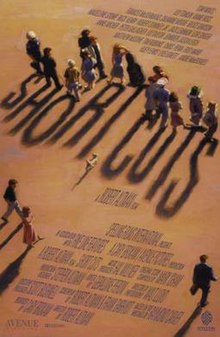
Short Cuts-1993

Short Cuts-1993

Director Robert Altman

Starring AndieMacDowell, Julianne Moore, Bruce Davison

Top 250 Films #123

Scott’s Review #1,400

Reviewed September 20, 2023

Grade: A

I am such a fan of acclaimed director Robert Altman because he typically features an enormous cast of richly drawn characters, all serving a story’s purpose.

Frequently, there is much character development and investment.

Short Cuts (1993) is a latter-day Altman offering set in Los Angeles, California, the City of Angels, that is nearly as good as my all-time favorite of his, Nashville, made in 1975.

Similarities burst onto the screen with twenty-two principal characters to Nashville’s twenty-four. Their lives frequently intersect, and the fun is peeling back the layers of their lives and discovering who is connected to whom.

Comparisons to 1992’s The Player (also Altman) and 1999’s Magnolia, directed by Paul Thomas Anderson, can also be made for obvious reasons related to the Los Angeles setting.

But Magnolia is much weirder than Short Cuts.

The irony is that most characters are anything but angels as they suffer from insecurities, deaths, infidelity, and various shenanigans as they attempt to get through California life amid an earthquake and a fleet of helicopters spraying for medflies.

Altman based the film on the nine short stories and a poem by Raymond Carver.

Some of the tales include a waitress Doreen (Lily) who is married to an alcoholic limo driver (Tom Waits) who accidentally runs into a boy with her car.

Soon after walking away, the child lapses into a coma. While at the hospital, the boy’s grandfather (Jack Lemmon) tells his son, Howard (Bruce Davison), about his past affairs.

Meanwhile, a baker (Lyle Lovett) harasses the family after they fail to pick up the boy’s birthday cake.

Dr. Ralph Wyman (Matthew Modine) and his wife, Marian (Moore), meet Stuart Kane (Fred Ward), an unemployed salesman, and Claire Kane (Anne Archer), a party clown, at a cello concert.

They impulsively decide to have a Sunday dinner date. seemingly having nothing in common.

Meanwhile, Marian’s sister, Sherri (Madeleine Stowe), is married to a cheating cop named Gene (Tim Robbins), who is having an affair with Betty Weathers (Frances McDormand), while Betty is divorcing one of the helicopter pilots, Stormy (Peter Gallagher).

There are other stories and connections to round out the fabulous cast.

The juicy, dramatic storylines play out like a terrific arc on Days of Our Lives or As the World Turns, with some needed comedic elements to balance things out.

Anyone who knows Altman will salivate with the name recognition among the cast, most notably Tomlin and Robbins. Actors frequently chomped at the bit to appear, knowing that he was an actor’s director.

This means he allowed his cast open range to create dialogue appropriate for their characters.

There’s no better example than when Jack Lemmon tells a story in the film. His improv and free dialogue are a dream to watch and a lesson in good and natural acting.

Despite the enormous cast, everyone has something of quality to do. Nobody is languishing on the back burner with throwaway scenes or unimportant activities.

All characters connect to others in some way.

Fans who fancy Los Angeles both in film and in real life, with its bursting sunshine and cheery perception, will revel in the down-and-dirty subtext of Short Cuts.

The fun is getting there.

Some characters are wealthy, but most struggle with day-to-day routine, so the film contains a harsh realism. They try to find any shred of happiness wherever they can.

Like real life, which is part of the brilliance of Short Cuts. The audience can relate to the characters because we all know people like them, which makes the film a beautiful and treasured experience.

Or some may even be like us. The writing is brilliant, and the characters are true to form.

One day, I’ll create a list of my Top Ten Robert Altman films, and I bet Short Cuts (1993) lands in the Top Five.

Oscar Nominations: Best Director-Robert Altman

Independent Spirit Award Nominations: 3 wins-Best Feature (won), Best Director-Robert Altman (won), Best Screenplay (won), Best Supporting Actress-Julianne Moore

Jackie Brown-1997

Jackie Brown-1997

Director Quentin Tarantino

Starring Pam Grier, Robert Forster

Top 250 Films #124

Scott’s Review #356

60010514

Reviewed January 9, 2016

Grade: A

Quentin Tarantino’s Jackie Brown (1997) is a fantastic film and one of the few to have a solely female lead (Kill Bill Volumes I and II are the others) and successfully re-launched the careers of stars Pam Grier and Robert Forster after too many years on the sidelines.

Grier’s earlier films heavily influenced the 1970s blaxploitation genre.

Jackie Brown is one of Tarantino’s more obscure films, but it is brilliant nonetheless and filled with slow, plodding yet tremendous scenes.

Grier plays the title character, Jackie Brown, a flight attendant for a small Mexican airline who smuggles money from Mexico to the United States to supplement her income.

When she is caught and threatened by the Feds to help them catch a much larger fish, she plots to use both sides to her advantage and walk away with the money.

Jackie develops feelings, and a sweet relationship ensues with Max Cherry, a bondsman played by Forster.

Mixed in with the plot are Tarantino staples: Samuel L. Jackson as Ordell Robbie, a crooked drug smuggler; Robert De Niro as Louis, a former cellmate of Ordell’s; and Bridget Fonda as Melanie, a dizzy stoner girl.

As is always the case with Tarantino films, Jackie Brown features a stellar cast just chomping at the bit to deliver the best performances they can, aided by rich, crackling dialogue written for them.

The writing is always fantastic in Tarantino films, and Jackie Brown has plenty of plot twists and turns.

My favorite scene by far is the one involving the transfer of money at the local Mall. Rich with flavor and atmosphere, it is a marvel. Jackie and Max engage in small talk at the food court before the transfer is to take place- Jackie then goes to a fitting room where the “switch” will occur.

Throughout this sequence, the tension is incredibly high, and the film turns into a nail-biter.

Tarantino, not one to focus on a romantic storyline, gives Jackie Brown a unique quality by featuring the respectful and delicious romance between Jackie and Max. This adds layers to the mainly bloody and crime-laden film.

In contrast to this relationship is the volatile relationship between Louis and Melanie, which ends in tragedy.

I love how the film is set in Los Angeles. Sunny, bright, with a stuffy and superficial element to the action, mixing the beach and the hot weather with a crime story, manipulation, and double-crossing works so well.

Giving aging Hollywood stars a deserving comeback, Tarantino weaves a complex, adventurous, and well-paced crime drama featuring veteran actors who deliver the goods.

Jackie Brown (1997) is a treasure in a world of Tarantino’s other treasures and a must-have for all the director’s fans and fanatics.

Oscar Nominations: Best Supporting Actor-Robert Forster

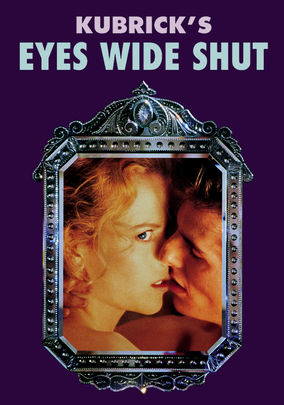
Eyes Wide Shut-1999

Eyes Wide Shut-1999

Director Stanley Kubrick

Starring Tom Cruise, Nicole Kidman

Top 250 Films #125

Scott’s Review #464

5670434

Reviewed August 14, 2016

Grade: A

Eyes Wide Shut is a film that I saw in theaters upon its release in 1999 and found fascinating, to say the least. I have watched the film twice more in the years following and it is even more fascinating today- it gets better and more nuanced with each viewing.

It is not an easy film to follow or explain but is rich in mystery and psychologically challenging.

A huge Stanley Kubrick fan, this film is an eerie, plodding, cerebral psychological/sexual thriller.

The creepy piano score is very effective, and Tom Cruise and Nicole Kidman are both excellent as affluent, yet restless, thirtysomethings living in New York City.

Cruise plays Bill, a successful doctor, and Kidman his gorgeous wife, both sexually restless and escaping into fantasy and otherwise real dalliances with other partners as they bicker about fidelity and jealousy as they lounge in their underwear and smoke pot.

It’s a film about relationships, temptation, and desire, and does not always make perfect sense, but boy will it leave you thinking.

The supporting characters are some of the most interesting I’ve ever seen as they compel and mystify and one wonders how they fit with the main characters.

The naughty Long Island orgy is as bizarre and surreal as one can imagine.

The movie reminds me somewhat of The Ice Storm (1997), Magnolia (1999), and Mulholland Drive (1992), which is the ultimate compliment as the aforementioned are film masterpieces.

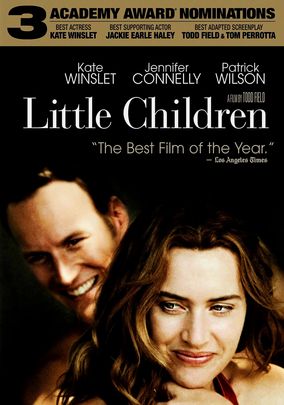
Little Children-2006

Little Children-2006

Director Todd Field

Starring Kate Winslet, Patrick Wilson

Top 250 Films #126

Scott’s Review #334

70052692

Reviewed January 9, 2016

Grade: A

Little Children is a subtle, dark drama from 2006 that reminds me a great deal of The Ice Storm and American Beauty- both equally quiet masterpieces. All are similar films about dysfunctional, interpersonal relationships that are damaged.

The great film is one of my more modern all-time favorites.

On the surface, the small suburban Boston town in which the members of the film reside is whimsical, peaceful, and quiet. Spacious colonial and Victorian houses similarly line the sleepy streets.

The small town (unnamed) is affluent and, we learn very early on, is rife with scandal. A child-molester, Ronnie, (Jackie Earle Haley), who is also a resident of the town, living with his mother, has recently been let loose to resume his life, which makes the neighborhood tense and angry.

It is summertime, and the air is thick with heat and secrets.

Other than the child-molester story, the main drama involves Sarah Pierce (Kate Winslet), an intelligent, bored, stay-at-home housewife. She is angry and frustrated.

She cares for her three-year-old daughter Lucy, while her husband is addicted to porn and regularly sniffs panties that he purchases online, even risking his job to immerse himself in his addiction to porn.

They have a sex-less marriage.

Soon, Sarah embarks on a relationship with the resident hunk, Brad (Patrick Wilson), a stay-at-home Dad to four-year-old Aaron. His wife, Katherine (Jennifer Connelly), a “knockout”, produces documentaries and is the breadwinner of the family.

Thrown in the mix is crazed ex-cop, Larry, obsessed with protecting the neighborhood from Ronnie, and a trio of suburban house-wives, who are friendly with Sarah and secretly lust after Brad.

Little Children is a film about relationships, insecurities, and dreams remaining unfulfilled. How these relationships are damaged, filled with angst, or yearning for a resolution far out of reach, are explored and every character is sad in some way.

Each character is unfulfilled and in the middle of all of it is the torrid romance between Sarah and Brad. They while away the summer in romance that we just know will not last. They find some happy moments, but how will this continue?

Tragic is the situation with Ronnie- despite being a child molester he is portrayed as a sympathetic character. The entire town is against him- a sad scene involves the townspeople fleeing the community pool when Ronnie dares to go for a swim.

When he tearfully tells the police that he just wanted to cool down, there is such sadness in his eyes.

Despite being supporting characters in the film, my favorite performances are by Haley and Phyllis Somerville, as Ronnie’s feisty yet haggard mother, May.

Determined to ensure her son has a decent life, she lashes out at anyone who bullies her poor Ronnie. Somerville’s performance is heartbreaking and, in a perfect Hollywood world, she would have received an Oscar nomination.

Happily, Haley did, as injecting any sympathy in a character such as his is a difficult task, but Haley does so in spades.

The film is filled with narrative- in not dissimilar fashion to the classic Barry Lyndon (1975)- as the narrator explains the thoughts and inner turmoil of the characters in regular intervals. This adds layers and clarity to the film.

A masterful scene involves one centered around the dinner table, successfully done. Curious about husband Brad’s daytime life when she is away at work, Katherine invites Sarah and her daughter to join them for a cozy dinner.

As everyone eats and converses, the light bulb suddenly goes on in Katherine’s head and she pieces together events, realizing Brad and Sarah’s true relationship.

All of those days when she knew not where Brad was now came flowing back to her. A similar scene was played out in 2008’s The Kids Are Alright, working successfully in that film too.

The stories eventually intersect and I love this point of the film, especially being that it takes place in a smothering small town.

Character-driven, cynical, tragic, and dark. Little Children (2006) is a humanistic masterpiece that I never tire of watching- one of my favorites.

Oscar Nominations: Best Actress-Kate Winslet, Best Supporting Actor-Jackie Earle Haley, Best Adapted Screenplay

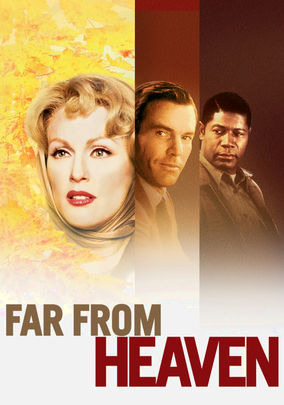
Far From Heaven-2002

Far From Heaven-2002

Director Todd Haynes

Starring Julianne Moore, Dennis Haysbert

Top 250 Films #127

Scott’s Review #332

60025011

Reviewed January 8, 2016

Grade: A

Far From Heaven (2002) is a gorgeous film, set in 1950’s upper-class and sophisticated Connecticut, that tackles not one, but two, separate social issues, in a wonderful story-telling fashion.

An interracial couple fraught with discrimination, and a homosexual husband hiding his secret lifestyle encompass this amazing film by acclaimed director Todd Haynes.

In years to follow, Haynes would also direct such masterpieces similar to the period (and story) of Carol (2015).

For starters, the cinematography and art direction are simply breathtaking- the beautiful and colorful small town in Connecticut, on the surface, prim and proper, is oozing with secrets and scandal just waiting to bubble to the surface.

An aerial view of the town allows the viewer to see this perfectly carved town in a sweeping motion.

Far From Heaven contains many similarities to All That Heaven Allows, made in 1955, and also focuses on a great scandal in a small, seemingly idyllic New England town.

Cathy Whitaker (Julianne Moore) seems to have everything perfectly styled and kept at home in affluent Connecticut, a successful husband named Frank (Dennis Quaid), who is an advertising executive, beauty, and a neighborhood filled with friends.

One night when Frank is working late, Cathy surprises him with dinner at the office, only to be surprised herself by catching Frank passionately kissing another man. In an awkward scene, Frank admits to Cathy that he needs conversion therapy, but instead turns to alcohol and continues to secretly see men.

Devastated, Cathy befriends her gardener, Raymond Deagan (Haysburt), a handsome black man, and slowly begins a relationship with him. Needless to say, this causes gossip and scandal amongst the townspeople.

Far From Heaven is fantastic story-telling, weaving, in essence, two main social stories together.

Frank questions his sexuality, afraid to admit he is gay and risking his reputation and career. Undoubtedly, he is a tormented individual and we see him slowly come to terms with his sexuality.

Haynes, fantastic at crafting a worthy story, carves a similar tale in 2015’s Carol, only she is a woman confident about her sexuality, but hiding it from society. Since the time in both films is the 1950s, the sexual revolution has not occurred, let alone anything gay-related.

The center story though belongs to Cathy and Julianne Moore portrays her to perfection. I would argue that Cathy is Moore’s best role- along with Amber Waves from Boogie Nights.

Hurt and betrayed by her husband, she suddenly is filled with new and dangerous emotions- falling in love with a black man in a not very open-minded time.

Moore and Haysbert have fantastic chemistry from their very first scene together.

I love how Haynes showcases the perfection of the town- the lawns are perfectly mowed, the flower beds flawless, and everyone appears cheerful and colorful. But when something in their little town becomes amiss (in this case Cathy going against the grain) the fangs come out and the animals bear their teeth.

A wonderful scene showcases Cathy and Raymond’s slow dancing in a solely black bar. They sway as one and Cathy is accepted by the black patrons. Raymond (and his daughter) are not treated the same way by the white folks of the town once they catch wind of the shenanigans going on between the interracial couple.

Far From Heaven (2002) is a beautiful film- from the way it looks and is shot, to the powerful acting performances all around. Moore may be the star and the central character of the film, but Quaid and Haysbert certainly deserve their due.

They each give layered performances as wounded and tortured men- and the conclusion of the film- perceived as open-ended- is also not a happily ever after climax.

Oscar Nominations: Best Actress-Julianne Moore, Best Original Screenplay, Best Original Score, Best Cinematography

Independent Spirit Award Nominations: 5 wins-Best Feature (won), Best Director-Todd Haynes (won), Best Female Lead-Julianne Moore (won), Best Supporting Male-Dennis Quaid (won), Best Cinematography (won)

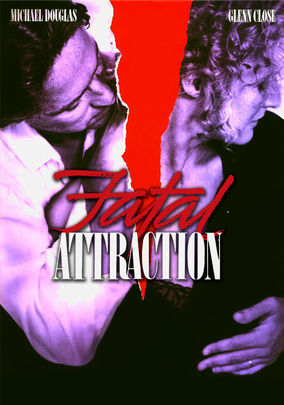
Fatal Attraction-1987

Fatal Attraction-1987

Director Adrian Lyne

Starring Michael Douglas, Glenn Close

Top 250 Films #128

Scott’s Review #329

60010341

Reviewed January 8, 2016

Grade: A

Fatal Attraction is a film that was a monster smash hit at its time of release (1987) and has all the makings of a trashy, forgettable, slick Hollywood film from a disastrous period in Hollywood.

Guess what? It is a fantastic, gripping thriller that still holds up well after all of these years.

Say what you will about Anne Archer, who is very good, but this film truly belongs to Michael Douglas and Glenn Close, who made it the believable thriller that Fatal Attraction is.

The subject matter is adultery, which made it the water-cooler topic of its day.

The plot is quite simple- Douglas plays Dan Gallagher, a successful New York City attorney, happily married to Beth (Archer), and raising a cute young daughter, Ellen.

When Beth and Ellen are away looking at new houses one rainy weekend, Dan embarks on a torrid affair with the sexy, successful businesswoman Alex (Close), not realizing that she is an unbalanced, needy woman who is not about to let Dan out of her life.

I adore this film in large part because it’s a film that can be debated.

Many seem to blame either (mostly) Dan or Alex. Still, the question of monogamy can always be a topic of conversation after viewing this film, so in that regard, it is multi-faceted, rather than solely a well-acted Hollywood potboiler.

Was it okay for Dan to cheat? Does Beth overreact, or does she forgive too easily? Do we sympathize with Alex? Is she a victim?

The film is unique in that many folks were rooting for Dan and Alex, despite her being the other woman.

So many memorable lines or scenes contribute to this film- who can forget the infamous “boiling pet rabbit” scene or the wonderful line that Alex utters to Dan, “I will not be ignored, Dan”.

They are so ingrained in pop culture that thinking of these aspects of Fatal Attraction brings a smile.

The real selling point, though, is the natural and honest chemistry that Douglas and Close share. Their scenes, especially the romantic weekend they spend together, flow so smoothly that they have real rooting interest, and I instantly bought them as a couple.

Without this undeniable chemistry, Fatal Attraction would be a standard romantic thriller- and not much else. And the smoldering sexuality during their love scenes is erotic and intense.

Surely not suffering from the dreaded “1980s look”, Fatal Attraction is a gem that holds up very well and is a slick thrill-ride, easily watched and enjoyed time and again.

Dozens upon dozens of carbon copy films cropped up in the years to follow, but none were ever as fantastic as Fatal Attraction (1987).

Oscar Nominations: Best Picture, Best Director-Adrian Lyne, Best Actress-Glenn Close, Best Supporting Actress-Anne Archer, Best Screenplay Based on Material from Another Medium

Bambi-1942

Bambi-1942

Director David Hand

Starring Various voices

Top 250 Films #129

Scott’s Review #556

Reviewed December 22, 2016

Grade: A

Bambi (1942) is one of my favorite classic Disney animated features. It is simply a lovely, endearing, and heartbreaking tale.

Gorgeous and flawless, the film conveys a clear message about animals yearning for peace in a world where hunters seek to disturb and kill the graceful deer.

After all these years, this message still resonates loud and clear, sad, heartbreakingly. All deer hunters should watch this film and dare to take a shot.

Bambi was released during the Golden Age of Disney films, which was led by notable films such as Snow White, Dumbo, and Pinocchio, among others.

We first meet baby Bambi as his dear mother nurtures and nestles him, fawning over him with pride and teaching him the joys of the forest. Bambi’s father is the Great Prince of the Forest- protector of all the creatures of the land.

Bambi’s mother (unnamed) warns an exuberant Bambi to be cautious of the gorgeous yet dangerous meadows, where the deer are vulnerable and unprotected.

During the film’s famous gut-wrenching scene, tragedy occurs, and violence disrupts the peaceful forest, leaving Bambi alone, lost, and devastated, forced into a cruel world of tragedy, realism, and responsibility.

The scene gets to me every time, as we see the pain and harshness of life for the sweet deer, to say nothing of the other animals in the forest —namely, Thumper (a rabbit) and Flower (a young Skunk).

These characters are Bambi’s best friends. The dripping teardrop that oozes from Bambi’s eye can never be forgotten.

To counterbalance the film’s darkness, Disney successfully incorporates cheerful scenes of the animals dancing and interacting with each other as a unified community.

This is nice, as it shows the power and bond between the creatures – they are united as a family and take care of one another. I love this message, especially as young people will watch the film for the first time.

There is also a sweet romance offered between Bambi and Faline.

Watching the film and listening to the musical score is a way to experience sheer beauty. The music makes the film powerful- its classical and operatic elements are gorgeous and will elicit emotions.

Visually, each frame is a drawing set against a still, and it is magical to watch and marvel at the amount of work that undoubtedly went into this preparation.

In the end, the circle of life comes full circle. Bambi becomes the Great Prince of the Forest, replacing his father as the protector. Now, all grown up with two tiny babies of his own, he must protect his family and friends.

Life goes on. This is a sad yet realistic message. How brave Disney was in creating a masterpiece like Bambi.

Personal satisfaction is observing my beloved female feline friend, Thora, become mesmerized and attentive to the film each time I watch it.

Disney’s Bambi is a wonderful, cherished treasure that evokes emotions and conveys a valuable, poignant message. It is a timeless masterpiece to be enjoyed for generations to come.

One will not escape the film with dry eyes, a testament to the marvelous filmmaking involved.

Oscar Nominations: Best Scoring of a Dramatic or Comedy Picture, Best Original Song-“Love Is a Song”, Best Sound Recording

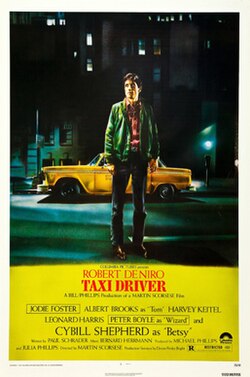
Taxi Driver-1976

Taxi Driver-1976

Director Martin Scorsese 

Starring Robert De Niro, Cybill Shepherd, Jodie Foster

Top 250 Films #130

Scott’s Review #776 

Reviewed June 20, 2018

Grade: A

It is incredibly tough to choose a favorite among Martin Scorsese’s films, since nearly all of them are exceptionally well-made.

Goodfellas (1990), Raging Bull (1980), and Taxi Driver (1976) immediately come to mind. Taxi Driver may be Scorsese’s darkest film of all.

The thriller is intense, dangerous, and ferocious, led by a riveting performance by Robert De Niro, a regular in the director’s earlier films. The film is nail-biting and compelling, and a great, character-driven watch.

Set in the bustling and (at that time) decrepit New York City shortly following the Vietnam War, Travis is a veteran suffering from some degree of post-traumatic stress disorder.

Lonely and angry, he works as an overnight taxi driver who falls for a snooty presidential campaign worker, Betsy (Cybill Shepherd).

He also forges a relationship of a protective nature with an underage prostitute, Iris (Jodie Foster). As he gradually spirals out of control due to the unhappiness surrounding him, he plots to kill Betsy’s boss while protecting Iris from her pimp (Harvey Keitel).

One great aspect of Taxi Driver is the extremely good performance by De Niro. Along with Jake LaMotta’s later role in Raging Bull, Travis Bickle’s role is my second favorite of his. With Bickle, he is unpredictable, on edge, and angry, as De Niro infuses the character with those qualities in a seamless fashion.

As he teeters on the brink of insanity and is ready to snap at any given moment, the character is impossible not to watch with both fear and marvel.

De Niro is that brilliant. 

While not to be outdone by the aforementioned negative and dangerous qualities, Travis also possesses a few benevolent traits, making the character complex. In large part, this comes into play with the protective nature he develops towards Iris.

Almost like a big brother/kid-sister dynamic, the deranged man treats her with kindness rather than taking advantage of her as he easily could have. The diner scene, in which the two actors (De Niro and Foster) share it, is rich in interesting dialogue and binds the characters together.

Travis also harbors love and hate emotions towards Betsy (Cybill Shepherd). As she is a political volunteer for a potential presidential candidate, Travis first encounters her while spying on her through the large glass windows where she works.

Coaxing her to accept a date, they have coffee and eventually attend a film together. Betsy is offended since the film is pornographic, and their date goes south fast. After a vicious showdown between the pair at the campaign office, Travis goes off the deep end and plots revenge.

The gritty, atmospheric approach Scorsese takes in Taxi Driver is an enormous highlight of the film. Dingy, dark, and dangerous, the director creates numerous scenes that show just how seedy New York City was in the 1970s.

Working the night shift, sure to bring out the rancid and most decaying elements of the city, Travis experiences many cretins and undesirables in his work- and arguably is one of them!

Many scenes feature the notorious 42nd Street and its accompanying porn theaters that made New York City famous (or infamous!) at the time.

In one of the film’s most frightening (and best) scenes, Travis can get his hands on a gun. He practices drawing his weapon in the mirror, repeatedly uttering the famous line “You talkin’ to me?” as we wonder if he will pull the trigger.

The scene is fraught with cerebral tension and quite frightening. Later, when Travis shaves his head and brandishes a mohawk, his new look is downright terrifying.

Scorsese creates a dark world enriched by his incredible cinematography and astounding portrayals of compelling characters in dangerous, unstable times.

Taxi Driver (1976) is a treasure to watch closely and appreciate as a timeless piece of art. Instead of decaying in the vaults of cinema, the film gets better and better with age.

Oscar Nominations: Best Picture, Best Actor-Robert De Niro, Best Supporting Actress-Jodie Foster, Best Original Score

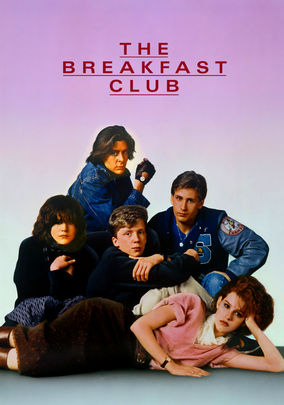
The Breakfast Club-1985

The Breakfast Club-1985

Director John Hughes

Starring Judd Nelson, Molly Ringwald, Emilio Estevez

Top 250 Films #131

Scott’s Review #755

Reviewed May 8, 2018

Grade: A

The Breakfast Club (1985) is one of the most beloved films of the 1980s and perfectly captures what it was like to be a teenager at the time.

Containing both innocence and authenticity rarely found in films targeted at younger audiences (and there were plenty in the 1980s), the film is timeless and holds up exceptionally well, still feeling fresh.

Director John Hughes avoids cliches and creates genuine truth in cinema. The theme song, “(Don’t You) Forget About Me,” is nearly impossible to hear without associating it with this film.

The storyline is uncomplicated: five high school students (Bender, Claire, Andy, Brian, and Allison) from different social classes gather one Saturday morning in the high school library for a day of detention.

Each student appears to know the others, but only peripherally, having little in common.

Assistant Principal Vernon (Paul Gleason) assigns them to complete a thousand-word essay by the end of the day. The group engages in mischievous antics, squabbles, and discusses their respective roles and troubles in life throughout the day.

The film looks and feels like a small, independent feature rather than a big-budget offering, which is a great compliment. The cast is very small- only the aforementioned six principles and two minor characters.

The setting is almost entirely inside the walls of a suburban high school, with only a few exterior shots. Mainly, what succeeds is the characters’ interactions, rich dialogue, and good texture, along with underlying insecurities that make the screenplay bristle with genuine angst.

It is tough to pinpoint who the lead characters would be, but arguably Claire and Bender (Molly Ringwald and Judd Nelson) are the pair expected to unite as a couple, as they do in the conclusion- this is predictable yet sweet.

Unexpectedly, however, the film pairs Andy and Allison (Emilio Estevez and Allie Sheedy).

Both couples are complete opposites; Claire and Bender even despise each other for most of the film, yet they realize their mutual attraction.

Careful not to weigh down the film with too much heavy drama, Hughes, who also wrote and produced the work, peppers in some comedic moments.

Gleason is the easy foil as the sole authority figure, a bit too dedicated to his job of humiliating and disciplining the students, but he does get his due humorously.

Either on-screen or off-screen, no adult figures are written in a positive light, giving The Breakfast Club a complete teenage perspective.

But the main appeal lies with teenagers and the message that Hughes successfully relays: that of the misunderstood young adult.

Each character is unhappy in some way and feels placed into a category or defined by the cliques they belong to, whether they want to or not.

Hughes makes the film a treasure in terms of relating to the characters- everyone remembers high school and the insecurities wrestled with while attempting to get good grades and obtain acceptance.

Hughes brings these aspects to life with his slice-of-life tale.

Even if not every character is immediately recognized by the viewers, each is empathetic nonetheless.

When Andy reveals his father’s criticisms, or Bender painfully recounts his father’s physical abuse, we feel for them, suddenly seeing the strong athlete or the burnout from our high school days in an entirely new way.

Mousy Allison gets a makeover from Claire and suddenly shines like a new dime- finally not being ignored. Brian’s overbearing parents’ pressures are almost too much for him to bear.

After the film, we are left to wonder what will happen on Monday morning during homeroom. Will the group continue their new friendships (or more) or return to the normalcy of their respective peer groups?

Hughes wisely does not satisfy our piqued curiosity but rather leaves it to our imagination.

The Breakfast Club (1985) holds appeal for the masses without feeling cliched or put upon- only feeling insightful and inspired to accept others we may have preconceived notions about.

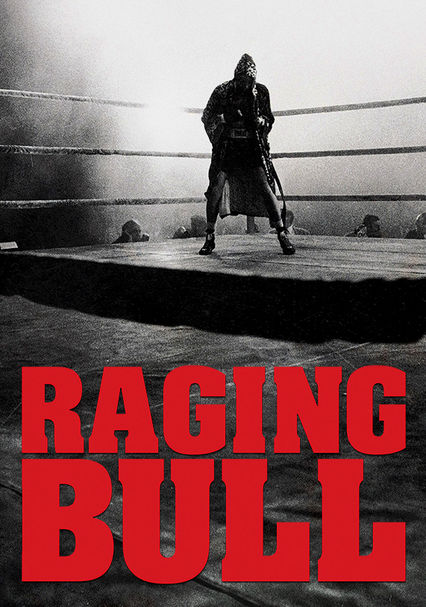
Raging Bull-1980

Raging Bull-1980

Director Martin Scorsese

Starring Robert De Niro, Joe Pesci, Cathy Moriarty

Top 250 Films #132

Scott’s Review #1,256

Reviewed May 14, 2022

Grade: A

Raging Bull (1980) might be director Martin Scorsese’s most personal film and his most character-driven.

His other films contain great characters, rich with life, but with the focus firmly planted on controversial real-life boxer Jake LaMotta (Robert De Niro), there is much to explore.

His descent into madness is hard to watch but also impossible to look away from.

It’s tough to top the De Niro/Scorsese pairing in Taxi Driver (1976), when the actor simply kicked the audience’s ass with his ferocious portrayal of the maniacal Travis Bickle.

LaMotta arguably surpasses that portrayal because the boxer experiences the highest of the highs with the lowest of the lows.

And the audience is whisked away with him on the journey from heaven to hell. Arguably, director and actor’s finest film, Raging Bull, is often painful to watch, but it’s a searing, powerful work about an unsympathetic hero who we can’t help but explore.

A double-pairing film extravaganza of Taxi Driver and Raging Bull is a fabulous idea, though the viewer may need a Valium to combat the resulting anxiety after watching them.

I love the title, Raging Bull, because it is so apt and central to the film. Fueled with machismo, testosterone, and anger, Jake LaMotta certainly is a raging bull.

Screenwriters Paul Schrader and Mardik Martin, frequent collaborators of Scorsese’s, adapt the story from Raging Bull: My Story, a 1970 memoir written by LaMotta.

Raging Bull tells the story of an Italian-American middleweight boxer as he struggles through the ranks to earn his first shot at the middleweight crown.

He possesses a self-destructive and obsessive rage, jealousy, and animalistic appetite that destroy his relationship with his wife and family.

Wonderfully cast as his wife, Vickie is played by Cathy Moriarty, a gorgeous girl from the Bronx who falls head over heels in love with Jake. Joe Pesci plays his well-intentioned brother and manager, who unsuccessfully tries to help Jake battle his inner demons.

Jake’s inability to express his feelings enters the ring and eventually takes over his life. He is sent into a downward spiral that costs him everything.

Comparisons to the exceptional Rocky (1976) are cute and perhaps contain some merit on paper, but. In contrast, the former is heroic and compelling; the main characters are nothing alike except that they are both struggling boxers who achieve success.

Both are sports films, but Raging Bull is much, much darker and purely a character study.

The cinematography by Michael Chapman and the Film Editing by Thelma Schoonmaker are deserving of accolades and make the picture as flawless as it is.

Scorsese includes enough boxing scenes to showcase the fantastic editing required for these difficult sequences.

The editing is lightning-quick, and the thunderous bombast makes the viewer feel each blow of the glove against the skin. The blood and sweat are legendary components of these scenes.

The black-and-white cinematography is jaw-dropping, especially powerful in the kitchen fight scene between Jake and Joey. The brutal buildup is hard to stomach as Jake’s dementia becomes evident.

Despite the other qualities of the film that bring it all together, my favorite aspect is the performance De Niro delivers, which wins him a much-deserved Best Actor Oscar.

He is powerful and animalistic, playing both subtle rage and explosive anger. His tragic final act as a much older and fat man is shrouded in heartbreak and pain for both the character and the viewer to experience.

All the pieces of Raging Bull (1980) add up perfectly into a masterpiece.

The violence and pain are enshrouded in poetic dialogue and beautiful, illuminating camerawork that explore one man’s battles and struggles, both inside the squared circle and internally.

Oscar Nominations: 2 wins-Best Picture, Best Director, Best Actor-Robert De Niro (won), Best Supporting Actor-Joe Pesci, Best Supporting Actress-Cathy Moriarty, Best Cinematography, Best Film Editing (won), Best Sound

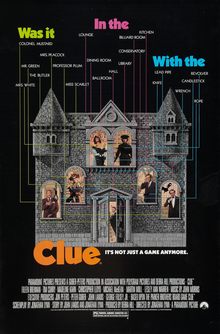
Clue-1985

Clue-1985

Director Jonathan Lynn

Starring Tim Curry, Eileen Brennan, Madeline Kahn

Top 250 Films #133

Scott’s Review #341

Reviewed January 9, 2016

Grade: A

Clue is a harmless 1985 comic yarn that is neither a cinematic masterpiece nor anything more than fluff.

But since I adored the classic board game growing up and reveled in the excitement of the different characters, rooms, and murder weapons, the film version holds a very special place in my heart and memory bank, having watched it time and time again as a youngster.

The plot is immediately filled with intrigue, a successful element, and the best part of the film.

Six interesting characters- with provocative aliases such as Ms. Scarlet, Colonel Mustard, and Mrs. Peacock- are all summoned to a New England mansion named Hill House.

Naturally, it is a dark, stormy night, and each receives a mysterious note written by a stranger.

Among the colorful characters working at the mansion are the plump cook, the scantily dressed maid, Yvette, and the butler, Wadsworth, who is running the show and greets the confused guests.

Slowly, it is revealed that all of the guests are being blackmailed, and all of them either live or have ties to Washington, D.C.

After each guest is given a weapon as a gift, the lights go out, and a murder occurs, launching a fun whodunit. Each guest and the staff strive to figure out who has committed the murder, as subsequent murders begin to occur.

The comic hijinks are reminiscent of funny films like High Anxiety (1977)  and even Young Frankenstein (1974).

The atmospheric qualities featured in Clue are what I love most about the film- the vast mansion, the many gorgeously decorated rooms, the secret passageways, and the driving rain all make for a great ambiance.

Clue is clever in that it features three different endings!  Upon initial theatrical release, this was a unique premise- one could see the film multiple times and not know how it was to end or who the killer might be revealed to be.

Unfortunately, the film was not a commercial success, so this ploy failed.

The famed cast delivers their parts with comic gusto, and without them, the film would simply be dumb.

It seems obvious that the cast had a good old time with this romp- Eileen Brennan, Christopher Lloyd, Lesley Ann Warren, and Madeline Kahn have a comic ball with their perfect delivery of the lines.

Clue is not a message movie; it does not inspire cinematic art, but what it does, it does incredibly well- it entertains.

The writing, along with the political and sexual innuendo, is witty. One can become lost in the interesting characters and try to guess, or even make up, the whodunit and why they did it.

I can be entertained by Clue (1985) time and time again.

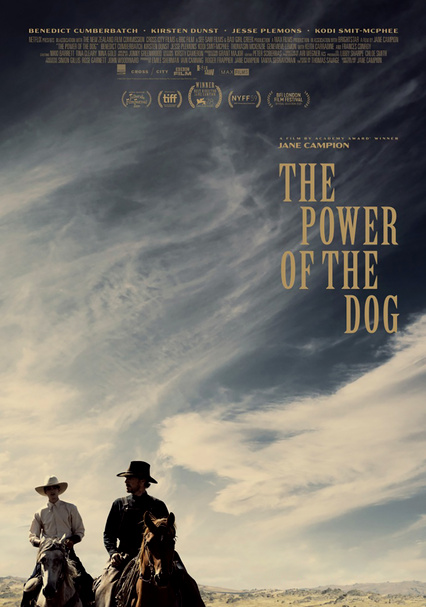
The Power of the Dog-2021

The Power of the Dog-2021

Director Jane Campion

Starring Benedict Cumberbatch, Kirsten Dunst, Jesse Plemons

Top 250 Films #134

Scott’s Review #1,199

Reviewed November 21, 2021

Grade: A

Benedict Cumberbatch delivers a harrowing and brutally honest performance in The Power of the Dog (2021), a thought-provoking and layered film by Jane Campion. Parts western, gothic, and drama, Cumberbatch leads the charge, but all players associated with the film knock it out of the park.

If the superior acting is not enough, the eerie subtext and gorgeous cinematography firmly place the viewer in 1925 Montana, where a vast and open range serves as the primary setting. Characters are riddled with secrets, and the fun lies in peeling back the layers to reveal their motives and true desires.

There are enough bare male butts to titillate most viewers, and Cumberbatch himself did not use the aid of a body double. He stated he wanted to be as raw and vulnerable as his character, the dastardly and cruel Phil Burbank.

Campion, who hasn’t made a film in over a decade, is back with a vengeance, paying homage to Ang Lee and his movie Brokeback Mountain (2006).

From the first moment on screen, we know something is mesmerizing about Phil. He is handsome and severe, an alpha male if there ever was one, and attributes his savvy to his deceased father figure, Bronco Henry. His relationship with this man is key to the whole story.

Along with his brother George (Jesse Plemons), the Burbank brothers are wealthy ranchers. One day, at the Red Mill restaurant on their way to market, the brothers meet Rose (Kirsten Dunst), the widowed proprietress, and her impressionable and effeminate son Peter (Kodi Smit-McPhee).

Phil behaves cruelly to Rose and Peter, but George becomes enamored with Rose and they marry, much to Phil’s chagrin. Now all living together, Phil taunts Peter and terrorizes Rose, but slowly begins to take the boy under his wing.

But what are his true intentions, and what will Peter do to save his mother from a complete breakdown?

The acting is so brilliant that I immediately became immersed in their lives. Particularly fascinating is Phil, but Rose, George, and Peter are all substantial characters. All the characters intertwine and have special relationships with each other, and all the principal actors are central to our fascination with them.

Rose may be Dunst’s best role yet, and Plemons is terrific as the kind and steady George. Smit-McPhee, unknown to me, is a revelation as the androgynous young intellectual.

There are enough homoerotic scenes to make the viewer question Phil’s sexuality. His secret stash of strong man magazines and his long gazes at nude male sunbathers may be enough to unlock the key. Still, when he rubs a handkerchief belonging to Bronco all over his body, the relationship between the two men oozes to the surface.

Campion has a lot of guts in taking on the male-driven western genre, and she brilliantly succeeds. Forgetting the storyline for a moment, the ravishing and oftentimes lonely landscape makes the film gorgeous to look at, especially on the big screen.

Plenty of long shots of the mountainous regions will inevitably captivate viewers and transport them to a bygone era.

The Power of the Dog was shot in New Zealand, but I was completely fooled into thinking Montana was the real filming location.

I adored seeing the costumes, whether it be Rose in a housedress or more distinguished characters like the governor and his wife dressed for a dinner party. All costumes appear authentic, peppered with a touch of glamour amidst the dirtiness of the range. Even the grubby ranch hands look great.

Discussions will certainly erupt once the film ends, and isn’t that the point of great films? The Power of the Dog (2021) takes the tried-and-true Western genre and infuses it with psychological depth.

Thanks to Campion and the team, she masterfully uses no gimmicks to draw the viewer into the world of the characters, instead offering authenticity and edge-of-your-seat drama.

Oscar Nominations: 1 win-Best Picture, Best Director-Jane Campion (won), Best Actor-Benedict Cumberbatch, Best Supporting Actor-Kodi Smit-McPhee, Jesse Plemons, Best Supporting Actress-Kirsten Dunst, Best Adapted Screenplay, Best Film Editing, Best Cinematography, Best Production Design, Best Original Score, Best Sound

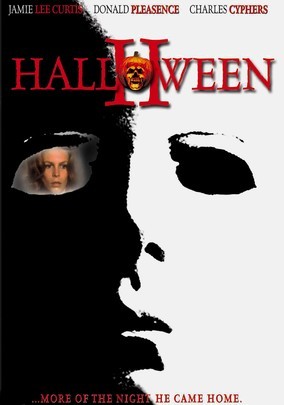
Halloween II-1981

Halloween II-1981

Director Rick Rosenthal

Starring Jamie Lee Curtis, Donald Pleasence

Top 250 Films #135

Top 40 Horror Films #23

Scott’s Review #505

569099

Reviewed October 31, 2016

Grade: A

The follow-up to the surprise 1978 cult classic, independently made Halloween- directed by legend John Carpenter,  Halloween II (1981) was made in 1981.

In real life, it is three years later. Still, the film picks up immediately where the original left off in a chronological sense- the infamous night Michael Myers came home to brutalize the town where he killed his sister years earlier.

This is an excellent plot point that makes the film successful, as it immediately takes the viewer back to that infamous night.

Halloween II is one of my favorite film sequels.

Despite not directing Halloween II, John Carpenter, along with Debra Hill, both wrote the script, so they are, thankfully, heavily involved in the production, giving it authenticity and familiarity.

So much so that Halloween and Halloween II can be watched back-to-back, like one long film.

Michael Myers’s path of destruction continues in the sleepy, suburban town of Haddonfield, Illinois. This point looms large in this fantastic sequel, and we are treated to a direct transition from the original.

The events switch from babysitter territory to the community hospital as new characters- mostly doctors, nurses, and ambulance people are introduced to the story, Laurie’s friends are sadly deceased.

Laurie Strode (Jamie Lee Curtis) and Doctor Loomis (Donald Pleasence) are the main stars of the film, and by the climax, they take center stage.

As a recap, the determined Loomis shot Michael Myers several times as he tumbled off a balcony to his presumed death. Spectacularly, the original Halloween brilliantly set the stage for a sequel, as Myers survives and disappears into the night, whereabouts unknown.

Now hours later, Laurie is transported to Haddonfield Hospital for treatment.  While there, the hospital staff do their best to protect her but are subsequently offed one by one by the crazed killer, who finds his way into the (conveniently!) deserted hospital.

The great quality of Halloween II is that it is gorier than its predecessor. More characters are sliced and diced in an unceremonious, brutal fashion.

One has her blood drained, and another is stabbed in the eye with a syringe. Yet another is repeatedly dunked into scalding water. And then there is the traditional knife in the back.

In contrast to many other slasher films, the supporting cast of characters is quite likable, and they are given little backstories of their own- a great touch.

Bud- the wise-cracking ambulance driver is dating Nurse Karen. Jimmy, a handsome orderly, takes a shine to Laurie.

Mixed in with the heavy horror are nice comic moments, such as when Nurse Janet ineptly tries to assist the hospital security guard, the bumbling Mr. Garrett, with a walkie-talkie, or when Head Nurse Mrs. Alves scolds the staff for being tardy.

We grow to care for these characters, in their little night-shift family, so that their inevitable demises hit home.

The chilling music- so instrumental to the success of the original- is slightly modernized into more of a keyboard-style sound. This gives a slicker, more commercial appeal.

Not to take away from the brilliance of the original score, but it is nice to hear a change that gives a fresher, more contemporary sound, rather than simply copying the same music.

Admittedly, Halloween II (1981) is not quite on par with Halloween, but that is asking the impossible. Halloween is a masterpiece, but Halloween II holds its own and is more than adequate as a sequel, having large shoes to fill.

Thanks to many of the same creators involved, it has not lost its edge or relevance all these years later.

American Beauty-1999

American Beauty-1999

Director Sam Mendes

Starring Kevin Spacey, Annette Bening

Top 250 Films #136

Scott’s Review #70

60000407

Reviewed June 25, 2014

Grade: A

American Beauty is a film that holds up magnificently well and packs the same punch as it did when I originally saw it premiered in 1999.

The film won the Best Picture Oscar in 1999, surprisingly so, as it is not a mainstream film and is edgy, artistic, and poetic.

The film is a thought-provoking story of the American Dream gone wrong and how most people live ordinary, humdrum, on the surface, happy lives, but ultimately are unhappy, damaged, or otherwise unfulfilled.

It is a truthful film and reminds me quite a bit of The Ice Storm, a film from 1997.

American Beauty is not a downer but rather is witty, dark-humored, and filled with dry sarcasm.

Kevin Spacey is tremendous as the central character going through a mid-life crisis and Annette Bening is frighteningly good as his neurotic, controlling wife.

Their daughter, played by Thora Birch, has her teenage angst and falls in love with a neighborhood misfit. Every character, even small and supporting, is troubled in some way.

American Beauty (1999) is a film that was loved or hated at the time of its release; some did not get it or did not want to invest in the thought it requires, but, to me, it’s a work of art, which has achieved a timeless quality.

Oscar Nominations: 5 wins-Best Picture (won), Best Director-Sam Mendes (won), Best Actor-Kevin Spacey (won), Best Actress-Annette Bening, Best Screenplay Written Directly for the Screen (won), Best Original Score, Best Cinematography (won), Best Film Editing

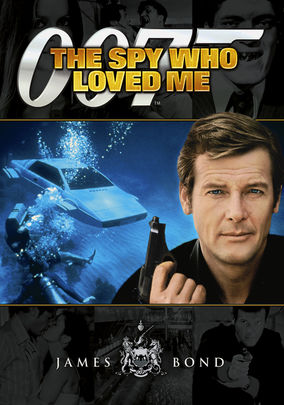
The Spy Who Loved Me-1977

The Spy Who Loved Me-1977

Director Lewis Gilbert

Starring Roger Moore

Top 250 Films #137

Scott’s Review #637

Reviewed April 27, 2017

Grade: A-

The Spy Who Loved Me (1977) is pure James Bond- an installment of the franchise that successfully contains all of the elements of an exceptional Bond film- and then some.

By this time, Roger Moore was firing on all cylinders and had made the character of James Bond his own- Sean Connery, who?

With his third appearance in the role, Bond exudes charisma and wry wit, combined with a fabulous story, sexy Bond girls, and a villain worthy of his role, The Spy Who Loved Me achieves near perfection, save for being too drawn out in the ending- otherwise, an excellent, memorable film that does not feel dated in the least.

When Soviet and British submarines begin to vanish, the two sides team up and send their best agents forward to uncover the circumstances surrounding the disappearances.

Barbara Bach plays Major Anya Amasova, also known as Agent Triple X, a Soviet agent, and naturally, Bond becomes enamored with her beauty and intelligence.

Together they face off against a megalomaniac named Karl Stromberg, who is intent on destroying the world with nuclear missiles and creating his underwater world. Stromberg’s sidekicks are Jaws, a giant with steel teeth, and a deadly vixen named Naomi.

Interestingly, if watched as a companion piece to a 1960s Bond film, as I did this time around (You Only Live Twice), one notices a change in how Bond’s female characters are treated.

No longer servile and obedient to the male characters (Bond specifically), Bond women are now his equals in every way, matching him in career success and intelligence.

The main “Bond girl”, (Anya), is a shining example of this, which the film immediately offers. In one of my favorite scenes, Anya is in bed with a handsome man- when “Agent Triple X” is paged, we assume the agent is the man until Anya slyly responds to the message- it is nonchalant, yet a brazen way to make the point that women have emerged as powerful and sexy figures in the modern Bond world.

The chemistry between Moore and Bach is immeasurably important to the success of the film, and their romance is dynamic- they have “it,” and their scenes smolder with sensuality.

To complicate matters, Bond has killed an agent whom Anya was in love with, and she plans to kill Bond as soon as their mission is victorious.

Director Gilbert also adds a slice of Bond’s backstory, lending the story truth and rich history, and mentions Bond’s deceased wife (married and killed in On Her Majesty’s Secret Service), a subject Bond deems off-limits.

This ode to the past only enhances the connection between these two characters.

Villains play an important part in the success of The Spy Who Loved Me.

Take Stromberg (Curd Jürgens), he is sophisticated, mature, worldly, and rich- and quietly insane. He also has a lavish dining room in his underwater submarine with exotic fish swimming about through visible tanks- a gorgeous element to this film.

Through a trap door,  victims meet their demise at the hands of a vicious killer shark swimming about. One unlucky female assistant, who has double-crossed Stromberg, meets her maker in bloody fashion. Later, Bond sees a severed hand floating about in one of the tanks.

This is great creative writing and adds nuances to the film.

Hulking henchman, Jaws, who would return in the next installment, Moonraker, dazzles and impresses with his deadly, steel teeth.

A great scene, aboard a high-speed train, and a throwback to 1963’s From Russia With Love, is action-packed.

Naomi meets her demise after an ill-fated helicopter chase scene. I would have liked to have had more screen time and to have gotten to know this character. Her brief, but obvious flirtation with Bond is all too short- and he never even gets to share a bed with her!

Not to be outdone, the locales in the film are lavish and gorgeous- Egypt and Italy are countries explored, and scenes are shot on location in each country in grand fashion.

The Egyptian pyramids are featured in a chase, and a murder occurs during a nighttime exhibit. Also fantastic are the gorgeous shots of Sardinia, a beautiful region in Italy where Stromberg’s hideout is set.

A mini gripe is a lengthy conclusion to the film. As Bond struggles to recalculate the two nuclear missiles set to destroy New York and Moscow, Bond must rush to make sure they do not hit their intended target.

The “final act” of the film goes on too long with way too many soldiers and men running around in a panic. The action is great, but by the end, enough is enough.

Roger Moore once commented that The Spy Who Loved Me (1977) was his favorite of all the Bond films to make- it is easy to see why he felt this way.

The film contains all the necessary elements to make it one of the top entries in its franchise and has a magnificent feel.

Oscar Nominations: Best Original Score, Best Original Song-“Nobody Does It Better”, Best Art Direction

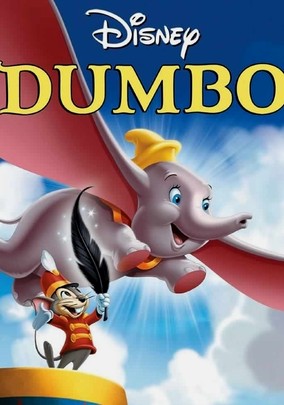
Dumbo-1941

Dumbo-1941

Director Ben Sharpsteen

Starring Various voices

Top 250 Films #138

Scott’s Review #559

Reviewed December 24, 2016

Grade: A

One of the best-produced (and at sixty-two minutes, one of the shortest) of the classic Walt Disney films of the golden age, Dumbo, in a similar fashion to another Disney classic, Bambi, is both heartbreaking and mixed with fun entertainment.

It should be heralded and viewed by everyone —children and adults alike —and teaches a valuable lesson in acceptance and tolerance, messages that never go out of fashion, despite the film being made in the grand old year of 1941.

To draw more comparisons to Bambi, we are introduced to the title character, Dumbo, who is nuzzled and cherished upon being brought into the world by storks by his warm and affectionate mother.

Dumbo is an elephant, and his mother is a circus elephant, where she spends her days as entertainment, along with a group of other female elephants —none of whom possess her grace, kindness, or dignity.

Sweet Dumbo is born with an imperfection- he has enormous ears. While others —namely the female elephants —ridicule and stare in horror at the lovable little elephant, his mother embraces and cuddles her little bundle of joy, eliciting a genuine, good-natured warmth rarely seen in cinematic history.

There is something innately good about this character (Mrs. Jumbo). She has a richness and way about her that is fantastic and consuming.

Sadly, one day, while entertaining the masses, a bratty human child taunts Dumbo, causing Mrs. Jumbo to go ballistic and immediately go into protection mode.

She was then deemed a “mad elephant”, shackled, chained, and worse yet- separated from her baby. How anyone can watch this portion of the film and not shed a tear or get a lump in their throat is beyond me.

Walt Disney was a master at eliciting raw emotion from his audience and writing heartbreaking yet charming stories.

The centerpiece of Dumbo is the extraordinary bond between mother and son —a sweet and powerful connection that almost everyone can relate to. The pride and joy in Mrs. Jumbo’s eyes when she is granted a visit from Dumbo while she is imprisoned is magical – it means the world to her.

The supporting characters are key to the richness of the film- Timothy Q. Mouse is an essential character in the story. Upon Dumbo and Mrs. Jumbo’s separation, he becomes Dumbo’s only friend, sympathizing with Dumbo, and is instrumental to Dumbo’s reunion with his mama as well as his future successes in the circus.

The bitchy female elephants are crucial, too- despite being one of their own, they still reject Dumbo and Mother. There are some light moments, such as when the ladies, (Catty, Giddy, and Prissy), gossip and act superior to others.

Another fun scene, to balance out the heavy drama, occurs when Timothy and Dumbo accidentally mistake champagne for water, causing them to hallucinate and imagine pink elephants.

Dumbo is essential in that it sends a powerful message about the way animals (especially circus animals) have historically been treated. Why animals should be used to amuse and entertain human beings is anyone’s guess, but this film serves as a powerful reminder of this.

Fortunately, the film has a happy and satisfying ending, which should please fans.

Dumbo (1941) is a timeless animated classic.

Oscar Nominations: 1 win-Best Scoring of a Musical Film (won), Best Original Song

Lawrence of Arabia-1962

Lawrence of Arabia-1962

Director David Lean

Starring Peter O’Toole, Alec Guinness, Omar Sharif 

Top 250 Films #139

Scott’s Review #355

60028312

Reviewed January 9, 2016

Grade: A

Lawrence of Arabia (1962) is quite a grand film that must be seen on a large screen. This will ensure full appreciation of the enormous scale of the production.

Numerous shots of objects in the distance are featured, and the small screen dulls the experience.

An excellent film from top to bottom and groundbreaking at the time, due to the scope and vast proportions of the production, Lawrence of Arabia achieves its place in cinematic history.

It’s a treat to revisit from time to time.

The film is divided into two parts with an intermission, as with epics that last nearly four hours.

Peter O’Toole stars as T.E. Lawrence, a bored British Army Lieutenant who talks his way into a transfer to the Arabian desert.

As the film opens, it is 1935, and Lawrence has just been killed in a motorcycle accident. While this concept of revealing the ending and working backward is common in current films, it was novel in 1962 when the film was made.

While in Arabia, Lawrence successfully bonded bitter rival tribes to unite against Turkish oppression during World War I. He meets two young guides and other central characters there: Prince Faisal (Alec Guinness) and Sherif Ali (Omar Sharif).

Much of the film features the battles between the rival tribes and Lawrence’s struggle to achieve peace.

Many location sequences of Lawrence and company traveling miles and miles of hot desert are featured.

Some complain that Lawrence of Arabia is too slow-moving a film, but that is its selling point. I find the scenes of the group languishing across the desert incredibly lush and rich in meaning.

The intense heat and beating sun are fantastic in their cinematic grandeur. The film is meant to take its time—precisely what an experience in the Arabian desert would be like—and the mountainous dunes and swirling winds are brilliantly filmed.

David Lean is the king of the sprawling epic, and Lawrence of Arabia is his crowning achievement.

Lawrence is a well-written, layered, and complex character. He is not easy to describe or understand, which is also to the film’s credit.

The sheer weight loss that O’Toole underwent over the two years it took to film Lawrence of Arabia is impressive enough, but he was also a tortured soul emotionally.

The epic film Lawrence of Arabia (1962) requires a half-day of dedicated viewing, but it is worth every minute.

For a reminder of what an actual, breathtaking film looks like sans the oversaturated CGI and quick edits, one should take a deep breath and appreciate this work of art for its majestic look.

Oscar Nominations: 7 wins-Best Picture (won), Best Director-David Lean (won), Best Actor-Peter O’Toole, Best Supporting Actor-Omar Sharif, Best Screenplay Based on Material from Another Medium, Best Music Score-Substantially Original (won), Best Sound (won), Best Art Direction, Color (won), Best Cinematography, Color (won), Best Film Editing (won)

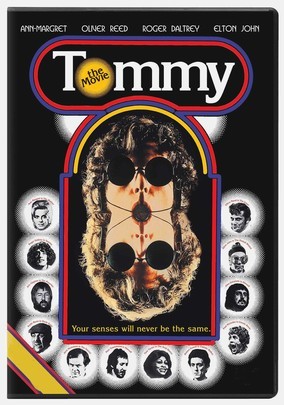
Tommy-1975

Tommy-1975

Director Ken Russell

Starring Roger Daltrey, Ann-Margret

Top 250 Films #140

Scott’s Review #617

Reviewed February 15, 2017

Grade: B+

The film version of Tommy (1975) is a musical fantasy, a rock opera based on The Who’s famous 1969 album.

Composed and adapted by Pete Townsend of The Who, the film tells the story of a deaf, dumb, blonde kid named Tommy.

Featuring a star-studded cast of actors and singers performing musical numbers, the film is an over-the-top treat and quite campy late-night fare. The stage version is usually a bit more serious and sedate than the film.

I enjoy the film, but it pales in comparison to the stage versions- which I was fortunate enough to see at my local community theater recently.

Ken Russell directs the film.

Set in the 1940s and told mainly through song, we see a montage of Captain Walker (Robert Powell) and his wife, Nora (Ann-Margaret), on their honeymoon, followed by Walker being sent off to war, leaving a pregnant Nora behind.

When his fighter plane is shot down and he is presumed dead, the montage skips ahead five years, and Nora is now involved in a relationship with Frank (Oliver Reed).

Tommy is five years old and is visited by his father, who is very much alive. After a struggle with Frank and Nora, Powell is killed, and a traumatized Tommy is unable to speak, see, or hear (except within his mind) as Frank and Nora are desperate to make sure he keeps quiet.

As Tommy grows into a young man, he becomes a “Pinball Wizard”, a prodigy at pinball, creating great wealth for Nora and Frank. Still unable to speak or see, he is first abused by his Uncle and cousin, but then championed as they are all able to get rich off of his abilities.

Through the years, Nora and Frank attempt to “cure” Tommy of his ailments via a preacher (Clapton) leading a Marilyn Monroe cult and a prostitute (Turner).

The joy in Tommy (the film) is seeing the star-studded cast- Elton John, Tina Turner, and Eric Clapton, as well as Roger Daltrey- bring a sense of wonderment to the film. Who doesn’t like to see rock stars perform?

Famous actors Jack Nicholson, Ann-Margret, and Reed are featured.

The musical numbers are the splendid part of the film, and one must be prepared to escape into a world of fantasy. Musical highlights for me include “Acid Queen”, “It’s A Boy”, and “We’re Not Gonna Take It”.

My most recent viewing of the film Tommy disappointed me slightly, and this may be because I recently saw the stage version, which I find far superior.

Ann-Margret, while superb and believable as Tommy’s mum, is not the character that Townsend had in mind.

Sultry and sexy, she is cast to bring some sex appeal- nothing wrong with this, but the stage character is more of a working-class woman and more in line with the rest of the cast.

The film also seems a bit too over-the-top, almost silly at times. But Tommy is an escapist film, based on the album, which is more serious.

I wonder if Russell was going for a more late-night, Rocky Horror Show- or Little Shop of Horrors-type feel.

Tommy (1975) has its place, certainly, but I would first recommend the stage or album version as a starting point, then move to the film as escapist fare.

Oscar Nominations: Best Actress-Ann-Margret, Best Scoring: Original Song Score and Adaptation or Scoring: Adaptation

Escape from New York-1981

Escape from New York-1981

Director John Carpenter

Starring Kurt Russell, Lee Van Cleef

Top 250 Films #141

Scott’s Review #344

Reviewed January 9, 2016

Grade: A

Escape from New York (1981) epitomizes a great action film to me.

Too often, action films are filled with run-of-the-mill characters, are plot-driven, and are mediocre stories that lack creativity. I adore Escape from New York, however.

The creativity and amazing direction by John Carpenter allow the film to soar high above what is typical for this genre.

The unique premise sets things off immediately as we follow the mission of ex-con Snake Plissken (Kurt Russell) to save an important figure in peril.

In futuristic 1997, we learn that due to skyrocketing crime throughout the United States, New York City has been fenced off and turned into a maximum-security prison.

All of the most hardened and demonic criminals have been isolated on Manhattan Island to fend for themselves- free to kill or be killed as they like.

The rest of the country is presumably crime-free- though we never see the rest of the country.

The President of the United States (Donald Pleasence) is taken hostage when Air Force One crashes on Manhattan Island. Snake is injected with a poison that will kill him in twenty-four hours unless he successfully rescues the president and returns him alive and well.

I love this film because it is strictly Carpenter’s vision.

Due to the success of 1978’s Halloween, he was given creative freedom and a big budget to film in St. Louis (doubling for New York).

The film features eerie synthesizer music (reminiscent of Halloween and Halloween II) that sets the tone exceptionally well. The dark and abandoned sets are wonderful and capture a futuristic world oh so well.

The audience will undoubtedly become enraptured as Snake’s mission is to do or die- if he does not save the president, he dies. As Snake arrives atop the World Trade Center via glider, now, post-9/11, the scene takes on a haunting quality.

Snake then immerses himself in the gloomy world of Manhattan, facing all sorts of dangers along the way. Punk rock-looking creatures scurry around the city- many insane, and Snake meets odd character after odd character in his quest to save the president.

His main ally is Cabbie, played by Ernest Borgnine.

The villain of the story is Duke, not well cast nor well developed, but this can be overlooked because of his super rad Cadillac and his two fascinating accomplices- Maggie (Barbeau) and Brain (Harry Dean Stanton).

The lavish sets include the New York Public Library and Grand Central Station- I love that there are so many iconic New York City locales featured- but the fact that they are not shot in the genuine areas does not bother me.

The art direction is done so well that I was fooled.

Escapism fare, but a unique entry in the action genre. Thanks to fantastic direction and a likable star, Escape from New York (1981) succeeds.

The Man with the Golden Gun-1974

The Man with the Golden Gun-1974

Director Guy Hamilton

Starring Roger Moore

Top 250 Films #142

Scott’s Review #346

28370063

Reviewed January 9, 2016

Grade: A

Though not typically regarded as one of the more appealing of James Bond films, and the second chapter to feature Roger Moore, Sean Connery’s replacement, The Man with the Golden Gun (1974) is one of my favorites, firmly placed in my top 5 of 007 offerings.

This could be the result of the film being one of my first introductions to the world of 007 when I was a child.

Moore seems more comfortable in the role than he did in the uneven Live and Let Die, released in 1973.

Qualities that make The Man with the Golden Gun a success include the wonderful casting of Christopher Lee, a famed horror film icon, in the central role of Francisco Scaramanga, the title character and nemesis of Bond.

Who cannot think of Count Dracula while watching Lee act- his dark, swarthy looks, angular face, and his deep baritone voice make for a perfect villain.

Known in large part for participation in Hammer Horror films opposite another legend, Peter Cushing, this is casting at its finest and a true high point of the film.

To summarize the story, MI6 receives a golden bullet with “007” sketched on the side, a clear threat to James Bond’s life. It is assumed to have been sent by the famed assassin, Scaramanga, whose trademark is a deadly golden gun.

Bond is ordered to remove himself from his current mission. Still, he pays no mind and sets out to find Scaramanga on his own, leading him into a mystery involving a stolen solar energy weapon feared to destroy the world.

The adventure takes Bond to a bevy of gorgeous locales, including Hong Kong, Thailand, Macau, and the South China Sea, where our villain resides on a private island accessible only by helicopter.

I found the main locale of the sunny deserted island and Scaramanga’s dwarf sidekick, Nick Nack, to be great aspects of the film. Majestic caves, sandy beaches, and a gorgeous array of water set the tone with gorgeous fantasy elements.

Servant Nick Nack is sinister, but with a sweet smile, one almost trusts him as he serves lunch or expensive champagne to guests sure to be killed afterward.

The secret maze of mirrors that Bond finds himself in is made all the more perfect by Nick Nack’s taunting and cackling. And the flying car that Scaramanga and Nick Nack drive in, though gimmicky, is a real hoot.

A demerit to The Man with the Golden Gun that I have always been able to look past, since other factors usurp her importance, is the miscasting of Britt Eklund as Bond’s assistant, Mary Goodnight.

The writer’s pen is good, but Goodnight is simpering, silly, and a big goof. An attempt at comic relief falls flat as the character epitomizes a blonde bubblehead- constantly screwing up everything.

Scaramanga’s girlfriend and co-Bond girl, Andrea Anders, played by Maud Adams, is much better, though we do not get to know the character very well before she is offed.

Fortunately, Adams would return to star in Octopussy in 1983.

Perhaps middling at times and suffering from some negative characteristics, The Man with the Golden Gun (1974) is a love of mine, a trip down memory lane to a time as a child when I was first discovering my love and zest for James Bond films.

This offering cemented my love of Roger Moore in the central role, and I still adore watching this film.

Traffic-2000

Traffic-2000

Director Steven Soderbergh

Starring Michael Douglas, Catherine Zeta-Jones, Benicio del Toro

Top 250 Films #143

Scott’s Review #333

60003243

Reviewed January 8, 2016

Grade: A

Simply put, I adore this film. I loved Traffic when it was first released in 2000 and I still love it in present times.

During an age where the overlapping stories with hefty casts were still in the infancy stage (Crash-2006, and Babel-2006, similar films, would not be released for several years), Traffic was groundbreaking, compelling, thought-provoking, and just a damned good drama!

With drug use still a continuing problem in the United States, the film remains both relevant and important.

Featuring three main, intersecting stories with a central theme of drug trafficking, each is told from various perspectives: users, political figures, law enforcement, and criminal traffickers.

Traffic also wisely shows how the drug problem knows no specific classes- affluent, middle-class, and poor are all represented in the film.

A strong political story is represented- led by conservative Ohio judge Robert Wakefield (Michael Douglas), who is appointed “drug czar” as the President’s Office of National Drug Policy leader, he vows to end all drug trafficking and is the moral center of the film.

However, his prep school daughter, Caroline, (played exceptionally well by Erika Christensen) and her equally affluent friends are dabbling in cocaine, heroin, and other drugs, so much so that their lives are slowly spiraling out of control.

The Mexico story involves the riveting tale of Mexican police office Javier Rodriguez (played convincingly by Benicio del Toro). He becomes heavily involved in a web of deceit, money, and drugs. His partner, Sanchez, makes a deal with the devil and his fate is thereby sealed. Javier has moral questions to ask himself and only wants to do right by some local, neighborhood boys.

Finally, San Diego is the setting for a story of corruption involving the DEA’s investigation of a drug lord, Carl Ayala. After being arrested, his wife Helena (Catherine Zeta-Jones) faces a moral dilemma- either carry on the illegal proceedings or come clean. She,  up until this point unaware of her husband’s business, faces enormous pressure, both financially and through the threat of violence.

My favorite aspect of Traffic is that all of the aforementioned stories are fascinating in their own right- and could make terrific films on their own, but as the film progresses they begin to intersect and keys to the puzzle slowly unlock themselves.

I love how many of the central characters (Helena, Javier, and Wakefield) begin as “good” people only to have their moral intentions challenged, and in some cases, threatened.

They are each conflicted in some way.

The film poses an interesting, crucial question of what can be done about the United States drug trafficking problem. The answer at the end of the film is a disappointing and perhaps even depressing realization.

Drugs will never stop being a problem and Traffic wisely explains how drugs show no barriers when it comes to either wealthy or more financially challenged individuals.

How wonderful to see a stellar cast, even in smaller roles (Dennis Quaid and Amy Irving immediately come to mind) with all of the characters having a purpose in a wonderful example of how a mainstream Hollywood film can achieve a true ensemble effort that works.

Great job Steven Soderbergh!

Oscar Nominations: 4 wins-Best Picture, Best Director-Steven Soderbergh (won), Best Supporting Actor-Benicio del Toro (won), Best Adapted Screenplay (won), Best Film Editing (won)