Tag Archives: Ann-Margret

Tommy-1975

Tommy-1975

Director Ken Russell

Starring Roger Daltrey, Ann-Margret

Top 250 Films #140

Scott’s Review #617
Reviewed February 15, 2017

Grade: B+

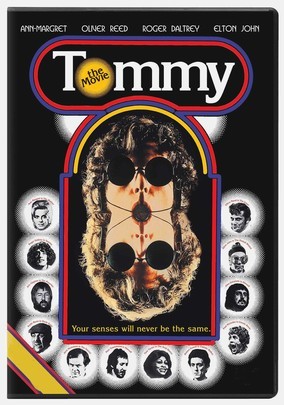
The film version of Tommy (1975) is a musical fantasy, rock opera based on the famous album recording by The Who in 1969.

Composed and adapted by The Who member Pete Townsend, the film tells the story of a deaf, dumb, blonde kid named Tommy.

Featuring a star-studded cast of actors and singers performing musical numbers, the film is an over-the-top treat and quite campy late-night fare. The stage version is usually a bit more serious and sedate than the film.

I enjoy the film but it pales in comparison to the stage versions- which I was fortunate enough to see at my local community theater recently.

The film is directed by Ken Russell.

Set during the 1940s and told mainly through song, we see a montage of Captain Walker (Robert Powell) and his wife Nora (Ann-Margret) on their honeymoon and Walker subsequently being sent off to war leaving a pregnant Nora behind.

When his fighter plane is shot down and he is presumed dead, the montage skips ahead five years, and Nora is now involved in a relationship with Frank (Oliver Reed).

Tommy is five years old and is visited by his father, who is very much alive. After a struggle with Frank and Nora, Powell is killed and a traumatized Tommy is unable to speak, see, or hear (except within his mind) as Frank and Nora are desperate to make sure he keeps quiet.

As Tommy grows into a young man, he becomes a “Pinball Wizard”, a prodigy at pinball, creating great wealth for Nora and Frank. Still unable to speak or see, he is first abused by his Uncle and Cousin but then championed as they are all able to get rich off of his abilities.

Through the years Nora and Frank attempt to “cure” Tommy of his ailments via a preacher (Clapton) leading a Marilyn Monroe cult and a prostitute (Turner).

The joy in Tommy (the film) is seeing the star-studded cast- Elton John, Tina Turner, and Eric Clapton, as well as Roger Daltrey, bring a sense of wonderment to the film. Who doesn’t like to see rock stars perform?

Famous actors Jack Nicholson, Ann-Margret, and Reed are featured.

The musical numbers are the splendid part of the film and one must be prepared to escape into a world of fantasy. Musical highlights for me include, “Acid Queen”, “It’s A Boy”, and “We’re Not Gonna Take It”.

My most recent viewing of the film Tommy disappointed me slightly, and this may be due to recently seeing the stage version- far superior in my mind.

Ann-Margret, while superb and believable as Tommy’s mum, is not the character that Townsend had in mind.

Sultry and sexy, she is cast to bring some sex appeal- nothing wrong with this, but the stage character is more of a working-class woman and more in line with the rest of the cast.

The film also seems a bit too over the top almost silly at times. But Tommy is an escapist film- based on the album, which is more serious.

I wonder if Russell was going for a more late-night, Rocky Horror Show or Little Shop of Horrors type of feel.

Tommy (1975) has its place, certainly, but I would first recommend the stage or the album version as a starting point and move to the film as escapist fare.

Oscar Nominations: Best Actress-Ann-Margret, Best Scoring: Original Song Score and Adaptation or Scoring: Adaptation

Viva Las Vegas-1964

Viva Las Vegas-1964

Director George Sidney

Starring Elvis Presley, Ann-Margret

Scott’s Review #1,280

Reviewed July 24, 2022

Grade: B

A lightweight romp created exclusively as a vehicle for superstar Elvis Presley and his lofty success, Viva Las Vegas (1964) is one of the better Elvis film entries.

This may not be saying much because he’s not the greatest actor in the world. He doesn’t need to be, though. He has enough charisma and chemistry with co-star Ann Margret to elicit a smile or two, and the musical numbers together and separately are entertaining.

That’s really what Viva Las Vegas is about.

Elvis was at his peak in 1964, both musically and physically, so watching the hunky singer croon, dance, and writhe with style on the big screen is not the most daunting task in the world.

The silly story feels forced, obvious, and created on the fly to provide humor, hijinks, and a bit of drama for the leads. It’s not the most substantial part of the film.

The opening camera shots of ‘old Las Vegas’ in the 1960s appeal. The lights and glitter are colorful and attractive, as is the Vegas setting. However, most of the films are disappointingly shot on a studio soundstage.

The sloppily conjured-up story involves a musically gifted race car driver named Lucky Jackson (Presley, naturally). He arrives in Las Vegas to earn enough money for a new car motor so he can win the upcoming Grand Prix race. He befriends a cagey racing rival named Elmo (Cesare Danova).

When he encounters sexy swimming instructor Rusty (Ann-Margret), he considers staying around longer to get better acquainted with the dame. After Lucky loses his winnings in the hotel pool, he’s forced to remain in Vegas, working as a waiter.

He wants to recoup his financial losses but is determined to win Rusty’s heart. Unfortunately, so does Elmo, setting off a chain of events that culminates with the Grand Prix race. Elmo and Lucky try to outwit each other.

To say the events in Viva Las Vegas are predictable is an understatement, as a meager attempt at an invested triangle between Lucky, Rusty, and Elmo is laughable. There is no doubt that Lucky and Rusty will ride off into the sunset together.

Unintentionally I am sure, director George Sidney is no Alfred Hitchcock after all, there exists homoeroticism between Lucky and Elmo. As they lie side by side under the wheels of a broken-down greaser, a titillating thought is, what if the men were to kiss?

Elvis’s enormous fan base was not ready for that scandal in 1964, so the result is a by-numbers boy meets girl, boy intends to conquer girl, a traditional love story.

Sigh.

Expecting a grand musical finale is disappointing because there isn’t one. There is only the race itself, which Rusty and company tepidly watch from an overhead helicopter.

The sequence is adequate, with enough suspense and car wrecks to enthrall the viewer, and Lucky wins the race.

In a rushed final scene, Lucky and Rusty happily emerge from a church on their wedding day. A bouquet is in Rusty’s hand, and everyone is smiling big.

The chemistry between Presley and Ann-Margret is strong and endearing. This is no surprise, given the real-life affair the pair reportedly had. Nonetheless, the sweetest number occurs early on when Lucky tries to convince Rusty, through song, that she is in love with him but doesn’t know it yet.

I gushed at the thought of Marilyn Monroe in the Rusty role, which may have been the original intent. The blonde bombshell died less than two years before the film’s release, likely after the idea was born.

No disrespect to Ann-Margret.

Of course, the main reason to watch Viva Las Vegas is for the tunes. The title track is a super-charged song about enjoying the city of sin, and other numbers appear throughout the film at breakneck speed.

This is a relief since there is little time to invest in the paper-thin plot.

Viva Las Vegas (1964) is a film mainly recommended to Elvis fans who want to see the star in his prime.

The Cincinnati Kid-1965

The Cincinnati Kid-1965

Director Norman Jewison

Starring Steve McQueen, Karl Malden

Scott’s Review #1,138

Reviewed April 29, 2021

Grade: B

I suppose anyone really into poker playing or similar casino games might be partial to The Cincinnati Kid (1965), especially if they are a die-hard Steve McQueen fan.

But for those with no interest in the ‘sport’ and who think that McQueen is a royal douche who received a modicum of film success, the film is a marginally decent effort.

For those who don’t know, Steve McQueen, the actor and not the British filmmaker, was nicknamed the “King of Cool” and played the anti-hero in most of his films.

His heyday was from the mid-1960s through the early 1970s, and he garnered success by repeatedly playing the same role. He was notorious for insisting his hair was perfect, being selfish, and being a royal prick.

He died of cancer in 1980.

An earlier film of his, The Cincinnati Kid (1965), is set in Depression-era New Orleans, though the film’s severe 1960s look makes it almost impossible to determine that it’s not the 1960s.

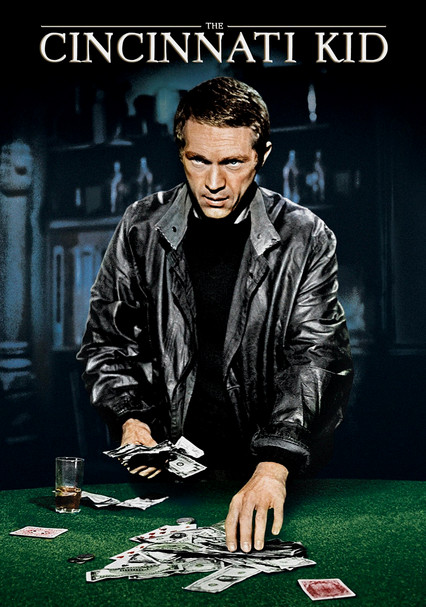
Eric Stoner (Steve McQueen) is a cocky poker player nicknamed the Cincinnati Kid who challenges longtime champ Lancey “The Man” Howard (Edward G. Robinson) to a showdown at the table, where a war of persistence and luck ensues.

To add energy, Rip Torn is cast as Slade, a villainous man who seeks revenge against Howard and tries to help Stoner best him.

In addition to the inevitable final poker game, Stoner is immersed in a romance with good girl Christian Rudd (Tuesday Weld) as he tries unsuccessfully to fend off the seductive advances of his best friend Shooter’s (Karl Malden) girlfriend (Ann-Margret), who is also a close friend of Christian.

Romance and double-dealing are in the air in this film.

The main draw is McQueen because he is charismatic and carries the by-the-numbers film. The story point appears to be a battle between youth (Stoner) and seasoned wisdom (Howard), but other than the fantastic finale involving (what else!) a tense game of cards, I didn’t find the primary story experience all too interesting.

There are other impressive aspects, however, such as the trimmings.

Realistic is how the actors handle the playing cards, speak the game terminology, and smoke a fat cigar, adding some good authenticity to the film. The New Orleans flavor provides some culture, and many black actors appear in minor roles that at least give some representation of the actual southern city.

Despite the talented cast, only McQueen shines.

Weld and Ann-Margret are incredibly one-note characters and opposites (good girl and bad girl) with little development. Malden is the moral compass of the film but otherwise has little importance to do.

Interestingly, Norman Jewison replaced original director Sam Peckinpah shortly after filming began. He described The Cincinnati Kid as his “ugly duckling” film that enabled him to transition from the light films he previously made and take on more serious films and subjects.

Cinema lovers know he directed the 1971s Fiddler on the Roof, a completely different film.

I wonder if Jewison’s heart was in this film or if he did the best he could with a subject that was not close to his heart.

Knowing Peckinpah’s brilliant work, I wonder if he would have made The Cincinnati Kid darker and more violent.

One scene that turns my stomach is a gruesome and violent cock-fighting scene. Any animal cruelty makes my blood boil, so I turned my head and refused to watch the scene or the group of merrymakers sitting around cheering the bloodbath.

The Cincinnati Kid (1965) is an enjoyable watch for poker lovers or fans of Steve McQueen. It is also not bad for casual fans.

Though I have not seen it, I understand that The Hustler (1961) is a similar-themed and better-made film.