Tag Archives: Nick Corri

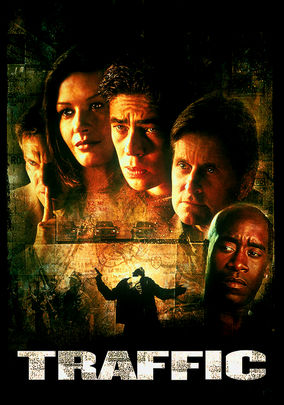
Traffic-2000

Traffic-2000

Director Steven Soderbergh

Starring Michael Douglas, Catherine Zeta-Jones, Benicio del Toro

Top 250 Films #143

Scott’s Review #333
60003243

Reviewed January 8, 2016

Grade: A

Simply put, I adore this film. I loved Traffic when it was first released in 2000 and I still love it in present times.

During an age where the overlapping stories with hefty casts were still in the infancy stage (Crash-2006, and Babel-2006, similar films, would not be released for several years), Traffic was groundbreaking, compelling, thought-provoking, and just a damned good drama!

With drug use still a continuing problem in the United States, the film remains both relevant and important.

Featuring three main, intersecting stories with a central theme of drug trafficking, each is told from various perspectives: users, political figures, law enforcement, and criminal traffickers.

Traffic also wisely shows how the drug problem knows no specific classes- affluent, middle-class, and poor are all represented in the film.

A strong political story is represented- led by conservative Ohio judge Robert Wakefield (Michael Douglas), who is appointed “drug czar” as the President’s Office of National Drug Policy leader, he vows to end all drug trafficking and is the moral center of the film.

However, his prep school daughter, Caroline, (played exceptionally well by Erika Christensen) and her equally affluent friends are dabbling in cocaine, heroin, and other drugs, so much so that their lives are slowly spiraling out of control.

The Mexico story involves the riveting tale of Mexican police office Javier Rodriguez (played convincingly by Benicio del Toro). He becomes heavily involved in a web of deceit, money, and drugs. His partner, Sanchez, makes a deal with the devil and his fate is thereby sealed. Javier has moral questions to ask himself and only wants to do right by some local, neighborhood boys.

Finally, San Diego is the setting for a story of corruption involving the DEA’s investigation of a drug lord, Carl Ayala. After being arrested, his wife Helena (Catherine Zeta-Jones) faces a moral dilemma- either carry on the illegal proceedings or come clean. She,  up until this point unaware of her husband’s business, faces enormous pressure, both financially and through the threat of violence.

My favorite aspect of Traffic is that all of the aforementioned stories are fascinating in their own right- and could make terrific films on their own, but as the film progresses they begin to intersect and keys to the puzzle slowly unlock themselves.

I love how many of the central characters (Helena, Javier, and Wakefield) begin as “good” people only to have their moral intentions challenged, and in some cases, threatened.

They are each conflicted in some way.

The film poses an interesting, crucial question of what can be done about the United States drug trafficking problem. The answer at the end of the film is a disappointing and perhaps even depressing realization.

Drugs will never stop being a problem and Traffic wisely explains how drugs show no barriers when it comes to either wealthy or more financially challenged individuals.

How wonderful to see a stellar cast, even in smaller roles (Dennis Quaid and Amy Irving immediately come to mind) with all of the characters having a purpose in a wonderful example of how a mainstream Hollywood film can achieve a true ensemble effort that works.

Great job Steven Soderbergh!

Oscar Nominations: 4 wins-Best Picture, Best Director-Steven Soderbergh (won), Best Supporting Actor-Benicio del Toro (won), Best Adapted Screenplay (won), Best Film Editing (won)
A Nightmare on Elm Street-1984

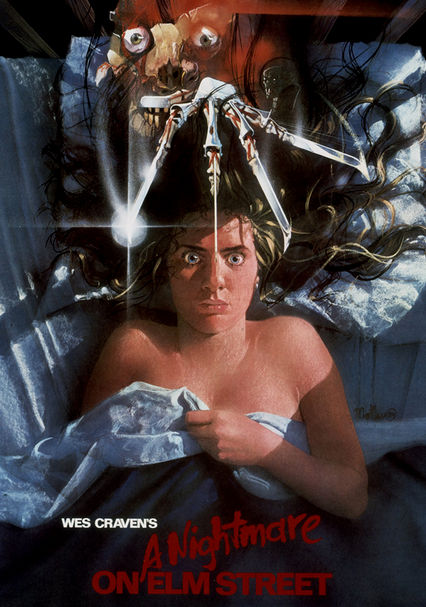
A Nightmare on Elm Street-1984

Director Wes Craven

Starring Heather Langenkamp, Robert Englund

Scott’s Review #1,019

Reviewed May 4, 2020

Grade: A-

Pioneer horror director Wes Craven, famous for reinvigorating the slasher genre with humor, wit, and satirically ponderous situations, created the iconic A Nightmare on Elm Street (1984), which introduced the legendary character of Freddy Krueger (Robert Englund) to audiences.

Followed by eight sequels or re-introductions, the debut is a clever affair and a breath of fresh air in the too-often formulaic world of slashers.

And who could deny the satisfaction of seeing future Hollywood royalty, Johnny Depp, succumb to the villainous Krueger?

A group of unsuspecting teenagers is tortured both consciously and unconsciously as they dream the nights away by a hideously disfigured man clad in a striped shirt and a gloved hand with razors.

He taunts and teases the teens unmercifully as they reside, party, and have sex in small-town America, mainly spending their time in high school or on the cursed Elm Street.

The main girl to experience Freddy’s devious wrath is Nancy Thompson (Heather Langenkamp), who uses caffeine and more drastic measures to stay awake and alive!

To review A Nightmare on Elm Street without mentioning the Friday the 13th or Halloween franchises would be foolhardy since combined, they make up the “Big Three” of the entertaining slasher genre, each living on in infamy.

To provide a quick chronology, A Nightmare on Elm Street ran from 1984 to 1994, adding a crossover with Friday the 13th in 2003, and an unnecessary remake in 2010. Friday the 13th hit cinemas in 1980 and never looked back until the uninspired 2009 remake.

Finally, Halloween debuted in 1978 and is still churning out relevant chapters.

Whereas Friday the 13th and Halloween chose to stick with a more realistic formula- a crazed killer wielding a butcher knife or an ax, the brief foray into outer space with Jason X (2002) notwithstanding, A Nightmare on Elm Street is the more cerebral of the three.

It mixes dreams and reality, leaving the viewer perplexed, filled with thoughtful questions, and scared.

As each victim is gleefully toyed with, invaded, and killed in their dreams, and thus killed by the burnt killer, more complexities exist.

Released right smack in the middle of the 1980s- the decade of decadence, where a snug suburban life meant safety and sweet dreams, the target audience is the teenage crowd.

At the height of the Reagan years, when everyone and their neighbor had a vacation house, a boat, or a BMW, this film scared the daylights out of most viewers. Sleep did not come easily for those who took Freddie’s taunts to heart.

While frightening, A Nightmare on Elm Street does not take itself as seriously as Friday the 13th or Halloween does. Infusing humor and snickering fun is a great recipe to differentiate itself from its brethren by taking on straight-ahead horror.

The film can blur the boundaries between the imaginary and the real, toying with audience perceptions at every turn and making them think.

Imaginative, this is not always the film’s key to success. Craven needs to be careful that his story does not teeter off into the absurd or the outlandish, which it did in later installments.

Credit must be given to Englund, who takes crazy Freddy off to orbit with dizzying rapidity, going over the top only once or twice. And who can ever forget the frightening children’s rhyming song featured in the film?

The story always eclipses effects, and Craven is wise to craft a backstory for Krueger to enjoy, almost making him sympathetic, but then harshly bringing reality back and making the killer a child murderer.

Still, the parents who took their brand of vengeance and burned Freddy alive are not saints but sinners. This allows Krueger just enough empathy to keep audiences engaged. He’s a fun villain!

A Nightmare on Elm Street (1984) is a timeless classic that introduced the world to one of the horror genre’s best villains.

Unlike Jason and Michael Myers, who are faceless, Freddy Krueger was played by a single actor, Robert Englund, who brought him energy, zest, and charm.

He will forever live on in the hearts of slasher fans everywhere.