Tag Archives: Carlin Glynn

Three Days of the Condor-1975

Three Days of the Condor-1975

Director Sydney Pollack

Starring Robert Redford, Faye Dunaway, Max von Sydow

Top 250 Films #246

Scott’s Review #1,206

Reviewed December 11, 2021

Grade: B+

Three Days of the Condor (1975) is an edge-of-your-seat thriller starring Robert Redford and Faye Dunaway, two big stars of the 1970s.

The film is directed by the respected Sydney Pollack, most famous for Out of Africa (1985) and Tootsie (1982).

He knows how to entertain while providing a good, juicy romance.

The quick pace and frenetic editing make the film move along, and the frequent exteriors of Manhattan and Brooklyn are great. Good-looking stars and a dangerous European bad guy played by Max von Sydow certainly help.

My only criticism is that Three Days of the Condor is quite similar and familiar to other espionage or political thrillers like All the President’s Men (1976) or Chinatown (1974) that emerged during the 1970s.

This is small potatoes by comparison with the compelling and action-oriented theme, though.

On a seemingly ordinary day, Joe Turner (Redford), a bookish CIA codebreaker, is tasked with fetching lunch for his colleagues. When he returns, he finds that they have all been murdered. Horrified, Joe flees the scene and tries to tell his supervisors about the tragedy, but quickly learns that CIA higher-ups were involved in the murders.

With no one to trust and a determined hitman named Joubert (Max von Sydow) on his tail, Joe must somehow survive long enough to figure out why his agency wants him dead. He kidnaps Kathy Hale (Dunaway), who he hopes will assist him in his peril.

The opening segment is the best part of Three Days of the Condor. The massacre of the entire office is shocking and bloody, and Pollack infuses the necessary elements of suspense in this key scene.

The scolding, chainsmoking receptionist who keeps a gun in her desk drawer is the first to die and no match for her assassins. As they go about the office, kicking down doors and wreaking havoc, it’s a hope that someone is spared.

We also wonder about their motivation.

And the tense elevator scene involving Turner and Joubert is fabulous.

Particularly worth mentioning is the inclusion of a female Asian character, hinted at as a possible love interest of Turner’s. Tina Chen’s character, Janice, is intelligent and sexy.

Her flirtations with Turner, unfortunately, never go anywhere, as she is part of the lunchtime slaughter, but some Asian representation in mainstream film during this time is a positive.

I fell in love with Kathy’s cozy and stylish Brooklyn apartment. Assumed to be very close to the Lower Manhattan financial district, the set is beautifully dressed. It provides depth and texture to her character, whom we barely know at first.

She has good taste and sophistication and sees something in Turner, although he has just accosted her at random.

It was a stretch to buy Robert Redford as nerdy or anything other than a platinum blonde hunk, but the actor does a satisfactory job leading the film. I couldn’t stop comparing Redford and Brad Pitt at that age, as the two stars look similar.

The chemistry between Redford and Dunaway is palpable and key to the film. If little or none existed, it would have detracted from the believability when they become lovers, it feels natural, a satisfying culminating moment for the audience, and proper to the story.

Providing enough action to enthrall viewers in the thriller genre, Three Days of the Condor (1975) is slick yet believable. Capitalizing on the paranoia that the fresh Watergate scandal had resulted in when the film was made, it still holds up well as a film decades later.

Oscar Nominations: Best Film Editing

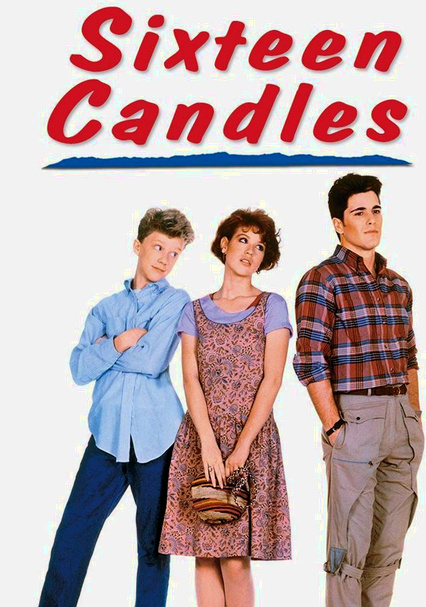
Sixteen Candles-1984

Sixteen Candles-1984

Director John Hughes

Starring Molly Ringwald, Michael Schoeffling, Anthony Michael Hall

Scott’s Review #1,389

Reviewed August 14, 2023

Grade: B

While recently re-watching a string of John Hughes-produced or directed films from the 1980s, I set upon them with fresh eyes.

Some scenes or themes that worked in the mid-1980s would be inappropriate in a more sensitive, post-Me Too! era. movement.

Hughes, of course, was the king of the teen angst, coming-of-age, romantic comedies that usually starred Molly Ringwald.

Sixteen Candles, Hughes’s first directorial effort, was released in 1984 and launched him to superstardom and immense popularity. Films like The Breakfast Club (1985) and Pretty in Pink (1986) would follow to much acclaim.

What he did so well was provide maturity and a message to the otherwise dumb and raunchy comedies that populated the decade. He brought a fresh female perspective, whereas others were typically male and hormone-driven.

Already angst-ridden Samantha (Molly Ringwald) wakes up on the morning of her sixteenth birthday to find her busy family has completely forgotten her special day.

Samantha already pines for the handsome senior Jake (Michael Schoeffling), but worries that her dorkiness and lack of sexual experience will be a turnoff for the popular boy.

Meanwhile, Samantha must constantly rebuff the affections of nerdy Ted (Anthony Michael Hall), the only boy in the school who seems interested in her.

As enjoyable as Sixteen Candles is, I’d list it as the weakest of the Hughes films. It serves as more of a blueprint for the genius he would become.

Ringwald carries the film with ease, which is all the more impressive since this was one of her first film roles. She infuses Samantha with a blend of confidence, insecurity, and worry, so that most American teenage girls could see themselves in her.

Pretty but not a pinup blonde, Samantha is intelligent and the girl next door. She lives in a suburban neighborhood, is middle-class, has loving but distracted parents, and siblings focused on their trials and tribulations.

Most can relate to that.

A wonderful and tender moment between Samantha and her father, Jim, played brilliantly by Paul Dooley, nearly moved me to tears. His wisdom and kindness, as Samantha emotionally reveals her love for Jake to her dad, are warm and solid, epitomizing what a dad should be to his daughter.

A series of tepid misunderstandings occurs between Samantha and Jake, who, ironically, has noticed her and shares her attraction. She freezes when face-to-face with him and flees, so he naturally assumes she is a bitch and has no interest in him.

It takes so long for the lovebirds to connect that many possibilities and scenes go unexplored. The film ends as soon as they reveal their feelings, leaving the audience with little to celebrate.

We also know almost nothing about Jake. He is a rich kid whose parents are vacationing in Europe, but what makes him tick? He could have any girl in high school and date the pretty blonde girl, but what makes him so drawn to Samantha?

The casting of the four grandparents serves no purpose other than to provide comic relief and to convey an inaccurate message about how bumbling older people are.

One refers to Samantha’s ‘boobies’ while another stinks up the bathroom.

Worse yet, the inclusion of a foreign exchange Asian student named Long Duk Dong (Gedde Watanabe) is riddled with cliches and stereotypes only played for laughs.

These characters are caricatures.

Finally, the groping and taking advantage of drunk female characters now feels dated if not flat-out inappropriate. In 1984, the scenes are meant to be funny.

Still, Sixteen Candles (1984) accurately depicts the loneliness and problems that nearly every teenager has faced throughout history. With a warm message of belonging and a sweet subtext, the film is a recommended watch, but be wary of its stereotypes.