Category Archives: Cillian Murphy

28 Years Later-2025

28 Years Later-2025

Director Danny Boyle

Starring Jodie Comer, Aaron Taylor-Johnson, Alfie Williams

Scott’s Review #1,496

Reviewed October 13, 2025

Grade: B

For loyal fans of the 28 Days Later film franchise, launched in 2002, 28 Years Later (2025) may be a disappointment.

Not what I expected, the film has less raw horror than its two predecessors, but it adds a deeper emotional connection, linking various characters together.

A family is introduced, which helps provide character depth. Apparently, 28 Years Later is the first of a new trilogy, which may leave the first two installments by the wayside.

Still, the film is uneven and meanders quite a bit until the final thirty minutes or so, when I felt more invested in the events.

This is surprising, given the participation of Academy Award-winning participants, including director Danny Boyle, writer Alex Garland, and actor Cillian Murphy, as Executive Producer. It also features the original cinematographer (Anthony Dod Mantle), so I’m surprised how little connection it has to the original.

A weak sub-plot featuring Sir Jimmy Crystal, the leader of the Jimmy Savile–inspired “Jimmy” cult, and a survivor of the original outbreak is the only connection.

It’s been almost three decades since the rage virus escaped a biological weapons laboratory, and now, still in a heavily enforced quarantine, some have found ways to exist amidst the infected.

One group of survivors lives on a small island connected to the mainland by a single, heavily defended causeway.

When Spike (Alfie Williams), the twelve-year-old son of Jamie and Isla (Aaron Taylor-Johnson and Jodie Comer), leaves the island on a mission to find help for his ailing mum, he discovers secrets, wonders, and horrors that have mutated not only the infected but also other survivors.

He encounters characters like “Samson”, a physically imposing Alpha leader of the infected, the odd Dr Ian Kelson (Ralph Fiennes), a former doctor and survivor of the outbreak, and a pregnant infected woman.

Isla, who teeters in and out of sanity, is along for the ride.

Comer, known for the television series Killing Eve (2018-2022), has begun to forge her way into feature films and is the standout performer.

Isla suffers from a mentally debilitating disease, but it’s unclear what the issue is. She mostly lies in bed, sleeping or suffering from excruciating headaches. It’s not until the final act that Comer’s work is stellar.

When she becomes attached to a healthy newborn baby, her emotional connection to Spike and her memories of time spent with her father are linked.

These are the best scenes, and when Comer shines brightly. She is aided by the inclusion of Fiennes as the sympathetic doctor.

This proves that superior actors can make any film better as long as they infuse their talents into the script, which Comer and Fiennes do. They have tremendous chemistry during their limited scenes, offering humane and tender moments. Young Williams also does good work.

The cinematography is impressive. Lavish outdoorsy sequences in meadows or amidst a raging fire are lucid and colorful. An abandoned train set is dressed perfectly with dingy seats overgrown with plants and weeds. When the characters race through the aisles, there’s a realism to the scene.

The rest of the film has issues, especially weak subplots.

There’s a bit too much going on, so the result feels messy. Visions, memories, Jamie cheats on Isla while Spike watches, Spike pulls a knife on dad, the alpha is on the loose, a mysterious doctor, a fire, and other such additions are included.

Some work better than others.

A hunting expedition where Jamie teaches Spike to hunt is superfluous and clichéd. Doesn’t almost every post-apocalyptic film or television show feature someone showing someone else how to hunt?

The film also feels remarkably similar to television’s The Walking Dead or The Last of Us, suggesting that the filmmakers may have been riding a trend rather than creating their own original work.

Why make the father sympathetic, then non-sympathetic? Is it a way to enhance Isla’s and Spike’s bond?

The same occurs later when a kind Swedish soldier (Edvin Ryding) debuts, only to become unlikable minutes later. Is this to justify his head being torn from his body? An incredible scene by the way.

28 Years Later (2025) has some impressive story and technical tidbits, marginally giving it a recommendation for fans of the franchise. Otherwise, there isn’t enough quality content to entice new viewers.
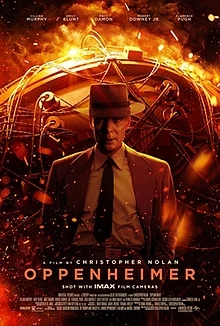
Oppenheimer-2023

Oppenheimer-2023

Director Christopher Nolan

Starring Cillian Murphy, Robert Downey Jr., Emily Blunt

Scott’s Review #1,384

Reviewed August 1, 2023

Grade: A

Knowing the films of Christopher Nolan who directed works like The Dark Knight Trilogy (2005-2012), Inception (2010), and Dunkirk (2017) I expected what I would be served with by his new film Oppenheimer (2023).

This would include a big booming soundtrack and an arguably more ‘guys’ genre film, but with intelligence, than other contemporary hits like Barbie (2023).

Dark and looming with complexities are usual for Nolan so I settled in for a three-hour epic journey centered on the atomic bomb and physics that has unexpectedly become a blockbuster.

Speaking of the pink phenomenon its simultaneous release with Oppenheimer led to the “Barbenheimer” phenomenon on social media, which encouraged audiences to see both films as a double feature.

This forever links the two vastly different films that were responsible for filling movie theaters once again.

I expected to enjoy Oppenheimer but was jarred (in a good way) by the sheer brilliance of its construction. Prepared for more mainstream fare that typically follows a biography or historical piece I was instead overly fascinated by the experimental elements enshrouding a more conventional film.

During World War II, Lieutenant Colonel Leslie Groves Jr. (Matt Damon) appoints physicist J. Robert Oppenheimer (Cillian Murphy) to work on the top-secret Manhattan Project.

Oppenheimer and a team of scientists spend years developing and designing the atomic bomb. Their work came to fruition on July 16, 1945, as they witnessed the world’s first nuclear explosion, forever changing the course of history.

The film is constructed marvelously in every way and is authentic to the eye. The first notice is that it feels like it’s the 1940s 1920s or 1960s or anywhere in between depending on where the film goes.

The art design, costumes, and makeup feel natural rather than stagey which helps its audience escape into the scientific world.

Speaking of, Nolan constructs the film in a series of pockets and goes back and forth between periods. We see Oppenheimer many times as an aspiring upstart with visions, a confident, established physicist, and in 1963 when President Lyndon B. Johnson presented him with the Enrico Fermi Award as a gesture of political rehabilitation.

His personal life is also explored.

Many, many scenes shift back and forth involving different characters at different ages. Most of the scenes in the 1940s take place in the desert at Los Alamos, New Mexico while the later years are set in a stuffy conference room where Oppenheimer is grilled for his left-leaning and suspected Communist politics.

The cinematography led by Hoyte van Hoytema provides some edgy moments especially when Oppenheimer descends into frightening and psychedelic hallucinations of those suffering the aftereffects of the atomic bomb. Images of peeling and melting faces are terrifying.

Cillian Murphy successfully makes Oppenheimer sympathetic especially after he creates the bomb and is left forgotten by his government.

Various moments in the film showcase Murphy at his best. After relinquishing his deadly bomb after a test the government callously tells Oppenheimer that ‘they’ll take it from here’. The look of dread, regret, and sadness in Murphy’s crystal blue eyes speaks volumes.

Another great scene occurs when President Harry S. Truman (Gary Oldman) a left-leaning democrat calls Oppenheimer ‘a crybaby’ when he expresses interest in returning land to the American Indians.

The supporting cast is a bevy of riches with several top-caliber actors appearing in cameos. My standouts in larger roles are Robert Downey Jr. shredding his Iron Man superhero persona as a slighted and venomous Lewis Strauss, intent on revoking Oppenheimer’s security clearance, and Emily Blunt as the boozy biologist and former communist wife of Oppenheimer.

My biggest takeaway from Oppenheimer (2023) though is a powerful one. The difference between the United States of America during and post World War II and in present times, 2023.

Then, a patriotic infrequently questioned nation brimming with pride and glory, where nationalism was rampant and expected and those with foreign respect were cast aside as traitorous.

Now, a divided country half of whom support an ideology based on hate, racism, and cultlike dedication to a corrupt ex-president, and the other focused on diversity inclusion, and equality for all.

This film resonated so powerfully well and in so many different ways.

Oscar Nominations: 7 wins-Best Picture (won), Best Director-Christopher Nolan (won), Best Actor-Cillian Murphy (won), Best Supporting Actor-Robert Downey Jr. (won), Best Supporting Actress-Emily Blunt, Best Adapted Screenplay, Best Film Editing (won), Best Cinematography (won), Best Costume Design, Best Production Design, Best Original Score (won), Best Sound, Best Makeup and Hairstyling

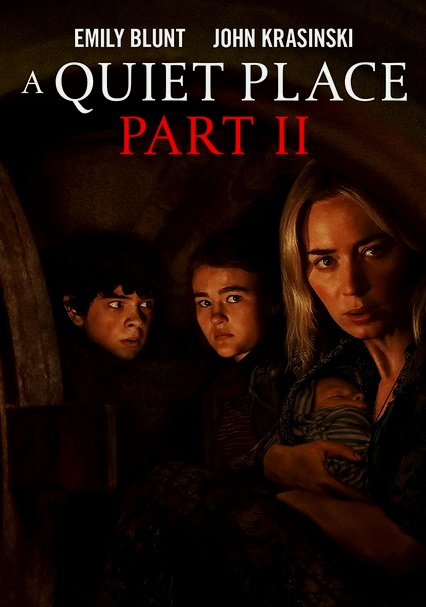
A Quiet Place Part II-2021

A Quiet Place Part II-2021

Director John Krasinski

Starring Emily Blunt, John Krasinski

Scott’s Review #1,170

Reviewed August 12, 2021

Grade: B+

A Quiet Place Part II (2021) makes excellent use of sound, almost a character in itself, by featuring a deaf character and aliens who are blind and rely solely on their acute sense of hearing to stalk and annihilate their prey.

The big sounds and the deafening silences keep the film fresh, capitalizing on its novel approach.

The film is both a sequel and a prequel, presumably allowing director, writer, and actor John Krasinski the chance to reprise his ill-fated character, offering a neat timeline to the events of the first film, A Quiet Place (2018).

Since that film was an enormous success, a sequel was green-lit by the studio almost immediately. It offered Krasinski a great deal of freedom, which he runs within this offering.

I can’t say the plot exactly comes together as tidily as I had hoped, and there is no explanation for the alien’s actions or motivations – what is it they want, and where do they come from?

The lack of explanation gnawed at me. After all, they must have been created from somewhere. The lack of motivation of a horror character like Michael Meyers is understandable, but aliens?

The film is raised quite a bit above average thanks to a thrilling and fascinating opening sequence. This lengthy scene was astonishing with differing character points of view, meticulous filmmaking, and frights galore.

Plus, the appearance of Lee (Krasinski, who was killed in the first film) immediately piques our intrigue.

I wish the rest of the film had remained as breathtaking, but it’s not bad either. As a northeasterner, I was treated to some of the action taking place on a dilapidated Metro-North railway train. Any commuter will appreciate this nod.

And who doesn’t enjoy numerous shots of Emily Blunt playing bad-ass with a loaded shotgun? The talented actress, wife of Krasinski, adds credibility to the horror genre.

I know someone who saw A Quiet Place Part II without having seen A Quiet Place and still enjoyed it, but I think it’s helpful to see the material to appreciate the first scene.

We begin on Day one, and the Abbott family-husband, wife, and three children-enjoys a little league game on a summer afternoon. When suddenly a cloud-like object plummets to Earth, all hell breaks loose, and the town is in a terrified flight as aliens destroy all in their path.

This plot point is interesting since viewers will know that two of the family members will not survive very long.

A year later, the Abbott family-Evelyn (Blunt), Regan (Millicent Simmonds), Marcus (Noah Jupe), and a newborn must leave their farm with a calculated plan to reach safety. They realize through a never-ending song played on the radio that there is a sanctuary on a nearby island.

Clever Regan, who is deaf, can combine a microphone with her cochlear implant to kill the aliens.

Young actress Simmonds is quite a find, and alongside Jupe, emerges as the star of the film. The teenagers spent a great deal of time on the run and battling the aliens. Setting events up for another sequel, Kransinki and Blunt may want less to do with follow-ups.

Deaf in real life, she is a standout and supports a female empowerment slant, especially given her own disability. She is a unique character because she is unconventional-looking and authentic, lacking the typical characteristics that attempt to get moviegoers into theaters. She is my favorite character.

Geography is an issue here. Presumed to be located in upstate New York and shot in western New York, possibly in the Utica area, the sanctuary is situated in Long Island Sound off the coast of Stamford, Connecticut.

This would require the Abbots to travel hundreds of miles, but the film makes it seem that both areas are neighboring. This mistake may not be noticed by most, but since I live in the area, it’s apparent.

A Quiet Place Part II feels reminiscent of the television series The Walking Dead. The additions of the family traversing the countryside, a sanctuary, and ravaging humans all support this comparison.

There are some predictable plot points to endure that prevent it from straying too far from the fray, but A Quiet Place Part II (2021) also offers a film about the senses that still feels unique.

By part III, this may become redundant, but John Krasinski proves he can make a compelling sequence with enough suspense to keep his viewers engaged.

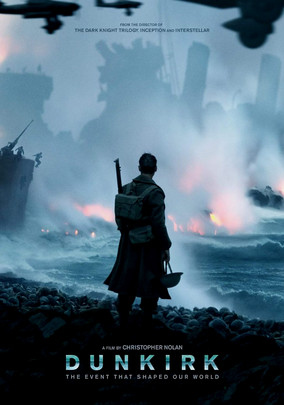
Dunkirk-2017

Dunkirk-2017

Director Christopher Nolan

Starring Fionn Whitehead, Tom Hardy

Scott’s Review #666

Reviewed July 24, 2017

Grade: A

Of the hundreds of war films made over the years, most have a similar style, with either a clear patriotic slant or a questioning/message-type nature.

Regardless, most have a certain blueprint—from the story to the visuals to the direction—and rarely stray from it.

The genre is not my favorite, as machismo is usually overdone, and too many films turn into standard “guy films” or “good guys versus the bad guys.”

Finally, along comes a film like Dunkirk (2017)that gives the stale genre a swift kick.

The story is both simple and historical.

In 1940, Nazi Germany, having successfully invaded France, pushed thousands of French and British soldiers to a seaside town named Dunkirk.

With slim hopes of rescue or survival, the soldiers are sitting ducks for the raid of German fighter planes, which drop bombs both on the soldiers and rescue ships.

In parallel stories, a kindly British civilian (Mark Rylance) and his son sail to Dunkirk to help rescue the soldiers, and two British fighter pilots chase the German fighter planes, attempting to thwart their deadly intentions.

One will immediately be struck by the film’s pacing, which is nonstop action from start to finish. The action, combined with very little dialogue and an eerie musical score, is what makes the film feel unique and fresh.

Directed by Christopher Nolan (The Dark Knight, 2008 and Inception, 2010), critics herald this film as his most remarkable work yet- I tend to agree.

Scenes involving such differing musical scores as screechy violins mixed with thunderous, heavy beats shake up the film and keep the audience on their toes as to what is coming next.

An interesting facet of the film, and certainly done on purpose, is that the characters’ backstories are not revealed- we know very little about them.  Do they have families? Are they married? This is a beautiful decision by the screenwriters and by Nolan.

For instance, the first scenes involve a disheveled private named Tommy (Fionn Whitehead).  Panicked, he runs through the streets in pursuit of the beach, where he meets a fellow soldier named Gibson, who is burying another soldier in the sand.

Together, they find a wounded soldier and carry him to a departing ship. The men never speak but communicate through their eyes and gestures—it is a powerful series of scenes.

Another positive to Dunkirk is the anonymity of the enemy. The German soldiers are never shown. We see many scenes of fighter planes overhead, pummeling the soldiers with bombs and pulsating gunfire in various scenes. Still, the mystique of the enemy troops is a constant throughout the film.

The faceless component of the villains adds terror and haunting uncertainty.  In this way, the film adds to the audience’s confusion about where the enemy may be at any given moment.

The visuals and the vastness of the oceanside beach are at the forefront throughout the entire film, which is one hour and forty-six minutes, relatively brief for a war film. It elicits both beauty and a terrible gloominess.

Scenes of the vastness of the beach peppered with thousands of cold and hungry men are both pathetic and powerful.

The best scenes occur on Mr. Dawson’s  (Rylance) mariner boat. Aided by his son Peter and Peter’s frightened schoolmate, the trio heads for dangerous Dunkirk to help rescue, but en route, he picks up a shell-shocked soldier determined to stay as far away from Dunkirk as possible.

This leads to compelling drama and deep characterization of all the central characters.

Many list 1998’s Saving Private Ryan as the best film in the modern war genre, but Dunkirk may very well rival that film in intensity and musical effectiveness. Dunkirk (2017) also contains shockingly little bloodshed or dismembered soldiers—it does not need this to tell a powerful story.

The film is sometimes emotional and intense, but it never lets go of its audience from the very first frame—it is a war film for the history books and a lesson in film creativity and thoughtfulness.

Oscar Nominations: 3 wins-Best Picture, Best Director-Christopher Nolan, Best Original Score, Best Sound Editing (won), Best Sound Mixing (won), Best Production Design, Best Cinematography, Best Film Editing (won)

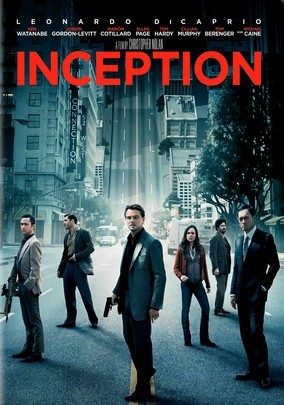
Inception-2010

Inception-2010

Director Christopher Nolan

Starring Leonardo DiCaprio, Ellen Page

Scott’s Review #558

Reviewed December 22, 2016

Grade: A-

Inception (2010) is the type of film that will leave you astounded, baffled, confused, bewildered, and many other adjectives. To put it more simply, this film needs to be pondered after the fact.

This is a high compliment as it is tough to remember such a complex (in a good way!), savory film.

Inception is visionary and meant to be processed.

A highly intelligent film, of sorts, that will leave you thinking afterward. The story is immeasurably complex and will leave many completely confused, but just go with it.

In a nutshell, it tells the story of a man who intercepts people’s subconscious minds through dreams. Different layers of their minds are revealed as the film goes along. There are also virtual levels to each person’s mind- complex, yes.

The film reminds me quite a bit of The Matrix- but better.

The film has many twists and turns throughout and will keep the viewer both perplexed and fascinated. My only slight criticism is the dream sequences do not feel like dreams at all but are highly stylized action sequences.

Many props have been given for being so inventive, though.

Oscar Nominations: 4 wins-Best Picture, Best Original Screenplay, Best Original Score, Best Sound Editing (won), Best Sound Mixing (won), Best Art Direction, Best Cinematography (won), Best Visual Effects (won)

28 Days Later-2002

28 Days Later-2002

Director Danny Boyle

Starring Cillian Murphy, Noah Huntley

Scott’s Review #507

60027998

Reviewed November 2, 2016

Grade: B+

Before the influx of zombie-related horror films and television shows filled the land- arguably offset by the success of The Walking Dead series, a little film came along- now almost teetering on its influence being forgotten- that presented this genre with fresh insight and creative storytelling posing questions amid the mayhem.

28 Days Later (2002) rejuvenated this largely dormant film category with a gritty story of peril among a group of survivors spared from a deadly virus.

The film is smart as it explores morality issues and the needs of society to continue.

We initially are immersed in confusion as chaos immediately ensues. After a brief prologue of a group of laboratory chimpanzees gone mad, inflicted with rage, being let loose by animal liberators, and killing all present as well as inflicting the humans, we meet a lone man named Joe- the timing is relevant as it is “28 days later” from the incident.

The young man awakens in a hospital to find himself alone amid downtown London- not a soul in sight.  Fortunately, he has been in a coma and missed the crumbling of society due to an outbreak- somehow Joe has been spared.

Gradually, Joe meets others uninfected by the virus and they forge through the country in search of a military base rumored to be a haven.

The infected humans are not zombies, but rather, violent creatures who destroy anyone in their path. The film not only presents the grotesque creatures but also challenges the audience to think in a political sense- how will the survivors forge a new society?

How will women be treated differently from and by their male counterparts in a world that now lacks any police force or government?

My initial reaction to watching 28 Days Later- years after its initial release- is that it now seems slightly dated, but that has more to do with the legions of copycat films that have come after it and have been exposed to.

We have become more encompassed by this type of film, both in genre and in style. Appreciation is warranted for its gritty, fast-paced camera-work, extreme violence, and the use of “infected” who turn from human beings to vicious beings.

A fantastic part of this film is that it is not simply a horror film, it is more layered than that. There are moments of great beauty and tender moments among Joe and Selena- the sole surviving female other than the young, waif-like, Hannah, whose world has been shattered by the death of her loved ones.

In one sad scene, a couple has peacefully committed suicide, rather than face what would surely become of them.

There is a sense of a human story in 28 Days Later, which made me find the film heartfelt and almost sweet. Even the military soldiers- their motivations questionable- are relatable based on the world being turned upside down. A layered, complex, zombie film with some character-driven elements.

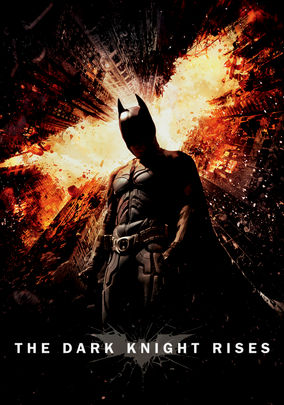
The Dark Knight Rises-2012

The Dark Knight Rises-2012

Director Christopher Nolan

Starring Christian Bale, Tom Hardy

Scott’s Review #431

70213514

Reviewed June 23, 2016

Grade: C+

The Dark Knight Rises (2012) is a sequel to the exceptional The Dark Knight from 2008 and, unfortunately,  is a complete letdown, especially compared to that film.

Perhaps my expectations were too lofty- it is a sequel after all, and sequels, typically disappoint.

To be fair, the film looks great and has a fast-paced, modern feel- slick and action-packed. A summer popcorn film.

The story, though, is uninteresting- the villains are not compelling, which is a major miss in a film like this where the villains are crucial.

Tom Hardy as Bane is miscast. Anne Hathaway’s Catwoman is underdeveloped and one-dimensional. We never really know much about what makes these characters tick.

I did enjoy the twist at the end involving Marion Cotillard, which impressed me and I did not see coming throughout the story.

I might have rated The Dark Knight Rises even lower than a C+ had it not been for the group of top-notch actors appearing in the film.

Having loved the most recent Batman film, I expected more and received less.