Category Archives: Damien Chazelle

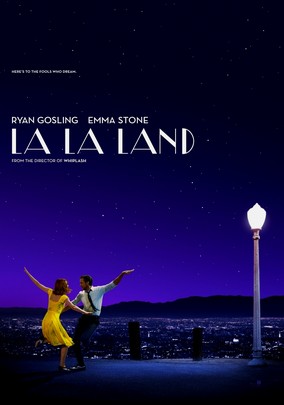
La La Land-2016

La La Land-2016

Director Damien Chazelle

Starring Emma Stone, Ryan Gosling

Top 250 Films #173

Scott’s Review #538
80095365

Reviewed December 6, 2016

Grade: A

La La Land (2016) breathes new life into the classic musical genre of the 1950s and offers a fresh glimpse into Hollywood.

The film explores the glitz and glamour, triumphs and heartbreaks, and dreams both broken and fulfilled in a town laden with broken hearts.

The bright, colorful film stars two of today’s top young, talented actors: Emma Stone and Ryan Gosling. The chemistry between the leads and the dynamic musical numbers is incredible.

It’s a masterful nod to old Hollywood.

Mia (Stone) is an aspiring young actress struggling to survive the Hollywood scene. She serves lattes in a coffee shop on a studio lot and auditions endlessly for film and television parts without much luck.

Her passion is acting, but she also writes a one-woman play she plans to star in.

On the other hand, Sebastian (Gosling) is a dedicated jazz musician, struggling to make ends meet by playing demoralizing gigs that ruin the essence of jazz, meeting many people who tell him that jazz is a dying genre.

Sebastian’s dream is to open his nightclub one day.

Through circumstances, Mia and Sebastian meet and continue to run into each other, forging a wonderful friendship that eventually leads to romance.

The film is a gorgeous experience with bright sets, creative sequences, and numerous song and dance numbers to keep you humming. Mia and Sebastian even tap-dance one beautiful night following a Hollywood party under the moonlight with the Los Angeles skyline in view as they bond.

It is one of the best scenes in the film.

La La Land is seasonal and begins in the winter, though this is strictly an attempt to separate the chapters. Los Angeles is always warm, but the timing is Christmas, which is engaging in a warm climate.

In the first scene, we are immediately treated to a musical number. Stuck in stifling freeway traffic, the car drivers get out in unison, sing and dance, and then return to their cars to continue their mundane day.

Director Damien Chazelle cleverly balances the cheerful tone with the everyday redundant tasks and the struggles of artists hoping for a dream.

La La Land excels during the scenes of Sebastian and Mia as the chemistry is palpable. Gosling and Stone have something.

Supporting players like J.K. Simmons and Rosemarie Dewitt add pizzazz to their small but meaningful parts.

I adore the odes to classic Hollywood films that director Chazelle incorporates into his movie.

Classics such as Alfred Hitchcock’s Notorious (1946) and the legendary film Casablanca (1940) are mentioned twice.

During a sweet moment, Sebastian takes Mia to see Rebel Without a Cause (1956) at an old-style theater; he is shocked that she has never seen the film and eagerly excited to introduce her to it.

This continues as he shares his love for jazz music with her.

Later, the theater closes, and the film takes a more dour tone as the struggles of both characters overwhelm them.

The film’s finale is terrific.

Suddenly, five years later, many events have happened. In a brilliant sequence, the characters’ lives are explained through a song as we see the period play out until we reach the point of the film where the song began, a treasure of an ode to the truth of the characters.

The sequence is emotional, heartbreaking, and choreographed without missing a beat,

Gosling and Stone sing all their songs, not live as in Les Miserables (2012), but wisely on a sound stage. They are neither novices nor Grammy winners, but they are honest, truthful, and with heart.

It is refreshing to see classic Hollywood told in such a riveting fashion, as seen through the young’s eyes.

Films and styles of decades past are renewed through this excellent piece of cinema.

I noted similarities to An American in Paris (1951) and countless other gems from years ago and stood proudly, knowing that a nostalgic piece of cinema is precisely what we need.

Oscar Nominations: 6 wins-Best Picture, Best Director-Damien Chazelle (won), Best Actor-Ryan Gosling, Best Actress-Emma Stone (won), Best Original Screenplay, Best Original Score (won), Best Original Song-“City of Stars” (won), “Audition (The Fools Who Dream),” Best Sound Editing, Best Sound Mixing, Best Production Design (won), Best Cinematography (won), Best Costume Design, Best Film Editing
Babylon-2022

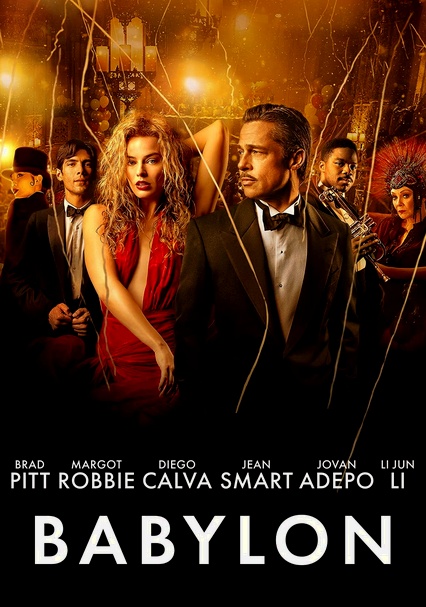
Babylon-2022

Director Damien Chazelle

Starring Margot Robbie, Brad Pitt

Scott’s Review #1,365

Reviewed June 4, 2023

Grade: A-

Babylon (2022) is a film that will likely divide audiences broadly. Slightly late to the table, I viewed the film after the awards season hoopla had ended, and the film came up empty-handed.

Sure, a few nominations were received, but much more was expected from the epic Hollywood-themed venture.

I’m a fan of director Damien Chazelle, most famous for the similarly set Los Angeles film La La Land (2016), which I adore.

His direction style reminds me a great deal of Baz Luhrmann’s, with the incorporation of intense musical numbers during many scenes and a strong, chaotic, and frenetic nature.

I realize this style is not for everyone, so I’m not surprised that Babylon is both revered and reviled. This isn’t always a bad thing, as a good film debate can be fun.

I adore Babylon primarily for the potent silent-era Hollywood story and the terror stars of the 1920s faced with the realization that sound had entered their pictures and they were expected to keep up with the times.

Sadly, many careers ended devastatingly, sinking one-time big stars into depression and despair.

The acting is superb, and major props go especially to Margot Robbie as debaucherous film star Nellie LaRoy and newcomer (to me) Diego Calva as handsome Mexican immigrant Manny Torres.

Both actors elicit superb performances that should have landed them Oscar nominations.

The major themes that Chazelle incorporates into Babylon are those of ambition and outrageous excess, as well as belonging and acceptance. The rise and fall of multiple characters during an era of unbridled decadence and depravity in early Hollywood are explored.

As Hollywood transitions from silent films to talkies, ambitious up-and-coming actress Nellie and aging superstar Jack Conrad (Brad Pitt) each struggle to adapt to the new medium, as well as a rapidly changing world.

And Manny wants a seat at the table.

Another reason I love the film is the dedication and exposure given to pre-sound Hollywood movies, which are often forgotten. I struggle to recall ever having viewed a film from that era, with my earliest film being the 1930 film “All Quiet on the Western Front.”

The hit film The Artist (2011) may have paid tribute, but it’s not the same, and Babylon goes for the jugular in showcasing an entire movement that is now largely forgotten.

Cinema fans will respect Babylon.

Besides the film’s characters, there is much to appreciate in the movie itself. A Hollywood movie set, repeated takes, scripts, dialogue, lighting equipment, and rehearsals make for a feast of riches for any cinephile.

The weak point is the film’s excessive length. At three hours and nine minutes, an epic length, the erratic structure is a challenge to get through. A piecemeal approach can sometimes affect the continuity, and it did detract a bit in this case for me.

If one can sit still long enough, the final thirty minutes are superb. A tidy wrap-up and truthful storytelling give several characters a proper sendoff.

The film ends in 1952, so a fitting conclusion is in order.

Before we get to this point, though, a nailbiting sequence involving Manny and a fiendish Los Angeles gangster played by Toby Maguire is second to none. Fake money, a rat-eating entertainer, and pornographic dwarves make for an odd adventure that one can’t look away from.

A fascinating and bombastic experience, Babylon (2022) delves loudly into the silent film world and pays a proper head nod to a long-forgotten era.

The film has made me appreciate Hollywood and its history even more than I already do.

Oscar Nominations: Best Musical Score, Best Production Design, Best Costume Design

First Man-2018

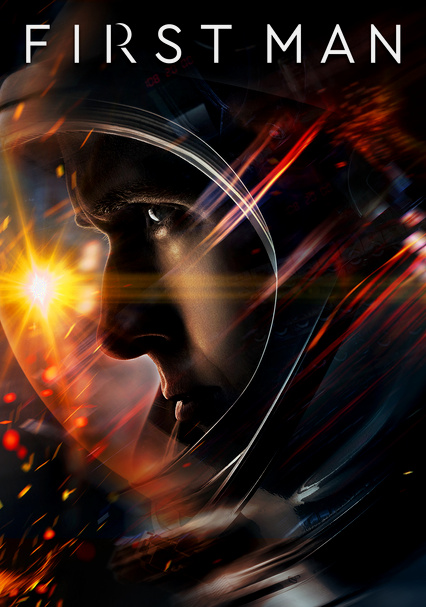
First Man-2018

Director Damien Chazelle

Starring Ryan Gosling, Claire Foy

Scott’s Review #915

Reviewed July 4, 2019

Grade: B+

First Man (2018) is a reteaming of efforts by director Damien Chazelle and actor Ryan Gosling, following the 2016 critical and commercial smash hit La La Land.

The former could not be more different from the latter, and the direction is unrecognizable for those expecting a comparison. First Man is a mainstream Hollywood production with good camerawork and edgy quality.

The necessary full-throttle action approach is interspersed nicely with a personal family story and humanistic spin that is never too sappy nor forced.

The focus of the story is on Neil Armstrong (Gosling) and the events leading up to the historic Apollo 11 mission, which made him the first United States astronaut to walk on the moon.

Buzzy Aldrin (Corey Stoll), the second man to walk on the moon, is featured to a lesser degree, and his character is portrayed as self-centered and complex, though screen time is limited.

The overall message is of the triumphs and the costs to families, the astronauts, and the country during an already tumultuous decade in history.

The events of the film begin in 1961, as we see Armstrong as a young NASA test pilot struggling with mishaps due to his problems, and culminate in 1969 after the successful mission concludes.

Chazelle wisely balances human and personal scenes with the inevitable rocket take-offs and outer space problems that the astronauts face.

Both segments turn out well and keep the action moving, allowing for tender moments between the characters, mainly showcasing the relationship between Neil and his wife, Janet (Claire Foy).

Lacking (thankfully) are the scenes of machismo or “guy talk” that sometimes accompany films in this genre.

During one of the first scenes, the audience quickly witnesses the couple’s two-and-a-half-year-old daughter Karen retching and suffering from learning disabilities, only to promptly die from a brain tumor, forever destroying the couple.

This critical aspect reoccurs as Neil imagines his daughter playing with neighborhood kids and enjoying life.

In a wonderful moment, he tearfully drops Karen’s tiny bracelet into a giant crater, hoping to keep her memory alive forever.

These additions give the film a character-driven quality.

Worthy of analysis before and after viewing the film is the young director’s decision to tackle such a project, heartily appealing to the mainstream audience undoubtedly in mind.

Legendary director Clint Eastwood was initially slated to direct, and the historically rich story seems right up his alley.

It’s interesting to wonder if, during the 1990s, Tom Hanks might have been cast as Armstrong in his younger days, playing a similar part in Ron Howard’s 1995 film Apollo 13.

Well-known character actors appear in supporting roles, fleshing out the production and further adding name and face recognition. Kyle Chandler, Jason Clarke, and Ciaran Hinds appear as astronauts or various NASA Chiefs. Viewers who may not be able to name the actors will certainly recognize them as actors seen in other films.

This only brings First Man to the big leagues with a hearty and talented central cast.

Gosling and Foy are the main draws, and both actors were mentioned as possibilities for Oscar nominations throughout awards season, but a slot in the big race did not come to fruition.

While the film drew a couple of nominations for Best Editing and Best Score, a Best Picture nomination was not to be, probably due to the film not being as big a blockbuster success as expected.

The film is also more brooding and less patriotic than a Howard or Eastwood production would have been.

To expand on this, First Man came under attack by Senator Marco Rubio from Florida and President Donald Trump for Chazelle’s decision to omit any mention of the famous planting of the American Flag on the moon by Armstrong and Aldrin.

Chazelle refused to admit that this was a political statement, instead insisting that he chose to focus more on the lesser-known aspects of the moon landing rather than facts that everybody already knew.

Young director Damien Chazelle proves to be a multi-faceted filmmaker by changing course and creating a historic biopic that is quite different from a story of singing and dancing in Los Angeles.

He proves to be no one-trick pony and gets the job done, creating a brave and robust effort that does not limit action at the hands of humanity, successfully weaving a good dose of both.

First Man (2018) may not be a classic in the making, but it deserves to be seen.

Oscar Nominations: 1 win- Best Sound Editing, Best Sound Mixing, Best Production Design, Best Visual Effects (won)

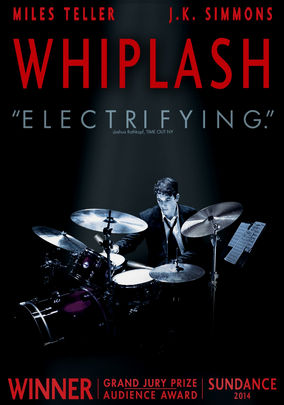
Whiplash-2014

Whiplash-2014

Director Damien Chazelle

Starring Miles Teller, J.K. Simmons

Scott’s Review #192

70299275

Reviewed November 13, 2014

Grade: A

Whiplash (2014) is a film about an aspiring nineteen-year-old Jazz drummer, Andrew Neyman, played by rising star Miles Teller (known for 2013’s indie teen drama The Spectacular Now), who is attending one of the most revered musical schools in the country, the Schaffer Conservatory in New York.

He is mentored and terrorized by his intense and sometimes sadistic conductor, Terence Fletcher, portrayed by J.K. Simmons.

Andrew aspires to be the best drummer and worships Buddy Rich, a famous Jazz drummer from the 1930s and 1940s, who he constantly listens to and emulates.

While Andrew aspires to make the school orchestra that desperately needs a new drummer, he meets a cute girl, Nicole, at the concession stand of his favorite movie theater, and they bond.

Also in the mix is Andrew’s father, played by Paul Reiser. Once an aspiring writer, who never made it big, he struggles as a high school teacher. Andrew’s mother left the family when Andrew was just a toddler leaving just father and son.

The film mainly centers on the tumultuous relationship between Andrew and Terence and Andrew’s determination to be the best drummer in the world.

J.K. Simmons is mesmerizing in his role of Terence and is wonderful to see as Simmons has struggled as a character actor for years.

He gives a powerhouse performance and plows full steam ahead in his viciousness and extreme brutality towards the students, and on more than one occasion reduces a student to tears. If the tempo is not to his liking he shakes his clenched fist in disapproval.

The audience wonders if Terence is mean and sadistic or is tough on the students to make them work harder and achieve great things.

Throughout the film, I wondered if I should hate this character or sympathize with him for wanting the students to excel.

The sexuality of Fletcher is ambiguous.

He belittles and ridicules the students with fat jokes. He hatefully taunts an overweight student about Mars bars and happy meals, uses Irish digs, and inevitably gay slurs on other students, but is he hiding something in his personal life? Is he a closet case? His private life remains a mystery.

As brutal as Terence can be, there are moments of sensitivity that the character exhibits. He tearfully tells the orchestra a heartbreaking story of a former student, whom he admired, who recently died in a car accident.

In another scene, he warmly bonds with a friend’s young daughter.

As brilliant as Simmons is we must not forget to recognize the immense talent of Teller. The young actor does a fantastic job of portraying determination, drive, anger, and vengeance.

Andrew has a wonderful relationship with his dedicated father, a love/hate relationship with Terence, (are they bitter enemies or do they have the respect of a mentor/student?), and a sweet yet uneven relationship with Nicole.

He successfully portrays a myriad of different emotions throughout the film.

Paul Reiser is wonderful in an overlooked and thankless role as Andrew’s unsuccessful, yet forever faithful father.

Thankfully the film chose to center on the conductor/student dynamic. The romantic relationship with Nicole did not take center stage and usurp the main story, as I felt that the dynamic between the two was of lesser importance to the whole.

The finale, an intense concert performance scene focusing on the intensity between Terence and Andrew, is superbly done. The close-up camera shots of the two add much to the climax.

In fact, throughout Whiplash, extreme close-up shots of sweat and blood and intensity during performances and practices add to the overall rawness of the film.

Whiplash (2014) is an intense, sometimes brutal, assaulting experience, but an amazing film.

Oscar Nominations: 3 wins-Best Picture, Best Supporting Actor-J.K. Simmons (won), Best Adapted Screenplay, Best Sound Mixing (won), Best Film Editing (won)

Independent Spirit Award Nominations: 2 wins-Best Feature, Best Director-Damien Chazelle, Best Supporting Male-J.K. Simmons (won), Best Editing (won)