Category Archives: Florence Pugh

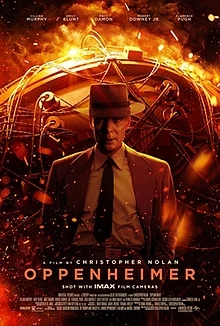
Oppenheimer-2023

Oppenheimer-2023

Director Christopher Nolan

Starring Cillian Murphy, Robert Downey Jr., Emily Blunt

Scott’s Review #1,384
Reviewed August 1, 2023

Grade: A

Knowing the films of Christopher Nolan who directed works like The Dark Knight Trilogy (2005-2012), Inception (2010), and Dunkirk (2017) I expected what I would be served with by his new film Oppenheimer (2023).

This would include a big booming soundtrack and an arguably more ‘guys’ genre film, but with intelligence, than other contemporary hits like Barbie (2023).

Dark and looming with complexities are usual for Nolan so I settled in for a three-hour epic journey centered on the atomic bomb and physics that has unexpectedly become a blockbuster.

Speaking of the pink phenomenon its simultaneous release with Oppenheimer led to the “Barbenheimer” phenomenon on social media, which encouraged audiences to see both films as a double feature.

This forever links the two vastly different films that were responsible for filling movie theaters once again.

I expected to enjoy Oppenheimer but was jarred (in a good way) by the sheer brilliance of its construction. Prepared for more mainstream fare that typically follows a biography or historical piece I was instead overly fascinated by the experimental elements enshrouding a more conventional film.

During World War II, Lieutenant Colonel Leslie Groves Jr. (Matt Damon) appoints physicist J. Robert Oppenheimer (Cillian Murphy) to work on the top-secret Manhattan Project.

Oppenheimer and a team of scientists spend years developing and designing the atomic bomb. Their work came to fruition on July 16, 1945, as they witnessed the world’s first nuclear explosion, forever changing the course of history.

The film is constructed marvelously in every way and is authentic to the eye. The first notice is that it feels like it’s the 1940s 1920s or 1960s or anywhere in between depending on where the film goes.

The art design, costumes, and makeup feel natural rather than stagey which helps its audience escape into the scientific world.

Speaking of, Nolan constructs the film in a series of pockets and goes back and forth between periods. We see Oppenheimer many times as an aspiring upstart with visions, a confident, established physicist, and in 1963 when President Lyndon B. Johnson presented him with the Enrico Fermi Award as a gesture of political rehabilitation.

His personal life is also explored.

Many, many scenes shift back and forth involving different characters at different ages. Most of the scenes in the 1940s take place in the desert at Los Alamos, New Mexico while the later years are set in a stuffy conference room where Oppenheimer is grilled for his left-leaning and suspected Communist politics.

The cinematography led by Hoyte van Hoytema provides some edgy moments especially when Oppenheimer descends into frightening and psychedelic hallucinations of those suffering the aftereffects of the atomic bomb. Images of peeling and melting faces are terrifying.

Cillian Murphy successfully makes Oppenheimer sympathetic especially after he creates the bomb and is left forgotten by his government.

Various moments in the film showcase Murphy at his best. After relinquishing his deadly bomb after a test the government callously tells Oppenheimer that ‘they’ll take it from here’. The look of dread, regret, and sadness in Murphy’s crystal blue eyes speaks volumes.

Another great scene occurs when President Harry S. Truman (Gary Oldman) a left-leaning democrat calls Oppenheimer ‘a crybaby’ when he expresses interest in returning land to the American Indians.

The supporting cast is a bevy of riches with several top-caliber actors appearing in cameos. My standouts in larger roles are Robert Downey Jr. shredding his Iron Man superhero persona as a slighted and venomous Lewis Strauss, intent on revoking Oppenheimer’s security clearance, and Emily Blunt as the boozy biologist and former communist wife of Oppenheimer.

My biggest takeaway from Oppenheimer (2023) though is a powerful one. The difference between the United States of America during and post World War II and in present times, 2023.

Then, a patriotic infrequently questioned nation brimming with pride and glory, where nationalism was rampant and expected and those with foreign respect were cast aside as traitorous.

Now, a divided country half of whom support an ideology based on hate, racism, and cultlike dedication to a corrupt ex-president, and the other focused on diversity inclusion, and equality for all.

This film resonated so powerfully well and in so many different ways.

Oscar Nominations: 7 wins-Best Picture (won), Best Director-Christopher Nolan (won), Best Actor-Cillian Murphy (won), Best Supporting Actor-Robert Downey Jr. (won), Best Supporting Actress-Emily Blunt, Best Adapted Screenplay, Best Film Editing (won), Best Cinematography (won), Best Costume Design, Best Production Design, Best Original Score (won), Best Sound, Best Makeup and Hairstyling
Don’t Worry Darling-2022

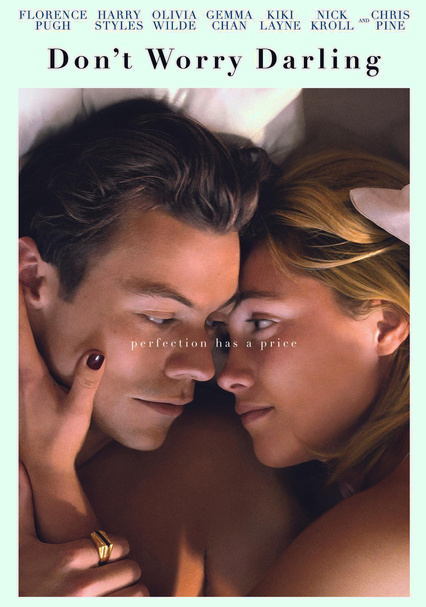
Don’t Worry Darling-2022

Director Olivia Wilde

Starring Florence Pugh, Harry Styles, Chris Pine

Scott’s Review #1,368

Reviewed June 9, 2023

Grade: B+

Don’t Worry Darling (2022) plays like a modern version of The Stepford Wives (1975) meets Pleasantville (1998) but with a supernatural spin and lots of much-needed modern diversity.

Not set in present times, the characters all feel very 2022 but are transplanted to a different period that only enhances an already unsettling feeling.

The sophisticated 1950s set design and art direction are a significant score, as well as the mysterious happenings that continue to shroud the central character and her surroundings.

The film never lags and, in fact, fascinates throughout. There is a continuous feeling of uncertainty, dread, and controlled chaos that assuredly will explode in the finale.

I’m not sure I quite got the conclusion right away until I read through the summary, and something about an alternate universe and different lives outside of the primary setting was revealed. Regardless, it felt unsatisfying, especially compared to the rest of the events.

But, small potatoes, I still enjoyed Don’t Worry Darling immensely.

The premise is thrilling from the start. A 1950s housewife named Alice, played by emerging star Florence Pugh, is living with her husband in a utopian experimental community. They mingle with neighbors, host lavish parties with delicious food and drink, and enjoy each gorgeous sunny day.

Daily, the men dutifully drive off to work in the distinguished Victory Headquarters while the wives cheerfully clean and scrub the windows and prepare a savory dinner, counting the minutes until their husbands return for a romp in the hay.

It all sounds too good to be true.

When a close friend Margaret (KiKi Layne) experiences a psychotic episode witnessed by Alice, she begins to worry that her husband’s glamorous company may be hiding disturbing secrets and that everything may not be as perfect as it seems.

I am becoming a big fan of Florence Pugh, who effortlessly carries the film. Impressive in both Midsommar and as Amy in Little Women, both in 2019, she possesses a specific ‘it’ factor showcased well in Don’t Worry Darling.

Pugh has many scenes with no dialogue. Ranging from a soak in the bathtub, a bizarre episode where she wraps her head in Saran Wrap, and witnessing her friend’s death, she does so much without speaking.

Successfully, the audience is taken along for the ride. We know as much as Alice does, which is nothing. It’s not that Alice hates her life; hell, she’s got it pretty good. A scrumptious roast and carrots alongside hot sex on her dining room table, the girl could do much worse.

But she knows something is off and is determined to find out what it is. Why are the women forbidden from seeing the Victory Headquarters? Why does a plane crash that only Alice sees? Why does Frank, the alpha male leader of Victory, wonderfully played by Chris Pine, keep eyeing Alice?

Impressive is the direction by Olivia Wilde, who also appears as Alice’s friend, Bunny. Along with the screenwriter, Katie Silberman, the duo crafts a piece of work with a feminist perspective turned topsy-turvy, and it’s a good angle.

Not to harp on the ending again, but the message of female empowerment, which I think is the intention of Wilde and Silberman, is unclear. A bolder message and a more finite ending would have helped cement the deal.

Still, in Wilde’s only second film, the first being the vastly different Booksmart (2019), she should only be proud of herself and the product she created.

If one is seeking an emboldened psychological thriller with twists and turns to savor, Don’t Worry Darling (2022) is a fine pick. It creeps along with appropriate plot points and a stylized visual canvas.

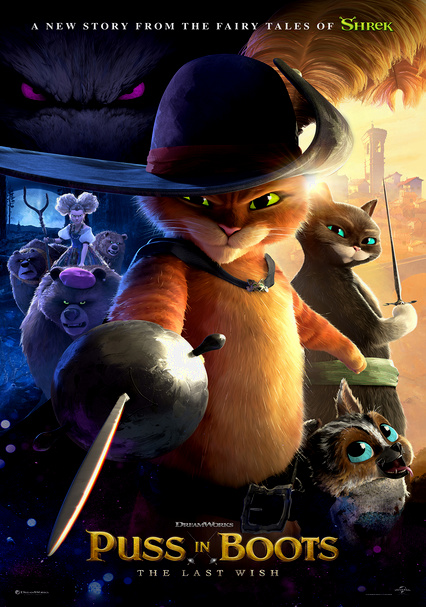
Puss in Boots: The Last Wish-2022

Puss in Boots: The Last Wish-2022

Director Joel Crawford

Voices: Antonio Banderas, Salma Hayek Pinault

Scott’s Review #1,357

Reviewed April 14, 2023

Grade: B

There is a connection between the Shrek film series and Puss in Boots, which I didn’t realize until researching this review.

The title character appears in Shrek 2 (2004) and a film called Puss in Boots (2011), which I think I’ve seen but don’t remember well, precedes the 2022 film Puss in Boots: The Last Wish.

I’m not a big enough fan.

The film is an entertaining adventure, laden with bright, colorful animations and Skittles- or rainbow-type colors, marred by blacks and greys. This works well and provides energy.

There is also a cool incorporation of familiar fairy tale characters. The names are reintroduced mostly as scheming people intent on capturing Puss in Boots, which accelerates the fun and my interest.

The result is a good but not a great film. I’m not sure what would have made Puss in Boots: The Last Wish a masterpiece, but the target audience is firmly set on young viewers.

My two cats glanced at the screen once or twice before deciding on a cozy nap instead. They were not engaged.

Even the darker subject matters of death and dog abuse somehow fall by the wayside in favor of the other cute, adventurous, and fight sequences.

Surprisingly, they do not pack a deeper punch.

Puss in Boots (Antonio Banderas) returns as the daring outlaw who discovers that his passion for danger and disregard for his safety have taken their toll, and he is forced to consider retirement.

As a cat, he is on his ninth and last life!

He tries to get those lives back by returning to the Black Forest to find the mythical Wishing Star on his grandest quest yet. At the risk of death, Puss will have to ask for help from his former partner and nemesis, Kitty Softpaws (Salma Hayek Pinault).

They are joined in their journey by a chatty and cheerful mutt named Perro (Harvey Guillén). Together, they try to stay one step ahead of the fairy tale villains, including Goldilocks and the Three Bears, ‘Big’ Jack Horner, and the Big Bad Wolf.

I didn’t know the character histories of Shrek or Puss in Boots, despite having seen them, but I’m not sure that’s imperative to one’s enjoyment of the film. I quickly caught on that Puss in Boots and Kitty Softpaws were meant to be an ‘item’.

The story is a compelling enough adventure, but it becomes meandering a some point. I knew the troupe would ultimately emerge on the Wishing Star and all would end well. It did, and the characters rode swiftly off into the sunset.

That’s how a film like Puss in Boots: The Last Wish is supposed to end, and I respect that. Best not to tarnish youngsters too early, especially when reality can sometimes be quite dark.

The fun for me was the visuals and specific moments. Puss in Boots’s stunning, gleaming green eyes are astounding and balance nicely with Kitty’s blue ones.

‘Big’ Jack Horner is patterned after Donald Trump. Bullying, fat, and loud, he is a feared pastry chef and a crime lord who plans to use the Wishing Star to gain control of all magic. Snubbed as ‘Little’ Jack Horner as a kid, he vows revenge and exhibits a pouty, snotty vibe.

The writers must have fun with that character.

Finally, a darling sequence featuring Mama Luna, an elderly cat lady who initially takes Puss in, is excellent. Puss in Boots, more like a human being eating human food and using the toilet, is reduced to cat chow and a litter box, like all the other cats.

Director Joel Crawford and screenwriters Paul Fisher and Tommy Swerdlow carefully tone down the violence and darker themes in favor of a robust adventure and largely succeed.

Perfect for kids, it’s not bad for adults either.

Oscar Nominations: Best Animated Feature

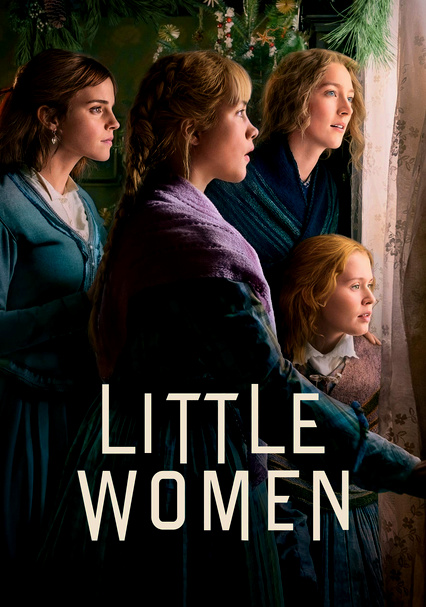
Little Women-2019

Little Women-2019

Director Greta Gerwig

Starring Saoirse Ronan, Florence Pugh

Scott’s Review #982

Reviewed January 21, 2020

Grade: A-

Numerous adaptations of the 1860s classic novel by Louisa May Alcott have been forged upon the silver screen, some good and some not as good.

The consensus is that Little Women (2019) is one of the better offerings, if not the best.

Director Greta Gerwig crafts a clear feminist, progressive version of the trials and tribulations of the March family, led by the spirited, spitfire Jo (Saoirse Ronan). Gerwig’s telling is fantastic, breathing fresh life into a classic story.

The story fluctuates heavily between 1868 and 1861, spanning both the United States Civil War and its aftermath.

Liberal, the Marches reside in Massachusetts, led by matriarch Marmee (Laura Dern), who mainly lives life while their patriarch, Father March (Bob Odenkirk), is off at war. The rest of the household includes sisters Jo, Meg (Emily Watson), Amy (Florence Pugh), and the youngest daughter, Beth (Eliza Scanlen).

The family endures joy, hardship, romance, love, and death as they navigate the decade.

The focal point is Jo, a determined young lady, who moves to New York City, frequently reflecting on her life through back-and-forth sequences.

She begins, as an aspiring writer, and as she grows up, eventually becomes a success, having her novel published boldly. She resists the tried and true and questions why a woman must rely on a man for success rather than her efforts and talents.

During the story, she is pursued by two young men, Laurie (Timothee Chalamet) and Friedrich (Louis Garrel).

Little Women is a fantastic and emotional story and a film that has no need for CGI, car chases, explosions, or any ingredients meant to enliven a film. It does not need them.

The excitement is in the plot, as we thirst for more of the ups and downs that the March family faces. With any successful drama, there are nuanced characters, each taking a turn at a story.

While Jo is the headliner, Amy, Meg, and Beth are much more than opening acts. They each have their own lives, dreams, triumphs, and hardships, and the audience cares about each of them.

To capitalize on this point, the casting is dynamite. In a small, but brilliant role, Meryl Streep gives a bombast to her character of Aunt March, the wealthy widow who owns a gorgeous house and vacations in Paris.

She is cranky, but wise, only wanting the very best for her nieces, which is, of course, to marry rich!

Ronan is well-cast and charismatic as Jo, the actress who loses her Irish accent for an American one. She utilizes her acting skills to imbue Jo with determination and just enough empathy to win over the audience.

Gerwig assures that the audience is reminded of the times and what it meant to be female during the 1860s, with a minimal chance at self-achievement, having to rely on a man for nearly everything.

She is in no way demeaning or ridiculing the male gender, though. She paints no villains in her film, instead showing men as supportive at times, enamored at other times, but never exerting their power over women.

Little Women receives a minor demerit in the pacing department. The film sharply shifts back and forth, in a too rapid manner, from period to period, at times leaving the viewer unclear as to which section of the film they are in.

Blessedly, this ceases about midway through, but the technique is jarring and unnecessary. One wonders what the action was intended to achieve and why a more straightforward approach to storytelling was not used.

A key facet of any outstanding film is the emotional reaction, and Little Women had this viewer with tears streaming down his face. Sometimes for joy, sometimes for sadness, all in an organic way given oomph by a powerful musical score that resonates but never overwhelms.

The film is one in which all its elements come together in perfect harmony.

The film received six nominations, including Best Picture, Best Actress (Ronan), Best Supporting Actress (Pugh), and Best Adapted Screenplay. Sadly, and in a never-ending slight for female directors, Gerwig was overlooked.

Before the 2019 film adaptation of Little Women, the novel had been adapted for film six times, with the most successful versions being in 1933 and 1949.

Seventy years later, the most modern version is arguably the best, with a left-leaning stance that is oh so necessary in modern times.

Oscar Nominations: 1 win- Best Picture, Best Actress- Saoirse Ronan, Best Supporting Actress- Florence Pugh, Best Adapted Screenplay, Best Original Score, Best Costume Design (won)

Midsommar-2019

Midsommar-2019

Director Ari Aster

Starring Florence Pugh, Jack Reynor

Scott’s Review #957

Reviewed November 11, 2019

Grade: B+

Director Ari Aster made a splash with his feature-length directorial debut, the horror-drama film Hereditary, in 2018. The film received enormous accolades, even considered for an Oscar nomination, and was quite bizarre and horrific.

Aster follows up with Midsommar (2019), a film that is arguably even freakier and more ambitious.

The film is slow-moving and foreboding, but it ultimately reaches a macabre and perplexing climax. My initial reaction is that the film is a fine wine with additional richness upon subsequent viewings.

The film quickly gets off to a creepy start in the United States as college student Dani Ardor (Florence Pugh) receives a cryptic email from her troubled sister. Her sister soon kills herself and her parents by filling the house with carbon monoxide fumes.

Dani is devastated and needs support from her distant boyfriend, Christian (Jack Reynor), an anthropology student. The couple continues to feel increasingly disconnected from each other as the months pass.

Dani and Christian decide to join some friends at a midsummer festival in a remote Swedish village. One friend has relatives in the town, and another chooses to work on his thesis.

What begins as a carefree holiday takes a devious turn when the villagers invite the group to partake in festivities that grow increasingly unnerving and viscerally disturbing.

Strange events begin to occur as the subsequent series of celebrations gets underway.

Any horror film that mixes pagan cults, folklore, and religion easily provides the creeps, and Midsommar successfully hybridizes American culture with Swedish culture in frightening form.

Much of the film takes place in a remote area, with sprawling sunny lands and a deathly silent atmosphere.

The cheery locale has a peculiar California vibe, and Swedish women often adorn their hair with hairstyles reminiscent of the Charles Manson era.

Uncertain is whether this was Aster’s intent or not.

I love how the students are intelligent and worldly, using their time in the village to learn and study. The traditional horror stereotype involving high school or college students is their desire to guzzle beer, party, have sex, and do little else.

Aster wisely makes his group intellectual and more studious than the norm. The students do partake in drugs, but this has more to do with the villagers having healing remedies and other sorts of herbal delicacies.

Midsommar contains many lengthy nude scenes, both male and female, the actors readily baring both their fronts and their rears. This is almost unheard of in American film, but Midsommar is a co-production between the United States and Sweden, providing more leeway in the nudity department.

When Christian is given a strong psychedelic and beds a virginal villager eager to mate, the poor chap winds up chased around the village in the buff. This occurs after he inseminates the girl as they are surrounded by nude female villagers cheering them on.

Confusing and left unclear are the motivations of the villagers. The point is made that nine human sacrifices must be made to rid the village of evil, but why is the evil there to begin with?

During a ritual, it is revealed, in gruesome form, that those elderly folks commit suicide at age seventy-two, and their names are given to newborns.

The handsome Christian is a prime candidate to provide life, but why are the others killed? Were they lured intentionally, and does their being American have anything to do with it? Was the intent all along to crown Dani May Queen, or did she win the dancing competition?

The climax of the film ties back to the beginning portion only in terms of Dani’s and Christian’s relationship, and her family’s deaths seem to have little to do with the overall narrative. Does Dani intend revenge on Christian, or is she so drugged that she is unaware of her actions? Will she remain in the village?

A film heavily influenced by The Wicker Man (1973), Midsommar (2019) has divided audiences, with common reviews offering mixed opinions. Some despise the film, calling it one of the worst ever seen.

Others herald it as a work of art, an unsettling offering that provokes thought and provides a sinister feel.

I found an enormous number of questions left unanswered, and this may be a good thing. It only makes me want to see the film again or peel back the onion post-film to dissect the many layers Aster creates.

Independent Spirit Award Nominations: Best Cinematography