Category Archives: Estelle Harris

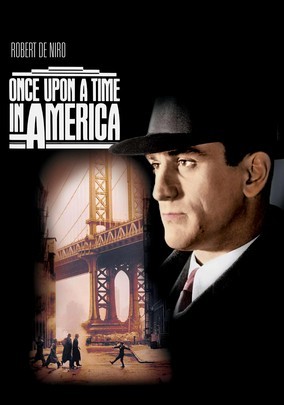
Once Upon a Time in America-1984

Once Upon a Time in America-1984

Director Sergio Leone

Starring Robert De Niro, James Woods

Top 250 Films #85

Scott’s Review #218

60028306

Reviewed January 19, 2015

Grade: A

An epic film, the extended directors cut at more than four hours in length, 1984’s Once Upon a Time in America is a film directed by Sergio Leone, who also directed the 1968 masterpiece Once Upon a Time in the West and numerous other westerns starring Clint Eastwood.

This particular film is in a different vein and not to be confused as any sort of sequel or related to the aforementioned film- this time Leone explores the crime drama genre rather than the western and does so in remarkable fashion.

The film tells the story of a group of Jewish friends who became involved in organized crime during the 1920s in New York City.

The main story is told via flashbacks as the central character, Noodles, played by Robert De Niro, returns to Brooklyn thirty years later to reunite with his former mobster friends.

In this way, the film is sectioned- the group of youngsters and kids and the same characters as adults.

Once Upon a Time in America has been met with much controversy since it was made. At the time of its release, the film was butchered as over an hour of footage was cut by the studio heads making the film largely uneven.

Fortunately, the restored version, at over three hours in length, is available for viewing. Furthermorethe director cut clocks in at well over four hours, and is the best version to watch. Due to so many cuts, other versions appear shoddy and out of order making the viewing experience difficult.

Once Upon a Time in America is largely underappreciated except for the die-hard cinema lovers most patient with the film, and deserves mention as an excellent crime epic drama.

The film contains many similarities to The Godfather and The Godfather Part II and the role De Niro plays is not too different from Vito Corleone in Part II.

However, the greatest contrast is that Once Upon a Time in America is more visually artistic than The Godfather films.

The film centers mainly on Noodle’s perspective as he enjoys youth in the Lower East Side of Manhattan where he meets his group of lifelong friends.

The focal point is his friendship with Max, the adult character played by James Woods, and his undying love for Deborah, played by Elizabeth McGovern as an adult.

As kids, they are worry-free, but gradually fall in with a group of older mobsters, first doing their dirty work, followed by venturing out on their own.

The themes of the film are loyalty, childhood friendship, betrayal, and greed as all of the characters change (or die) in the time that the film takes place.

When a mysterious letter forces Noodles to resurface in Brooklyn, we begin to understand the back story and the history between the friends as layers are slowly peeled back.

The film drags slightly in the middle section, but the first part and last parts are very well-made and absorbing.

Leone has a way of pacing the film that works- it is methodical, and nuanced, with wonderful set pieces and each period explored- 1920s, 1930s, and 1960s seem equally as authentic as the next one does.

I especially enjoyed the 1920s art direction- it revealed such a state of genuineness and felt like truly there in that period.

The relationship between Noodles and Deborah is an interesting one worth mentioning. Falling in love as youngsters (when Deborah was played by a very young Jennifer Connelly) they had an innocent, puppy-love relationship.

As adults, due to a violent, disgraceful act, their tender relationship is subsequently ruined and one might argue one of the characters turns quite unsympathetic.

Once Upon a Time in America (1984) is a sprawling epic film sure to be enjoyed by intelligent fans of the crime epic drama genre and specifically Sergio Leone fans- an underappreciated gem.
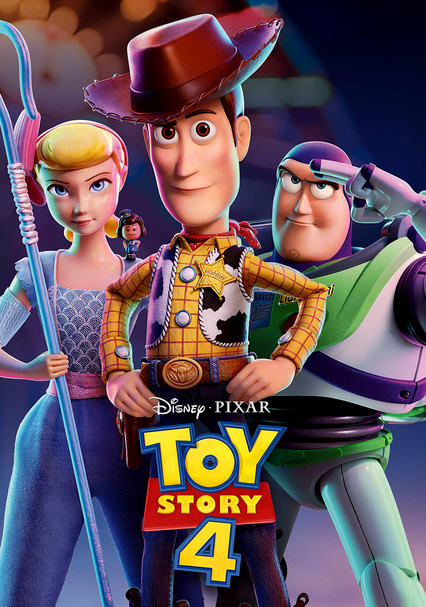
Toy Story 4-2019

Toy Story 4-2019

Director Josh Cooley

Voices: Tom Hanks, Tim Allen, Annie Potts

Scott’s Review #966

Reviewed December 10, 2019

Grade: B

Toy Story 4 (2019) is the fourth installment in the Pixar/Disney-produced Toy Story series, now nearly twenty-five years old!

The glitter is beginning to fade on a once-endearing franchise, and hopefully, this is the last one- additional segments are not needed unless desperation develops.

After a slow start and too many retread moments, the film shows bombast and familiar heart and tenderness in the finale, presumably wrapping up the long story with a neat bow.

The animation is vivid and colorful, almost astounding, and makes up for an otherwise unnecessary story.

In a flashback sequence, nine years after Toy Story 2, Bo Peep (Annie Potts) is donated to a new owner, and Woody (Tom Hanks) begrudgingly decides to maintain his loyalty to the owner, Andy.

Years later, and now a teenager, Andy donates a forgotten Woody to a young child named Bonnie, who lacks the affection for the toy that Andy had. When Bonnie makes and bonds with Forky, a toy made of plastic, Woody struggles to convince Forky that each is more than garbage.

When Bonnie and her parents embark on a summer road trip to an amusement park, Woody and other familiar faces are along for the ride.

The group meets other forgotten toys, some benevolent and some sinister, at the park and a nearby antique store. Woody’s dear friend and comic relief, Buzz (voiced by Tim Allen), is in the mix and helps all the toys realize that they are not forgotten and that they can still bring joy to children.

The film provides an unwieldy list of celebrities in major and minor roles. The incorporation of characters like Chairol Burnett, Bitey White, and Carl Reineroceros (voiced naturally by Carol Burnett, Betty White, and Carl Reiner) may not be necessary.

Still, it’s fun to watch the credits roll and see who’s who from the cast.

The minor characters are little more than window dressing, but the creativity is admirable.

The main story of abandonment, loyalty, and discarding of one’s toys is ample and pleasant, but has occurred in every segment thus far in the series.

Do we need to see this again? Yes, it is an essential message for both children and adults, but why not simply watch the first three installments of Toy Story, each brilliant in their own right?

Toy Story 4 plays by the numbers with little surprises.

One glaring notice is how almost every single adult is either incompetent or played for laughs.

I understand that the main draw is the toys and outsmarting the adults is half the fun, but when Bonnie’s father assumes his navigation system is on the fritz, rather than catching on to the fact that one of the toys is voicing the system, one must shake one’s head.

Suspension of disbelief is increasingly required in these types of films.

Toy Story 4 picks up steam in the final twenty minutes with a thrilling adventure through the amusement park and a cute romance between Woody and Bo Peep.

When the long-forgotten toy Gabby Gabby (Christina Hendricks) emotionally rescues a lost child, she is rejuvenated and breathes new life into both the child’s life and her own.

In a darling moment, Forky meets another creation named Knifey. Knifey suffers from the same existential crisis as Forky once did, and Forky immediately becomes smitten with her, both realizing that even though they are odd-looking, they still matter.

The nice lesson learned is that even toys from the 1960s and 1970s can provide warmth and comfort to a young child and are more than “of their time”.

This is a clear and bold message that resonates with human beings and acknowledges that advanced age does not come with an expiration date.

Everyone matters and brings importance. The underlying theme is heartwarming and central to the film, bringing it above mediocrity.

What should certainly be the final chapter in a tired franchise that continues to trudge along, the bright message and strong animations remain, but the film feels like a retread.

Given that Toy Story 3 was released in 2010, Toy Story 4 (2019) needs to bring the series to a conclusion before installments 5, 6, 7, or 8 result in a dead-on-arrival sequel.

Oscar Nominations: 1 win-Best Animated Feature Film (won), Best Original Song-“I Can’t Let You Throw Yourself Away”

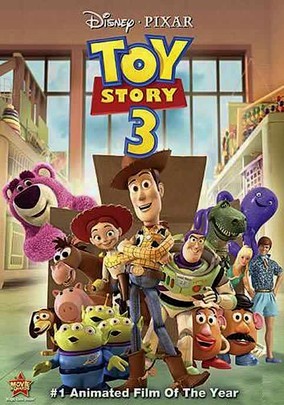
Toy Story 3-2010

Toy Story 3-2010

Director Lee Unkrich

Starring Tom Hanks, Tim Allen

Scott’s Review #562

Reviewed December 26, 2016

Grade: B+

It’s not easy for sequels to succeed in the creativity or originality categories, but surprisingly, Toy Story 3 (2010) is a fresh, imaginative, fun film.

The characters are charming, interesting, and heartwarming, and the film can avoid a sappy result.

Pixar has another hit.

Andy, now grown up and headed off to college, sees no reason to keep any of his childhood toys, now irrelevant and headed for the scrap box- at least that is what Woody, Buzz Lightyear, and friends, fear will happen as the dreaded day approaches.

They must scheme to avoid their fate.

Many interesting new toys are introduced to this franchise with unique personalities, thereby giving a fresh approach, yet not forgetting the past.

I adore how Toy Story 3 has many dynamic themes (loneliness, abandonment, togetherness), that play very well together with a nice message.

On a deeper level, the film reflects the modern era. People are so easily thrown out, forgotten, and abandoned, whether through a job, relationship, etc. so that makes this film a sad reality if one chooses to look at it that way, which most won’t.

Great movie for kids and adults alike with a meaningful, relevant message. The film is not a sugar-coated affair and offers a cold reality while remaining accessible.

Oscar Nominations: 2 wins-Best Picture, Best Adapted Screenplay, Best Animated Feature Film (won), Best Original Song-“We Belong Together” (won), Best Sound Editing