Category Archives: Lionel Jeffries

Chitty Chitty Bang Bang-1968

Chitty Chitty Bang Bang-1968

Director Ken Hughes

Starring Dick Van Dyke, Sally Ann Howes

Scott’s Review #1,490

Reviewed August 13, 2025

Grade: B

With a strong connection to James Bond, especially when looking beneath the most obvious details, Chitty Chitty Bang Bang (1968) offers pure escapist fun in the fantasy genre.

Albert R. Broccoli, who produced many of the 007 films, also serves as producer, a surprise given the differing genres. Furthermore, Ian Fleming, who wrote a series of James Bond books, also wrote the novel Chitty Chitty Bang Bang in 1964.

The screenplay was written by the famous British children’s author, Roald Dahl (James and the Giant Peach and Charlie and the Chocolate Factory), whose handprint can be noticed as well.

I missed some of the subtle and not-so-subtle trimmings upon my viewing until taking a deeper dive into research. I also did not know the James Bond connection before watching the film.

One day, in rural England, young siblings Jeremy and Jemima meet the striking Truly Scrumptious (Sally Ann Howes), who falls for their widowed father, Caractacus Potts (Dick Van Dyke), despite coming from different backgrounds.

Potts tinkers with various oddball inventions, including the family’s noisy rebuilt car, Chitty Chitty Bang Bang, which they name because of its unusual engine noises.

Caractacus tells Truly and the children a fantastical fable about the villainous Baron Bomburst (Gert Fröbe) and his evil designs on the Potts family car.

This becomes the central part of the film and the adventurous events that the family experiences.

For much of the film, events meander a bit more than I would have liked, and there seems not to be a clear direction. There were also too many over-the-top moments, mostly involving Caractacus’s wacky father (Lionel Jeffries) and various bumbling villain accomplices.

While enjoyable, the action felt silly and cartoonish.

After the intermission, the family ‘flies’ by car to a lavish castle owned by Bomburst in the childless nation of Vulgaria. There, they encounter frightened townspeople and the scary Child Catcher, wonderfully played by Robert Helpmann.

The colorful sets and art direction lend a helping hand to the secret of why there are no children in Vulgaria. We experience an odd yet witty toymaker played by Benny Hill and a splendid cat and mouse sequence involving human jack-in-the-boxes.

Later, a hidden grotto beneath the castle explains the mystery of where the town children are being kept and why.

While the Baron and Baroness (Anna Quayle) are unbelievably silly, the romance between Caractacus and Truly takes off and cements my investment in the pair.

Obviously and satisfyingly, they experience a happily ever after send-off after a couple of hiccups.

Van Dyke and Howes have dynamic chemistry despite Howes being a runner-up to Julie Andrews, who turned down the role, fearing it was too similar to Mary Poppins.

Fröbe (the diabolical title character from 1964’s Goldfinger) and the actor who played the familiar Bond character, Q (Desmond Llewelyn), make appearances. 

The Chitty Chitty Bang Bang car is practically a character in itself, boasting special powers and gadgets reminiscent of numerous unique Bond cars, and serves as a good comparison.

Finally, the name Truly Scrumptious is a similar character name, albeit much more family-friendly, to Pussy Galore from Goldfinger.

Of course, since Roald Dahl is involved, it’s no wonder children are in peril.

Other than the award-nominated title song, which is easy to hum and hard to forget, the other songs pale in comparison to this standout. I’d give second place to Trudy’s earnest ‘Lovely Lonely Man, a decent song.

For a family-ready affair with deeper particulars for eagle-eyed viewers to spot, Chitty Chitty Bang Bang (1968) is recommended around holiday time when other pleasant children’s musicals make their emergence.

The film would serve as a perfect warm-up act to the superior but companionable Oliver! (1968).

Oscar Nominations: Best Song- Original for the Picture, ‘Chitty Chitty Bang Bang’
Camelot-1967

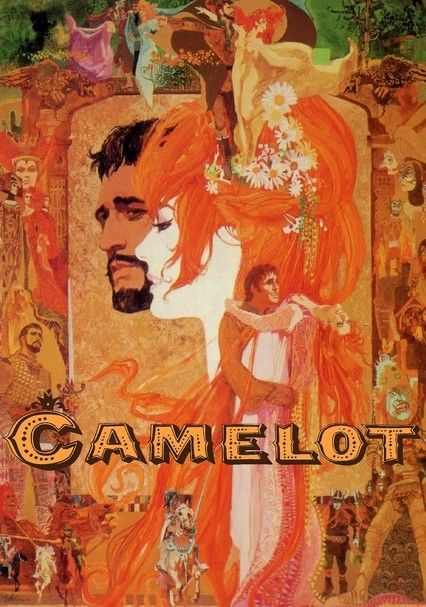
Camelot-1967

Director Joshua Logan

Starring Richard Harris, Vanessa Redgrave, Franco Nero

Scott’s Review #1,370

Reviewed June 21, 2023

Grade: A-

Camelot (1967) is an adaptation of the well-known Broadway spectacle that explores the creation of the Knights of the Roundtable. It’s medieval times, and King Arthur is the main character.

Unfortunately, original stage stars Richard Burton and Julie Andrews declined to participate. Still, their replacements, Richard Burton and Vanessa Redgrave are more than adequate in their prominent roles.

At an epic length of nearly three hours, not every moment is the edge of your seat, and some lagging exists, but the film does justice to the stage production only with a big budget to add extravagance.

The setting and experience are pure magic, not only because of the far-removed time. The Shakespearean elements are strong as royalty and entitlement mesh with scheming, jealousy, and dangerous romance.

This makes for some juicy soap opera drama.

After the arranged marriage of Arthur (Harris) and Guinevere (Redgrave), the king gathers the noble knights of the realm to his Round Table. The dashing Lancelot (Franco Nero) joins but soon falls in love with Guinevere.

When Arthur’s illegitimate and conniving son, Mordred (David Hemmings), reappears in the kingdom and exposes the secret lovers, Arthur finds himself trapped by his own rules into taking action against his wife and closest friend.

There are some dull moments to face at epic length, especially in the first half. I tuned out once or twice but then was whisked back to the dramatic events.

The great moments are genuinely outstanding, with enough punch to pack a wallop, emotionally speaking.

During a sequence when Lancelot is challenged to a game of jousting with some knights, events turn deadly, and one knight, Sir Dinadan, is critically injured. Horrified, Lancelot pleads for Sir Dinadan to live, and as he lays hands on him, Dinadan miraculously recovers.

The scene is fraught with emotion as a decisive moment occurs between the men. It’s also pivotal to the storyline because it links Lancelot with Guenevere and sets off a romantic chain of events.

Guenevere is so overwhelmed and humbled that her feelings for Lancelot begin to change. Despite his vows of celibacy, Lancelot falls in love with Guenevere.

More than one song is lovely in Camelot, and as the production went on, I yearned for more musical numbers.

My favorite is the coy  “The Lusty Month of May,” which appears when Guinevere and the women frolic and gather flowers to celebrate the coming of spring. Later, Lancelot and Guenevere sing of their forbidden love and how wrong life has all gone in ‘I Loved You Once In Silence.’

In the eyes of the law, the lovers are to be punished so they are aware they are not long for this world.

Visually, Camelot is a spectacle that is rich with style and pizazz. Whimsical colors and a ton of vibrant and fragrant flowers appear regularly amid fields of greens and forests of trees.

The castles and battlefields also support gothic structures and masculine power that perfectly balances the exquisiteness of other aspects.

This more than makes up for any drudgery the story might have. It’s nice to sit back and be fulfilled by the cinematic beauty, especially considering the romance at the heart of the picture.

So when the story drags, one can enjoy the visuals and escape momentarily.

Also impressive is the story of friendship and how a woman’s affectionswoman can tear apart two male friends.

Camelot (1967) is a behemoth epic that requires patience. Some parts flat-out drag. But the daring and compelling triangle between the three leads usually turns the experience into an above-average thrill ride.

Oscar Nominations: 4 wins-Best Art Direction (won), Best Cinematography, Best Costume Design (won), Best Costume Design (won), Best Original Song Score or Adaptation Score (won), Best Sound

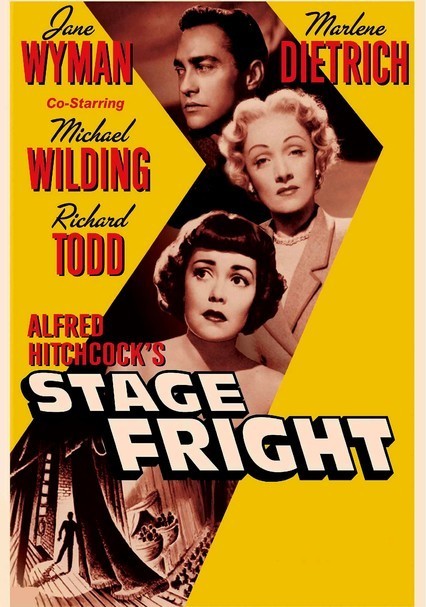
Stage Fright-1950

Stage Fright-1950

Director Alfred Hitchcock

Starring Jane Wyman, Marlene Dietrich, Michael Wilding

Scott’s Review #1,160

Reviewed July 9, 2021

Grade: A-

Stage Fright (1950) is a British film directed by Alfred Hitchcock before his American invasion.

The film feels like a hybrid British/American project with the leading lady, Jane Wyman, being American, but otherwise, it is set in London with many British actors.

Hitchcock mixes plenty of film noir influences with the typical thrills and suspense, creating an excellent film that flies under the radar compared to his other films.

Wyman is cast as an attractive aspiring actress who works on her craft by going undercover to solve a mystery. The film has elements of Nancy Drew, and it’s fun to watch Wyman, who would become Mrs. Ronald Reagan before he entered politics and later became President of the United States.

She reportedly divorced him because she had little interest in entering the political spectrum by association.

The action gets off to a compelling start with two characters driving in a car in apparent peril. Hitchcock loved driving scenes like these. It is learned that the police think actor Jonathan Cooper (Richard Todd) is a murderer, and now they’re on his tail.

He seeks shelter with his ex-girlfriend Eve (Wyman), who drives him to hide with her father, Commodore Gill (Alastair Sim).

He explains that it was his lover, the famous and snobbish actress Charlotte Inwood (Marlene Dietrich), who killed the victim (not coincidentally, her husband). Convinced that Jonathan is innocent, Eve plays detective and assumes multiple disguises, slowly developing feelings for Detective Inspector Wilfred O. Smith (Michael Wilding).

Once embroiled in a web of deception, she realizes that Shakespeare was right and that all the world is a stage.

Wyman is the Hitchcock brunette as opposed to his later fascination with the blonde bombshell. Therefore, her role is more sedate and astute than the sex appeal that would come with Hitchcock’s later characters.

Eve closely resembles Charlie, the character Teresa Wright played in 1943’s Shadow of a Doubt. They are both astute and investigative, with a mystery to unravel. Interestingly, they both fall for detectives.

All the glasses! Hitchcock’s fetish for women wearing glasses is on full display, especially with the character of Nellie, a cockney opportunist played by Kay Walsh. Look closely, and one can spot several minor or background ladies sporting spectacles, and even Eve dons a pair as a disguise.

The director’s daughter, Pat Hitchcock, plays a small role as she would in Strangers on a Train (1951) and Psycho (1960).

Speaking of Strangers on a Train, there are similarities to mention.

Both involve a tit-for-tat exchange in which one character requests another kill someone for a payoff or other motivation.

Marlene Dietrich is as sexy as ever in Charlotte’s pivotal role. She is also self-centered, self-absorbed, and thoughtless. She constantly mispronounces Eve’s fictitious name and barely notices that she is covering for her regular maid/dresser.

But is she evil and capable of killing her husband?

Stage Fright has a thrilling finale. In the climax, the audience finally finds out who has been telling the truth, who has been lying, and what explanations are revealed. There is a pursuit, an attempted killing, and a shocking death by way of a falling safety curtain in the theater, naturally.

What one would expect from a Hitchcock final act.

The focus on theatrical stage actors is a nice topic and adds to the existing drama, as the implications of playing various roles are prominent. So is the prominence early on of the Big Ben landmark in London and other location trimmings.

Stage Fright (1950) doesn’t get the love saved for other Hitchcock masterpieces, and that’s a shame because the film is excellent.