Category Archives: Rami Malek

Bohemian Rhapsody-2018

Bohemian Rhapsody-2018

Director Bryan Singer

Starring Rami Malek

Top 250 Films #239

Scott’s Review #836

Reviewed December 3, 2018

Grade: A-

Crafting a biography of a performer with a personality the size of Freddie Mercury is challenging, but it can be done successfully.

The filmmakers of Bohemian Rhapsody (2018) opt to go in a decidedly mainstream direction, proving a wise choice as the film becomes an enthralling foot-stomping crowd-pleaser.

While nitpicking about accurate timelines and rigid facts may be disappointing, others who are content to sit back and enjoy a heartfelt biopic will undoubtedly love the film.

Rami Malek performs flawlessly as the legendary British rock band Queen’s singer Mercury. I will go out on a limb and state that this could be the young actor’s crowning achievement and his “role of a lifetime”.

The film wisely chronicles the singer’s initial struggles finding his bandmates and the band’s subsequent rise to fame and fortune during the 1970s and 1980s.

Predictably, as with many rock bands, infighting, drug use, and jealousies reared their ugly heads.

Other points of interest featured are Mercury’s personal life and his HIV diagnosis, culminating in his ultimate death in 1991 at the tender age of forty-five.

Less so a biography of the band, Mercury takes center stage as the film’s point. With his four-octave vocal range and operatic sensibilities, the star was a force to be reckoned with. He was nobody who would back down from either studio executives or pesky reporters eager for a scoop about his personal life and preference for male companions.

Malek sinks his teeth into an enormous role that is undoubtedly intimidating for most actors and an unbelievable challenge for the casting department. With boldness and charisma for miles, what actor could ever fill this challenging role?

Malek completely shines as he dons dentures to emulate Mercury’s famous overbite, a fact that the film nearly over exaggerates.

With wounded eyes and clever dialogue, Malek delivers witty one-liners and comical comebacks with a smirk, a hand wave, or a retort of “my dear”. The actor is careful to perfect the dramatic and emotional scenes flawlessly and portray the singer as a lonely and isolated being.

To the delight of most classic rock fans, Bohemian Rhapsody features many songs from the Queen catalog. “Killer Queen,” “Hammer to Fall,” “Another One Bites the Dust,” “We Will Rock You/We Are the Champions,” and the game-changing “Bohemian Rhapsody” are featured, along with the histories and stories behind many of these legendary hits.

Perhaps the loveliest tune, “Love of My Life”, which Mercury wrote for his fiancée Mary Austin, is prominently featured.

The film concludes with the band’s fantastic performance at Wembley Stadium in London for the Live Aid event 1985. A breathtaking finale, this final sequence is jaw-dropping with emotion, heart, and entertainment, and is the film’s finest moment.

As the story reaches its climax at this point with Mercury’s HIV diagnosis (a death sentence for gay men in the 1980s) and revelation to his bandmates, the lengthy scene will not leave a dry eye in the house.

A weakening Mercury powered through his illness to deliver a dynamic performance.

Bohemian Rhapsody’s (2018) numerous historical inaccuracies and incorrect timeline of events have been called into question.

Also, the fact that two members of Queen (Brian May and Roger Taylor) had a staggering amount of creative control is cause for alarm.

Additionally, further reading suggests that the characters of Mary and Mercury’s manager, Paul, may not have been as good or bad as they were respectively written. These points may be valid, but the film is a major champion as a source of good entertainment.

Oscar Nominations: 4 wins- Best Picture, Best Actor- Rami Malek (won), Best Sound Editing (won), Best Sound Mixing (won), Best Film Editing (won)
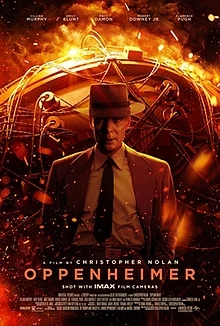
Oppenheimer-2023

Oppenheimer-2023

Director Christopher Nolan

Starring Cillian Murphy, Robert Downey Jr., Emily Blunt

Scott’s Review #1,384

Reviewed August 1, 2023

Grade: A

Knowing the films of Christopher Nolan who directed works like The Dark Knight Trilogy (2005-2012), Inception (2010), and Dunkirk (2017) I expected what I would be served with by his new film Oppenheimer (2023).

This would include a big booming soundtrack and an arguably more ‘guys’ genre film, but with intelligence, than other contemporary hits like Barbie (2023).

Dark and looming with complexities are usual for Nolan so I settled in for a three-hour epic journey centered on the atomic bomb and physics that has unexpectedly become a blockbuster.

Speaking of the pink phenomenon its simultaneous release with Oppenheimer led to the “Barbenheimer” phenomenon on social media, which encouraged audiences to see both films as a double feature.

This forever links the two vastly different films that were responsible for filling movie theaters once again.

I expected to enjoy Oppenheimer but was jarred (in a good way) by the sheer brilliance of its construction. Prepared for more mainstream fare that typically follows a biography or historical piece I was instead overly fascinated by the experimental elements enshrouding a more conventional film.

During World War II, Lieutenant Colonel Leslie Groves Jr. (Matt Damon) appoints physicist J. Robert Oppenheimer (Cillian Murphy) to work on the top-secret Manhattan Project.

Oppenheimer and a team of scientists spend years developing and designing the atomic bomb. Their work came to fruition on July 16, 1945, as they witnessed the world’s first nuclear explosion, forever changing the course of history.

The film is constructed marvelously in every way and is authentic to the eye. The first notice is that it feels like it’s the 1940s 1920s or 1960s or anywhere in between depending on where the film goes.

The art design, costumes, and makeup feel natural rather than stagey which helps its audience escape into the scientific world.

Speaking of, Nolan constructs the film in a series of pockets and goes back and forth between periods. We see Oppenheimer many times as an aspiring upstart with visions, a confident, established physicist, and in 1963 when President Lyndon B. Johnson presented him with the Enrico Fermi Award as a gesture of political rehabilitation.

His personal life is also explored.

Many, many scenes shift back and forth involving different characters at different ages. Most of the scenes in the 1940s take place in the desert at Los Alamos, New Mexico while the later years are set in a stuffy conference room where Oppenheimer is grilled for his left-leaning and suspected Communist politics.

The cinematography led by Hoyte van Hoytema provides some edgy moments especially when Oppenheimer descends into frightening and psychedelic hallucinations of those suffering the aftereffects of the atomic bomb. Images of peeling and melting faces are terrifying.

Cillian Murphy successfully makes Oppenheimer sympathetic especially after he creates the bomb and is left forgotten by his government.

Various moments in the film showcase Murphy at his best. After relinquishing his deadly bomb after a test the government callously tells Oppenheimer that ‘they’ll take it from here’. The look of dread, regret, and sadness in Murphy’s crystal blue eyes speaks volumes.

Another great scene occurs when President Harry S. Truman (Gary Oldman) a left-leaning democrat calls Oppenheimer ‘a crybaby’ when he expresses interest in returning land to the American Indians.

The supporting cast is a bevy of riches with several top-caliber actors appearing in cameos. My standouts in larger roles are Robert Downey Jr. shredding his Iron Man superhero persona as a slighted and venomous Lewis Strauss, intent on revoking Oppenheimer’s security clearance, and Emily Blunt as the boozy biologist and former communist wife of Oppenheimer.

My biggest takeaway from Oppenheimer (2023) though is a powerful one. The difference between the United States of America during and post World War II and in present times, 2023.

Then, a patriotic infrequently questioned nation brimming with pride and glory, where nationalism was rampant and expected and those with foreign respect were cast aside as traitorous.

Now, a divided country half of whom support an ideology based on hate, racism, and cultlike dedication to a corrupt ex-president, and the other focused on diversity inclusion, and equality for all.

This film resonated so powerfully well and in so many different ways.

Oscar Nominations: 7 wins-Best Picture (won), Best Director-Christopher Nolan (won), Best Actor-Cillian Murphy (won), Best Supporting Actor-Robert Downey Jr. (won), Best Supporting Actress-Emily Blunt, Best Adapted Screenplay, Best Film Editing (won), Best Cinematography (won), Best Costume Design, Best Production Design, Best Original Score (won), Best Sound, Best Makeup and Hairstyling

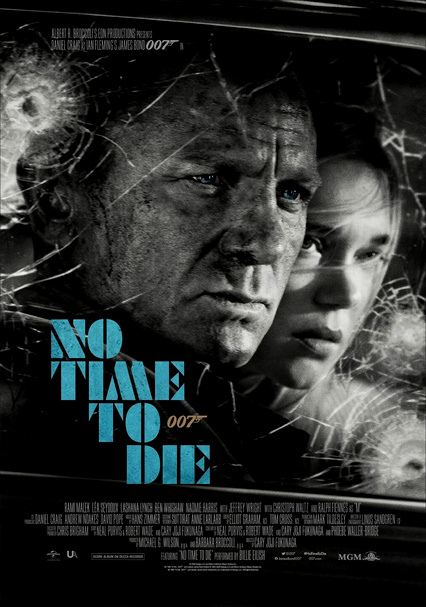
No Time to Die-2021

No Time to Die-2021

Director Cary Joji Fukunaga

Starring Daniel Craig, Léa Seydoux, Rami Malek

Scott’s Review #1,236

Reviewed March 6, 2022

Grade: A-

Celebrating the twenty-fifth in the iconic James Bond film franchise, No Time to Die (2021) is Daniel Craig’s fifth and final appearance as the British MI6 agent.

As of this writing, it is yet to be determined who will next step into the shoes of the legendary character, but Craig was able to make the character his own since his debut in Casino Royale (2006).

He retains his hunky and muscular portrayal with a sullen and serious tone.

No Time to Die is visually and stylistically similar to the recent handful of films that came before it, with a slick and modern look and feel.

The difference is that the film is about relationships and has a shocking conclusion that nearly rivals Mrs. James Bond’s death in On Her Majesty’s Secret Service way back in 1969.

James Bond utters a few quips or one-liners, and we can agree that Craig does not play the character in the same way that Roger Moore did. But, there exists a dark and dreary tone throughout and more than one surprising death.

It’s a serious affair.

I love the parallels to On Her Majesty’s Secret Service that emerge mainly in the beginning and end of the film.

The inclusion of the famous Louis Armstrong song ‘We Have All the Time in the World’ recalls both love and loss experienced by Bond and is played in full during the closing credits.

This is a special treat for fans of that film, myself included. I felt emotionally connected to No Time to Die, which was a significant score for it.

In an extended opening sequence, a young girl named Madeleine witnesses the murder of her mother by terrorist Lyutsifer Safin in a failed attempt to murder her father, Mr. White (appearing in Casino Royale). Madeleine shoots Safin (Rami Malek), but he survives and rescues her after she falls into a frozen lake. This connects them for life.

In the present, after the capture of villain Blofeld, Madeleine (Léa Seydoux) is vacationing in Southern Italy with Bond when Spectre’s assassins ambush him. He incorrectly assumes Madelaine has betrayed him, and he ends their relationship after they escape death.

Depressed, Bond retires to Jamaica but returns to action after his friend Felix Leiter (Jeffrey Wright) from the CIA turns up asking for help. The mission to rescue a kidnapped scientist turns out to be far more treacherous than expected, leading Bond onto the trail of a mysterious villain armed with dangerous new technology.

With the emotional and relationship investments successfully sealed, any worthy Bond film should have great action with interesting locales, stellar villains, and relevant Bond girls. In this regard, the film gets a solid B+ with those as mentioned earlier, bumping it up a notch.

The chase throughout southern Italy is fabulous, with delicious scenery of the culturally lavish country getting the film off to a fast start.

Other sequences in Chile and Cuba show the sophistication and investment in quality locales. Naturally, London is heavily featured, and I adore the grand and frequent aerial views that allow prominent landmarks to be discovered.

Although actor Malek can be creepy in his roles and play a dastardly villain, I wasn’t delighted with the character of Safin. Not appearing in an obvious fashion until midway through his screen time is limited, and his motivations murky- I wanted more.

The casting is terrific, but the character is underwhelming and not explored to his full potential.

Christoph Waltz’s limited appearance as an imprisoned Blofeld is excellent, and double agent Logan Ash (Billy Magnussen) and scientist Obruchev (David Dencik) prove quality secondary villains.

The storyline with Felix and the returns of Moneypenny, Q, and M (now played by Ralph Fiennes) is solid.

Main Bond girl Madelaine did not win me over at first, but by the end, I was heavily invested, especially since she is a powerful female character and a true romantic partner to Bond. A new female 007, played by Lashana Lynch, is a progressive inclusion that breathes new life into MI6.

May both appear in the future?

Time, and perhaps another viewing, will determine how No Time to Die (2021) ranks compared to other Bond films. At a hefty two hours and forty-three minutes, the film drags in the middle section, and some characters receive limited exploration.

The nods to history and the heavy emotional investment kept me glued to my seat.

Oscar Nominations: 1 win-Best Original Song-“No Time to Die” (won), Best Sound, Best Visual Effects

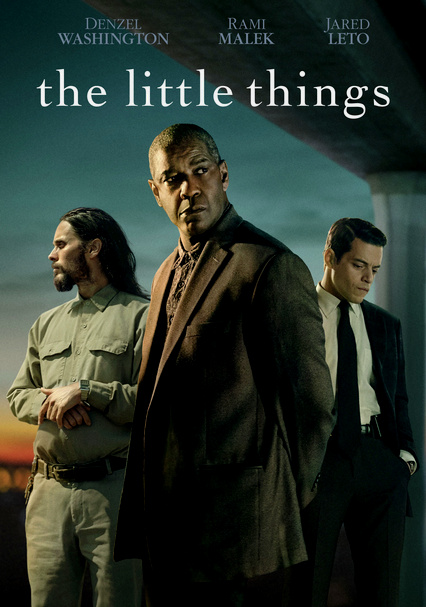
The Little Things-2021

The Little Things-2021

Director John Lee Hancock

Starring Denzel Washington, Rami Malek, Jared Leto

Scott’s Review #1,191

Reviewed November 5, 2021

Grade: B

The serial killer genre in film always fascinates me. Gems like Dirty Harry (1971), The Silence of the Lambs (1991), Seven (1995), and Zodiac (2007) immediately spring to mind as top-of-the-heap works.

John Lee Hancock, who directs The Little Things (2021), thinks so too, as he borrows from those pictures throughout his film.

The film features superior acting and a fantastic mood, complemented by practical musical score elements and absorbing cinematography of Los Angeles and its surrounding areas.

The script must have been compelling enough to attract heavyweights like Washington, Malek, and Jeto to join on board.

Despite these wins, The Little Things is lackluster and ultimately disappoints. I was ready to award it a solid B+ if not for the confusing and unsatisfying conclusion, which reminds me of a weak copy of those mentioned above, Seven.

Deputy Sheriff Joe “Deke” Deacon (Washington) joins forces with Sgt. Jim Baxter (Malek) to search for a serial killer who’s terrorizing Los Angeles. The blueprint is similar to a case that Deacon worked on and ended with a deadly mistake and his resulting heart attack.

As the pair track the suspected culprit, a loner named Albert Sparma (Leto), Baxter becomes aware of Deke’s inner demons and risks going down the same emotionally wrecked path.

A cat-and-mouse game ensues with Sparma continually toying with both Deke and Baxter.

The story is familiar territory and sets the stage for the rest of the film. How many times in film have we seen a detective tortured over a case? Despite Sparma being the only real suspect and presumed serial killer, we never do learn whether or not he did the deeds.

One girl who escaped the killers’ clutches may recognize Sparmas’ boots, but is dismissed after concluding that, since he is in police custody, he must be the killer.

The opening sequence is excellent despite using a direct rip-off of the scene in The Silence of the Lambs where the girl is cruising down an empty desert road at high speed, singing a rock song without a care in the world.

Thankfully, they had her crooning a different song, but the scene mirrors the other. She is pursued by a killer in another car. The scene is a terrific way to start.

The ensemble does good work with the characters they play. Leto gets the showiest role while Washington plays yet another police detective, a role he now can probably play in his sleep, but always does well.

Malek was cast based on the success of his Oscar-winning portrayal of Freddie Mercury in Bohemian Rhapsody (2018).

Leto received enough acclaim to earn a Screen Actors Guild Award nomination and a Golden Globe nomination. This prompted me, and undoubtedly others, to see The Little Things, which suffered at the box office due to the COVID-19 pandemic.

I didn’t buy the period of 1990-1991 for a second, regardless of how many shiny Chevy Impalas were used in the production. None of the characters looked like the time that it was supposed to be, though I admired the now old-fashioned diners and storefronts they used.

I don’t know much about Hancock, who both directs and writes The Little Things, but looking at his filmography, he has produced such works as The Blind Side (2009) and Saving Mr. Banks (2013).

Since both of these films are safer works, it’s unsurprising that much of the film resembles watching an episode of CSI.

Hancock could do with a dose of rawness over sleekness in his next film.

The Little Things (2021) pales in comparison to other, better-known genre films and will not be remembered well, despite making a valiant effort to play with the big boys.

Unfortunately, it’s a minor league experience that borrows too heavily from other films and therefore lacks a distinct identity.

I shudder to think of the result if not for the big stars who appear.

Short Term 12-2013

Short Term 12-2013

Director Destin Daniel Cretton, Lakeith Stanfield

Starring Brie Larson

Scott’s Review #149

70272893

Reviewed August 6, 2014 

Grade: C+

Having just viewed Short Term 12 (2013), I am not sure I am getting all of the “this movie is brilliant” or “beyond amazing”, or glowing praise surrounding the film.

The film is set in a group home for troubled teens and centers around the supervisor of the home named Grace (Brie Larson). Grace runs the home with her boyfriend and other twenty-something, mostly former troubled youths.

The film’s focal point is Grace and both her problems (she is pregnant and her abusive father is being released from prison) and her relationships with the teens currently staying in the group home.

The film is fairly engaging but seems a bit forced and not gritty enough given the subject matter.

I enjoyed the relationship between Grace and a new charge, Jayden, whom she befriends. The group of teens is almost too perfectly cast, however- with a mix of races and stereotypes, the kids did not come across as genuine.

I would have liked to see more backstory for some of the kids besides the two that were given one.

Subjects were introduced but not followed through with- Why was Grace’s father never introduced onscreen? Where was the mother? Her childhood issues were mentioned only in passing. Some of Grace’s actions were unrealistic and out of character for a counseling supervisor.

Would she smash the windows of one of the teen’s father’s cars out of anger and not consider the repercussions? And what was with the constant poop jokes, especially in the first ten minutes?

That was dumb and out of place.

The film feels glossed over and I didn’t feel the realism- almost like a CBS television drama with swear words added to seem harsher. The subject was brave, but many more details could have been delved into and explored in Short Term 12 (2013).

Independent Spirit Award Nominations: 1 win-Best Female Lead-Brie Larson, Best Supporting Male-Lakeith Stanfield, Best Editing (won)

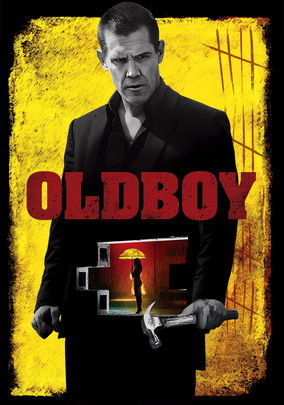
Oldboy-2013

Oldboy-2013

Director Spike Lee

Starring Josh Brolin, Elizabeth Olsen

Scott’s Review #97

70274810

Reviewed July 8, 2014 

Grade: B-

Oldboy (2013) is a United States remake of the original South Korean film from 2003 that tells the story of a successful advertising executive named Joe Doucett, played wonderfully by Josh Brolin.

He is mysteriously kidnapped and kept prisoner in a private one-room facility, where he is served the same three meals daily for twenty years, while framed for the murder of his wife.

Through the years he is kept abreast of his daughter’s life events through videos. He is just as mysteriously released after twenty years and sets out to exact revenge on his former captors.

Brolin is quite charismatic and appealing (kudos for his multiple nude scenes) in the lead role and it is nice to see Michael Imperiolo in an off-beat supporting role.

The premise is interesting but the type of film where everything that happens is plot-driven, the villains completely manipulate events, and the film becomes implausible and, via flashbacks, reminds me of the CBS series Cold Case.

Forgetting that Brolin’s character becomes superhero-like and chiseled after twenty years in captivity, the film is a good, solid, fun, thrill-ride, and bloody at times.

It has aspects of a nice whodunit to a point.  It has so many plot holes that I lost count, but somehow it is enjoyable at the same time.

Oldboy is never boring and even unpredictable at times.

Many questions run through the viewer’s head. Who is the villain? What could the villain’s motivation be? Friend or foe?

Is the film unrealistic, and ludicrous at times, but also highly enjoyable?