Category Archives: John Bennett

Lawrence of Arabia-1962

Lawrence of Arabia-1962

Director David Lean

Starring Peter O’Toole, Alec Guinness, Omar Sharif 

Top 250 Films #139

Scott’s Review #355

60028312

Reviewed January 9, 2016

Grade: A

Lawrence of Arabia (1962) is quite a grand film that must be seen on a large screen. This will ensure full appreciation of the enormous scale of the production.

Numerous shots of objects in the distance are featured, and the small screen dulls the experience.

An excellent film from top to bottom and groundbreaking at the time, due to the scope and vast proportions of the production, Lawrence of Arabia achieves its place in cinematic history.

It’s a treat to revisit from time to time.

The film is divided into two parts with an intermission, as with epics that last nearly four hours.

Peter O’Toole stars as T.E. Lawrence, a bored British Army Lieutenant who talks his way into a transfer to the Arabian desert.

As the film opens, it is 1935, and Lawrence has just been killed in a motorcycle accident. While this concept of revealing the ending and working backward is common in current films, it was novel in 1962 when the film was made.

While in Arabia, Lawrence successfully bonded bitter rival tribes to unite against Turkish oppression during World War I. He meets two young guides and other central characters there: Prince Faisal (Alec Guinness) and Sherif Ali (Omar Sharif).

Much of the film features the battles between the rival tribes and Lawrence’s struggle to achieve peace.

Many location sequences of Lawrence and company traveling miles and miles of hot desert are featured.

Some complain that Lawrence of Arabia is too slow-moving a film, but that is its selling point. I find the scenes of the group languishing across the desert incredibly lush and rich in meaning.

The intense heat and beating sun are fantastic in their cinematic grandeur. The film is meant to take its time—precisely what an experience in the Arabian desert would be like—and the mountainous dunes and swirling winds are brilliantly filmed.

David Lean is the king of the sprawling epic, and Lawrence of Arabia is his crowning achievement.

Lawrence is a well-written, layered, and complex character. He is not easy to describe or understand, which is also to the film’s credit.

The sheer weight loss that O’Toole underwent over the two years it took to film Lawrence of Arabia is impressive enough, but he was also a tortured soul emotionally.

The epic film Lawrence of Arabia (1962) requires a half-day of dedicated viewing, but it is worth every minute.

For a reminder of what an actual, breathtaking film looks like sans the oversaturated CGI and quick edits, one should take a deep breath and appreciate this work of art for its majestic look.

Oscar Nominations: 7 wins-Best Picture (won), Best Director-David Lean (won), Best Actor-Peter O’Toole, Best Supporting Actor-Omar Sharif, Best Screenplay Based on Material from Another Medium, Best Music Score-Substantially Original (won), Best Sound (won), Best Art Direction, Color (won), Best Cinematography, Color (won), Best Film Editing (won)
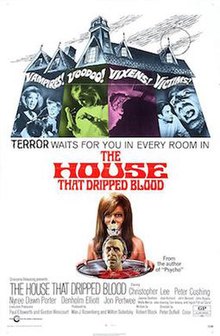
The House That Dripped Blood-1971

The House That Dripped Blood-1971

Director Peter Duffell

Starring Christopher Lee, Peter Cushing

Scott’s Review #1,408

Reviewed October 31, 2023

Grade: B+

Any horror project featuring Christopher Lee and Peter Cushing is worth a watch, and The House That Dripped Blood (1971) includes both actors, though, sadly, not in any scenes together.

The British horror anthology is spooky and perfect for the Halloween season. The action surrounds a hulking house where bad events occur regardless of who inhabits it.

The film is divided into four short stories explaining the circumstances surrounding the individual inhabitants.

The production is low budget, which is perfect for a film like this, but the title makes it seem bloodier and gorier than it is.

All of the stories were initially written and later adapted into scripts by Robert Bloch.

Below is a summary, review, and rating of each vignette.

Framework: B+

Shortly after renting an old country house, a well-known film star, Paul Henderson, mysteriously disappears, and a local Sergeant calls Inspector Holloway (John Bennett) from Scotland Yard to investigate.

When he inquires at the local police station, he is told some of the house’s history.

He soon learns how four tenants met macabre fates.

The ‘Framework’ sequence sits between the vignettes and provides good context, but it’s largely just the interplay between Inspector and Sergeant.

This serves as an introduction to each chapter and ties the events together.

Method for Murder: A-

Charles Hillyer (Denholm Elliott) is a struggling writer who specializes in horror stories. He and his wife Alice (Joanna Dunham), move into the house thinking it will serve as inspiration. Charles creates a devious character named ‘Dominic’ after he ‘imagines’ seeing him outside a window.

Charles soon starts to see Dominic, who begins stalking and tormenting him.

My second favorite of the four chapters, I all but guessed the ‘twist’ from the get-go, but I was surprised by the ‘twist on top of a twist,’ which pleased me.

It’s great when a villain thinks they’ve gotten away with murder, only to be murdered themselves.

Waxworks: B+

Retired stockbroker Philip Grayson (Cushing) moves into the house with plans to read, garden, and relax. Though initially he occupies himself with his hobbies, he quickly becomes lonely. One day, while wandering around town, he happens upon a wax museum.

Grayson explores the museum and finds a sculpture of a dead woman he had loved. The museum’s proprietor explains that he based the likeness of the sculpture on his late wife, who had been executed after murdering his best friend.

Despite featuring Cushing, it’s a moderately good story but lacks the compelling nature of a couple of the other vignettes.

It’s less about the house itself and more about the wax museum and obsession as the subject matter.

While decent, Waxworks didn’t blow me away either.

Sweets to the Sweet: A

Widower John Reid (Lee) moves into the house next door along with his odd young daughter Jane (Chloe Franks). John hires former teacher Ann Norton (Nyree Dawn Porter) to tutor Jane. Ann bonds with Jane and helps her overcome a fear of fire.

Ann suspects John of abusing Jane, but is there more to the story? Why doesn’t he let Jane play with other children or with toys, and why does he do his best to keep her isolated?

Is there something wrong with Jane?

This is the best installment and has a resemblance to The Innocents (1961), featuring a governess and a spooky child. Viewers will find themselves switching allegiances to the characters as the story moves quickly.

The Cloak: B+

Finally, horror film actor Paul Henderson (Jon Pertwee) moves into the house while starring in a vampire film being shot nearby.

Irritated by the cast and crew’s lack of maturity or talent, he decides to buy a realistic cloak for his character (who happens to be a vampire). The shop he makes his purchase from is run by the enigmatic Theo von Hartmann (Geoffrey Bayldon), who eerily offers him a black cloak.

This one plays like a Hammer Horror Dracula installment and is good but not great. Less happens within the confines of the house than I’d like, and Paul is an unlikable character.

The action on the movie set and in the shop are the best parts.

The Mirror Crack’d-1980

The Mirror Crack’d-1980

Director Guy Hamilton

Starring Angela Lansbury, Elizabeth Taylor, Rock Hudson

Scott’s Review #1,371

Reviewed June 22, 2023

Grade: B+

I’m a sucker for any sort of whodunit especially based on an Agatha Christie novel. Some of her treasures like Murder on the Orient Express and Death on the Nile have made for quality filmmaking in the crime thriller genre.

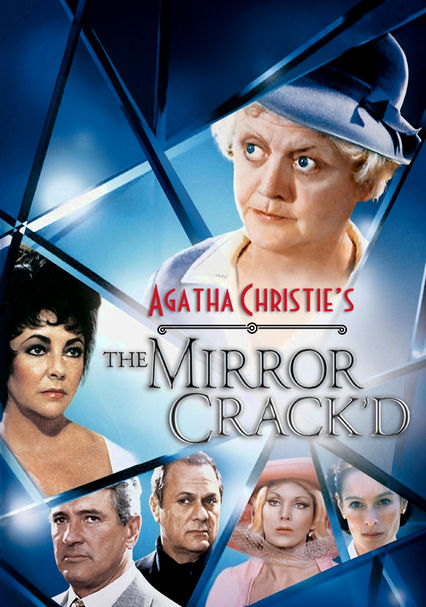
With The Mirror Crack’d (1980) director Guy Hamilton (he directed four James Bond films) collects some of Hollywood’s finest stars and creates an adaption with British authenticity and a knock-it-out-of-the-park finale twist that I didn’t see coming.

Any fans of the long-running CBS sleuth series Murder, She Wrote from the 1980s are treated to gleeful clues that the film influenced the series. Both star the iconic Angela Lansbury.

The main character and murder solver in The Mirror Crack’d is a kindly old woman named Miss Marple played by Lansbury. The actress is aged via makeup to look much older than she was at the time. Lansbury does a good job with the speech and mannerisms of one of her character’s age.

Jane Marple (Lansbury) is tickled pink when two glamorous Hollywood actresses, Marina Rudd (Elizabeth Taylor), and Lola Brewster (Kim Novak), arrive in her quaint English village to shoot a movie.

Drama is sprinkled in when it’s revealed that the two actresses despise each other.

At a welcome reception related to the film, Marina engages in conversation with a longtime fan named Heather Babcock and is momentarily distracted. Soon afterward, the fan collapses and dies, poisoned by a drink intended for Marina.

Pleasure is had by the incorporation of so many stars some way past their prime. My favorite is the dynamic duo of Taylor and Hudson as a married couple. Fans will recall that Hudson’s sad death due to A.I.D.S. in 1985 led to Taylor championing a crusade for research with which the government then refused to be associated.

Her efforts and star power led to tremendous progress to be made as the disease ravaged the world’s LGBTQ+ community.

So, any scene centered on Taylor and Hudson is heartfelt and a pure treat.

Otherwise, the cast of characters is positioned in a familiar pattern to reveal almost everyone would have a reason to kill the glamorous star. Could it be her sexy blonde rival? Or the cranky producer of the film played by Tony Curtis? Or even her hubby Jason?

Geraldine Chapman appears as Ella Zielensky who is secretly in love with Jason and has a good reason to want Marina out of the way. Especially suspicious are her trips to a phone booth to call an unknown person accusing them of murder.

The setting adds value as the small English village is cute and picturesque. Marple’s cottage is perfectly dressed with colors and patterns well suited for her character.

The Mirror Crack’d has a couple of misfires and sometimes has a television movie feel. The comparisons to Murder, She Wrote while nice are also detractors since it makes the film seem like a small screen effort.

The time is supposed to be 1953 and the characters are dressed appropriately but it doesn’t feel authentic. The real year 1980 feels more believable despite the costumes.

While it doesn’t drag a bit it also isn’t quite as good as the aforementioned Murder on the Orient Express (1974) or Death on the Nile (1978).

For a good old-fashioned detective story based on a storied author, one could do worse than watching The Mirror Crack’d (1980). Sure there are other better-produced efforts but the film is a solid, entertaining watch with glamorous stars incorporated.

Minority Report-2002

Minority Report-2002

Director Steven Spielberg

Starring Tom Cruise, Colin Farrell, Samantha Morton

Scott’s Review #1,318

Reviewed November 27, 2022

Grade: B+

If you study his body of film work, the fascinating thing about acclaimed director Steven Spielberg is the growth and groundbreaking cross-genre categorization of many of his films.

Traversing blockbuster popcorn films like Close Encounters of the Third Kind (1977) and E.T. the Extra-terrestrial (1982) to heavy drama with the 1993 masterpiece Schindler’s List, the man can do it all.

With 2002’s Minority Report, he bravely delves into science-fiction territory with a crime thriller and action tint. The film is tough to follow and mostly reminds me of Inception (2010), a Christopher Nolan vehicle influenced by this film.

Despite the cerebral tone, Minority Report is a fascinating study of futuristic crime-fighting styles with enough twists and turns to keep me engaged though I confess at times having no real idea what was going on plot-wise.

The casting of Tom Cruise is a major win. Who better to carry a film like this except maybe Bruce Willis though Cruise is a better actor. Nonetheless, he is believable as a crime chief with a slick edge and a wicked smile.

Unsure whether or not to trust him he remains at the heart of the success of the film.

Based on a story by science fiction writer Philip K. Dick, ‘Minority Report’ contains a perfect premise to bring to the big screen. Set in Washington D.C. in 2054, police are now intelligent enough to utilize psychic technology to arrest and convict murderers before they commit their crimes.

The setup is fabulous and rife with possibility.

Cruise plays Chief John Anderton, the head of this Precrime unit, and is himself accused of the future murder of a man he hasn’t even met. Following an audit, it is predicted that in thirty-six hours, Anderton will kill a man who is a stranger to Anderton.

Anderton flees, prompting a manhunt led by Witwer (Colin Farrell).

It is revealed that Anderton joined the Precrime program after his son was kidnapped and never found. He is depressed, withdrawn, and addicted to hard drugs, and his wife Lara (Kathryn Morris) has since left him.

But is this all a setup and are others involved in the conspiracy?

The plot goes way off the rails in terms of explanation or logic but the fun is in trying to put the never-ending puzzle pieces together. Truthfully, after a while, I simply gave up this approach and enjoyed the visual eye candy and terrific futuristic style.

I rarely am a proponent of visuals over storytelling but the intelligence of the sequences and the thrilling nature of the acting assured me there was something there. I just wasn’t completely getting it.

Since it’s directed by Spielberg I was confident that the complexities I was being served were not shit. I was comforted by this knowledge and my enjoyment escalated.

Enough props can’t be handed out for Cruise’s dynamic performance parlayed by the coldness and harshness of the overall tone of the film.

Many of Spielberg’s films are heartwarming but this was not to be found in Minority Report (2002) and I liked it even more for that reason.

Spielberg gets another win by suckering me into a cinematic world that he magically can create. This time with perplexities and perhaps even some influence from the Matrix (1999) movies.

Oscar Nominations: Best Sound Editing