Category Archives: Alessandro Nivola

The Brutalist-2024

The Brutalist-2024

Director Brady Corbet

Starring Adrien Brody, Guy Pearce, Felicity Jones

Scott’s Review #1,468

Reviewed March 1, 2025

Grade: A

The three-hour and thirty-five-minute film The Brutalist (2024) captivated me from the first sequence.

Adrien Brody’s character László Tóth, emerges from what is revealed as a ship. He emigrated to the United States after being sent to the Buchenwald concentration camp and forcibly separated from his wife, Erzsébet, and orphaned niece, Zsófia.

As his ship enters New York Harbor, he sees the Statue of Liberty.

The sequence follows László in the dark, and the audience is confused and unaware of what’s happening. His wife reads a Hungarian letter amid the scene explaining the events.

This is a top notch first scene.

The film is very long, so if you can’t watch it in a movie theater, we recommend watching it in miniseries style and digesting the segments slowly.

While The Brutalist initially feels like a studio blockbuster extravaganza, it’s shockingly an independent film made for relatively little money.

It’s brilliant but slow and methodic with rich moments of raw emotion, and graceful humanity. Parts are edgy and artistically creative with a quiet bombast.

Events occur between 1947 and 1958; the conclusion is set in 1980.

Having escaped post-war Europe, visionary architect László is well-respected and admired in his home country. He finds his way to Pennsylvania, where the wealthy and prominent industrialist Harrison Lee Van Buren (Guy Pearce) recognizes his talent for building.

The central theme of The Brutalist is László’s struggles to achieve the American Dream. While a wealthy client changes his life, it comes at a price. Do we trust Harrison?

An early scene showcases Harrison’s bad temper, and we know this will come into play again, but it does at the expense of László.

There are so many wonderful facets to The Brutalist; some slowly build and reach a dramatic crescendo, and others continue to bubble under the surface, ripe for discussion after the film has ended.

Though sometimes conventional with a heartwarming story of an immigrant’s struggle to succeed in 1950s USA, it is anything but a mainstream film when looked at closely.

Is there an attraction between Harrison and László? Harrison has no wife and seems uninterested in women. László visits a prostitute and cannot perform; he dances with a gorgeous woman and cannot be seduced. He cannot have sex with his wife.

A male/male rape scene is both gorgeously shot and filled with animalistic brutality. It’s the most unconventional rape scene I’ve ever seen in cinema.

László is also addicted to heroin and has bouts of rage. Is his relationship with Erzsébet more a friendship than a romance?

Brady Corbet’s direction is flawless, led by astounding cinematography of rural Pennsylvania. An early shot of a speeding bus with the opening credits shifting sideways brims with fresh style and creativity.

The sophisticated costumes and makeup perfectly fit the era, which is even more reason to give it kudos on such a small budget.

The acting by Brody, Pearce, and Jones is terrific.

We finally meet Erzsébet (Jones) halfway through the film when she makes her way to America. Crippled, due to osteoporosis, she is a brave and confident woman, finding career work as a writer for a newspaper.

Jones enfuses confidence into a role where she could be the victim. In a late scene, she tears down the house in a powerful performance, interrupting a family dinner.

Pearce electrifies in the best role of his career. His sexuality might explain his Jekyll and Hyde personality and bouts of rage. After all, this was the 1940s and 1950s. The actor plays ambiguity so well that knowing what Harrison feels is challenging.

Finally, Brody is brilliant. In a role arguably similar to his character in The Pianist (2002), he is a clever man forced as an immigrant to play the lousy cards he is dealt. With raw emotion, Brody makes every scene real and powerful.

Is he better off in Hungary or Israel?

Corbet, who also co-wrote the screenplay, delves into the experience of an immigrant. He showcases discrimination, preconceived notions, and the hopes and dreams of one man with the cards stacked against him.

The Brutalist (2024) is a beautiful film with much to say. It has soul and grit and perfectly pays tribute to an experience in the 1950s while sadly feeling relevant to the discrimination still facing immigrants in present times.

Oscar Nominations: 3 wins-Best Picture, Best Director-Brady Corbet, Best Actor-Adrien Brody (won), Best Supporting Actor-Guy Pearce, Best Supporting Actress-Felicity Jones, Best Original Screenplay, Best Original Score (won), Best Production Design, Best Cinematography (won), Best Film Editing

Independent Spirit Award Nominations: Best Director-Brady Corbet
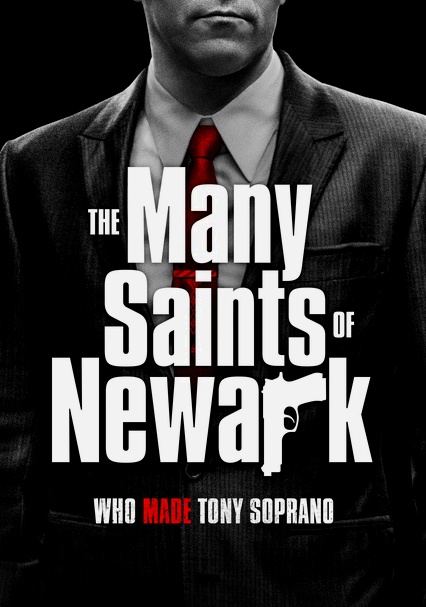
The Many Saints of Newark-2021

The Many Saints of Newark-2021

Director Alan Taylor

Starring Michael Gandolfini, Alessandro Nivola, Vera Farmiga

Scott’s Review #1,272

Reviewed July 4, 2022

Grade: B

Fans of the iconic HBO series The Sopranos, which ran from 1999 to 2007, have been chomping at the bit since the announcement of the soon-to-be-released The Many Saints of Newark (2021).

The film is a prequel to the series, centering on a young Tony Soprano. The kicker is that the actor who portrays Tony in the movie (Michael Gandolfini) is the real-life son of James Gandolfini, who played Tony in the series.

To add mustard to the on-paper perfect setup is that the film is written by David Chase, the writer and creator of The Sopranos. This ensures rich character development and dedication to the rich history.

What could go wrong?

The answer is that nothing is ‘wrong’ with The Many Saints of Newark. It’s not as brilliant as the series, and it seems unnecessary to have been made, especially after such a long gap.

While the film meanders at times, this gave me time to thoughtfully ruminate that perhaps The Many Saints of Newark would have been better as a limited series.

There are so many characters, and too few of them are familiar to audiences of The Sopranos. The two-hour and change running time couldn’t possibly provide enough time to get to know many of them, and I longed to.

On the upside, the film is shot exceptionally well, and the costumes, sets, and design of the 1960s and 1970s are incredible with superior accuracy.

It succeeds in transporting the audience to what Newark, New Jersey, was like during that time. Additionally, the film bears a striking resemblance to The Sopranos and is influenced by the legendary 1991 offering Goodfellas and other mafia-laden films.

Young Anthony Soprano (Gandolfini) is growing up in one of the most tumultuous eras in Newark’s history, as rival gangsters begin to challenge and desecrate the powerful DiMeo crime family.

As the year 1967 emerges and Newark is now an increasingly race-torn city, events take on a violent and historical tone.

Conflicted by the changing times is Tony’s Uncle Dickie (Alessandro Nivola), whom he idolizes much more than his own father, Johnny (Jon Bernthal), or domineering mother, Livia (Vera Farmiga).

The Many Saints of Newark depicts how Tony will eventually become the mob figure Tony Soprano!

Besides looking like his father, Gandolfini is not the best actor in the world, but he does his best with a small role billed as the lead. He hardly appears until thirty minutes before the film concludes, and he never carries the movie as one would expect the character to.

The real star of the film is Dickie (Nivola), who is terrific. The storyline follows his conflict and a damaged relationship with his father, wonderfully played by Ray Liotta, and his father’s horny wife, Giuseppina, who later becomes his mistress.

A shocking scene occurs when Dickie beats a significant character to death by repeatedly slamming their head against a steering wheel. The death will hold forever repercussions for Dickie, emotionally and otherwise.

The problem is that even though Dickie is a great character, the audience doesn’t know him, which is a significant issue.

Despite flaws with the marginally adequate casting, the uneven writing, and the focus on unfamiliar characters, there are other small treats to enjoy.

The film is peppered with familiar characters like Paulie, Big Pussy, and Carmella as younger people. Even though they don’t have much to do with the story, their mere presence feels like an old home week.

The racial tensions are another win, and actor Leslie Odon Jr. adds a winning formula to his character of Harold McBrayer, a black associate of Dickie’s.

I haven’t watched an episode of The Sopranos since it ended in 2007, and it may be advantageous to watch The Many Saints of Newark immediately after. Situations, history, and characters will be fresher in one’s mind, and it may result in more cohesiveness.

Or maybe the film shouldn’t have been made fourteen years after the series ended.

Regardless, The Many Saints of Newark (2021) is a pretty solid effort but completely underwhelming, especially when compared with such a groundbreaking television series.

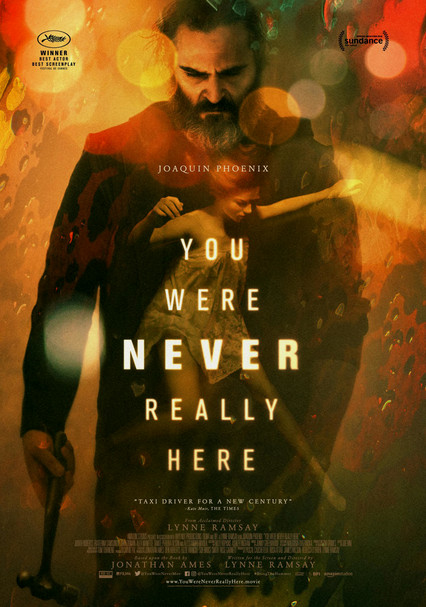
You Were Never Really Here-2018

You Were Never Really Here-2018

Director Lynne Ramsay

Starring Joaquin Phoenix

Scott’s Review #932

Reviewed August 19, 2019

Grade: A-

You Were Never Really Here (2018) is an independent psychological thriller that is most reminiscent in tone and texture of the legendary Scorsese film Taxi Driver (1976).

The main characters are worlds apart, but the classic influences the plot and trimmings amid a different period (the present).

A terrific and brooding performance by star Joaquin Phoenix leads the charge, as does the fantastic direction by Lynne Ramsay and the editing team. The dark film is an unusual and impressive choice for a female director.

Snippets of cinematic genius exist during a film that, with a more complete package, might have been a masterpiece.

We first meet Joe (Phoenix) somewhere in Ohio, as we learn he is a hired gun sent to rescue underage girls from sex trafficking rings. He is brutal in his methods of rescue, resorting to gruesome murders to complete his assignments, and is paid handsomely.

In New York City, he cares for his elderly mother, whom he adores, and is contacted to rescue Nina, the daughter of a New York State Senator, Albert Votto, for an enormous sum.

When Joe rescues Nina and waits for Votto, events quickly spin out of control, revealing a sinister web of deception.

When you look at the story that You Were Never Really There tells, it has been told many times before, typically in slick Hollywood conventional standards.

An angry ex-military man unleashes brutality on devious criminals, rescues the girl, and returns her safely to the open arms of her awaiting parents.

Fortunately, the film is more thoughtful than that, adding complexity to the Joe and Nina relationship and a stylistic, poetic quality featuring Joe’s relationship with his mother.

The plot is paced very well so that the events occur over only a day or two, and the film is highly unconventional and dark.

Frequent flashbacks give the film mystique as we see both Joe and his mother abused by Joe’s father, as a young Joe hides in a closet and hyperventilates. Now an adult, Joe is suicidal, frequently fantasizing or practicing his death until he is interrupted.

As grisly as the film can be, beautiful and tender moments are laden throughout as Ramsay provides gorgeous style and humanity. a homoerotic moment occurs when Joe lies next to the man who has killed his mother.

As the man is close to death at the hands of Joe, they hold hands as Joe provides comfort to the man in death. Joe then buries his mother in a pond in upstate New York, providing her with a peaceful final resting place. These are unique scenes that feel almost like an art film.

The conclusion is open-ended, leaving lots of questions. Joe and Nina appear to ride off into the sunset together, but what will they do? What is to become of them? Surely, no romantic element can be found, but where will they go from here?

Both characters appear to have nothing left to hang on to other than each other, but is this sustainable?

The film is not the type that is poised for a sequel, but I would be very curious about what Ramsay has planned for her characters.

Joe is not portrayed as wicked; he is too complex for that. Phoenix, a tremendous actor, perfectly infuses the character with brutality, anger, tenderness, and warmth.

The similarities between You Were Never Really Here and Taxi Driver—the grizzled New York portrayals, the political backdrop, and the main characters saving a woeful young girl from the depths of despair—make the two films comparable.

However, Joe and Travis Bickle are opposites, the latter having frenetic humor that the former lacks.

Ramsay has been around for a while, with We Need to Talk About Kevin (2011) being her most prominent film. She is successful at telling stories about deeply troubled individuals who are good people given awful circumstances.

With a tremendous actor like Phoenix on board, she crafts a solid work that has garnered accolades, at least among the indie critics, for You Were Never Really Here (2018). Ramsay seems poised to break out in a big way and shake up the film industry with future works.

Independent Spirit Award Nominations: 1 win- Best Feature, Best Director- Lynne Ramsay, Best Male Lead- Joaquin Phoenix, Best Editing (won)

Howl-2010

Howl-2010

Director Rob Epstein, Jeffrey Friedman

Starring James Franco

Scott’s Review #491

untitled

Reviewed October 9, 2016

Grade: B+

Howl (2010) is a compelling courtroom drama biopic starring James Franco who is wonderfully cast.

This role, despite being in a small film with little recognition, cements Franco’s talents as an edgy actor who is willing to tackle challenging work rather than sticking to mainstream safe fare.

Franco has become one of my favorite young actors. He is so diverse and believable in any role he takes on.

The story is about 1950s poet Allen Ginsberg and his trial to determine whether his poems were art or should be banned for being indecent.

Much of the action transpires inside the courtroom and the film wisely mixes animation (in scenes of Ginsberg reading his poetry) in between traditional scenes.

The film allows the viewer to get to know the characteristics of Ginsberg. He was troubled (his sexuality, delusions, stints in a mental hospital), for sure, but also had a true, authentic love of writing and poetry, which is inspiring in an age of digital technology.

Sometimes good old-fashioned words are the truest art.

Howl (2010) is an interesting little film.

Selma-2014

Selma-2014

Director Ava DuVernay

Starring David Oyelowo, Carmen Ejogo

Scott’s Review #248

80013278

Reviewed June 19, 2015

Grade: A-

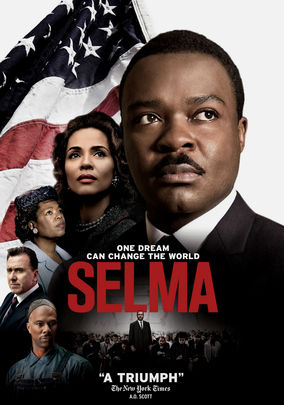
An Oscar-nominated factual feast, set in the mid-1960s during the Civil Rights movement, Selma (2014) is a re-telling of the life and times of Martin Luther King Jr. and the struggles that black Americans endured during a tumultuous period in history.

The film includes dealings with then-President Lyndon B. Johnson and the famous and important 1965 Selma to Montgomery voting rights march, which led to the signing of the pivotal Voting Rights Act of 1965.

This film reminded me quite a bit of 2013’s The Butler in subject matter and style-ironic since Lee Daniels was slated to direct and instead signed on for The Butler.

Both feature a charismatic and intelligent black man struggling with racial matters.

Despite being an independent undertaking, it is glossy, polished, and reflective of the time. Both The Butler and Selma boast a huge cast, and historical political figures, in a tumultuous era in history.

Selma features a bevy of real-life figures from George Wallis to President Johnson to the obvious leader of the Civil Rights movement, Martin Luther King Jr., and his wife, Coretta Scott King, and the casting is very well thought out.

Tim Roth, David Oyelowo, Tom Wilkinson, and Carmen Ejogo portray their roles professionally and passionately. None of the above received Oscar nominations and I am okay with that.

I did not feel that any were definite standouts from a crowded field of talent, though perhaps Ejogo could have been in the running with her understated though compelling performance.

The drama surrounding the lack of expected Oscar nominations is not shared by me. The truth is, the film was included in the Best Picture category and won Best Song.

While an emotional and compelling film, neither is it a masterpiece nor will change the art of cinema, though I must stress it is good.

I find Selma to be an important film- a look back on history and the shame and humiliation placed on blacks who attempted to obtain voting rights. A heartbreaking scene depicts a determined woman (played by Oprah Winfrey) being denied this right by a cold and racist authority figure as she is asked impossible and tricky questions to prove her patriotism, which of course, she cannot possibly answer correctly.

Yes, the film is directed by a black, female director (Ava DuVernay) and yes, one might argue that it has a black point of view. However, the film successfully sympathetically portrays several white characters and avoids the assumption that all white people were racist in this period.

Let’s face it- racism still exists, especially in the South, and in the 1960s even more so. I did not find the message in black people vs. white people’s terms, but rather as a humanistic struggle for rights.

And the struggles continue as the film makes abundantly clear in the message of the film.

While King was a life changer to the black people of the United States, his life was abruptly cut short in his prime. One wonders how much more good this man could have achieved.

The song “Glory” is an emotional, powerful number, especially during the marching and subsequent slaughter scenes highly emotional and effective.

And who will not become teary-eyed as the innocent marchers are beaten and treated like cattle, simply for taking a stand? One will gasp at the senseless bombing scene that rocks a building and takes four innocent little girls’ lives away with it.

Selma successfully transplanted me to a time before my time and made me appreciate and capture the positive and negative experiences of a race of people not long ago.

This film inspires and moves me and teaches me what a movement occurred in 1965.

Oscar Nominations: 1 win-Best Picture, Best Original Song-“Glory” (won)

Independent Spirit Award Nominations: Best Feature, Best Director-Ava DuVernay, Best Male Lead-David Oyelowo, Best Supporting Female-Carmen Ejogo, Best Cinematography

A Most Violent Year-2014

A Most Violent Year-2014

Director J.C. Chandor

Starring Oscar Isaac, Jessica Chastain

Scott’s Review #239

_A_Most_Violent_Year__Theatrical_Poster

Reviewed May 1, 2015

Grade: B

Set in New York City, throughout the notoriously violent year of 1981 and influenced, at least in part, by The Godfather (1972) A Most Violent Year (2014) is similar in texture to the elite HBO series The Sopranos (1999-2007).

A Most Violent Year is an attempt at weaving a tale of a “good guy” mixed up with the mafia and attempting to remain upstanding throughout the adversity and corruption he encounters.

Oscar Isaac and Jessica Chastain portray Abel and Anna Morales, who owned Standard Oil, an upstart business they are attempting to launch.

Due to the violent nature of the times, several trucks are hijacked, resulting in robberies and severe beatings. In desperate need of funds to expand their business and stay ahead of competitors, Abel and Anna are forced to take out loans, leading them into a world where crime and violence run rampant.

They are under investigation for apparent price fixing and tax evasion activity by the Assistant District Attorney.

The main theme is the conflict and guilt that Abel feels towards violence and the constant temptation to join the ranks of the crime world to protect his business ventures.

Abel faces pressure from Anna, who has mob ties (her father is an influential mafia boss known around town) and is all for fighting fire with fire. Abel refuses and is determined to lead a straight and narrow life.

When circumstances spin out of control, his morals are questioned.

A Most Violent Year is an interesting film yet I think I was expecting a bit more than I was given.

For starters, it is not in the same league as the mafia works of art. It is tough to put my finger on what the issue is but something is missing from the film making it lack a compelling edge.

The plot moves slowly, for sure, but the film is successful as the character study that it is, however, I was left wanting more depth to the characters and a broader vision of the film itself.

I did not find myself truly vested in either the character of Abel or Anna.

Chastain received praise for her performance, which I found adequate, but hardly a marvel. Nominated for several awards, but deemed “snubbed” for not receiving an Oscar nomination, I find this untrue.

Her performance is not brilliant and Oscar Isaac’s is superior.

This is not to say that I did not enjoy the film overall. It takes some risks, has a rich character complexity, is shot very well, and looks great. It has a smooth look and I completely bought the 1981 time period, rather than it appearing to be dressed up for the era.

There is an authenticity to it.

A mob film not on the level of The Godfather or Goodfellas (1990), A Most Violent Year is a decent contribution to the crime-thriller era. It just does not live up to the critical acclaim heaped upon it.

Independent Spirit Award Nominations: Best Supporting Female-Jessica Chastain, Best Screenplay, Best Editing

American Hustle-2013

American Hustle-2013

Director David O. Russell

Starring Christian Bale, Bradley Cooper, Jennifer Lawrence

Scott’s Review #39

70281530

Reviewed June 18, 2014

Grade: A

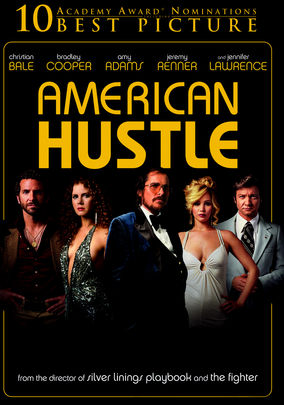
Having seen American Hustle (2013) a month ago and finally getting around to reviewing it, it’s a perfect time as a slew of Oscar nominations has been reaped upon it, thus, undoubtedly more people will be seeing it in the weeks ahead.

I loved this film.

Some were underwhelmed, but I found it quite authentic and stylish.

I loved the 1970’s period and felt the hairstyles, clothes, and props were spot on.

I also felt the film had great acting and, though I’m not a fan, Jennifer Lawrence enraptured me. The same with Cooper, Bale, and Adams, who all deserve their Oscar nods.

I found it similar in style to Boogie Nights, a 1997 masterpiece directed by Paul Thomas Anderson.

The 1970s musical rock score was perfect. The subject matter of political corruption and cat-and-mouse intrigue was effective and resounding.

Oscar Nominations: Best Picture, Best Director-David O. Russell, Best Actor-Christian Bale, Best Actress-Amy Adams, Best Supporting Actor-Bradley Cooper, Best Supporting Actress-Jennifer Lawrence, Best Original Screenplay, Best Production Design, Best Costume Design, Best Film Editing