Category Archives: James Remar

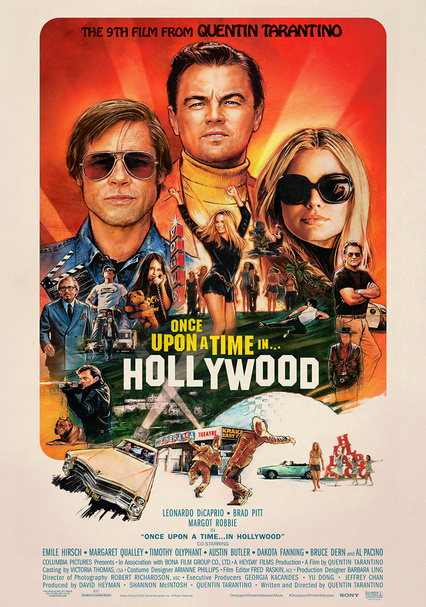
Once Upon a Time in Hollywood-2019

Once Upon a Time in Hollywood-2019

Director Quentin Tarantino

Starring Leonardo DiCaprio, Brad Pitt, Margot Robbie

Top 250 Films #84

Scott’s Review #926
Reviewed August 1, 2019

Grade: A

Once Upon a Time in Hollywood (2019) is another brilliant offering by one of the most (deservedly) respected directors of the modern film era.

This film may be his most personal as it includes many cinematic references and immerses itself in the Hollywood lifestyle. Toned down considerably from the violence standard in his other films, the first half lays the groundwork for a startlingly good second half with every detail of utmost importance.

A bevy of riches awaits any viewer enthusiastically feasting their eyes on this film.

The time is 1969, as actor Rick Dalton (Leonardo DiCaprio) struggles to reinvent himself and revitalize his career in Hollywood amid a changing cinematic landscape.

Famous for a popular western television series from the 1950s, Bounty Law, a pursued film career has not taken off, and he is reduced to guest appearances as the villain, then considered throwaway roles, in other episodic series.

His stunt double and best friend, Cliff Booth (Brad Pitt), accompanies him almost everywhere, serving as both sidekick and errand boy.

Meanwhile, famous director Roman Polanski and his wife, actress Sharon Tate (played by Argot Robbie), have moved into the house next door, which Dalton hopes will help him revitalize his career aspirations.

As Tate goes about her daily life of running errands and watching her movies in the theater, she is visited by Charles Manson one day, looking for the former resident of her house.

Historical viewers are familiar with the subsequent events that unfolded in real life, as Tarantino presents a fictional and tantalizing version of the events.

The film’s length is two hours and thirty-nine minutes, quite robust but typical for a Tarantino production. Some may complain about the bloated running time, but the film never drags; instead, the director lays out all the pieces carefully like a fine chess game.

By the mid-point, all hell breaks loose with one of the most suspenseful and edge-of-your-seat scenes in film history. When Cliff drives a flirtatious young hippy hitchhiker, Pussycat (Margaret Qualley) to a range populated by Manson followers, he is in for the adventure of his life…..if he survives.

Once Upon a Time in Hollywood is an orgy of cinematic tidbits, featuring a myriad of clips from forgotten films of the late 1960s and popular songs from that era.

This is just the tip of the iceberg in greatness as Tarantino perfectly immerses the viewer into the time with fury and zest. Every set piece, costume, hairstyle, or car is flawlessly placed. Kraft macaroni and cheese, Velveeta cheese, and popular dog food from the period are featured.

Tarantino is a fan of cinema and makes cinema lovers fall in love with cinema all over again.

The cast is humongous, but each character is necessary and perfectly represented in roles large and small.

The haunting troupe of Manson followers, specifically Tex Watson (Austin Butler), Squeaky Fromme (Dakota Fanning), and Susan Atkins (Mikey Madison), are all real-life figures. They are foreboding, dangerous, and crucial to the story.

Al Pacino shines in the small but pivotal role of Schwarz (not Schwartz), Dalton’s agent, while Steve McQueen’s look-alike, Damian Lewis, on-screen for merely seconds, is memorable.

The list of cameo performances goes on and on and on, and the fun is wondering who may appear next.

Despite the incorporation of big-name stars in important minor roles, the best performances belong to DiCaprio and Pitt. DiCaprio’s best scene takes place alone in his trailer as the washed-up star botches his lines thanks to a hangover, causing a delay in filming.

He abuses himself into nailing the scene, receiving kudos all around, while becoming teary-eyed after a compliment from a young actress.

Pitt has never given a better performance than he does as Cliff, sharing his best scenes with his adorable dog Brandi and with DiCaprio.

Who can ever forget his chest-baring rooftop scene?

Quentin Tarantino scores again with a bombastic and flawless picture, his ninth release. Rumored to retire after his tenth film, one can hardly fathom the reality of that statement. Hismovis can be watched and watched again, continuously absorbing new and noteworthy details of rich texture.

Once Upon a Time in Hollywood (2019) easily joins the ranks of great works, not just of the director’s catalog, but of all time.

Oscar Nominations: 2 wins-Best Picture, Best Director-Quentin Tarantino, Best Actor-Leonardo DiCaprio, Best Supporting Actor-Brad Pitt (won), Best Original Screenplay, Best Sound Editing, Best Sound Mixing, Best Production Design (won), Best Cinematography, Best Costume Design
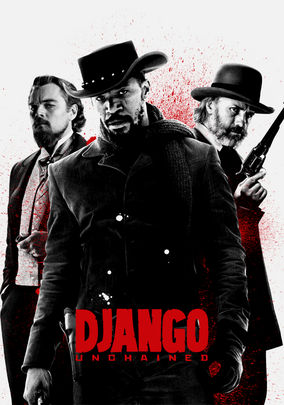
Django Unchained-2012

Django Unchained-2012

Director Quentin Tarantino

Starring Jamie Foxx, Christoph Waltz

Top 250 Films #116

Scott’s Review #699

Reviewed November 26, 2017

Grade: A

Quentin Tarantino, the brilliant filmmaker, can do very little wrong in my opinion, and he releases yet another masterpiece with 2012’s Django Unchained, a western story centering around the delicate subject matter of slavery.

As with several other talented director’s stories, the main focal point here is a revenge-driven tale with plenty of bloody scenes and stylistic ferociousness, making Django Unchained yet another masterpiece in the Tarantino collection.

Certainly not for the faint of heart, the film will please fans of film creativity and artistic achievement.

As with many Tarantino films a stellar cast is used and each actor cast to perfection- it seems almost every actor in Hollywood is dying to appear in the director’s films- this time Jamie Foxx, Christoph Waltz, Kerry Washington, Leonardo DiCaprio, and Samuel L. Jackson are the lucky ones, all featured in prominent roles- not surprisingly the acting is top-notch.

An interesting fact to note is that whoever appears in a Tarantino film seems to be having the time of their lives- what creative freedom and interesting material to experience.

A comparable director to Tarantino- as far as recruiting fine actors- is Robert Altman- also tremendously popular with talent.

The saga begins with clear Western flair as Django Freeman (Foxx) is led through the scorching heat of Texas with a group of other black slaves, presumably, to be sold by their abusive white captors- the time is 1858, and the abolition of slavery has not yet occurred the Civil War is still two years away.

Doctor King Schultz (Waltz), a former dentist and current bounty hunter, is on a mission to find and kill the Brittle brothers and realizes that Django can help him find the men.

To complicate matters, Django has been separated from his wife Broomhilda (Washington) and vows to find her and avenge her abductors.

As circumstances lead Schultz and Django to a vast Tennessee estate, the duo becomes business partners and friends. The race to rescue Broomhilda takes the pair to sunny (and equally hot) Mississippi- the home of vicious Calvin Candie (DiCaprio) and his dreaded “Candyland”.

The crackling heat and the atmospheric nature of Django Unchained combined with the revenge theme make the film an immeasurable success.

An ode to spaghetti westerns of yesteryear, the film incorporates similar music and grit so that the result is a modernized version of those films, with lots more blood and violence.

Slavery is a tough subject matter to tackle, especially when members of the Ku Klux Klan are featured, but Tarantino does so effortlessly, and as Django gains revenge on his tormentors, there is major audience satisfaction to be enjoyed.

The indignities and downright abuse that several black characters suffer can be quite tough to sit through.

The climactic dinner scene in Mississippi is splendid and the best sequence of the film. Schultz and Django dine with Calvin at his spectacular mansion. Calvin’s sinister and loyal house slave (Jackson) suspects a devious plan is about to be hatched and a vicious shoot-out erupts between the parties involved.

The ingenious and long sequence is a cat-and-mouse affair with all of the characters carefully tiptoeing around the others in fear of being revealed or discovered as fakes.

The scene is exceptional in its craft as we watch the characters dine on delectable food and drink, all the while motivations bubble under the surface.

Django Unchained is not for film-goers seeking either a linear story or a mainstream piece of blockbuster movie-making-Tarantino is not a typical Hollywood guy.

The film is exceptionally carved and constructed in a way that challenges the viewer to endure what some of the characters (specifically Django and Broomhilda) are made to go through. This discomfort and horror make the inevitable revenge all the more sweet and satisfying.

Quentin Tarantino has created masterpiece after masterpiece throughout his filmography of work.

Proudly, I can herald 2012’s  Django Unchained as one of the unique director’s very finest and will be sure to be remembered decades and decades in the future as being able to challenge, provoke thought, and satisfy legions of his fans.

Oscar Nominations: 2 wins-Best Picture, Best Supporting Actor-Christoph Waltz (won), Best Original Screenplay (won), Best Sound Editing, Best Cinematography

Cruising-1980

Cruising-1980

Director William Friedkin

Starring Al Pacino, Paul Sorvino, Karen Allen

Scott’s Review #1,469

Reviewed March 9, 2025

Grade: B+

Cruising is a 1980 effort that brought the LGBTQ+ community into mainstream cinema at least for a brief moment shortly before HIV/AIDS changed its image and trajectory.

The film was derided by critics and gay rights protesters who believed it stigmatized them.

Decades later, Cruising has become more accepted and even admired by some, especially in the LGBTQ+ community. It’s a film that most community members have heard of, allowing it to make its mark in cinema history.

William Friedkin, famous for directing The French Connection (1971) and The Exorcist (1973), writes and directs the film, loosely adapting it from a novel by The New York Times reporter Gerald Walker.

The story is about a serial killer targeting gay men, particularly the men associated with the leather scene in the late 1970s. A psychopath is scouring New York City gay clubs and viciously torturing and stabbing gay men to death.

Resembling the victims physically, Detective Steve Burns (Al Pacino) is asked to wear leather attire, and frequent the city’s hardcore clubs to lure the killer.

As Steve becomes immersed in club hopping, he begins to identify with the subculture more than expected. Meanwhile, he behaves distantly around his girlfriend, Nancy (Karen Allen), the police force’s homophobia becomes apparent and the killer remains at large throughout one hot summer.

Initially, Richard Gere was slated to star but Pacino ended up with the role.

Pacino, being Pacino, gives it his all in an uneven script and unclear character motivations. The ending is exceptionally muddled and peculiar, leaving an unsatisfying feeling, while I also somewhat admire its ambiguity.

Dusting off this relic was an absolute pleasure. It gave me a glimpse into the LGBTQ+ leather scene of long ago, with authentic New York City gay clubs and clubgoers.

Cruising also features a variety of exterior NYC locales, such as Columbia University, the Meat Packing district, and an opening view of the Manhattan skyline.

Though too young to remember the scene being showcased, I do remember traveling into Manhattan to go to work with my father as a very young boy and the dangerous city I was always warned about.

Friedkin and cinematographer James Contner exceptionally depict New York City in the late 1970s/early 1980s. The gritty and crime-ridden streets capture the time like similar films Taxi Driver (1976) and Gloria (1980) did.

I also adore seeing the clubs and bars from an LGBTQ+ perspective, though I’m unsure if non-LGBTQ community members would appreciate this aspect of the film.

Nonetheless, fans of Pacino should add this to their list. While not on par with his most tremendous role as Michael Corleone in The Godfather series (1972-1995), he was in his prime before he started overacting and taking on inferior roles.

It’s also a damned good crime thriller!

Cruising reminds me of a Dirty Harry (1971) film only set in NYC, particularly the killer. With a low and taunting voice, and a fondness for teasing his victims before killing them, the similarities are apparent and work well.

The killer’s motivation is weakly explained in a flashback with his father.

Since we more or less see the killer’s identity early on, the film is not so much a whodunit until the final scene when another character is found dead after the killer is apprehended.

Is the new killer Steve or the victim’s jealous boyfriend? Is Steve closeted? These questions are left unanswered.

The production is superior and the glowing park scenes with shadows and insect sounds only enhance the thrills and perils of the characters.

The film shows plenty of bare male asses unusual for this time in American cinema and dares to show plenty of simulated and apparent complete on sex. Forty minutes of X-rated male-on-male action footage needed to be cut, in which Pacino may or may not have participated.

While the screenplay has gaping holes and the conclusion less than satisfying, Cruising (1980) is a win in my book for showcasing an unrepresented group of people and taking me back to a fascinating time.

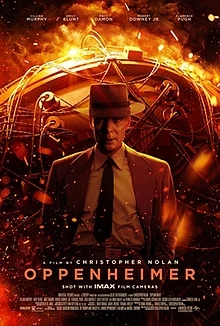
Oppenheimer-2023

Oppenheimer-2023

Director Christopher Nolan

Starring Cillian Murphy, Robert Downey Jr., Emily Blunt

Scott’s Review #1,384

Reviewed August 1, 2023

Grade: A

Knowing the films of Christopher Nolan who directed works like The Dark Knight Trilogy (2005-2012), Inception (2010), and Dunkirk (2017) I expected what I would be served with by his new film Oppenheimer (2023).

This would include a big booming soundtrack and an arguably more ‘guys’ genre film, but with intelligence, than other contemporary hits like Barbie (2023).

Dark and looming with complexities are usual for Nolan so I settled in for a three-hour epic journey centered on the atomic bomb and physics that has unexpectedly become a blockbuster.

Speaking of the pink phenomenon its simultaneous release with Oppenheimer led to the “Barbenheimer” phenomenon on social media, which encouraged audiences to see both films as a double feature.

This forever links the two vastly different films that were responsible for filling movie theaters once again.

I expected to enjoy Oppenheimer but was jarred (in a good way) by the sheer brilliance of its construction. Prepared for more mainstream fare that typically follows a biography or historical piece I was instead overly fascinated by the experimental elements enshrouding a more conventional film.

During World War II, Lieutenant Colonel Leslie Groves Jr. (Matt Damon) appoints physicist J. Robert Oppenheimer (Cillian Murphy) to work on the top-secret Manhattan Project.

Oppenheimer and a team of scientists spend years developing and designing the atomic bomb. Their work came to fruition on July 16, 1945, as they witnessed the world’s first nuclear explosion, forever changing the course of history.

The film is constructed marvelously in every way and is authentic to the eye. The first notice is that it feels like it’s the 1940s 1920s or 1960s or anywhere in between depending on where the film goes.

The art design, costumes, and makeup feel natural rather than stagey which helps its audience escape into the scientific world.

Speaking of, Nolan constructs the film in a series of pockets and goes back and forth between periods. We see Oppenheimer many times as an aspiring upstart with visions, a confident, established physicist, and in 1963 when President Lyndon B. Johnson presented him with the Enrico Fermi Award as a gesture of political rehabilitation.

His personal life is also explored.

Many, many scenes shift back and forth involving different characters at different ages. Most of the scenes in the 1940s take place in the desert at Los Alamos, New Mexico while the later years are set in a stuffy conference room where Oppenheimer is grilled for his left-leaning and suspected Communist politics.

The cinematography led by Hoyte van Hoytema provides some edgy moments especially when Oppenheimer descends into frightening and psychedelic hallucinations of those suffering the aftereffects of the atomic bomb. Images of peeling and melting faces are terrifying.

Cillian Murphy successfully makes Oppenheimer sympathetic especially after he creates the bomb and is left forgotten by his government.

Various moments in the film showcase Murphy at his best. After relinquishing his deadly bomb after a test the government callously tells Oppenheimer that ‘they’ll take it from here’. The look of dread, regret, and sadness in Murphy’s crystal blue eyes speaks volumes.

Another great scene occurs when President Harry S. Truman (Gary Oldman) a left-leaning democrat calls Oppenheimer ‘a crybaby’ when he expresses interest in returning land to the American Indians.

The supporting cast is a bevy of riches with several top-caliber actors appearing in cameos. My standouts in larger roles are Robert Downey Jr. shredding his Iron Man superhero persona as a slighted and venomous Lewis Strauss, intent on revoking Oppenheimer’s security clearance, and Emily Blunt as the boozy biologist and former communist wife of Oppenheimer.

My biggest takeaway from Oppenheimer (2023) though is a powerful one. The difference between the United States of America during and post World War II and in present times, 2023.

Then, a patriotic infrequently questioned nation brimming with pride and glory, where nationalism was rampant and expected and those with foreign respect were cast aside as traitorous.

Now, a divided country half of whom support an ideology based on hate, racism, and cultlike dedication to a corrupt ex-president, and the other focused on diversity inclusion, and equality for all.

This film resonated so powerfully well and in so many different ways.

Oscar Nominations: 7 wins-Best Picture (won), Best Director-Christopher Nolan (won), Best Actor-Cillian Murphy (won), Best Supporting Actor-Robert Downey Jr. (won), Best Supporting Actress-Emily Blunt, Best Adapted Screenplay, Best Film Editing (won), Best Cinematography (won), Best Costume Design, Best Production Design, Best Original Score (won), Best Sound, Best Makeup and Hairstyling

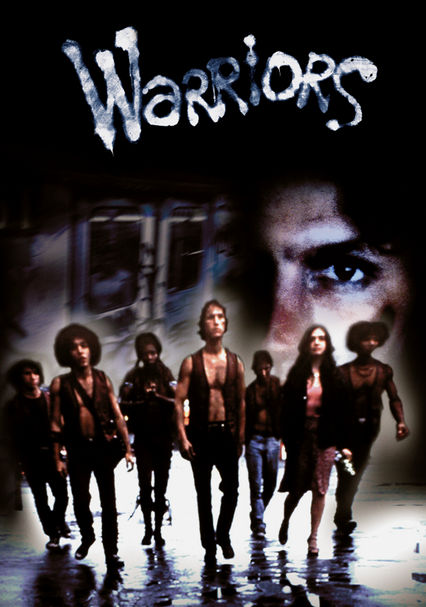
The Warriors-1979

The Warriors-1979

Director Walter Hill

Starring Michael Beck, Deborah Van Valkenburgh

Scott’s Review #1,383

Reviewed July 31, 2023

Grade: B+

The Warriors (1979) is an entertaining gang-themed action-thriller that is a perfect watch for a late Saturday night. Reportedly, it caused friction and outbreaks of fights in movie theaters when it was released but decades later doesn’t feel as dangerous as it might have upon release.

The film does terrific work with some art direction that melds live-action with colorful drawings of characters. This infuses an artistic experience and raises results way above dumb action flicks like Rambo (1982), Death Wish (1974), and countless others.

In perhaps a peculiar comparison, The Warriors reminds me a bit of Escape from New York by John Carpenter which came two years later. The isolated Manhattan streets and other areas with a post-apocalyptic feel merge the two films, in my mind anyway.

The film suffers a bit from a dated and obscure categorization and is not remembered as well as perhaps it should be. The acting isn’t terrific either but strangely this makes the experience a bit more raw and enjoyable.

After being wrongly accused of killing a charismatic gang leader named Cyrus, a Coney Island street gang known as the Warriors must hoof their way home which is miles from where the death occurred. They are pursued by both police and enemy gangs one of which framed them for Cyrus’s execution.

The ambiance and atmospheric qualities are the best aspects of the overall film. So many Big Apple treats can be found especially the infamous Central Park which takes center stage. The lavish and picturesque park wasn’t as safe and pristine in the late 1970s as in 2023 and the film uses this to its advantage.

Characters never know who or what might be lurking behind a bench or a tree. A particularly fun scene features a young Mercedes Ruehl being groped by a gang member only to be revealed to be a sexy policewoman who quickly puts the perp in handcuffs.

The other locales featured are plentiful and include Van Cortlandt Park, Union Square, 96th Street and Broadway, and Riverside Park. The beauty of this is that the action doesn’t include only Manhattan but other boroughs like the Bronx and Brooklyn showing the vastness of NYC.

The main romance is between Swan (Michael Beck) and Mercy played by Deborah Van Valkenburgh. The pair have a sliver of chemistry but I wasn’t watching the film for doey-eyed young people.

One scene was exceptionally done when the couple laid eyes on some well-dressed and upstanding teenagers on the subway who could easily be their doppelgangers.

Maybe them in another life? The forlorn look on the faces of Swan and Mercy reveals much as the couples all eye each other perhaps thinking the same thing.

Walter Hill directs the film and is well-versed in the action genre creating the popular film 48 Hours (1982). He paces and choreographs the action sequences so well that it’s as if the viewer is watching a dance routine occur.

The opening sequence gets the tone of the film out in the open as the storied Wonder Wheel on dusty Coney Island is on full display. Even the bright and windy shore feels gloomy and ominous as leather-clad gang members make it their turf.

The finale salutes the Warriors with a song, ‘In the City by Joe Walsh which I particularly enjoyed because it’s a great song.

Though unrealistic for the time, it’s nice to see gang members of different ethnicities team up together in diverse representation.

The film is a perfect watch for cinema fans thirsty for old New York City locales and greasy, dirty subway stations. Because the real Manhattan wasn’t too different from what The Warriors (1979) showcases.

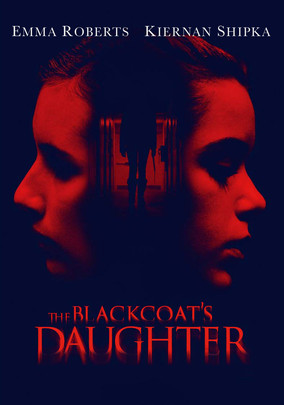
The Blackcoat’s Daughter-2017

The Blackcoat’s Daughter-2017

Director Oz Perkins

Starring Emma Roberts, Kiernan Shipka

Scott’s Review #732

Reviewed March 12, 2018

Grade: B+

The Blackcoat’s Daughter is an eerie 2017 independent horror film that combines various chilling elements to achieve its goal.

While slow at times, the film is primarily a fusion of the supernatural, the occult, and the psychological. It offers a unique experience and is unpredictable in nature.

Parts of the film are downright scary and spooky as religion meets satanism, always a safe bet for an unsettling experience.

Writer/Director Oz Perkins should be well on his way to a successful career in the industry with this, almost full-on artsy, film.

The action begins in a prestigious Catholic boarding school in a quiet, wintry area of upstate New York. As students (largely unseen) leave the school for a February break, Kat (Kiernan Shupka), and Rose (Lucy Boynton) are left behind when their parents do not arrive to pick them up.

While the girls hunker down for the night, hoping their parents show up the next day, a third girl, Joan (Emma Roberts), who may be a psychopath, is en route towards the school, enlisting the help of a strange married couple (Bill and Linda), whose daughter had died years ago and was the same age as Joan.

Also in the mix are two school nuns who are rumored to be Satanists.

Little is known about the town, but the fact that nobody is around making the setting a significant plus.

This may very well be due to budgetary restrictions associated with the film. Still, regardless, the use of very few characters or extras is a score, with the number of principal characters below ten.

The cold and bleak nature of the town and Joan’s stark journey create a very successful ambiance.

Many scenes throughout The Blackcoat’s Daughter are set during nighttime in relative seclusion. Given the icy texture of upstate New York in the middle of winter, the setting chosen by Perkins is spot on and quite atmospheric.

The overall story of The Blackcoat’s Daughter is peculiar and mysterious and does not always make complete sense.

In fact, by the time the film concludes and the credits roll, not much of the film adds up from a story perspective, leaving me somewhat unsatisfied.

Since Bill and Linda’s daughter looks identical to Rose, are we to assume that the events at the school occurred a decade before the events involving Joan? What ends up happening to Kat is perplexing, haunted by spirits, and forced to kill, is she healed at the end of the film? Or is Kat Joan?

Too many loose ends are left.

The film is heavy on the violence and the gore and dares not hold back in showcasing the victim’s pain and suffering before they cease to exist. More than one character lies bleeding and immobile as the killer calmly approaches to finish the deed.

Three characters are decapitated in horrific form as we later see their severed heads lined up in a boiler room. The demonic chanting “Hail, Satan!” may turn some viewers off, as would the overall storyline.

Those who feel that 1973’s The Exorcist is disturbing need not see this film as similar elements abound.

Also worthy of a quick mention is the cool, unique musical soundtrack created by singer/songwriter Elvis Perkins, brother of the director.

With goth/techno elements, the score is noticed (in a good way) at various points throughout the running time and adds to the film’s overall feel.

The Blackcoat’s Daughter (2017) succeeds as a disturbing and experimental piece of independent horror-making that will pique the interests of horror aficionados.

With plenty of blood-letting and squeamish parts, Oz Perkins knows what works. The story, though, would have been improved by a clear, definitive beginning, middle, and end, to avoid a confusing outcome.

Still, I look forward to more works from this up-and-coming director.