Category Archives: Olivia Wilde

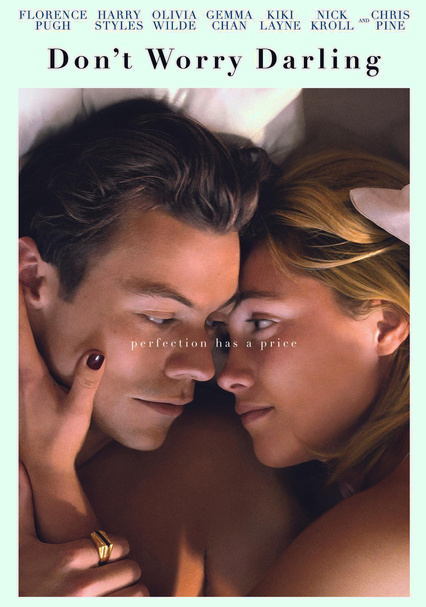
Don’t Worry Darling-2022

Don’t Worry Darling-2022

Director Olivia Wilde

Starring Florence Pugh, Harry Styles, Chris Pine

Scott’s Review #1,368
Reviewed June 9, 2023

Grade: B+

Don’t Worry Darling (2022) plays like a modern version of The Stepford Wives (1975) meets Pleasantville (1998) but with a supernatural spin and lots of much-needed modern diversity.

Not set in present times, the characters all feel very 2022 but are transplanted to a different period that only enhances an already unsettling feeling.

The sophisticated 1950s set design and art direction are a significant score, as well as the mysterious happenings that continue to shroud the central character and her surroundings.

The film never lags and, in fact, fascinates throughout. There is a continuous feeling of uncertainty, dread, and controlled chaos that assuredly will explode in the finale.

I’m not sure I quite got the conclusion right away until I read through the summary, and something about an alternate universe and different lives outside of the primary setting was revealed. Regardless, it felt unsatisfying, especially compared to the rest of the events.

But, small potatoes, I still enjoyed Don’t Worry Darling immensely.

The premise is thrilling from the start. A 1950s housewife named Alice, played by emerging star Florence Pugh, is living with her husband in a utopian experimental community. They mingle with neighbors, host lavish parties with delicious food and drink, and enjoy each gorgeous sunny day.

Daily, the men dutifully drive off to work in the distinguished Victory Headquarters while the wives cheerfully clean and scrub the windows and prepare a savory dinner, counting the minutes until their husbands return for a romp in the hay.

It all sounds too good to be true.

When a close friend Margaret (KiKi Layne) experiences a psychotic episode witnessed by Alice, she begins to worry that her husband’s glamorous company may be hiding disturbing secrets and that everything may not be as perfect as it seems.

I am becoming a big fan of Florence Pugh, who effortlessly carries the film. Impressive in both Midsommar and as Amy in Little Women, both in 2019, she possesses a specific ‘it’ factor showcased well in Don’t Worry Darling.

Pugh has many scenes with no dialogue. Ranging from a soak in the bathtub, a bizarre episode where she wraps her head in Saran Wrap, and witnessing her friend’s death, she does so much without speaking.

Successfully, the audience is taken along for the ride. We know as much as Alice does, which is nothing. It’s not that Alice hates her life; hell, she’s got it pretty good. A scrumptious roast and carrots alongside hot sex on her dining room table, the girl could do much worse.

But she knows something is off and is determined to find out what it is. Why are the women forbidden from seeing the Victory Headquarters? Why does a plane crash that only Alice sees? Why does Frank, the alpha male leader of Victory, wonderfully played by Chris Pine, keep eyeing Alice?

Impressive is the direction by Olivia Wilde, who also appears as Alice’s friend, Bunny. Along with the screenwriter, Katie Silberman, the duo crafts a piece of work with a feminist perspective turned topsy-turvy, and it’s a good angle.

Not to harp on the ending again, but the message of female empowerment, which I think is the intention of Wilde and Silberman, is unclear. A bolder message and a more finite ending would have helped cement the deal.

Still, in Wilde’s only second film, the first being the vastly different Booksmart (2019), she should only be proud of herself and the product she created.

If one is seeking an emboldened psychological thriller with twists and turns to savor, Don’t Worry Darling (2022) is a fine pick. It creeps along with appropriate plot points and a stylized visual canvas.
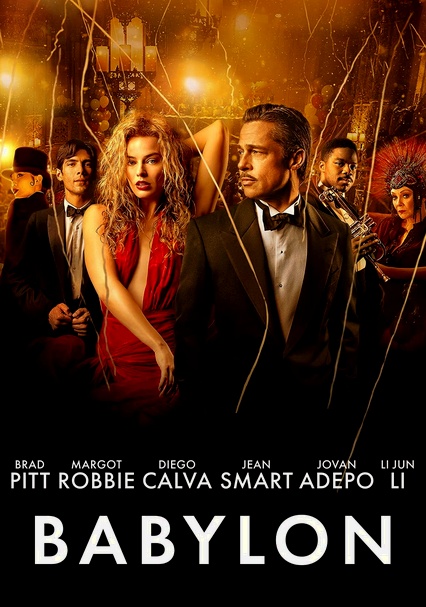

Babylon-2022

Babylon-2022

Director Damien Chazelle

Starring Margot Robbie, Brad Pitt

Scott’s Review #1,365

Reviewed June 4, 2023

Grade: A-

Babylon (2022) is a film that will likely divide audiences broadly. Slightly late to the table, I viewed the film after the awards season hoopla had ended, and the film came up empty-handed.

Sure, a few nominations were received, but much more was expected from the epic Hollywood-themed venture.

I’m a fan of director Damien Chazelle, most famous for the similarly set Los Angeles film La La Land (2016), which I adore.

His direction style reminds me a great deal of Baz Luhrmann’s, with the incorporation of intense musical numbers during many scenes and a strong, chaotic, and frenetic nature.

I realize this style is not for everyone, so I’m not surprised that Babylon is both revered and reviled. This isn’t always a bad thing, as a good film debate can be fun.

I adore Babylon primarily for the potent silent-era Hollywood story and the terror stars of the 1920s faced with the realization that sound had entered their pictures and they were expected to keep up with the times.

Sadly, many careers ended devastatingly, sinking one-time big stars into depression and despair.

The acting is superb, and major props go especially to Margot Robbie as debaucherous film star Nellie LaRoy and newcomer (to me) Diego Calva as handsome Mexican immigrant Manny Torres.

Both actors elicit superb performances that should have landed them Oscar nominations.

The major themes that Chazelle incorporates into Babylon are those of ambition and outrageous excess, as well as belonging and acceptance. The rise and fall of multiple characters during an era of unbridled decadence and depravity in early Hollywood are explored.

As Hollywood transitions from silent films to talkies, ambitious up-and-coming actress Nellie and aging superstar Jack Conrad (Brad Pitt) each struggle to adapt to the new medium, as well as a rapidly changing world.

And Manny wants a seat at the table.

Another reason I love the film is the dedication and exposure given to pre-sound Hollywood movies, which are often forgotten. I struggle to recall ever having viewed a film from that era, with my earliest film being the 1930 film “All Quiet on the Western Front.”

The hit film The Artist (2011) may have paid tribute, but it’s not the same, and Babylon goes for the jugular in showcasing an entire movement that is now largely forgotten.

Cinema fans will respect Babylon.

Besides the film’s characters, there is much to appreciate in the movie itself. A Hollywood movie set, repeated takes, scripts, dialogue, lighting equipment, and rehearsals make for a feast of riches for any cinephile.

The weak point is the film’s excessive length. At three hours and nine minutes, an epic length, the erratic structure is a challenge to get through. A piecemeal approach can sometimes affect the continuity, and it did detract a bit in this case for me.

If one can sit still long enough, the final thirty minutes are superb. A tidy wrap-up and truthful storytelling give several characters a proper sendoff.

The film ends in 1952, so a fitting conclusion is in order.

Before we get to this point, though, a nailbiting sequence involving Manny and a fiendish Los Angeles gangster played by Toby Maguire is second to none. Fake money, a rat-eating entertainer, and pornographic dwarves make for an odd adventure that one can’t look away from.

A fascinating and bombastic experience, Babylon (2022) delves loudly into the silent film world and pays a proper head nod to a long-forgotten era.

The film has made me appreciate Hollywood and its history even more than I already do.

Oscar Nominations: Best Musical Score, Best Production Design, Best Costume Design

Booksmart-2019

Booksmart-2019

Director Olivia Wilde

Starring Beanie Feldstein, Kaitlyn Dever

Scott’s Review #1,113

Reviewed February 17, 2021

Grade: A-

I usually avoid teenage coming-of-age comedies, or more to the point, being not of that demographic, they are not usually even on my radar.

The only reason I saw Booksmart (2019) is for the Independent Spirit Award it won and the Golden Globe nomination it achieved. Still, I was skeptical of what the appeal of two female teenage bookworms who decide to become party animals would have on me.

Boy, was I wrong? The film is a fabulous and fast-paced experience that I enjoyed immensely.

Director Olivia Wilde, in her very first effort, delivers the goods, believe it or not. She takes a genre told to death and knocks it on its keister, offering a fresh and creative spin on a tried-and-true formula that feels anything but formulaic.

There is diversity, inclusiveness, and heart for miles without the feeling that these add-ons were done intentionally for a modern spin.

Before I get carried away too much Wilde carefully keeps the standard moments of teenage angst, rejection, breakups, and makeups, and there are one or two of the commonplace high school “types”- loner, jock, weirdo, etc. but evident is a strong LGBTQ+ stronghold including one of the leading female characters. Booksmart sure feels authentic to me.

Molly (Beanie Feldstein) and Amy are forever friends.

The girls study, they giggle, they hang out, and they share their problems, both sexual and otherwise, with each other. The kicker is that Molly is straight and Amy is gay. Amy is happily “out” and nobody gives a damn.

Her parents, played in small but juicy parts by Will Forte and Lisa Kudrow, are hilarious and progressive in their approach to understanding a gay child. They incorrectly assume that Molly and Amy are a couple, which the girls use to their advantage.

Anyway, Amy and Molly are intelligent and look forward to graduation day and attending great schools. Once they realize that their fellow students who, in their minds, slack off and party, are also going off to Ivy League schools, they panic.

They realize they have wasted four years studying and decide to finally let their hair down the night before graduation, intent on attending a popular boy’s (and Molly’s crush) party.

The situations the duo get themselves into are clever and witty, and the most fun in the film. Feldstein and Dever have exceptional chemistry, and I bought them as best friends from the moment of their first scene.

When they have a knock-down, drag-out argument towards the end of the film, it’s acting at its finest, which made me feel proud.

I admire young talent with great acting chops and pride in their craft, and Feldstein and Dever both have it.

Wilde peppers much of the film with hip and trendy pop songs that surprisingly enhance rather than detract from the viewer’s enjoyment. The lyrics match the specific events of the particular scene.

The romanticism is pivotal as the crushes Molly and Amy have are not necessarily who they wind up with at the end of the film, which naturally culminates on graduation day. I love how their ceremony includes no parents.

The creativity within Booksmart is admirable.

When Molly and Amy trip on a hallucinogen, they accidentally imagine they are Barbie dolls. The scene is laden with hilarity as they bend, twist, and turn. Later, Molly imagines a dance with Nick amid a colorful, slow-motion sequence that is beautiful, while Amy has an awkward, unexpected sexual experience with a mean girl.

Booksmart (2019) is quite R-rated, almost shockingly so, which is not a negative. It’s a positive. Too many films of this ilk try to soften how teenagers speak and the feelings they have, which are usually sexual.

It’s raunchy and not for the younger teen set, but mature audiences will reminisce about their high school days.

Independent Spirit Award Nominations: 1 win-Best First Feature (won)

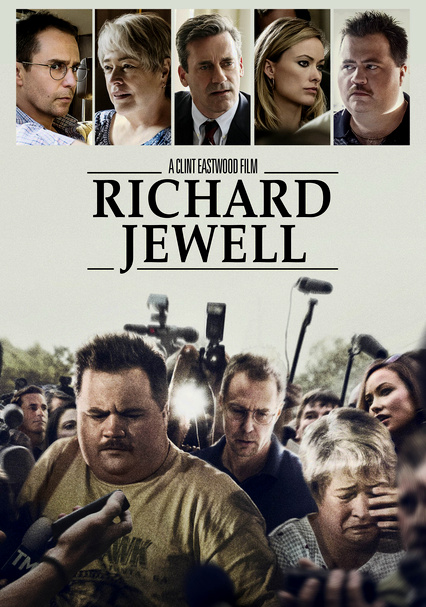
Richard Jewell-2019

Richard Jewell-2019

Director Clint Eastwood

Starring Paul Walter Hauser, Sam Rockwell, Kathy Bates

Scott’s Review #1,035

Reviewed June 19, 2020

Grade: B

With most Clint Eastwood films, especially in the latter part of his career, one should expect a mainstream story with a conservative edge. The man has lost his touch with age, unlike greats like Martin Scorsese.

This may not always make for the most cutting-edge cinematic experience, but the results can still be compelling.

Richard Jewell (2019) was not on my radar, but for the last minute, a surprising Oscar nomination for Kathy Bates.

I am still smarting that she presumably took the last spot over the snubbed Jennifer Lopez (Hustlers-2019).

But I digress.

As anticipated, the project has a predictable edge and a safe feel, Eastwood sending a nasty note to the media and the FBI shaming them for their corruption and ineptness.

The biography, centering around the Centennial Olympic Park bombing and its aftermath during the 1996 Summer Olympic Games in Atlanta, Georgia, tells the story in a nicely paced way but feels light, pulling too much of a right-wing slant.

Lead actor Paul Walter Hauser is the standout of the film, bringing empathy and heroism to his portrayal of the one and only Richard Jewell.

Our title character is an overweight, average-looking man who lives with his mother in a modest apartment in Georgia. He works as a supply clerk in a small law firm where he meets arrogant attorney Watson Bryant (Rockwell).

They bond over video games and become fast friends.

The time is 1986.

Jewell, aspiring to become a police officer, lands a job as a security guard at Piedmont College, where he is subsequently fired for overstepping his grounds. Finally, he begins a job running security for a concert series near the Olympic Games.

He has a keen eye for law enforcement and is passionate about doing his job well.

Hauser, who had supporting roles in I, Tonya (2017) and in BlacKkKlansman (2018), has reached his breakout role.  Hauser makes the character likable and loyal. Law and order are his passions, and he eats, sleeps, and breathes life.

The actor makes it clear to the audience that Richard is not dumb. He is brilliant but has not been handed an easy life. The relationship with his mother is touching, and he genuinely wants to protect those whom he serves.

As far as the supporting roles go, Rockwell is fantastic as Watson, who ultimately defends Richard against the FBI. With wit, sarcasm, and outrage, his passion comes across on screen as a gruff but loyal friend.

Other big-name stars are not as lucky with their roles.

Jon Hamm plays FBI Agent Tom Shaw, a made-up character who wants to railroad Richard at all costs. He tricks Richard into confessing, which he then records. Olivia Wilde is Kathy Scruggs, an unpleasant journalist who will trade sex for stories.

The character is unlikable, and rumors abound that the writing is sharply embellished. Both Hamm and Wilde suffer from one-note characters.

Let’s discuss Kathy Bates’s performance.

Bates is a legendary actress and well-regarded. In the film, her best role is that of the maniacal Annie Wilkes in Misery (1990). Over the past few years, she has brightened the small screen with daring and unique roles on American Horror Story. Her role as the sympathetic and kindly Bobi Jewell is not one of her best.

There is nothing wrong with her performance, but the character never has a big, memorable scene.

Unclear is the historical accuracy of the story, and my hunch is that liberties could offer good drama. Inexplicable is the omission of anything related to the real bomber, who is never mentioned.

What were his motivations? Whatever happened to him? Viewers can conduct their research, but a notable omission is not including this.

The story only centers around Richard’s accusers and attempted railroading simply because he fits the profile of a bomber. The film could have gone further.

Also, viewers are left with no knowledge that Richard traditionally put a rose on one of the bombing victims’ graves or other niceties that could have been included.

Why did Eastwood need to hammer home the point that Richard was fretting about the perception that he may have been gay? True or false the point feels like a homophobic tidbit thrown in to appeal to a likely redneck audience.

Richard Jewell (2019) will not appear on Eastwood’s “greatest hits” of top films or even top 10 lists. Mystic River (2003) and Million Dollar Baby (2004) would get my votes for “best of” the year.

The film is only a slightly above-average biography of a falsely accused man who eventually gains justice. The spin is a politically conservative one, portraying the main characters as heroes who meet unfortunate circumstances.

Oscar Nominations: Best Supporting Actress- Kathy Bates

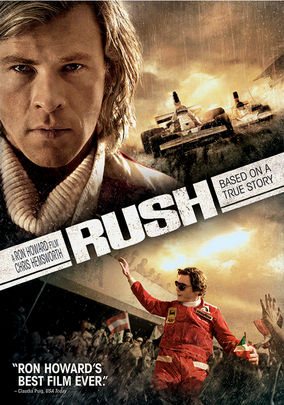
Rush-2013

Rush-2013

Director Ron Howard

Starring Chris Hemsworth, Daniel Bruhl

Scott’s Review #162

70253165

Reviewed August 31, 2014 

Grade: B+

Rush (2013), a film directed by Ron Howard, delves into the world of auto racing with the true story of the 1970s rivalry between racing superstars of the day, James Hunt and Niki Lauda.

The film mainly focuses on the period from 1970-1976 and the series of races and championships involving the two with some of their life trials and tribulations thrown in.

At first bitter enemies, respect, and friendship slowly build over the years.

Chris Hemsworth and Daniel Bruhl give excellent performances as Hunt and Lauda, respectively.

Ron Howard, a very mainstream, Hollywood-style director carves a nice film that is not edgy or particularly risk-taking but is a solid biopic that works and will hold the viewer’s interest.

The film is not gritty and has a definite safe feel, but that is unsurprising since Ron Howard directed it and is a characteristic of his films.

Reportedly, the feud between Hunt and Lauda is slightly embellished from the low-key real-life feud, and some events are created for effect- Hunt never beats up a reporter in Lauda’s defense.

The racing sequences are compelling and are not overdone or take away from the human aspect of the film. I loved seeing the real-life Hunt and Lauda at the end of the film as is quite common these days when telling a true-life story.

Bruhl, an unknown to me, received a deserving Golden Globe nomination for Best Supporting Actor.

Rush is not a movie to go down in history nor will it leave one thinking about or asking questions days after viewing it, but a slick, competent, entertaining story with impressive acting by the two leads.

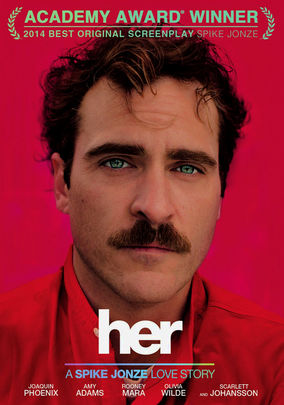
Her-2013

Her-2013

Director Spike Jonze

Starring Joaquin Phoenix, Scarlett Johannson

Scott’s Review #147

70278933

Reviewed August 5, 2014

Grade: A-

Her (2013) is a very unique film directed by Spike Jonze.

The film tells the tale of a lonely, depressed man named Theodore, played by Joaquin Phoenix, who lives in a beautiful high-rise in futuristic Los Angeles.

He works as a writer for a company that creates intimate cards for people in relationships. Having suffered a recent divorce, he falls in love with his computerized operation system named Samantha, played by Scarlett Johansson- voice only.

Conflicts emerge as the relationship deepens and intensifies. Her is a love story uniquely crafted, but also a story of loneliness and the world of technology we now live in.

It portrays human relationships as troubled and unsuccessful yet several characters have wonderful relationships with computers.

Is this what the future may bring with human beings? How many people have fallen in love with a fantasy or a voice on the phone?

The film ponders why relationships have been changed due to technological advances and wonders what will happen further into the future. Technology, while wonderful, has changed our interpersonal relationships and this film successfully delves deeply into that aspect.

The conversation is a lost art and Her features the joys and the tragedies of technology.

Visually, the film is successful because it portrays Los Angeles in a sophisticated, ultra-sleek, modern way that is fascinating.

Several technological games are featured (the Alien child is brilliantly comical) and the “Mom points” is fascinating in its irony.

Her is a deep film that raises questions and I applaud this in modern cinema.

Her is a slow-moving film, but a questioning one.

It won the 2013 Best Original Screenplay Oscar and I am so glad the academy recognized the originality of this film.

Oscar Nominations: 1 win-Best Picture, Best Original Screenplay (won), Best Original Score, Best Original Song-“The Moon Song”, Best Production Design