Obsession-1976
Director Brian De Palma
Starring Cliff Robertson, Geneviève Bujold, John Lithgow
Scott’s Review #1,503

Reviewed November 25, 2025
Grade: B+
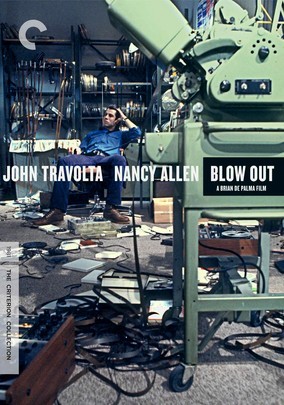
Brian De Palma’s Obsession was made in 1976, the same year as his iconic horror film Carrie, which made him a household name. This kicked off a period of other great De Palma films, like Dressed to Kill (1980) and Blow Out (1981).
The marginally successful film gained respectability because the director acknowledged that Alfred Hitchcock’s 1958 masterpiece Vertigo heavily influenced Obsession, which undoubtedly drew many to sit up and take notice.
Since Vertigo is a film I am ‘obsessed’ with, I can easily see the blueprint that it is on many levels.
Film composer and Hitchcock stalwart Bernard Herrmann beautifully scores both movies, so the similarities are undeniable on both a musical and a plot level. I immediately recognized the orchestral and mysterious notes that fill Vertigo with intrigue and sophistication.
A case of doppelgangers and an obsession with a presumed-dead character or the ghost of someone from the past are common elements in both, as a tangled web is spun.
The heroic male character struggles with this obsession while spiraling out of control and making rash or poor decisions.
The story begins in 1959 and centers on a prominent New Orleans businessman, Michael Courtland (Cliff Robertson), who is riddled with guilt following the death of his wife, Elizabeth (Geneviève Bujold), and daughter during a kidnapping-rescue attempt gone wrong.
Fast forward to 1975, and Brian, while traveling to Florence, Italy, meets and falls in love with a young woman who is the exact look-alike of his long-dead wife. He must do anything to have her and imagines she actually is his wife.
While Obsession is a compelling film with an appropriate, suspenseful buildup and a startling twist during the final act, Vertigo’s influence also makes it a weakness for Obsession on its own merits.
Since I knew it was patterned after such greatness, I also found myself constantly comparing it. While Obsession is good, it’s also more of an opening act to Vertigo’s headliner status.
Some standard De Palma particulars are incorporated, which is what I waited for throughout, and some are not.
The slow-motion sequence appears at the conclusion of the film, in a long shot of an airport terminal, as one character runs to another. The fact that one character weilds a hidden gun makes the perilous situation even more daring.
The dreamlike quality is apparent, including a puzzling romance scene in which Michael imagines a marriage and a steamy bedroom sequence with Elizabeth. He also imagines the kidnapping events happening again.
Is this real or imagined?
The split screen, so potent in Sisters and Dressed to Kill, is abandoned altogether.
De Palma also treads lightly on the subject matter of incest that could have made Obsession daring and cutting edge, but instead is softened considerably. This irritated me slightly, since I assumed there would be pushback from studio executives.
Robertson and Bujold have adequate chemistry, and it’s a treat to see John Lithgow in what would be the first of several De Palma films.
Obsession (1976) is worth a watch for De Palma fans because, like Sisters (1973), it offers a glimpse of the greatness he was about to achieve with grander, more fleshed-out efforts.
Some early tools from the director’s arsenal are featured, making the watch enjoyable and a treat for anyone with a fondness for what air travel was like in the mid-1970s, well before terrorism and 9/11 changed the world forever.