Tag Archives: Raffey Cassidy

The Brutalist-2024

The Brutalist-2024

Director Brady Corbet

Starring Adrien Brody, Guy Pearce, Felicity Jones

Scott’s Review #1,468

Reviewed March 1, 2025

Grade: A

The three-hour and thirty-five-minute film The Brutalist (2024) captivated me from the first sequence.

Adrien Brody’s character László Tóth, emerges from what is revealed as a ship. He emigrated to the United States after being sent to the Buchenwald concentration camp and forcibly separated from his wife, Erzsébet, and orphaned niece, Zsófia.

As his ship enters New York Harbor, he sees the Statue of Liberty.

The sequence follows László in the dark, and the audience is confused and unaware of what’s happening. His wife reads a Hungarian letter amid the scene explaining the events.

This is a top notch first scene.

The film is very long, so if you can’t watch it in a movie theater, we recommend watching it in miniseries style and digesting the segments slowly.

While The Brutalist initially feels like a studio blockbuster extravaganza, it’s shockingly an independent film made for relatively little money.

It’s brilliant but slow and methodic with rich moments of raw emotion, and graceful humanity. Parts are edgy and artistically creative with a quiet bombast.

Events occur between 1947 and 1958; the conclusion is set in 1980.

Having escaped post-war Europe, visionary architect László is well-respected and admired in his home country. He finds his way to Pennsylvania, where the wealthy and prominent industrialist Harrison Lee Van Buren (Guy Pearce) recognizes his talent for building.

The central theme of The Brutalist is László’s struggles to achieve the American Dream. While a wealthy client changes his life, it comes at a price. Do we trust Harrison?

An early scene showcases Harrison’s bad temper, and we know this will come into play again, but it does at the expense of László.

There are so many wonderful facets to The Brutalist; some slowly build and reach a dramatic crescendo, and others continue to bubble under the surface, ripe for discussion after the film has ended.

Though sometimes conventional with a heartwarming story of an immigrant’s struggle to succeed in 1950s USA, it is anything but a mainstream film when looked at closely.

Is there an attraction between Harrison and László? Harrison has no wife and seems uninterested in women. László visits a prostitute and cannot perform; he dances with a gorgeous woman and cannot be seduced. He cannot have sex with his wife.

A male/male rape scene is both gorgeously shot and filled with animalistic brutality. It’s the most unconventional rape scene I’ve ever seen in cinema.

László is also addicted to heroin and has bouts of rage. Is his relationship with Erzsébet more a friendship than a romance?

Brady Corbet’s direction is flawless, led by astounding cinematography of rural Pennsylvania. An early shot of a speeding bus with the opening credits shifting sideways brims with fresh style and creativity.

The sophisticated costumes and makeup perfectly fit the era, which is even more reason to give it kudos on such a small budget.

The acting by Brody, Pearce, and Jones is terrific.

We finally meet Erzsébet (Jones) halfway through the film when she makes her way to America. Crippled, due to osteoporosis, she is a brave and confident woman, finding career work as a writer for a newspaper.

Jones enfuses confidence into a role where she could be the victim. In a late scene, she tears down the house in a powerful performance, interrupting a family dinner.

Pearce electrifies in the best role of his career. His sexuality might explain his Jekyll and Hyde personality and bouts of rage. After all, this was the 1940s and 1950s. The actor plays ambiguity so well that knowing what Harrison feels is challenging.

Finally, Brody is brilliant. In a role arguably similar to his character in The Pianist (2002), he is a clever man forced as an immigrant to play the lousy cards he is dealt. With raw emotion, Brody makes every scene real and powerful.

Is he better off in Hungary or Israel?

Corbet, who also co-wrote the screenplay, delves into the experience of an immigrant. He showcases discrimination, preconceived notions, and the hopes and dreams of one man with the cards stacked against him.

The Brutalist (2024) is a beautiful film with much to say. It has soul and grit and perfectly pays tribute to an experience in the 1950s while sadly feeling relevant to the discrimination still facing immigrants in present times.

Oscar Nominations: 3 wins-Best Picture, Best Director-Brady Corbet, Best Actor-Adrien Brody (won), Best Supporting Actor-Guy Pearce, Best Supporting Actress-Felicity Jones, Best Original Screenplay, Best Original Score (won), Best Production Design, Best Cinematography (won), Best Film Editing

Independent Spirit Award Nominations: Best Director-Brady Corbet
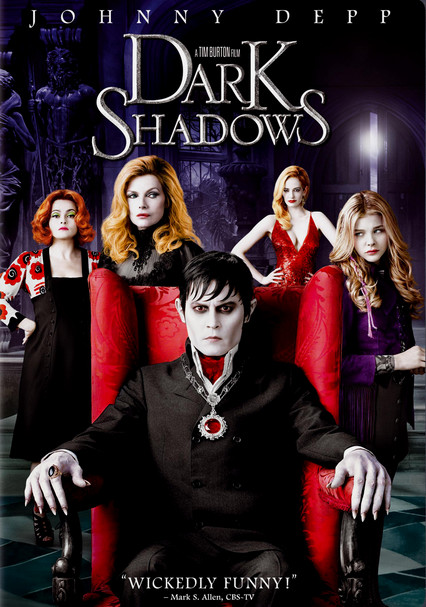
Dark Shadows-2012

Dark Shadows-2012

Director Tim Burton

Starring Johnny Depp, Michelle Pfeiffer, Helena Bonham Carter

Scott’s Review #1,203

Reviewed December 3, 2021

Grade: C+

Sometimes a great idea doesn’t pan out. On paper, relaunching the unique and gothic 1960s daytime television series Dark Shadows with a tribute on the big screen with even bigger stars sounds wonderful.

The endless possibilities and the inevitable nods to history are head-spinning.

Sadly, the film version of Dark Shadows (2012) directed by Tim Burton is miscategorized and misunderstood by all involved. It’s billed as a dark comedy rather than horror or even fantasy and comes across as more of a mockery than a real nod to the series.

It’s completely over-the-top and misses any of the wonder and the spookiness that made the long-ago black and white show a daily adventure.

I do not profess to have seen the entire series but I have watched much of the first season and understand the appeal. Fans will be disheartened by Burton’s botched attempts to recreate a great idea.

Depp, a frequent guest star in Burton’s film works, strikes out as the iconic character Barnabas Collins, the eighteenth-century vampire who awakens in the twentieth century though he’s not as bad as he was when he feebly stepped into the Willy Wonka character in 2005.

Yikes.

The only saving grace is the creative and magical visual effects and set design which provides enough imagination and macabre fascination to at least partly save this otherwise messy experience.

The plot gives a brief explanation of the history.

In eighteenth-century Maine, Barnabas Collins (Depp) presides over the town of Collinsport. A rich and powerful playboy, Barnabas breaks the heart of a witch named Angelique (Eva Green) who deviously makes him pay.

Angelique turns Barnabas into a vampire and buries him alive.

Two centuries later, Barnabas escapes from his tomb when builders are erecting a Mcdonald’s and finds the current 1970s Collinsport a very different place. His once-grand estate has fallen into ruin, and the dysfunctional remnants of his family have fared no better.

His resurrection creates complications and drama for the entire family.

Burton knocks it out of the park with the visuals.

The gothic mansion, in particular, is right up his alley and he embraces the possibilities with gusto. Every creak or wind sound heard within the mansion co-aligns with the dark and dreary purples and brown colors.

Frequent candles mark the proper mood and investigating the vast number of rooms was something to look forward to.

Since the rest of the film sucked I had nothing better to do than fully embrace and focus on the art and set designs.

Heavyweights like Michelle Pfeiffer, Helena Bonham Carter, and Depp do their best but oddly overact in nearly every scene. Their direction must have been skewed toward comedy instead of adding any meat or emotional relevance to the characters.

The original series created something strangely dramatic and compelling on a shoestring budget. There was a delicious haunting and grabbing nature that made you anticipate the next episode and who might fall victim to the vampire.

The film veers into a vastly different territory.

Burton and Depp’s Barnabas struts around emitting one-liners for intended giggles. The other characters appear to be dressed for Halloween and are dumb and morose.

The feeling I got was that of a retread to a situation comedy like The Addams Family rather than a horror soap to be taken seriously.

The sexual references and the occasional bloody vampire effects are okay but seem peppered in to justify the dark comedy.

Even an uninspired cameo by shock rocker Alice Cooper is perceived as a weak attempt to add something frightening or dangerous.

Unsurprisingly, Dark Shadows (2012) performed poorly at the box office and was derided by true fans of the series and almost every other film critic.

This caused Barnabas and his family to slink back into their coffins possibly for good.

What a shame.

The Killing of a Sacred Deer-2017

The Killing of a Sacred Deer-2017

Director Yorgos Lanthimos

Starring Colin Farrell, Nicole Kidman

Scott’s Review #774

Reviewed June 15, 2018

Grade: A

For fans of Greek director Yorgos Lanthimos, who created such disturbing and bizarre films as 2009’s Dogtooth and 2015’s The Lobster, The Killing of a Sacred Deer (2017) will be a treasure.

As with those films, the odd story and the peculiar acting styles are prevalent, making the film quite the experience.

I relish the film and its unusual nature. It offers a cinematic experience that is insightful, mesmerizing, extreme, and, quite frankly, brilliant.

Steven Murphy (Farrell) is an esteemed cardiac surgeon who “befriends” a troubled teenage boy named Martin (Barry Keoghan), whose father had died years earlier as a result of Steven’s negligence.

They fall ill when Martin slowly insinuates himself into Steven’s family life. Martin threatens to kill the entire family unless Steven kills either his wife Anna (Nicole Kidman) or one of his two children- the victim can be of his choosing.

The creepy premise is enormously intriguing as the conclusion cannot be foreseen.

A basic yet deep storyline is wonderfully spun, with many possible plot directions.

After forty-five minutes or so of the audience wondering why Steven and Martin meet secretly in diners, hospital corridors, or other remote areas, the teen boy’s true motivations come to the surface as he rapidly and calmly puts his cards on the table for Steven.

Surprisingly, none of the characters are particularly sympathetic.

One would assume that the Murphy family- wholesome, affluent, and astute, would garner audience support, but we slowly peel back the onion on each character.

With a gorgeous house in a quiet Cincinnati neighborhood, Steven and Anna (a doctor herself) are sometimes harsh and physical with their kids. In contrast, the kids (Bob and Kim) develop a strange fascination with Martin.

In this way, each character is peculiar and has dire motivations as the plot unfolds.

Lanthimos is quietly becoming one of my favorite new directors. He slowly churns out one disturbing film after the next. His clear Stanley Kubrick influences bubble to the surface, particularly in The Killing of a Sacred Deer.

The score is crisp with uniqueness, with plodding and sudden bombastic classical music pieces eliciting emotions like surprise and terror from the audience.

From a visual perspective, fans of Kubrick will no doubt notice the long camera shots and slowly panning camera angles. The hospital’s long and foreboding hallways are prominently featured as we follow a character walking along the corridors.

This is highly reminiscent of the Overlook hotel sequences in the 1980 Kubrick masterpiece, The Shining.

One particularly jarring nuance in the film is the speech patterns of most of the actors—clearly dictated by Lanthimos and also present in 2015’s The Lobster.

The character of Steven talks very quickly but with a monotone delivery and in a matter-of-fact style; Kim and Martin also speak this way. I didn’t notice the quality as much with Kidman’s Anna, but Farrell went to town.

I’m not sure this works throughout the entire film since the mannerisms give off almost a comical element.

This uniqueness makes the film more quirky and decidedly non-mainstream, which is to be celebrated.

The climax of the film is brutal.

As Steven brandishes a loaded shotgun, the family gathers in their family room, Anna fussing over her new black dress. As the group dons pillowcases, Steven goes Russian roulette-style on the family, randomly firing a shot until one member is killed.

When the remaining family members see Martin at the diner the next day, they give him icy, hateful looks.

The entire scene is done without dialog and is tremendously macabre.

Rest assured, I am eagerly awaiting Lanthimos’s next project (reportedly already in the works) and hope against hope he continues to use the superb Colin Farrell, the brilliant Nicole Kidman, and newcomer Barry Keoghan again.

Thanks to tremendous acting, a riveting score, and enough thrills and creeps to last a lifetime, The Killing of a Sacred Deer (2017) is at the top of its game.

Independent Spirit Award Nominations: Best Supporting Male-Barry Keoghan, Best Cinematography