Category Archives: Nick Adams

Picnic-1955

Picnic-1955

Director Joshua Logan

Starring William Holden, Kim Novak

Top 250 Films #81

Scott’s Review #550

Reviewed December 19, 2016

Grade: A-

Picnic is a classic 1955 film that is wonderful to watch over Labor Day weekend or anytime during the humid summer season.

The film perfectly depicts summertime in a tiny town in Kansas. It is a slice-of-life story about life in middle America during the 1950s, despite its trials and tribulations.

William Holden stars as a “wrong side of the tracks” type of guy who arrives in a quiet Kansas town on Labor Day weekend, disrupting the town’s events and causing scandals for the townspeople.

He is a hunky former college football player and exudes sexuality.

He then falls in love with his best friend’s girlfriend, Madge Owens, played by Kim Novak. The chemistry between the two stars is the film’s main appeal.

The supporting cast makes this film unique (Arthur O’Connell and Rosalind Russell star as townspeople who are in a relationship of their own).

Picnic also contains a gorgeous and lovely musical score, precisely “Theme from Picnic” and “Moonglow”.

It is shot on location in Kansas, mostly in and around Hutchinson, and is considered classic summer enjoyment.

Based on the Pulitzer-award-winning play.

Oscar Nominations: 2 wins-Best Motion Picture, Best Director-Joshua Logan, Best Supporting Actor-Arthur O’Connell, Best Scoring of a Dramatic or Comedy Picture, Best Art Direction, Color (won), Best Film Editing (won)

Rebel Without a Cause-1955

Rebel Without a Cause-1955

Director Nicholas Ray

Starring James Dean, Natalie Wood

Top 250 Films #112

Scott’s Review #885
Reviewed April 14, 2019

Grade: A

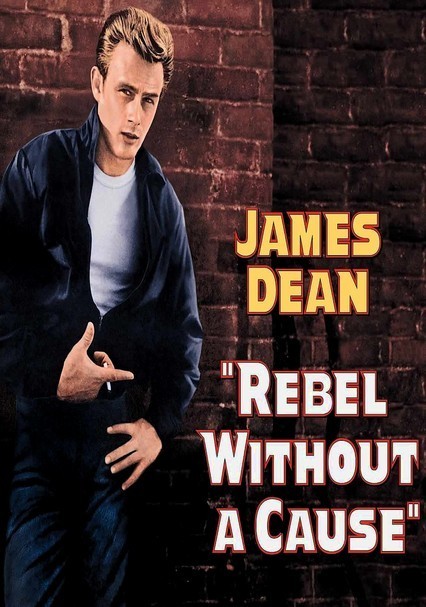
Rebel Without a Cause (1955) is usually most associated with being the best-remembered film of star James Dean’s short-lived career. East of Eden (1955) and Giant (1956) are his other notable films in a much too brief time.

With Rebel Without a Cause, Dean and underappreciated director Nicholas Ray crafted a story about teenage angst and rebellion that has brilliant authenticity and was the first of its kind to influence countless other films.

In Los Angeles, three teenagers meet and commiserate at the juvenile section of the police station, revealing their respective crimes. Jim Stark (Dean) has been brought in for drunkenness and meets John “Plato” Crawford (Sal Mineo), who was brought in for killing a litter of puppies, and Judy (Natalie Wood), who was brought in for curfew violation.

All three suffer from problems at home and confide in one another. Their most profound revelations connect them and bond them for life.

To complicate matters, Jim is a new student and must endure challenges associated with this, in addition to his troubled home life. His main rival is Buzz Gunderson (Corey Allen), who challenges Jim to a knife fight and, finally, a deadly “Chickie Run” game.

This leads to Buzz’s death, which infuriates his gang, who mistakenly assume that Jim ratted them off to the cops. This puts a target on Jim’s back as he slowly falls in love with Judy and develops a deep friendship with Sal, who idolizes him.

One key to the success of Rebel Without a Cause is in the casting. Dean, rebellious in real life and the roles he portrayed, chews up each scene he appears in.

The famous scene in which Jim quarrels with his father (Jim Backus) results in a bombastic emotional unraveling and an exclamation of “You’re tearing me apart!” as his blind-sided parents bicker with one another over how best to handle the situation.

Dean is a pivotal reason for the film’s success and landmark status.

Wood infuses her character, Judy, with poignancy and a calm demeanor. Judy is a good kid who behaves wildly out of frustration over her inability to communicate with her deliberately distant father (William Hopper).

Finally, Plato (Mineo), who is so sensitive that he threatens to break apart at the seams, has taken to killing puppies as a desperate cry for attention from his wealthy, always absent parents.

Wood and Mineo support the film in brilliant form.

Jim and Judy are likable as a pair from opposite sides of the tracks, another influential aspect of the film that became commonplace in oodles of entertainment genres over the years.

Good Girl meets Bad Boy is dangerous, tender, and filled with story possibilities.

It is implied that Plato is in love with Jim, but in 1955, films were meticulous about pushing the envelope much further than an implication when it came to homosexuality. Rumors ran rampant that Dean and director Ray had a torrid love affair off-screen.

Another positive is that the film is told within twenty-four hours, providing excellent pacing and an action-packed emotional punch. The best scenes occur at night, especially the deadly car race, and the fantastic conclusion takes place in the old deserted mansion that the trio of friends claim as their sanctuary.

The tragic final ending is sure to result in the shedding of a tear or two by anyone who watches and is entranced by the decisive finality of the event.

Watching the film in the present day, one must appreciate the enormous influence that Rebel Without a Cause has achieved.

Some classics that succeeded Rebel and stand out on their own include American Graffiti (1973), The Breakfast Club (1985), and even West Side Story (1961), which also starred Natalie Wood. Each is riddled with teenage angst, hormones, and elevated emotions, and all contain a seriousness and a depth all their own.

Rebel Without a Cause (1955) is a film that should be viewed and viewed again for more than the prominent and impressive story it tells.

The film is directed well and speaks to a generation of unruly and angry teenagers, giving them a much-needed voice. It is fraught with emotion and balance for current and future generations of teenagers to learn from.

Oscar Nominations: Best Motion Picture Story, Best Supporting Actor-Sal Mineo, Best Supporting Actress-Natalie Wood

Giant-1956

Giant-1956

Director George Stevens

Starring Rock Hudson, Elizabeth Taylor, James Dean

Top 250 Films #235

Scott’s Review #898

Reviewed May 14, 2019

Grade: A

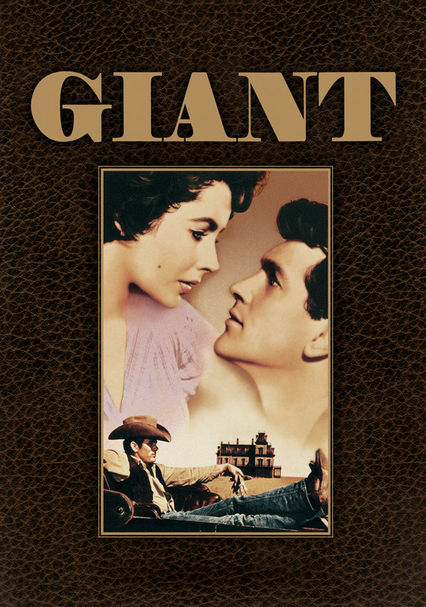
Giant (1956) is a sweeping epic firmly ensconced in both the Western genre and the dramatic field of play. The film is a flawless Hollywood production featuring three of the most recognizable stars of the time and a slew of powerful supporting actors offering rich performances and good characterizations.

The thunderous melodrama plays out over decades with the dry and dusty locale and the superb cinematography, among the finest aspects of the film experience.

Dashing and wealthy Texas rancher Jordan Bick Benedict Jr. (Rock Hudson) falls in love with and marries socialite Leslie Lynnton (Elizabeth Taylor) after a whirlwind romance in Maryland.

The pair begin their married life on Bick’s immaculate Texas ranch, but not before two central figures thwart their happiness. Jett Rink (James Dean) falls obsessively in love with Leslie while Bick’s sister, Luz Benedict (Mercedes McCambridge) despises Leslie, taking out her vengeance on Leslie’s horse.

The trials and tribulations continue as the characters age through the years.

The trifecta of talents Taylor, Hudson, and Dean make Giant the ultimate in treats as one fawn over the good looks of each (or all!) over the long three hours and eleven minutes of illustrious screen time.

Making for more powerful poignancy is that the film is Dean’s final appearance on-screen before his tragic death in a car accident, his death occurring before it was even released to the public.

Dean plays Jett to the hilt as a surly ranch hand, jealous of Bick’s riches and wanting to take Bick’s woman for himself. Jett is an unsympathetic character and the one I find the most interesting. Decades-long rivals, Jett and Bick’s lives overlap continuously as Jett finally becomes rich and dates Bick and Leslie’s daughter, much to their chagrin.

Jett is a racist, which was common in the early to mid-1900s, especially in southwestern Texas. Sadly, he never finds happiness, which is the central part of his depth.

The screenplay is peppered with meaningful and relevant social issues that provide sophistication and a humanistic approach. The film inches towards a liberal slant as the plot progresses, the most famous example occurring in the final act as Benedict’s stop at a roadside diner with a racist sign, implying the restaurant will not serve Mexicans.

Bick takes a dramatic stance and shows heart as his family, now multi-racial, needs his help. Culminating in a fight, the scene reveals the enduring love that Bick and Leslie share for one another.

Criticisms of the films’ enormous length and scope are wrong as these aspects deepen and the components I find the most appealing.

Director George Stevens never rushes through a scene or makes superfluous edits to limit running time. Instead, he allows each scene to marinate and graze like real life. Lengthy scenes play out with honest conversations and slow build-up, allowing the characters’ opinions and motivations to take shape slowly.

On the surface, a drama and western, the film can be peeled back like an onion to reveal deeper nuances. The racism, love story, and class structure ideals are mesmerizing, especially given the true-to-life humanitarian that Taylor was.

One can sit back and revel in the knowledge that she must have been enjoying the rich character.

Along with great epics like Gone with the Wind (1939), Lawrence of Arabia (1963), and The Godfather (1972) sits a film that is rarely mentioned with the other stalwarts, and that is a shame. With magnificent shot after shot of the vast Texas land and with enough gorgeous stars to rival the landscape, Giant (1956) is a must-see.

A Western soap opera with terrific writing, rife with racism, prosperity, and fortitude, the film deserves more praise than it’s given.

Oscar Nominations: 1 win-Best Motion Picture, Best Director-George Stevens (won), Best Actor-James Dean, Rock Hudson, Best Supporting Actress-Mercedes McCambridge, Best Screenplay-Adapted, Best Music Score of a Dramatic or Comedy Picture, Best Art Direction-Color, Best Costume Design-Color, Best Film Editing

Pillow Talk-1959

Pillow Talk-1959

Director Michael Gordon

Starring Rock Hudson, Doris Day

Scott’s Review #907

Reviewed June 6, 2019

Grade: B+

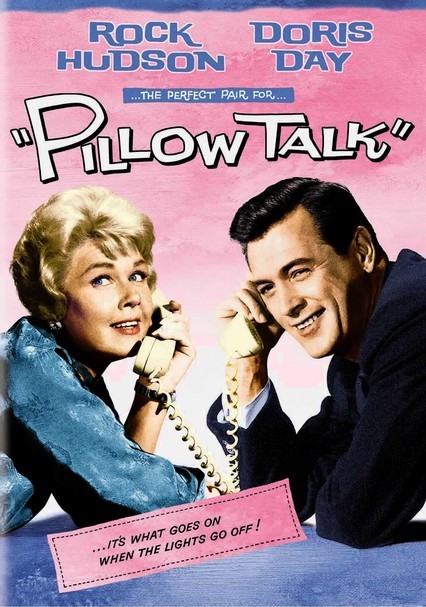
Pillow Talk (1959) is the ultimate in romantic comedies from the age of innocence in cinema.

In 1959, pictures were still wholesome and safe, providing happy stories and charming characters. The film is a lovely and enchanting experience with intelligent characters and fantastic chemistry among its leads.

Combined with a good romance and comic elements, it makes for a fun watch that still feels fresh and bright decades later.

Doris Day and Rock Hudson smolder as singles living in Manhattan, New York City. Day plays Jan Morrow, a perky, independent interior decorator who dates frequently but has not yet found love. Hudson plays Brad Allen, a talented, creative Broadway composer and playboy who lives in a nearby apartment building.

Jan is frustrated by a party line that allows her to hear Brad’s endless phone conversations with the women in his life. He is annoyed by her prim and proper, holier-than-thou attitude. They bicker on the phone but have not met.

Through their mutual, yet unknown to them, acquaintance Jonathan Forbes (Tony Randall), Brad realizes who Jan is, which leads to hilarity as he fakes a Texan accent and invents a new persona: Rex Stetson, a wealthy Texas rancher.

He succeeds in wooing Jan, who falls madly in love with him while unaware of his identity. Events culminate in the inevitable big reveal when the couple vacations at Jonathan’s cabin in nearby Connecticut.

Rock Hudson oozes masculinity and charisma, and nearly every woman he meets falls madly in love with him. Hudson’s sexual preferences are hidden from the public but well-known within the film industry, so one wonders if a few comical situations were added as an inside joke.

One can speculate if these additions were made with or without the star’s knowledge; rumors abound that Hudson reportedly carried on an affair with actor Nick Adams (Tony) during filming.

A recurring theme involves Brad mistakenly walking into an obstetrician’s office (twice!) and the doctor and nurse assuming he may be the first man to become pregnant as they attempt to locate Brad when he continues to disappear.

Later, Brad attempts to trick Jan into believing Rex might be a homosexual because of his love for effeminate things.

The supporting players bring wit to Pillow Talk and are key to the film’s enjoyment. Randall, as Jonathan, is not quite the nice guy but not entirely the foil. As he has designs for Jan, he warns Brad to keep away.

His intention, which fails, is to woo her with money, but Jan seeks true love.

Thelma Ritter’s performance as Alma, Jan’s boozy housekeeper, is delicious. She adds necessary comic timing and sardonic humor. We crackle with delight when she ultimately finds love with the elevator operator.

The lavish set design is flawless. It brightens the film while adding the luxurious style and sophistication that only New York City apartment living can bring. The combined sets of Brad’s and Jan’s apartments are gorgeous.

With bright colors and 1950s-style furniture, one can easily imagine how beautiful it would be to live in an apartment of this brilliance—I know this viewer did!

A Doris Day film would not be complete without several songs that the singer/actress performs. “Pillow Talk” during the opening credits, “Roly Poly” in the piano bar with Blackwell and Hudson, and “Possess Me” on the drive up to Jonathan’s cabin.

Pillow Talk (1959) is an example of a rich romantic comedy with significant elements. It is a bit fantasy and silly but contains style, sophistication, and humor.

The film was an enormous success and was deemed “the feel-good film of the year” in many circles. Following the film, Hudson’s career was relaunched after a snag years earlier.

Oscar Nominations: 1 win-Best Actress-Doris Day, Best Supporting Actress-Thelma Ritter, Best Story and Screenplay Written Directly for the Screen (won), Best Scoring of a Dramatic or Comedy Picture, Best Art Direction, Color