Category Archives: Denzel Washington

Philadelphia-1993

Philadelphia-1993

Director Jonathan Demme

Starring Tom Hanks, Denzel Washington

Top 250 Films #171

Scott’s Review #782

Reviewed July 3, 2018

Grade: A

Having the powerful distinction of being one of the first Hollywood LGBT films to deal with heavy issues such as HIV/AIDS and homophobia, Philadelphia (1993) is a film to champion.

The film does contain some less-than-positive stereotypes across the board, but was a tremendous box office success and more importantly introduced a large audience to a still (at that time) taboo subject.

Hopefully, this had a tremendous effect on creating an understanding of a vicious disease and its ramifications.

Tom Hanks deservedly won the Best Actor Oscar for his lead performance of an AIDS and discrimination victim as did the heartbreaking theme song “Streets of Philadelphia”, penned by Bruce Springsteen, win for Best Original Song.

Director Jonathan Demme creates a world quite realistic in portrayal at the corporate level. Hotshot attorney Andrew Beckett (Hanks) has a promising future at one of the country’s largest law firms in Philadelphia.

Assigned a high-profile case, it is noticed that Andrew has developed lesions across his body and is subsequently fired from the firm. After deciding to sue the firm and having no luck finding an attorney to represent him, he finally meets struggling black attorney, Joe Miller (Denzel Washington), who begrudgingly takes the case to gain exposure.

Philadelphia is a film that is a courtroom drama with a cause and is firmly ensconced in the “message movie” genre.  A lesser version, and perhaps one made even a decade or so after 1993, might be reduced to the Hallmark television movie category.

Fortunately, the timing is perfect and Philadelphia can be remembered as a film championing LGBT rights.

Hanks’s performance is just dynamic- his character is meant to be empathetic, a victimized man unjustly suffering not only discrimination but a death sentence. The audience knows what is to come and as Andrew loses more weight and appears more sullen and haggard, the tale increases in sadness.

The final act of Andrew’s court victory is to be celebrated, but also is heartbreaking as a feeble and dying Andrew now lies close to death.

Hanks brilliantly infuses Andrew with courage, heart, and values, so much so that he becomes a hero to the audience even if their sexuality is different than his.

As much as the undying love for Hanks is deserved, the powerful supporting cast is a treasure. Washington is not as sympathetic a character as Andrew is, but learns a lesson and eventually leaves his machismo on the sidelines.

The heart-wrenching death scene culminating in the hospital room involves lover Miguel (Antonio Banderas), surrounded by Andrew’s family, all-embracing as one. There is beauty mixed with tragedy in this one scene alone.

Even Mary Steenburgen as the tough defense lawyer shows some heart. And who can say more about the dynamic Joanne Woodward as Andrew’s mother?

Unfortunately, there are a few stereotypes to endure, and sadly many early LGBT films (and some still do!) include these for emphasis- or perhaps ignorance? Nonetheless, these make the film seem slightly dated given the LGBT progress made in the decades since the film was released.

Joe Miller is portrayed as a macho guy afraid to be viewed as gay- he even jokes around about being a “man” with his wife. Joe also grimaces when he shakes hands with Andrew and suddenly realizes Andrew has AIDS.

Nearly all of Andrew and Miguel’s gay friends are effeminate- this hardly seems possible.

Such is a monumental achievement when a film breaks barriers by telling a story of critical importance. Philadelphia (1993) does just that by patiently asking its audience for tolerance, understanding, and heart.

In return, the film educates, floods with emotion, and breaks hearts. Other LGBT films would come along that were arguably even better, but Philadelphia is a groundbreaking experience sure to be remembered as the first of its kind.

Oscar Nominations: 2 wins-Best Actor-Tom Hanks (won), Best Original Screenplay, Best Original Song-“Streets of Philadelphia” (won), “Philadelphia”, Best Makeup
Gladiator II-2024

Gladiator II-2024

Director Ridley Scott

Starring Paul Mescal, Pedro Pascal, Denzel Washington

Scott’s Review #1,456

Reviewed December 21, 2024

Grade: B+

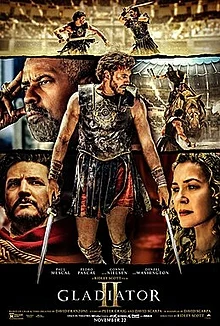
Ridley Scott, who directed Gladiator (2000), returns to the fold to direct Gladiator II almost twenty-five years later. Both are epic proportions and center on the barbaric yet luscious Ancient Roman Era.

It’s the type of film best seen in the theater on a large screen with loud surround sound. It’s bloodier than the first Gladiator.

Scott wisely incorporates snippets of the original’s ending to familiarize the audience with the events and ties a significant character to characters from the first film, both dead and alive.

The great thing about Scott directing both films is that despite the long gap between them, they feel very much aligned and have a similar tone.

When the film begins, we are told that Rome is nearly ruinous and led by tyrants. The peacefulness after Maximus’s (Russell Crowe in Gladiator) death is sadly gone.

Rome is now ruled by corrupt twin emperors, Geta (Joseph Quinn) and Caracalla (Fred Hechinger). They are barbaric and evil and use scare tactics to keep the masses in line.

We meet Lucius (Paul Mescal) when the emperors of Rome steal his home and kill his wife. He has unrelenting rage in his heart, and it’s revealed that he is the rightful heir to Rome and witnessed his father’s (Maximus) death at the hands of his uncle as a young boy.

With the empire’s future at stake, he looks to the past to find the strength and honor needed to return the glory of Rome to its people.

The fact that Lucius is the rightful heir and that his mother, Lucilla (Connie Nielsen), is still alive and now remarried to General Acacius (Pedro Pascal) provides immediate rooting value.

Combined with the viciousness of the current regime, we want the good guys to beat the bad guys. The bloody battles and the machismo nature of the story make it a muscular vehicle sure to appeal to a male audience.

It’s that type of film.

However, there is much to see visually to titillate one’s loins. Mescal looks chiseled and cut in his gladiator attire, sweatily and bloodily fighting others to the death. His hunky nature and dreamy blue eyes only make the character a sure crowd-pleaser.

Mescal also looks enough like Crowe to make the heritage believable.

Pascal and Denzel Washington are terrific in supporting roles. Washington, as Macrinus, a motivated leader intent on having the throne for himself, is bisexual, though this is hardly explored other than one line of dialogue.

A rumored kiss between Macrinus and another male character was reportedly scrapped, and shame on the powers that be for that. Too much for mainstream audiences?

The central LGBTQ+ presence is saved for the more unhinged twin ruler in a more stereotypical form.

There is little unpredictability since we know from the start that Lucius will conquer the tyranny and save the Roman people from further chaos.

But, the violent matches between gladiators and vicious beasts and one another are entertaining to watch and enthralling in their violence.

The visuals of a mock Roman Colosseum and palatial dining areas are well constructed and look real enough to transport us to the Roman Era.

Politically, the twins are compared to present-day tyrannical rulers in office and a rogue’s gallery of appointed officials. Although it can be argued that the twins are somewhat played for laughs, the fact that dictators like this rule is scary.

Gladiator (2000) packs more emotional punch than Gladiator II (2024), but watching them in parallel would be fun. From a story perspective, they link well and have the same look and feel.

Oscar Nominations: Best Costume Design

The Little Things-2021

The Little Things-2021

Director John Lee Hancock

Starring Denzel Washington, Rami Malek, Jared Leto

Scott’s Review #1,191

Reviewed November 5, 2021

Grade: B

The serial killer genre in film always fascinates me. Gems like Dirty Harry (1971), The Silence of the Lambs (1991), Seven (1995), and Zodiac (2007) immediately spring to mind as top-of-the-heap works.

John Lee Hancock, who directs The Little Things (2021), thinks so too, as he borrows from those pictures throughout his film.

The film features superior acting and a fantastic mood, complemented by practical musical score elements and absorbing cinematography of Los Angeles and its surrounding areas.

The script must have been compelling enough to attract heavyweights like Washington, Malek, and Jeto to join on board.

Despite these wins, The Little Things is lackluster and ultimately disappoints. I was ready to award it a solid B+ if not for the confusing and unsatisfying conclusion, which reminds me of a weak copy of those mentioned above, Seven.

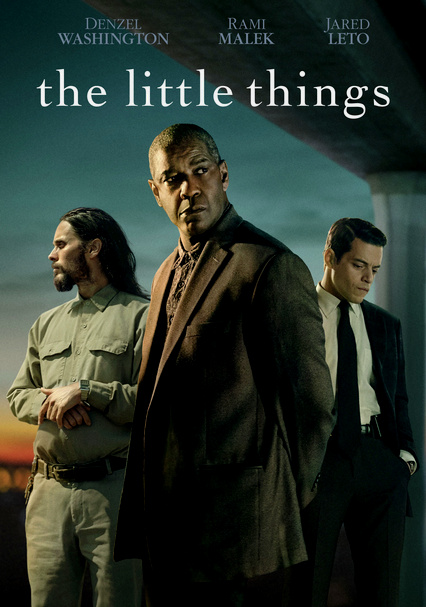
Deputy Sheriff Joe “Deke” Deacon (Washington) joins forces with Sgt. Jim Baxter (Malek) to search for a serial killer who’s terrorizing Los Angeles. The blueprint is similar to a case that Deacon worked on and ended with a deadly mistake and his resulting heart attack.

As the pair track the suspected culprit, a loner named Albert Sparma (Leto), Baxter becomes aware of Deke’s inner demons and risks going down the same emotionally wrecked path.

A cat-and-mouse game ensues with Sparma continually toying with both Deke and Baxter.

The story is familiar territory and sets the stage for the rest of the film. How many times in film have we seen a detective tortured over a case? Despite Sparma being the only real suspect and presumed serial killer, we never do learn whether or not he did the deeds.

One girl who escaped the killers’ clutches may recognize Sparmas’ boots, but is dismissed after concluding that, since he is in police custody, he must be the killer.

The opening sequence is excellent despite using a direct rip-off of the scene in The Silence of the Lambs where the girl is cruising down an empty desert road at high speed, singing a rock song without a care in the world.

Thankfully, they had her crooning a different song, but the scene mirrors the other. She is pursued by a killer in another car. The scene is a terrific way to start.

The ensemble does good work with the characters they play. Leto gets the showiest role while Washington plays yet another police detective, a role he now can probably play in his sleep, but always does well.

Malek was cast based on the success of his Oscar-winning portrayal of Freddie Mercury in Bohemian Rhapsody (2018).

Leto received enough acclaim to earn a Screen Actors Guild Award nomination and a Golden Globe nomination. This prompted me, and undoubtedly others, to see The Little Things, which suffered at the box office due to the COVID-19 pandemic.

I didn’t buy the period of 1990-1991 for a second, regardless of how many shiny Chevy Impalas were used in the production. None of the characters looked like the time that it was supposed to be, though I admired the now old-fashioned diners and storefronts they used.

I don’t know much about Hancock, who both directs and writes The Little Things, but looking at his filmography, he has produced such works as The Blind Side (2009) and Saving Mr. Banks (2013).

Since both of these films are safer works, it’s unsurprising that much of the film resembles watching an episode of CSI.

Hancock could do with a dose of rawness over sleekness in his next film.

The Little Things (2021) pales in comparison to other, better-known genre films and will not be remembered well, despite making a valiant effort to play with the big boys.

Unfortunately, it’s a minor league experience that borrows too heavily from other films and therefore lacks a distinct identity.

I shudder to think of the result if not for the big stars who appear.

Ma Rainey’s Black Bottom-2020

Ma Rainey’s Black Bottom-2020

Director George C. Wolfe

Starring Viola Davis, Chadwick Boseman

Scott’s Review #1,107

Reviewed February 3, 2021

Grade: A-

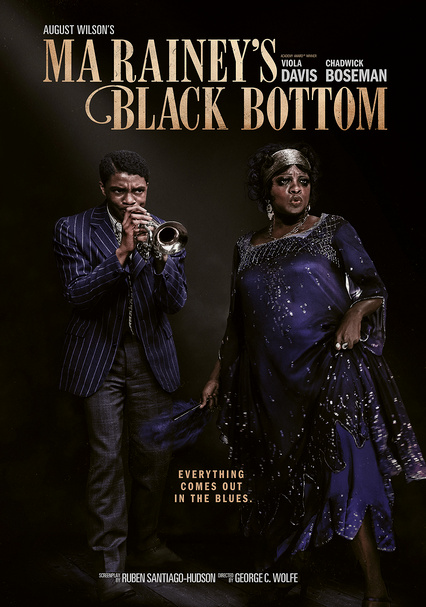
Viola Davis and the late Chadwick Boseman lead tremendous performances in Ma Rainey’s Black Bottom (2020), a film fueled by exceptional acting.

The production is shot like a play and is based on one written by August Wilson. He also wrote Fences, which was adapted into a film in 2017 and starred the terrific Davis.

As wonderful as Davis is amid a bruhaha of hype over how powerful her performance is, it’s an ensemble event that makes Ma Rainey’s Black Bottom a memorable experience.

Ruben Santiago-Hudson adapts a fast-paced screenplay with quick dialogue, extended scenes, and a startling turn of events. The action unfolds over one day, similar to other Wilson works, adding a robust and powerful strength as the situations unfold.

The time and the racial aspects are key to the crackling dialogue.

Most of the cast is black, and it’s 1927, so how can the work not be about race? In clever and heartbreaking form, much of the racism is internalized, pitting black versus black instead of the standard white versus black.

Despite the excellent singing and acting, this point hit home the most with me and was the most uniquely palpable. It’s bad enough when black people, or any other minority group, face hatred and resentment from other people, but when it’s one of your own, this is bitter and hard to watch.

The conflict and fury escalate to a vicious climax as one character lashes out in deadly form, ruining more than just their own life. It has a spiraling effect that utilizes the claustrophobic rehearsal hall where these scenes take place as a backdrop.

There are two different stories taking place here, and both are superb.

Ma Rainey (Davis) is a superstar, being female and black, her victory is achieving that success, to begin with, against insurmountable odds.

We only imagine this because the film doesn’t go into her backstory too much- they don’t need to. Her struggle is obvious, and we can only imagine how she managed to get so far in her career. Was she able to capitalize on her success with her voice alone?

Ma is immensely talented and angry. She is pouty and tough as nails with her white producers, who have invited her to Chicago to record an album. She knows they want one thing from her, and that’s money-making profits from her talent.

She demands a Coke before she will perform. She smirks as the producers scurry to fulfill her request, not daring to show too much irritation that will cause her to cancel the session and return to the South.

Is she a diva? Well, yes, but shouldn’t she be? If she were a gracious person, would people walk all over her?

We learn she would easily be arrested for causing a stir in the streets if not for her manager, Irvin (Jeremy Shamos), schooling the police on who she is.

Davis, who can play any role handed to her, is brilliant. Ma is brazen and brutal, yet she releases emotion when she belts out her tunes.

Though Davis is the star, Ma is almost a supporting player against the robust and juicy other plot occurring among the male cast, one floor below. Boseman is flawless as the trumpeter in her band, Levee Green.

His humor masks a wave of anger and cynicism lurking beneath that slowly builds as he feels jealous and cheated by the older members of Ma’s band.

Colman Domingo and Glynn Turmann are fantastic, adding stability and wisdom in supporting roles. Their characters try to teach the younger Levee that being a black man also represents stoicism, a calm demeanor, and wisdom.

From a diversity and inclusion perspective, the film features Ma’s bisexual girlfriend Dussie Mae (Taylour Paige) and nephew Sylvester (Dusan Brown), who stutters.

This offers LGBTQ+ and disability inclusion.

Ma Rainey’s Black Bottom (2020) is a film that celebrates fearlessness, determination, and the ugliness and frustration of inner turmoil within one’s race.

It also features gorgeous and emotional songs from the roaring 1920s and top-notch acting performances.

Oscar Nominations: 2 wins-Best Actor, Chadwick Boseman, Best Actress, Viola Davis, Best Production Design, Best Costume Design (won), Best Makeup and Hairstyling (won)

Independent Spirit Award Nominations: Best Feature, Best Female Lead-Viola Davis, Best Male Lead-Chadwick Boseman, Best Supporting Male-Colman Domingo, Glynn Turmann

Fences-2016

Fences-2016

Director Denzel Washington

Starring Denzel Washington, Viola Davis, Jovan Adepo

Scott’s Review #652

Reviewed June 11, 2017

Grade: B+

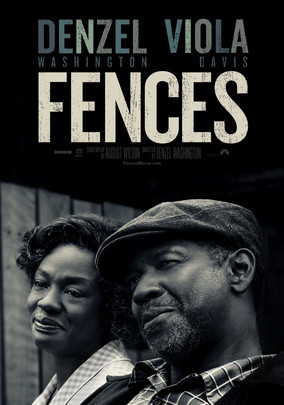
Denzel Washington and Viola Davis both give dynamic performances in Fences (2016), a film directed by Washington himself and based on a stage play written by August Wilson.

The film reunites several actors from the stage version, and while compelling, Fences does not translate as well onto the screen as hoped. Throughout the movie, I surmised how much better Fences would be on the live stage.

Still, a tremendous acting tour de force transpires, which is well worth the price of admission.

Set in 1950s Pittsburgh, Troy Maxson (Washington) is a struggling fifty-three-year-old black man who works as a trash collector alongside his best friend, Jim Bono.

Troy is married to Rose (Davis). They have a teenage son, Cory (Jovan Adepo), an aspiring high school football player. Troy’s younger brother, a mentally impaired World War II veteran, and Troy’s older son, Lyons, a fledgling musician, are also in the mix.

Everyone lives in a close-knit community, and there is a sense of comradery, though the principal characters are frequently at odds with each other as dramatic situations slowly arise.

Troy is an irate man, frequently going on rants about his time playing in the Negro baseball league and complaining about the unfairness of the world, specifically the racial injustice of the time.

The friction between Troy and Cory is thick. Cory wants to dedicate his life to football, while Troy feels his son will ultimately be disappointed. When Troy drops a startling bomb on Rose, their lives are forever changed, and they work to mend the damage inflicted between them.

At its core, Fences is a family drama, and the story offers conflict. Almost all the action is set in the Maxson family home, a two-story brick house. Scenes frequently play out in the backyard.

The film stays very true to its roots as a stage production, which is good and evil.

The film feels like a play, so I fantasized about how good the production would be on the stage rather than on the screen, especially since some actors (Washington and Davis) starred in that version.

What a blessing and a curse.

The film feels limiting and has a glossy “Hollywood look.” This is good, but the stage version would undoubtedly be more bare-bones, giving the production a raw feel, substantial in several key dramatic scenes between Troy and Rose.

Despite other opinions, I did not find Troy to be a likable character. Washington infuses power and good acting grit into the character, but I found few redeeming qualities. To say nothing of the situation with Rose, he does not treat his son Cory with much respect.

After a while, I found Troy’s repeated verbal rampages and stories irritating and wondered, “Why should we root for this man?”

Viola Davis deserved the Best Supporting Actress award she received for her turn as Rose. Dutiful, loving, and woefully underappreciated, her character rises well above a traditional homemaker, as during one pivotal scene, she explodes with rage.

Davis, a fantastic “crier”, saves her best tears, in a weepy portrayal. But more than that, she exudes a strong woman during a time when black women had it particularly tough.

I would have preferred an edgier film than Fences (2016) brings to the big screen, but the excellent performances more than compensate for what the film otherwise lacks in darkness.

Sometimes, it is too safe and slightly watered down; the stage version may be the best option.

Oscar Nominations: 1 win- Best Picture, Best Actor-Denzel Washington, Best Supporting Actress-Viola Davis (won), Best Adapted Screenplay