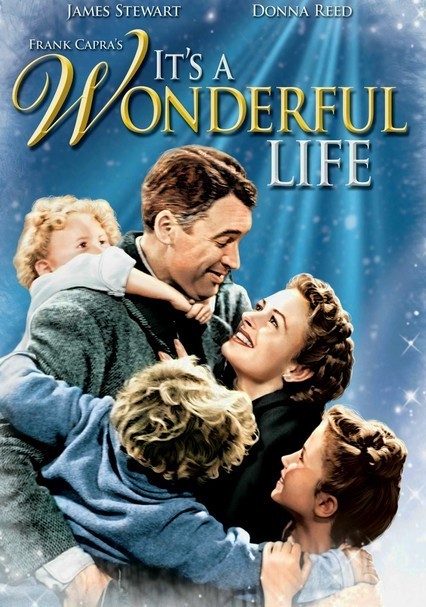
It’s a Wonderful Life-1946

It’s a Wonderful Life-1946

Director Frank Capra

Starring James Stewart, Donna Reed

Top 250 Films #219

Scott’s Review #863
Reviewed February 5, 2019

Grade: A-

A popular holiday tradition in many households eager to cozy up in front of the fire with an enduring and entertaining classic, It’s a Wonderful Life (1946) serves an essential purpose. It is the ultimate annual festivity passed down through generations.

While not one of my standards, I recognize the influence and the endearment the film offers and cannot fault its power to bring people together with its humanistic and sweet message.

James Stewart is perfectly cast as the wholesome and likable George Bailey. He strives to help all those in his small community who need help, often at the expense of his own well-being.

Depressed by the failure of his bank on Christmas Eve in 1945, in the snowy locale of Bedford Falls, New York, George is visited by a guardian angel named Clarence (Henry Travers), who teaches him what life will be like if he chooses the dire path of ending his own life.

Along with Stewart, Donna Reed as the wife, Mary Hatch Bailey, is cast exceptionally well and is the perfect counterpart to George.

Together, the actors immerse themselves in their roles, holding their heads high as the leaders of the sleepy little town they reside in, and set an example for the other townspeople with their kindness and thoughtfulness.

A sound “king and queen of the prom,” the duo radiates and elicits tears from audience members living vicariously through the couple.

A perfect companion piece to A Christmas Carol, perhaps the version from 1951, for similar periods, both spirited and teaching life lessons, is recommended.

Both are thematically similar in the visitation by a heavenly spirit and offering glimpses into the past, present, and future; the comparisons are endless, to say nothing of the Christmastime elements both possess.

Arguably, It’s a Wonderful Life is the most uplifting, both in good and bad ways. The lesson constantly voiced is that if one is good to others, one will be rewarded or at least have peace of mind.

This is not a bad lesson, which is the main reason for the film’s lasting appeal. Bad luck and financial hardship will inevitably affect everyone, but kindness is forever enduring.

It’s also worth mentioning the timing of the creation and release of It’s a Wonderful Life. As the United States, to say nothing of many European nations, struggled to pick up the pieces after the devastation of World War II, the picture was opportune to immerse itself in the lives of many people who needed a strong and uplifting message.

No wonder the film was popular when it was first released as the feel-good film of 1946.

The black-and-white cinematography does wonders to portray the film’s magical atmosphere. The high points are the cold and snowy bridge scenes.

Controversial years later was the colorization, and some would say the ruination, a decision that was met with anger by star Stewart, who went as far as testifying in court to voice his displeasure.

At the risk of being raked across the coals and deemed a “Scrooge”, portions of It’s a Wonderful Life are saccharin and manufactured in the utmost goodness, sometimes too good.

Admittedly, the characters of George, Mary, and their children come across as somewhat trite at times, as they seem to radiate only benevolent characteristics, never engaging in improper or impure actions. In a fantasy film, the overly humanistic approach can sometimes be a tad silly.

The same can be said for the angel, Clarence.

Nonetheless, films such as It’s a Wonderful Life (1946) serve their purpose in cinema history.

With a robust and heart-warming message, the positive vibes cannot be denied, and the warmth and emotion the film possesses radiate even the coldest hearts and the harshest of critics, willing to accept and be enraptured by the film’s staying power.

Oscar Nominations: Best Motion Picture, Best Director-Frank Capra, Best Actor-James Stewart, Best Sound Recording, Best Film Editing
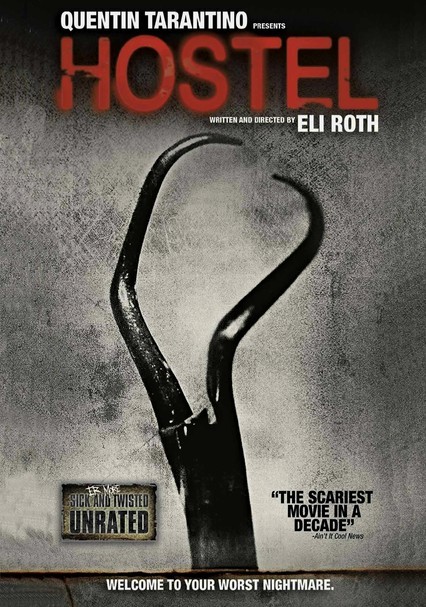
Hostel-2006

Hostel-2006

Director Eli Roth

Starring Jay Hernandez, Derek Richardson

Top 250 Films #220

Top 40 Horror Films #33

Scott’s Review #951

Reviewed October 24, 2019

Grade: A-

During the early 2000’s the traditional horror genre catapulted into a sub-genre commonly referred to as “torture porn” led by the Saw franchise, debuting in 2004.

Hostel (2006) takes note and creates a terrifying production that holds up arguably the best in the bunch.

With Quentin Tarantino serving as producer and Eli Roth (Cabin Fever-2002) as the writer and director chair, one knows something memorable is in store.

The film is hardly everyone’s cup of tea but a delight for horror fanatics.

American college students Paxton (Jay Hernandez) and Josh (Derek Richardson) travel across Europe seeking adventure and dalliances. They are advised to visit Slovakia, where they are told the women are beautiful, picking up a new Icelandic acquaintance, Oli, along the way.

They encounter a strange Dutch businessman, a pack of rebellious street kids, two Asian girls, and two gorgeous European women, Natalya and Svetlana, as they travel.

When Oli disappears, and Paxton and Josh are drugged by the girls, events turn gruesome as the young men find themselves in a horrific remote dungeon facility where tourists are accosted and sold to willing buyers who brutalize and experiment on the victims.

Paxton must figure out a way to escape his peril and try to save any of the others before it is too late.

Hostel portrays the loneliness and insecurity of traveling abroad successfully as confusion and disorientation are commonalities that anyone who has traveled to a foreign country can relate to. The country of Slovakia (as an aside the film was shot in the Czech Republic) looks eerie and desolate with a quiet and cold tone.

As the group is preyed upon by a mysterious organization that tortures and kills kidnapped tourists, the thought and realism this conjures up adds to the fright.

In a unique measure, Roth turns the traditional gender stereotypes upside down. Based on an unbalanced scale females are killed much more often in horror films than males are. A refreshing point is the three principles are males, not females and we wonder which ones will “get theirs” and how.

Similarities thereby abound with Halloween (1978) when the trio were females and audiences watched their daytime adventures while salivating at the thought of the antics that would transpire when darkness finally falls.

Hostel kicks into high gear during the final thirty minutes once the blood-letting begins to take place. The dark and dingy dungeon is laden with corpses, severed limbs, and blood.

A melancholy scene occurs when one character, alive yet pretending to be dead, is affixed in a position where he must stare into the dead eyes of his friend. In another scene, one character must cut off the dangling eyeball of another so that they can escape the dungeon.

The scenes have equal power in different ways.

A slight irritant to Hostel is the prevalence of homophobia throughout the film. When the guys get into a scuffle with a long-haired bar patron and use a homophobic slur or a scene in which Paxton states “that’s so gay” as a negative seems unnecessary.

Is this to make the main characters less sympathetic or for the viewer to hope that they suffer a horrible fate? Or is Roth just known for homophobia?

In 2006 the LGBT community was becoming prominent in the film, so the inclusion is off-putting and out of line.

Hostel (2006) remains a superlative horror film that is a shock-fest and is still one of the best of its decade. The gruesome scenes still resonate well and watching the film more than a decade later it feels as fresh as when released with only the homophobic slurs needing to be removed.

Influence by Tarantino is always a fine element and his stamp is all over the film.

Followed by two sub-par sequels that tread the same blueprint of European travels gone deadly.

Black Swan-2010

Black Swan-2010

Director Darren Aronofsky

Starring Natalie Portman, Winona Ryder, Barbara Hershey

Top 250 Films #221

Scott’s Review #735

Reviewed March 22, 2018

Grade: A

Darren Aronofsky, the director famous for the psychological and bizarre, most notably 2000’s Requiem for a Dream, 20008’s The Wrestler, and 2017’s mother!, can easily add 2010’s Black Swan to this category as he weaves an unsettling tale involving the world of ballet centered around the Tchaikovsky work Swan Lake.

The film is dark, eerie, perverse, and utterly mind-blowing in its creativity- in short, Black Swan is a masterpiece.

The film reaped several Academy Award nominations, including a win for Natalie Portman as Best Actress.

In the competitive New York City ballet company, art director, Thomas Leroy (Vincent Cassel), is preparing to open the season with the compelling and complex, Swan Lake.

Deemed “too old”, star ballerina Beth McIntyre (Winona Ryder) is forced into retirement, much to her chagrin, allowing others to audition for the coveted lead role.

Aspiring talent, Nina Sayers (Portman) gives a flawless audition as the White Swan but lacks the depth to succeed as the Black Swan. Despite this point, Nina wins the role and slowly becomes psychotic as she begins to embody the Black Swan in her quest for perfection.

Center stage, Portman embodies her character with mystique as we never know if she is living her dual role or if someone is messing with her.

As strange events begin to occur, Nina is insecure and on edge throughout- as she desperately wants to give testament to White Swan/Black Swan she does not feel confident in the skin of Black Swan and she eventually teeters toward the edge of insanity.

Deserving the Oscar statuette she won, Portman delivers the best role of her career.

Black Swan would not have been the success that it was without the talents of the three most prominent supporting characters- Cassel, Mila Kunis (at the time unknown), as Lily/Black Swan, and legendary talent Barbara Hershey as Nina’s the supportive yet haggard mother, Erica.

Just as Nina grows both suspicious of and distrustful of each of these character’s motivations, so does the audience.

Is Lily a trusted friend? What does Nina know of her? Is Cassel’s Thomas manipulating Nina for a great performance or does he have sexual designs on her?

Is Erica a loyal confidante, a jealous bitch, vengeful about her stalled career?

The final scene of the film is a masterpiece in itself and perfectly wraps up the film in a perplexing, grotesque style. As the big night finally arrives and doubt is cast on whether or not Nina will perform successfully, the entire scene is a riveting, climactic experience.

One will never forget the final shot of Nina, gushing with blood, and a grimace caked in stage makeup, as she professes a perfect performance to her musical director and castmates.

With this scene, we are left wondering whether she will ever recover from this performance.

The fabulous musical score is haunting and effective and each piece is perfectly placed within the appropriate scene. The heavy use of violins gives the soundtrack a frightening, almost horrific screeching quality, and the Chemical Brothers’ electronic songs, importantly used during Nina and Lily’s wild night out clubbing, are tremendously effective.

The 1948 masterpiece The Red Shoes, directed by the controversial Michael Powell, must have been an influence on Aronofsky.

Both contain similar subject matters of ballet and dancing on the edge of sanity, I can hardly think of two better films to serve as companion pieces, watched in tandem, than these two timeless greats.

Darren Aronofsky, along with a perfectly cast company with stellar, bombastic actors, and a classical music score by the great Tchaikovsky, with electronic elements mixed in, delivers a piece that works in spades.

2010’s chilling Black Swan is a modern-day classic that will be discussed as much as it is remembered as an incredibly important film.

Oscar Nominations: 1 win-Best Picture, Best Director-Darren Aronofsky, Best Actress-Natalie Portman (won), Best Cinematography, Best Film Editing
Independent Spirit Award Nominations: 4 wins-Best Feature (won), Best Director-Darren Aronofsky (won), Best Female Lead-Natalie Portman (won), Best Cinematography (won)

Saw-2004

Saw-2004

Director James Wan

Starring Cary Elwes, Leigh Whannell

Top 250 Films #222

Top 40 Horror Films #34

Scott’s Review #1,285

Reviewed August 4, 2022

Grade: A

One of the many reasons that I love the horror genre so much is how it changes and develops over time. Many classic horror films are influential to more modern ones and that’s all well and good.

But then sometimes a new idea or style comes along that throws everything topsy turvy and influences other films for years to come.

Saw (2004) is one of those films. It smacked everyone who thought they knew horror films upside the head with a relentless and pulsating gore-fest.

I was fortunate enough to see the film when it premiered and boy was it the ‘water cooler’ film of its day. The clever writing and intricate plot and set pieces were unheard of in a world of maniac-wielding knife setups and redundant endings.

It invented the grisly ‘torture porn’ moniker that became popular with films like Hostel (2005) and many more that would come after it.

The Saw franchise ultimately produced perhaps one too many sequels that left it feeling stale and exhausted, but what an influence the original Saw had, and continues to have.

I still remember the hold the film had over me and how much it resonated in nastiness, butchery, and enough creative killings to last a lifetime.

Needless to say, it’s not for the squeamish or faint of heart, and watching Saw now knowing the surprise twist doesn’t pack quite the same punch that it did in 2004, but I’ll never forget how I felt when first watching this film.

The twist ending is unforgettable.

Events get off to a kick-ass start when two men awake in peril. Photographer Adam Stanheight (Leigh Whannell) and oncologist Lawrence Gordon (Cary Elwes) who do not know one another, regain consciousness while chained to pipes at either end of a filthy bathroom.

As the confused men realize they’ve been trapped by a sadistic serial killer nicknamed “Jigsaw” and must complete his perverse puzzle to live, flashbacks unravel the mystery of other character connections.

Meanwhile, Dr. Gordon’s wife (Monica Potter) and young daughter (Makenzie Vega) are forced to watch his torture via closed-circuit video.

A massive clue to the puzzle that Saw presents is lying right there in the bathroom but of course, the unwitting audience knows none of this. The fun of the film is to sit back and let the filmmakers slowly unpeel the onion and reveal the who’s who of the backstory.

And let the blood drip.

Unlike legacy films like Halloween (1978) and Friday the 13th (1980) or even later efforts like Scream (1996) that brought thousands of rabid horror fans back to movie theaters, nobody is being chased with a knife in Saw.

It’s much more cerebral than that.

Who can ever forget the sound of Jigsaw’s grave voice pouring out of a tape recorder stating “I want to play a game” in a robotic tone? It is still as ominous a sound as one could imagine, and the big reveal still comes as a genuine shock.

Most of the characters have secrets to reveal and most of those secrets are dirty.

Director James Wan and writer Leigh Whannell who also stars in Saw, brilliantly craft a web of deceit amongst their players. The characters who suffer the most have committed a hateful act of deception or schemed their way to benefit based on someone else’s ruin.

In perfect form, all the victims almost deserve their fates like being caught in a shotgun trap, shot in the chest, or being forced to ‘saw’ off their foot to escape death.

The final reveal is downright freaky and will make the audience quickly rewind the events of the film in their heads. The character thought to be the main killer, and wonderfully played by creepy actor Michael Emerson (star of television’s Lost) is merely a pawn of someone more sinister.

Saw (2004) savagely hacked its way into viewers’ heads with a sophisticated, plot-driven experience with a film style enhanced by an independent look.

It’s had its day but it must never be forgotten for the influence left behind.

Zodiac-2007

Zodiac-2007

Director David Fincher

Starring Jake Gyllenhaal, Mark Ruffalo, Robert Downey Jr. 

Top 250 Films #223

Scott’s Review #1,134

Reviewed April 16, 2021

Grade: A

Zodiac (2007) is an excellent film in its own right. The attention to detail circa the 1960s and 1970s is spot on and adds to the flavor of the entire experience. The locale of San Francisco is moody and lurking with the antics of the self-professed Zodiac Killer.

With excellent acting, the sum of its parts adds up to a wonderful film experience.

The film is incredibly well-paced, character-driven, and layered in rich texture. What more can be asked of a cinematic production? It simply has it all and will engage any viewer craving mystery and intrigue.

David Fincher, as the director’s chair, creates a world unto itself with carefully crafted sets, artistic nuances, and of course a superb story. A lesson learned is that sometimes evil exists and cannot be caught despite best efforts and the ramifications are endless.

Painfully, the characters in Zodiac slowly realize this.

Zodiac is based on the best-selling non-fiction book by Robert Graysmith, a pivotal character in the film. The novel is very similar to James Elroy’s 1987 novel The Black Dahlia, another unsolved case set in California.

The film tells the story of the manhunt for the Zodiac Killer, a serial killer who terrorized the foggy San Francisco Bay Area during the late 1960s and early 1970s.

Investigators (Mark Ruffalo, Anthony Edwards) and reporters (Jake Gyllenhaal, Robert Downey Jr.) become obsessed with learning the killer’s identity and bringing him to justice.

Meanwhile, Zodiac claims victim after victim and taunts the authorities with endless and specifically graphic letters, bloodstained clothing, and cryptic messages shrouded in menacing phone calls.

The case remains one of the United States’ most infamous unsolved crimes.

Much of the acclaim must go to the three actors cast in the central roles and Gyllenhaal is top of his game in the leading role. As cartoonist Robert Graysmith he is the main hero and the person who spearheads the investigation, prompting disbelievers to listen to him.

Gyllenhaal is sensitive, sympathetic, and obsessed and at first, perceived to be a laughing stock, but audiences will immediately get behind the man and this is thanks to Gyllenhaal’s powerful acting.

The character-driven approach continues as Mark Ruffalo gives a wonderful portrayal of Inspector David Toschi. The tough-as-nails and no-nonsense approach led Toschi into obsession and fudging evidence.

Finally, Robert Downey Jr. provides energetic gusto as Paul Avery, a journalist who turns to drugs and alcohol because of the intensity and emotional investment in the case.

Plenty of red herrings make the film fun and the prime suspect of Arthur Leigh Allen, played by character actor John Carroll Lynch may or may not be the assailant.

It’s breathtaking watching all the twists and turns in this ferociously complex film.

Zodiac is based on real events and reportedly is extremely historically accurate. Fincher and others spent eighteen months conducting their investigation and research into the Zodiac murders.

So, authenticity is everywhere in this film.

Watching a film beginning in 1969 and ending in 1983 is a joy for someone who grew up in that era. Fincher drizzles the film with timely automobiles, clothes, and other sets so it appears to be walking into a time capsule.

I’m sure this only will add to the viewer’s enjoyment.

For fans of films based on the Zodiac Killers, the 1971 film Dirty Harry, starring Clint Eastwood delivers an exceptional experience based on the real-life case.

But Fincher’s Zodiac is just as good.

Despite the behemoth running time- two hours and thirty-seven minutes, Zodiac (2007) is an edge-of-your-seat thriller. The pulsating yet prowling pace is worth several viewings to appreciate the juiciness of all of the elements David Fincher offers.

A hefty round of applause is deserved.

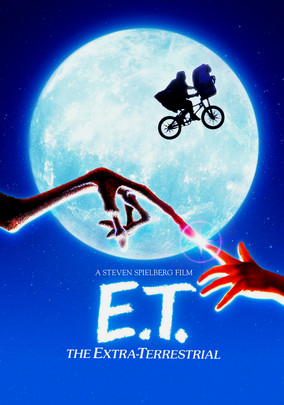
E.T. The Extra-Terrestrial-1982

E.T. The Extra-Terrestrial-1982

Director Steven Spielberg

Starring Henry Thomas, Dee Wallace

Top 250 Films #224

Scott’s Review #756

Reviewed May 10, 2018

Grade: A

E.T. the Extra-Terrestrial (1982) is a wonderful, magical film that will melt the hearts of anyone with even a tad of cynicism. The film is otherworldly (quite literally) and contains a message of acceptance and appreciation of other beings.

Mixing many humorous moments with tender drama and tears, the film becomes part of a fantasy, science fiction, and humanistic story. The film still feels fresh and relevant today with a bevy of forever-remembered scenes and references- a wonderful story of friendship.

The audience is immediately introduced to a pack of alien botanists, arriving in a California forest from their faraway planet to study plants one night.

When government agents interrupt the peaceful moment, the “extraterrestrials” are forced to depart, leaving one creature behind.

When ten-year-old Elliott (Henry Thomas) discovers and begins to communicate with what will come to be known as “E.T.”, the duo forge a wonderful, lasting friendship as they attempt to return E.T. to his homeland.

E.T. the Extra-Terrestrial is crowd-pleasing in every way, offering a bit of everything for all of its lucky viewers.

Director Steven Spielberg reportedly made this film as a result of his desire to share a childhood imaginary friend with the world, so the charm shines through in this very personal story.

The film contains an overall innocence that is pure benevolence- E.T. teaches Elliott as much as Elliott teaches E.T.

Who can ever forget the pair’s initial interaction as the use of Reese’s Pieces candy became a huge cultural phenomenon? The lovely quote “E.T. phone home!” is still as poignant and teary-eyed as it was in 1982.

Enjoyable and recognizable, E.T. himself is becoming a cult figure. Odd-looking, wide-eyed, and yet of a lovable nature, even cute, the filmmakers were careful not to make him too frightening.

Using real actors and distorted voices, E.T. became famous, appearing on lunch boxes, tee-shirts, notebooks, and binders throughout the early 1980s.

The film, released in the “modern age” of 1982, provides a genuine portrayal of suburban life at that time.

In the sunny, subdivision-style neighborhood where Elliott and his family live, the absent father figure (so common in many 1980s films) and the single-mom/divorced-parents phenomenon take hold, making families like this commonplace.

If made in 1960, Elliott would have had two happy parents and a white picket fence.

Dee Wallace, as Elliott’s mother, Mary, received several mom roles throughout the decade, portraying them with a wholesome middle-America quality.

Henry Thomas, like Elliott, is crucial to the success of E.T. The Extra-Terrestrial, and sadly, the actor never did much beyond this great film. While it’s tough to create chemistry with a creature from outer space, the young actor does just that as we see the two as connected friends.

The duo especially shines during the emotional “death” scene and the farewell scene finale.

The other supporting characters rounding out Elliott’s family are well cast and effectively convey what a typical suburban family looks like.

Michael (Robert MacNaughton) is slightly surly yet protective as the older brother, and Gertie, played by a very young Drew Barrymore (soon to become a superstar throughout the 1980s and 1990s), is cute, bubbly, and teeters on the edge of stealing the show as the precocious five-year-old.

At its core, what makes E.T., The Extra-Terrestrial so appealing is its heart- a sympathetic creature’s desire to return home and be with his loved ones is the main focus.

Only slightly reversed is a comparison to the 1939 masterpiece The Wizard of Oz. As Dorothy yearns to return to her home amid an exotic, unfamiliar, and sometimes scary world, so does E.T., making both films similar and equally appealing.

Rich in elegance, intelligence, and creativity, Spielberg crafts a tale that is both primed for mass consumption and ripe for mainstream appeal. Rather than weave a contrived or clichéd story, he spins a magical, long-lasting good story that will appeal to the kid in all of us.

E.T. the Extra-Terrestrial (1982) reaped many Oscar nominations but lost out on the big prize to the epic Gandhi that year.

Oscar Nominations: 4 wins-Best Picture, Best Director-Steven Spielberg, Best Screenplay Written Directly for the Screen, Best Original Score (won), Best Sound Effects Editing (won), Best Sound (won), Best Cinematography, Best Film Editing, Best Visual Effects (won)

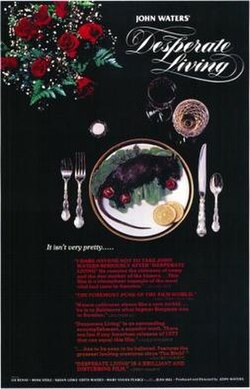
Desperate Living-1977

Desperate Living-1977

Director John Waters

Starring Mink Stole, Liz Renay, Susan Lowe

Top 250 Films #225

Scott’s Review #534

Reviewed December 4, 2016

Grade: B

Desperate Living (1977) will not be everyone’s cup of tea. It is a raunchy, late-night comedy, similar to other John Waters-directed cult classics.

This one, however, suffers from the absence of Waters’ staple, Divine, who did not appear due to scheduling conflicts.

For this glaring omission, Desperate Living is not the greatest of the Waters films, but it is a fun experience all the same.

The film features choruses of political satire, specifically on fascism and the overthrow of the government.

Mink Stole (Peggy Gravel) takes on the lead role as a crazed, mentally unhinged, neurotic woman on the lam with her maid, Grizelda, after they accidentally cause the death of Peggy’s husband.

Peggy has been in and out of mental hospitals and is clearly off her rocker as she yells at neighbors about communism.

After an encounter with a lewd police officer, the duo is banished to Mortville, a town filled with outcasts and social deviants. They align with others in the town to overthrow the tyrannical Queen Carlotta, played by Waters fixture Edith Massey.

Carlotta plots to spread rabies throughout the community and is at war with her daughter, Princess Coo Coo.

The issue with Desperate Living is the absence of Divine, originally set to play Mole McHenry, a self-loathing female wrestler, determined to receive a sex change operation.

One imagines the Divine in this important role, which Susan Lowe, a capable star, played, but not the Divine. With Divine in the part, the hilarious possibilities are endless.

Mink Stole carries the movie well, but traditionally being a supporting player in Waters’s films, she is not quite the star the film needs to be a true success.

This is not to say that the film is a dud- it is entertaining and will please most Waters fans. It contains gross-out moments and vulgarity from the very first scene- as the opening credits roll, we see a roasted rat, daintily displayed on good china, on an eloquent dinner table, presumably to be served.

Later, Carlotta meets her fate by being roasted, pig style, on a spit with an apple in her mouth. Another character is executed by being shot in the anus. The offensive moments never end!

There also exists a quite controversial scene that I am surprised made the final cut. Peggy, already in a frazzled state due to a neighbor boy accidentally shooting out her bedroom window, is shocked to find another boy playing “doctor” with a little girl in her downstairs basement.

Both children are completely naked, leaving not much to the imagination. This scene is tough to watch as one wonders what the child actors thought of all of this.

I have never viewed another scene quite like this in a film.

Otherwise, Desperate Living is filled with cartoon-like characters, lots of sexually deviant leather men, grizzled men with facial hair, and other odd-looking characters who make up the community of Mortville.

Water’s set creations for the exterior scenes of the town are great using mainly cardboard and rubbish he found throughout Baltimore where the film was shot, the sets show a bleak yet colorful underworld.

Desperate Living (1977) is a raunchy good time with over-the-top acting, trash-filled moments, and laugh-out-loud fun.

The lack of any Divine makes it not the first offering to watch from the Waters collection. Pink Flamingos (1972) and Female Trouble (1974) would take that honor.

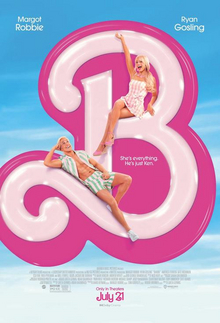
Barbie-2023

Barbie-2023

Director Greta Gerwig

Starring Margot Robbie, Ryan Gosling, and America Ferrera

Top 250 Films #226

Scott’s Review #1,381

Reviewed July 23, 2023

Grade: A

Greta Gerwig is a tremendously talented director who is influencing Hollywood films. The gifted woman crafted Lady Bird in 2017 to critical acclaim and forged ahead with another feminist and progressive project.

In Barbie (2023), she takes a traditional and iconic ‘Barbie doll’ product by Mattel and explores the positives and negatives of the doll throughout its existence.

An incredible opening sequence harkening to Stanley Kubrick’s 1968 masterpiece 2001: A Space Odyssey explains the evolution of the doll.

Barbie incorporates gender balance, creativity, thought, satire, and slapstick comedy fraught with meaning. Not forgotten is heart and humanity, and a look at how much progress has been achieved for women over the years, and how much more is still needed.

As if that’s not enough, Barbie deserves praise for its direction, production design, costumes, music, and cast performances.

Well done.

The film stars Margot Robbie as Barbie and Ryan Gosling as Ken, who embark on a journey of self-discovery after Barbie faces an existential crisis. Deemed the ‘stereotypical’ Barbie, she begins having peculiar and ‘un-Barbie’ thoughts of death and analytics, and must return to the real world to find her doll’s owner.

She soon longs to return to Barbie Land, which is a perfect place. Unless you’re a Ken who exists merely to pine after Barbie, but do they secretly resent this?

There are numerous positives to explore regarding Barbie, but one slight drawback is its proximity to silly comedy and goofiness. The meaning of the film mostly offsets this, but I fear that some audiences may be overwhelmed by gag jokes and lose the overall point of the story.

Let’s take a deep dive. The production design and art direction are dazzling and immediately noticeable. Particularly, I’m referring to Barbie Land and its pink and pretty sets. Luxurious pools, streets, houses, and cars are rich with color and ooze a fun vibe.

I can’t imagine these teams being overlooked during the year-end awards season.

Robbie and Gosling, looking blonde, buff, and tanned, are wonderfully cast and not only look the part but quickly switch from physical comedy to heavy drama without looking foolish.

Robbie, for example, while the classic Barbie type has layers of emotion that she channels. And Gosling could have looked like a buffoon with over-the-top sequences if not for a startlingly good dramatic scene towards the film’s climax.

The supporting cast is brilliant and includes Kate McKinnon as ‘weird Barbie,’ a perfect role for her to unleash her comedic prowess. How lovely to see Rhea Perlman again in the small but powerful role of Ruth Handler, co-founder of Mattel and creator of the Barbie doll.

Finally, America Ferrera and Will Ferrell add both comedy and meaningful spirit to their roles. And how could the inclusion of British stalwart Helen Mirren as the narrator not create credibility?

The main attraction, though, is the writing. Isn’t it always the case when it’s done intelligently?

The dynamic duo of Gerwig and Noah Baumbach (famous for, among other works, the 2019 film Marriage Story) pair well, giving equality messages to both Barbie and Ken. While it is easy to dismiss Ken, his role is valued and respected within the overall context of showing that everyone deserves a seat at the table.

I was touched by the film in various moments more than I ever expected. Wonderful sentiments about being a mother are powerfully stated by Ruth and Gloria (Ferrera) during various scenes and messages, such as everyone deserves respect and serving a purpose, which are hard not to get choked up over.

Barbie wins points for diversity and inclusion with nearly every ethnic group represented and a transgender character, Dr. Barbie (Hari Nef), featured prominently.

Providing roaring entertainment, bubble gum sets and design, and a message that will break your heart while exuding intelligence, Barbie (2023) is a win.

It’s a story about the wills of plastic and humanity, making for a perfect, harmonious blend. Who would have thought a film about Barbie would be so important?

Oscar Nominations: 1 win-Best Picture, Best Supporting Actor-Ryan Gosling, Best Supporting Actress-America Ferrera, Best Adapted Screenplay, Best Costume Design, Best Production Design, Best Original Song-“I’m Just Ken”, “What Was I Made For?” (won)

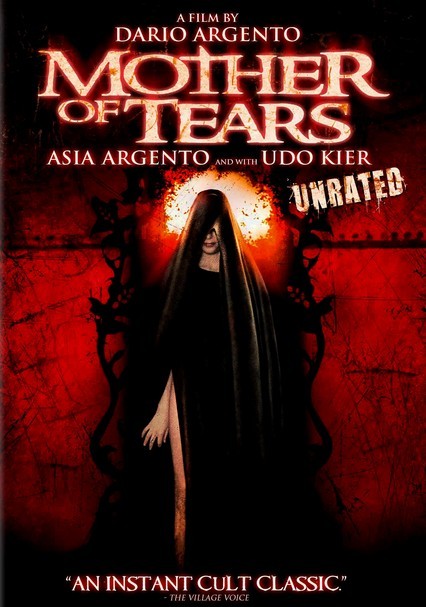
Mother of Tears-2007

Mother of Tears-2007

Director Dario Argento

Starring Asia Argento, Cristian Solimeno

Top 250 Films #227

Top 40 Horror Films #35

Scott’s Review #1,360

Reviewed May 13, 2023

Grade: B+

Mother of Tears (2007) is a film I have a great fondness for and I’ll never forget its debut in my life. It is the very first film my husband and I saw in a movie theater together. So, I’m pretty partial to the nostalgic feeling it emotes on a personal level.

Both fans of esteemed horror director Dario Argento, we cohabitated in the dusty art theater one rainy Saturday evening following a delicious Italian dinner on one of our first dates.

The atmosphere was nearly as perfect as an Argento film itself since he is known for operatic, visceral, and visual perfections.

The film is the concluding installment of Argento’s supernatural horror trilogy The Three Mothers, preceded by Suspiria (1977) and Inferno (1980), and depicts the confrontation with the final “Mother” witch, known as Mater Lachrymarum.

Grisly deaths await several unlucky Italian citizens after an American archaeology student named Sarah Mandy (Asia Argento) innocently releases a demonic witch from her ancient prison. A mysterious urn comes into her possession and when attempted to be restored at the Museum of Ancient Art in Rome, all hell breaks loose.

Sarah harbors a personal connection to the witch since her mother was once embroiled in a feud with her.

Making Mother of Tears a family affair and comfort for viewers of Argento’s work, daughter Asia plays the lead character while younger brother Claudio co-produces the picture along with Dario.

Religion is always a fun theme in horror, especially in the oft-targeted Roman Catholic church. Like The Exorcist did in 1973, and many other horror films followed over the years, the religion is mocked in the kindest of ways.

As an ode to previous works involving children, a child is massacred and more than one baby is sacrificed in the name of Mater Lachrymarum so be forewarned if this is a dealbreaker for some.

Who doesn’t enjoy a coven of witches flocking down on Rome screeching at passerby folks and wreaking havoc on the sacred city now overcrowded with demons?

For the bloodthirsty types who crave a healthy dose of bloodletting Mother of Tears lets the floodgates spill wide open. One poor woman is speared through her private area and upwards while another’s mouth and face are expanded until they pop. Several eyes are violently gouged.

You get the idea.

Recommended is to watch Suspiria and Inferno first for chronological ease but this is not a must and a stand-alone viewing will do just fine.

Nothing can match the sheer madness and visual mastery of 1977’s Suspiria and Mother of Tears is the weakest of the three films but this is not a gripe merely a comparison. They work well together and the final confrontation involving Sarah and Mater Lachrymarum’s fight over a red tunic is the highlight.

The dark texture of the filming mixed with glowing lights and red colors are easily noticeable. This aligns nicely with religious or occult characters like a monsignor, cardinal, and various witches.

The film, though American-made, feels Italian and is quite authentic. Further, it naturally sits well with films of Argento’s heyday, the 1970s, and 1980s. Most if not all actors appear to be Italian or European adding flavor and culture to the experience.

If one has traveled to Rome, many exterior shots of the ancient city appear adding to the enjoyment. Sarah ravages the streets and scurries through the vast train station in one powerful sequence. Since trains are the main mode of transportation in Italy viewers can transport themselves back to a previous trip.

To know Dario Argento is to love him. Mother of Tears (2007) may not measure up to his very best works but it is an entertaining and enthralling visit to the macabre world.

It may or may not win over new fans but it will satisfy existing fans of the director.

Network-1976

Network-1976

Director Sidney Lumet

Starring Faye Dunaway, Peter Finch, William Holden

Top 250 Films #228

Scott’s Review #1,481

Reviewed May 13, 2025

Grade: A

A conceptual film laden with intelligence and satire, Network (1976) is innovative, not easily digestible, but satisfying nonetheless. It pairs well with films like All the President’s Men (1976) or Spotlight (2015), with a focus on media frenzy, ratings, and the frustrating search for the truth amid chaos.

Or, does the truth even matter? It’s a sobering question the film explores.

The film received nine Oscar nominations and won three of the four acting awards. Decades later, it holds up tremendously well and is a stark reminder of the power of television and public perception, for better or worse.

Brilliant acting, rich writing, and impressive editing make Network a timeless treasure for many generations, not to mention Lumet’s creative and sometimes shocking direction.

Over narration, we meet veteran news anchorman Howard Beale (Peter Finch). He learns from his friend and news division president, Max Schumacher (William Holden), that he has only two more weeks on the air with the UBS network due to declining ratings.

After threatening to shoot himself on live television, instead, he launches into an angry televised rant, which turns out to be a huge ratings boost for the network, and he is kept on for entertainment purposes.

But what happens when the public grows tired of his antics and craves even more outrageous programming?

Ambitious producer Diana Christensen (Faye Dunaway), obsessed with her career and ratings, takes actions to dangerous new levels.

The poignancy that immediately caught my attention was how little the bottom line has changed in almost fifty years of television since Network was released. One could argue that things have gotten worse, with ratings making or breaking a television broadcast.

Depressing still is the knowledge in 2025 politics where liars, cheats, and felons callously hold the highest offices and wield the most power; newscasts are currently created based on the truths their target audiences believe, regardless of the truth.

Lumet, well-known for creating the groundbreaking Dog Day Afternoon (1975) just a year earlier, uses split screens to show four perspectives and adds frightening, gun-toting rebels who are angry and intent on making political statements.

But Diana needs them for a significant ratings share.

Lumet’s sequences teeter between long soliloquies in which characters reveal their deepest motivations and emotions and rapid-fire editing involving shootings and bank robberies.

I loved seeing the 1970s-style corporate offices with retro telephones, notepads, pens, pencils, stylish carpets, and colorful elevators. The glamorous and polished interiors perfectly reflect the gorgeous Manhattan skyline seen in numerous sequences.

The lavish restaurants and strong cocktails provide a luminous texture to the time.

The screenplay, written by Paddy Chayefsky, was based on the idea of a live death as the film’s central focus, as he said later in an interview, “Television will do anything for a rating… anything!”

The statement hit home in frigid reality.

Dunaway and Finch are clear favorites and provide the deepest character structures. Dunaway’s Diana is frigid and opportunistic, offering the audience no vulnerability or sympathy. In a way, she is not a human being, lacking emotional depth.

I half expected her to tear her face off and reveal herself as a fembot.

Finch steals the show as the tired and depressed veteran who feels dismissed and forgotten. Even when he reveals his intent to commit suicide on live TV, the news crew tunes out his monotone voice as they do nightly.

Finally, Beatrice Straight brilliantly delivers an acting 101 tutorial as the aging housewife being cheated on by her philandering husband.

One miss is Robert DuVall in a one-note performance we’ve already seen him deliver.

Network (1976) is a top-notch film from my favorite decade in cinema. The 1970s produced many meaningful and introspective gems, and Network is one of them.

Oscar Nominations: 4 wins-Best Picture, Best Director- Sidney Lumet, Best Actor- Peter Finch (won), William Holden, Best Actress- Faye Dunaway (won), Best Supporting Actor- Ned Beatty, Best Supporting Actress- Beatrice Straight (won), Best Original Screenplay (won), Best Cinematography, Best Film Editing
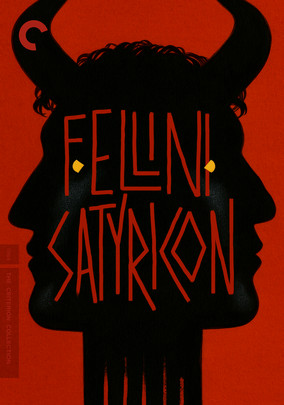
Fellini Satyricon-1969

Fellini Satyricon-1969

Director Federico Fellini

Starring Martin Potter, Hiram Keller

Top 250 Films #229

Scott’s Review #530

60010344

Reviewed November 30, 2016

Grade: A

Fellini Satyricon (1969) is a fascinating experience and is a great film. Still, only for the very broad-minded and patient viewer- it is more of an “experience” than watching a conventional start-to-finish type finish.

It is nothing of that nature.

I both loved the trip and was fascinated by the creativity and depth of it- dreamlike is a word that immediately springs to mind.

The story does not make perfect sense, nor does it need to. The fact that it is set some two thousand years ago is, in itself, fantastic, as the sets are filled with decadent imagination.

The film is certainly not for everyone and is a fairy tale for adults.

It tells of a journey through Ancient Rome and is divided into nine chapters. A scholar (Encolpius) and his friend (Ascyltus) traverse the land in the hopes of winning the heart of a young boy (Giton).

They are both in love with him, and the topics of bisexuality, public sex, slavery, and brothels are explored.

I love Fellini films because they are wild, dreamlike, and fantasy-like, with odd characters.

Is Fellini’s Satyricon strange? Absolutely. But that is to its credit- this film is highly imaginative and wild, and will leave one pondering its beauty afterward.

Oscar Nominations: Best Director-Federico Fellini

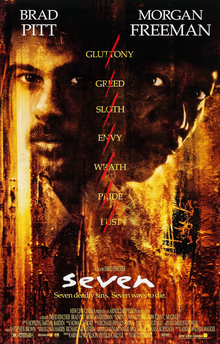
Seven-1995

Seven-1995

Director David Fincher

Starring Brad Pitt, Morgan Freeman

Top 250 Films #230

Scott’s Review #780

Reviewed June 29, 2018

Grade: A-

Many films containing a similar theme as Seven (1995) have come along over the years- some good, most mediocre.

The mixture of homicidal detectives tracking crazed killers has been done ad nauseam and more often than not, done with either poor writing or a predictable outcome, or both.

Instead of being a run-of-the-mill film, Seven serves as a blueprint for the tautness and unpredictability achievable with a familiar yet compelling concept, provided there is good writing and direction.

The film is incredibly brutal and riveting.

Respected director David Fincher assembles an all-star cast of Hollywood heavies, including Brad Pitt, Morgan Freeman, Kevin Spacey, and Gwyneth Paltrow, all of whom lend their talents to the well-crafted script.

It also raises the talent level to a respectable level, and, as great as the story is, with weaker actors, the stakes would not have been as high, and the film might even have been ruined.

A serial killer is on the loose in Los Angeles- detective duo William Somerset (a very good Freeman) is set to retire and is tasked with finding the killer. He is partnered with David Mills (Pitt), a young, hot-tempered man who has just moved to the city with his wife, Tracy (Paltrow).

Unbeknownst to David, Tracy is pregnant and unsure whether to keep the child- this point factors in heavily as events unfold.

The killer is using the seven deadly sins: greed, gluttony, sloth, lust, pride, envy, and wrath, as his motivation for the creative slayings.

In retrospect, Seven is very similar to the still-to-come Fincher work, 2007’s Zodiac, so much so that both films could be watched in sequence- one being a true story, the other pure fiction.

Both focus on the serial-killer element with a message; each has marvelous psychological intrigue and purpose. There are cat-and-mouse scenes aplenty for fans to enjoy.

At the risk of this point being a total stretch, I’d also argue that 1971’s Dirty Harry influenced Zodiac, Seven, and The Silence of the Lambs (1991).

A heinous killer shrouded in intelligence, danger, and motivation is a commonality of all of the aforementioned films, and numerous studies of each of the killers could be dissected if time permits.

Each killer is calculating and manipulative.

On that note, Kevin Spacey gives a tremendous performance as the cold and villainous John Doe. Clever and inventive, his victims are intended to suffer and suffer greatly.

Some of the kills could be included in the best of the torture-horror franchise, Saw (2004), as they are very twisted and brutal.

A supermodel is disfigured after being given a choice to call for help or overdose on pills, representing pride. A man is forced to consume food until his stomach ruptures, representing gluttony.

Spacey portrays his role as calm, cool, and collected, eliciting a terrifying response from audiences, especially as he toys with the detectives.

Still coming into his own as an actor in 1995, Pitt proves he can almost measure up (though not quite) with big-boy acting talents Spacey and Freeman.

Playing an ambitious man eager to prove himself in “the big city” with his pretty wife in tow, Pitt’s David is wholesome and family-oriented, yet has an edge.

All around the likable hero, Pitt is perfectly cast in the role and a large part of the film’s success.

The frightening final sequence still resonates with me after all of these years since Seven was released. In a classic standoff between Doe and the detectives, as is typical in these films, the climax is twisted, psychological, and gruesome.

I did not see this shocker coming, as it culminates in lives being forever changed. The expressions and actions of Freeman, Pitt, and Spacey are superlative.

Seven (1995) is a film basking in riches. On par with the best of the best in serial killer films, it is powerfully directed by Fincher. The film is fraught with grisly symbolism and its share of suspenseful sequences.

With powerful performances, it is a film that remains relevant and watchable decades after its original release.

Perhaps not quite on the level as Dirty Harry or The Silence of the Lambs, but pretty damned close, and that is impressive in itself.

Oscar Nominations: Best Film Editing
A Streetcar Named Desire-1951

A Streetcar Named Desire-1951

Director Elia Kazan

Starring Marlon Brando, Vivien Leigh

Top 250 Films #231

Scott’s Review #872

Reviewed March 2, 2019

Grade: A

A Streetcar Named Desire (1951) is an adaptation of Tennessee Williams’s dark and dreary Broadway play. The stellar cast includes three of the four original members of the stage version who brought the film to the big screen.

Tremendous acting and a morbid southern setting will leave the viewer transfixed and wondering what chaos and drama will next unfold. The story is sad, pitiful, and quite heavy as each character suffers guilt, resentment, rage, or regret, but these elements make the film a pure classic.

Aging southern belle Blanche DuBois (Vivien Leigh) has lost her valuable southern plantation and flees her aristocratic livelihood to New Orleans to live with her working-class sister Stella (Kim Hunter) and brother-in-law Stanley Kowalski (Marlon Brando).

Unhappy, Blanche immediately begins acting snobbish compared to regular people and offends many with her prim and proper manners.

Stanley feels slighted by Blanche, who is convinced she is keeping Stella’s inheritance. This leads to conflict. Stanley meets Mitch (Karl Malden) and may have a shot at happiness.

Blanche is the most painful and well-dissected character. A fun fact is that Leigh is the only Actor among the principal four who did not appear in the original stage version, where Jessica Tandy played the role.

Leigh was undoubtedly cast because of her star power at the time. She dives full steam ahead into the role, delivering the perfect blend of pathos and courage while adding the most complexity.

Reduced to a life among the poor and struggling, the reality is harsh for the once-wealthy heiress who has lost all her money through no fault of her own, her estate taken by creditors after her husband’s tragic death, assumed to be suicide.

Almost as complicated is Stanley, played stunningly by Brando, an actor who, with this film, was beginning to embark on Hollywood success that would surround him throughout most of the 1950s.

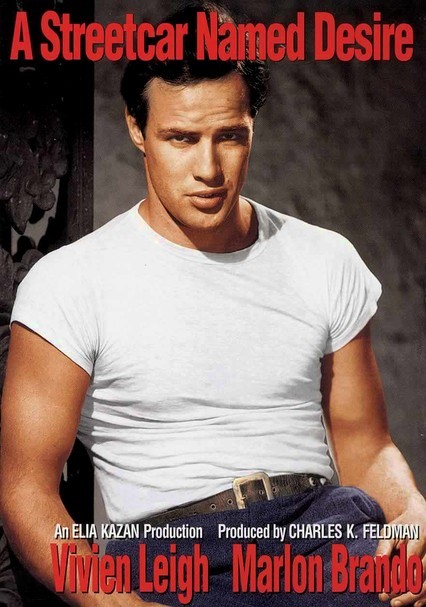
The most prominent film cover art features a tee-shirt-clad Brando, his muscular arms and torso on display, and his smoldering bad-boy pose. The sexual tension between Stanley and Blanche is undeniable, as their love/hate relationship is filled with unbridled passion.

Their carnal attraction is mainly due to the brutish masculinity that Brando exudes on camera.

The combined supporting performances by Kim Hunter and Malden are almost as complex as the leads, and they are just as important to recognize.

Hunter portrays Stella as wounded and put-upon, yet not weak. She has strength but is unsure who to trust or whether to leave her husband. Malden plays Mitch as benevolent and trusting, enamored with Blanche until her secrets are finally revealed.

Heartbroken, even he, the kindest character in the group, is left unhappy. Malden excels at imbuing Mitch with an everyman and graceful quality.

Who can ever forget the poignant and melancholy wails of “Stella! Stella! Stella!” emitted by the tragic Stanley, a moment forever remembered in cinematic history? He longingly begs for Stella’s forgiveness as he looks towards the sky.

The suggested rape, although not shown, is a powerful tidbit and controversial in the film for 1951. The audience not seeing the action is arguably as intense as having seen it, as the imagination can often be more prominent.

The black-and-white cinematography adds emotional treasures. It captures the bleak life in New Orleans, and the characters’ struggles and hardships are wonderfully portrayed.

The run-down tenement where most of the film takes place is dour, suffocating, and dingy, perfectly enveloping the characters’ lives.

Hopelessness and depression are commonalities as director Elia Kazan creates a film that grasps his audience and never lets go.

A Streetcar Named Desire is about conflict, pain, and the human desire for love and feeling thwarted by realism and dire circumstances.

Each of the four characters can be dissected, sympathized with, and is worthy of discussion. This only proves the complexities of each.

I challenge a good comparison to Who’s Afraid of Virginia Woolf? (1966) and A Streetcar Named Desire have similar qualities.

The film set an Oscar record when it became the first film to win in three acting categories (a feat only since matched by Network in 1976).

It won awards for Actress in a Leading Role (Leigh), Actor in a Supporting Role (Malden), Actress in a Supporting Role (Hunter), and Art Direction.

A Streetcar Named Desire (1951) is not an easy watch, but it is assuredly a feast of excellent acting and heartbreaking, wounded characters.

Oscar Nominations: 4 wins-Best Motion Picture, Best Director-Elia Kazan, Best Actor-Marlon Brando, Best Actress-Vivien Leigh (won), Best Supporting Actor-Karl Malden (won), Best Supporting Actress-Kim Hunter (won), Best Screenplay, Best Scoring of a Dramatic or Comedy Picture, Best Sound Recording, Best Art Direction, Black-and-White (won), Best Cinematography, Black-and-White, Best Costume Design, Black-and-White

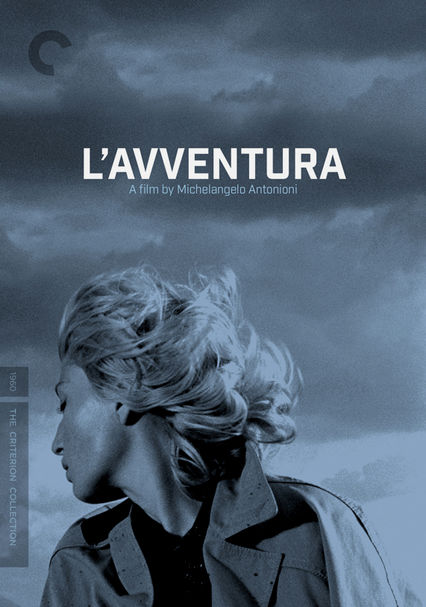
L’Avventura-1960

L’Avventura-1960

Director Michelangelo Antonioni

Starring Gabriele Ferzetti, Monica Vitti

Top 250 Films #232

Scott’s Review #1,167

Reviewed July 30, 2021

Grade: A

L’Avventura (1960) is similar to the horror masterpiece Psycho (1960), released the same year. However, they are not exactly opposite on the surface.

One is an American horror film directed by an esteemed British director, and the other is an Italian art film. What do they have in common?

Forgetting that the former is not a horror film, L’Avventura first introduces a character that the audience is particular to be the main character, only to pull a switcheroo midstream and make other characters the central protagonists.

What Janet Leigh’s Marion Crane was to John Garvin, Vera Miles, Sam Loomis, and Lila Crane in Psycho.

Be that as it may, as an interesting if not wholly odd comparison, L’Avventura is a brilliant film and not just for the story alone. Black and white cinematography of the grandest kind transplants the film viewer to a fabulous yet haunting island where the events occur.

Frequent shots of the gorgeous Mediterranean Sea and its roaring waves pepper the action.

In Michelangelo Antonioni’s classic of Italian cinema, two beautiful young women, Claudia (Monica Vitti) and Anna (Léa Massari), join Anna’s lover, Sandro (Gabriele Ferzetti), on a boat trip to a remote volcanic island.

They plan to spend their time cruising, resting, and relaxing on the Mediterranean. The trio is all good-looking and resides on the outskirts of Rome. They join two wealthy couples and depart on their excursion,

A search is launched when Anna suddenly disappears on an island stop. Meanwhile, Sandro and Claudia become involved in a romance despite Anna’s disappearance, though the relationship suffers from the guilt and tension brought about by the looming mystery.

Their relationship is intriguing, given their roller-coaster emotions. Their burgeoning romance and Anna’s disappearance overlap.

Assumed to be the film’s focal point, Anna eventually serves as more of a ghost character and quickly disappears from the screen.

This threw me for a loop.

Events do not remain on the island but return to the Italian mainland, where Sandro and Claudia continue with their guilt, finally becoming convinced Anna might have returned!

The brilliant and ambitious thing about L’Avventura is that the film changes course many times.

On the surface, it appears to be a film about a missing girl and a friend’s attempts to locate her. But Antonioni delves into a film about emotions and the meaning of life, making the audience go deeper along with the characters.

Eventually, Sandro and Claudia chase a ghost of their design and plod along unhappy and unfulfilled, suffering paranoia.

L’Avventura is all about the characters and the cinematography, and each immerses well with the other.

Many characters exchange glances with each other that the audience can read into. What was the relationship between Sandro and Claudia before the cruise? What is Anna and Sandro’s backstory? And what’s become of Anna? Did she run off and drown, or was she murdered?

The camerawork is stunning; each shot is a lovely escapade into another world. The yacht cruise and island sequences are awe-inspiring. I love how the characters explore different sections of the island instead of dully standing on the shore or in similar shots.

As the title says, the point is both physical and cerebral adventure.

L’Avventura (1960) is a film that will make you think, ponder, escape, and discuss the true meaning. Isn’t that what great art cinema does?

Antonioni also made me consider comparisons to another great art film creator- the Swedish director Ingmar Bergman.

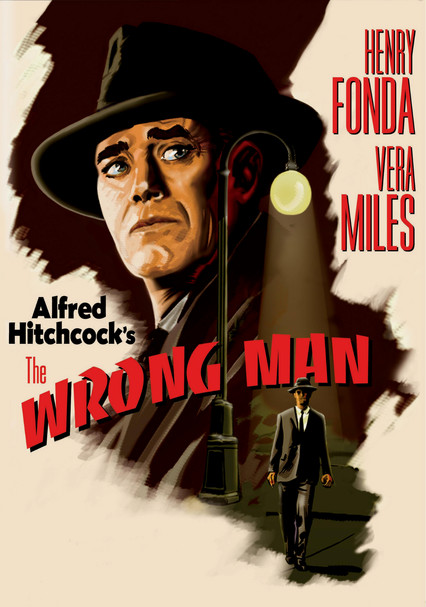
The Wrong Man-1956

The Wrong Man-1956

Director Alfred Hitchcock

Starring Henry Fonda, Vera Miles

Top 250 Films #233

Scott’s Review #902

Reviewed May 24, 2019

Grade: A-

The Wrong Man (1956) is not an Alfred Hitchcock film typically mentioned when lists of the greatest of all the director’s works are in conversation.

Although it flies completely under the radar and is absent from most “Best of” collections, the film is a lovely gem ready to be dusted off and appreciated for its worth.

It features the legendary Henry Fonda, perfectly cast in a story point frequently used in Hitchcock films: that of the wrongly accused man.

Set in New York City, Manny Balestrero (Fonda) is a struggling musician who requires three hundred dollars for dental work that his wife Rose (Vera Miles) needs. Determined not to let his wife suffer, he decides to obtain the money by borrowing against her insurance policy.

The life insurance employees mistake Manny for another man who recently held them up. He is arrested and forced to perform a test for the police, which he fails, leading them to assume he is their man.

Attorney Frank O’Connor (Anthony Quayle) sets out to prove that Manny is not guilty since he has perfect alibis for the nights of both holdups. However, complications erupt during his trial as proper witnesses either cannot be found or have died, leaving Manny in dire straits.

Meanwhile, Rose teeters towards the brink of insanity as she suffers from severe depression.

The Wrong Man differs from many Hitchcock films in that its story is based on a real-life quandary one man faced. As such, viewers can relate to the story immensely and imagine themselves in Manny’s shoes.

I often wonder, “What would I do if this were me?” as one could find the story implausible, one could just as easily find it plausible. Mistaken identity can happen, and proving one’s innocence may not be as easy as it may seem.

Mainly set on location is another tidbit unique to many Hitchcock productions as the man cringed at the thought of any scene that studio luxuries could not manipulate. The New York City locales are splendid and provide an artistic and genuine element.

Many scenes were filmed in Jackson Heights, where Manny lived when he was accused. Most of the prison scenes were filmed among the convicts in a New York City prison in Queens. The courthouse was at the corner of Catalpa Avenue and 64th Street in Ridgewood.

Careful not to be too dissimilar to standard Hitchcock fare, the use of every man being falsely accused is every day in some of his films.

Other films like North by Northwest (1958) and The 39 Steps (1935) delivered the same elements with a man being mistakenly accused of murder. While the others were more of “chase stories” involving flight, The Wrong Man stays firmly planted in one city.

The film has some jazz elements, representing Fonda’s appearance as a musician in the nightclub scenes. These elements add sophistication to the film’s overall tone, especially as we see Manny as worldly yet kind.

He is a performer but comes home to his wife and adores her, doing anything he needs to for her comfort. The music and the black-and-white cinematography exude harshness and coldness but also good style.

Fans of either the police force or the justice system may be in for a challenging ride watching The Wrong Man, as neither group is written very sympathetically. The police are the worst offenders as they go to unethical methods to accuse a man of a crime and seem not to care who is convicted, only that someone is.

The one detraction to The Wrong Man is the chemistry between Fonda and Miles. The passion is underwhelming but not terrible, either. Instead, the main point is the false accusations instead of the romance. A bit more of the latter might have made the film more unique.

With suspenseful and dramatic elements and a charismatic leading man, The Wrong Man (1956) perhaps lacks the flair of other well-known Hitchcock films. Still, it is a solid achievement that deserves more acclaim than traditionally given.

Yes, it’s sullen, but it’s also poignant, frightening, and a terrific effort. Henry Fonda carries the film and provides compassion and realism.

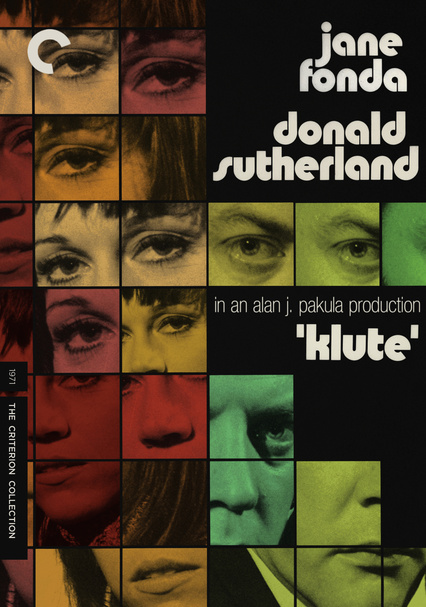
Klute-1971

Klute-1971

Director Alan J. Pakula

Starring Jane Fonda, Donald Sutherland

Top 250 Films #234

Scott’s Review #1,351

Reviewed March 12, 2023

Grade: A-

I’ll gladly watch any film Jane Fonda appears in, especially early treats like They Shoot Horses, Don’t They (1969), Coming Home (1978), and On Golden Pond (1981), but Klute (1971) trumps them all.

Fonda plays a prostitute, one with intelligence, manipulation skills, and deep introspective thought. Teamed with Donald Sutherland, who is quite extraordinary, the duo sink their teeth into a taut psychological thriller chasing a serial killer.

The inventive part is that the film is hardly a whodunit, yet it uses long sequences of calm dialogue and few editing breaks, making it stand out with great style and substance.

Bree Daniel (Fonda) is a New York City call girl who becomes absorbed in an investigation into the disappearance of a business executive. Detective John Klute (Sutherland) is hired to follow Bree and eventually begins a romance with her.

Klute is not the only one on Bree’s trail. A killer is on the loose, having killed two prostitutes with whom Bree is friendly. They must figure out the deadly puzzle before it’s too late.

Fonda plays Bree wonderfully. Gorgeous and well-dressed, Bree is aching to leave the business and launch an acting or modeling career, but she keeps striking out on both fronts. Fonda assures the audience that Bree is brilliant and uses her smarts to get the best of the men she beds.

Throughout several scenes in which she chats with her shrink, we learn a great deal about Bree and the workings of her mind. While she cringes at a dull life of being married and darning socks, she also craves stability and self-worth.

She aptly embraces her lifestyle, but on her terms. When briefly jaded by a pimp played by Roy Scheider, I cringed because Bree is better than that.

I only wanted to learn a bit more about Bree’s childhood and how she wound up as a call girl, but at the same time, the mystique works well. The ambiguity only makes Bree more complex.

Pre-conceived notions or sub-par writing might have had the character dubbed the overdone ‘hooker with the heart of gold’ title, but there are no cliches to be found.

Written by Andy and Dave Lewis and directed by Alan J. Pakula, they construct a complex film with equal focus on the intriguing serial-killer pursuit and the workings of its lead female character.

Surprisingly, the men achieve both goals. In later years, the screenplay might have been written by a female, but it’s impressive how boldly they write Bree.

The character of Klute is also well-written. Similarly shrouded in mystery, we know that the investigator is the strong, silent type and falls for Bree hook, line, and sinker. Has he been married? Does he have kids? Why the fascination with Bree?

He only mirrors the audience as we become equally smitten with her. The fact that he knows the killer is icing on the cake, adding rich texture to the storytelling.

The other facets of Klute are strong from a technical and location perspective.

The interior sequences, mostly of Bree’s apartment building, are superior, with dull lighting and an eerie musical score to set the proper mood. Downsizing from Park Avenue, Bree has a decent Manhattan apartment, but with dated appliances and unflattering lighting.

The exterior New York City location shots are fun to look at and help a native tri-state area resident identify various neighborhoods.

Early 1970s New York City was not a pretty sight, and the Wall Street area and garment district, where the riveting action culminates, are terrific.

Delightful is the scene involving Jean Stapleton as a no-nonsense secretary. Forever remembered as Edith Bunker on the television series All in the Family, it’s great fun seeing her in Klute and remembering that she appeared in films before her television success.

Klute (1971) is a taut, superior thriller that sometimes is a bit too complex, but it scores a winning run with its marriage of a character study and intelligent writing.

Thanks to Fonda and Sutherland, and a screenplay that bravely goes left of center when it easily could have gone straightforward, Klute is a memorable piece of cinema.

Oscar Nominations: 1 win-Best Actress-Jane Fonda (won), Best Original Screenplay

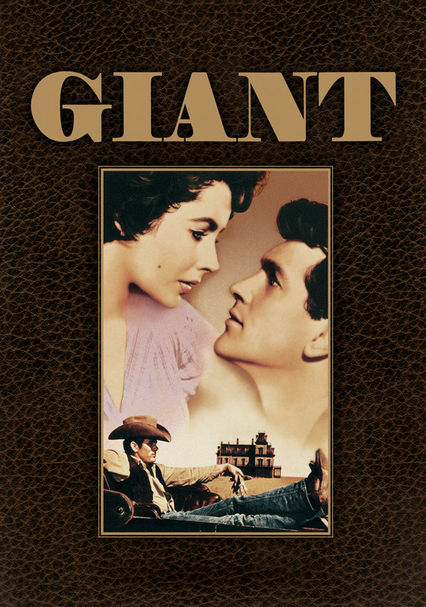
Giant-1956

Giant-1956

Director George Stevens

Starring Rock Hudson, Elizabeth Taylor, James Dean

Top 250 Films #235

Scott’s Review #898

Reviewed May 14, 2019

Grade: A

Giant (1956) is a sweeping epic firmly ensconced in both the Western genre and the dramatic field of play. The film is a flawless Hollywood production featuring three of the most recognizable stars of the time and a slew of powerful supporting actors offering rich performances and good characterizations.

The thunderous melodrama plays out over decades with the dry and dusty locale and the superb cinematography, among the finest aspects of the film experience.

Dashing and wealthy Texas rancher Jordan Bick Benedict Jr. (Rock Hudson) falls in love with and marries socialite Leslie Lynnton (Elizabeth Taylor) after a whirlwind romance in Maryland.

The pair begin their married life on Bick’s immaculate Texas ranch, but not before two central figures thwart their happiness. Jett Rink (James Dean) falls obsessively in love with Leslie while Bick’s sister, Luz Benedict (Mercedes McCambridge) despises Leslie, taking out her vengeance on Leslie’s horse.

The trials and tribulations continue as the characters age through the years.

The trifecta of talents Taylor, Hudson, and Dean make Giant the ultimate in treats as one fawn over the good looks of each (or all!) over the long three hours and eleven minutes of illustrious screen time.

Making for more powerful poignancy is that the film is Dean’s final appearance on-screen before his tragic death in a car accident, his death occurring before it was even released to the public.

Dean plays Jett to the hilt as a surly ranch hand, jealous of Bick’s riches and wanting to take Bick’s woman for himself. Jett is an unsympathetic character and the one I find the most interesting. Decades-long rivals, Jett and Bick’s lives overlap continuously as Jett finally becomes rich and dates Bick and Leslie’s daughter, much to their chagrin.

Jett is a racist, which was common in the early to mid-1900s, especially in southwestern Texas. Sadly, he never finds happiness, which is the central part of his depth.

The screenplay is peppered with meaningful and relevant social issues that provide sophistication and a humanistic approach. The film inches towards a liberal slant as the plot progresses, the most famous example occurring in the final act as Benedict’s stop at a roadside diner with a racist sign, implying the restaurant will not serve Mexicans.

Bick takes a dramatic stance and shows heart as his family, now multi-racial, needs his help. Culminating in a fight, the scene reveals the enduring love that Bick and Leslie share for one another.

Criticisms of the films’ enormous length and scope are wrong as these aspects deepen and the components I find the most appealing.

Director George Stevens never rushes through a scene or makes superfluous edits to limit running time. Instead, he allows each scene to marinate and graze like real life. Lengthy scenes play out with honest conversations and slow build-up, allowing the characters’ opinions and motivations to take shape slowly.

On the surface, a drama and western, the film can be peeled back like an onion to reveal deeper nuances. The racism, love story, and class structure ideals are mesmerizing, especially given the true-to-life humanitarian that Taylor was.

One can sit back and revel in the knowledge that she must have been enjoying the rich character.

Along with great epics like Gone with the Wind (1939), Lawrence of Arabia (1963), and The Godfather (1972) sits a film that is rarely mentioned with the other stalwarts, and that is a shame. With magnificent shot after shot of the vast Texas land and with enough gorgeous stars to rival the landscape, Giant (1956) is a must-see.

A Western soap opera with terrific writing, rife with racism, prosperity, and fortitude, the film deserves more praise than it’s given.

Oscar Nominations: 1 win-Best Motion Picture, Best Director-George Stevens (won), Best Actor-James Dean, Rock Hudson, Best Supporting Actress-Mercedes McCambridge, Best Screenplay-Adapted, Best Music Score of a Dramatic or Comedy Picture, Best Art Direction-Color, Best Costume Design-Color, Best Film Editing
Saboteur-1942

Saboteur-1942

Director Alfred Hitchcock

Starring Robert Cummings, Priscilla Lake

Top 250 Films #236

Scott’s Review #98

60020559

Reviewed July 9, 2014

Grade: B+

Saboteur (1942) is a very early Alfred Hitchcock film that served as a blueprint for his masterpieces in the years to come.

The story follows a common theme among Hitchcock thrillers- the falsely accused man. An aircraft factory worker, Barry Kane, is falsely accused of an act of sabotage that kills his best friend.

Only Kane and the audience know the true culprit and set out on a quest for his innocence and to find and capture the real culprit.

The film then begins a tale of adventure, cross-country hijinks, romance, and political espionage, similar to the Hitchcock classic North by Northwest (1959), which followed years later.

This film contains some excellent scenes- the traveling Carnie train adventure, the blind man, and the climactic chase scene atop the Statue of Liberty are fantastic.

Saboteur (1942) is a bit raw, and the chemistry between the leads, Robert Cummings and Priscilla Lane, is poor, but an early Hitchcock film to be appreciated.

Mad Max-1979

Mad Max-1979

Director George Miller

Starring Mel Gibson, Joanne Samuel

Top 250 Films #237

Scott’s Review #1,070

Reviewed October 15, 2020

Grade: A-

Mad Max (1979) is a gritty, dirty film unlike any that came before it. There is an edginess and an “off the beaten track” quality that sucks you in and pummels you into submission with its energy and ferocity.

The film is raw and not slick, and hats off for that. This is all done with fun intentions, and it’s meant to be enjoyed, but the film has brutality and power that must be experienced to be believed.

The plot is not the most important quality, nor is it the most believable, but it’s the trimmings that make Mad Max unforgettable.

I haven’t seen the two follow-up sequels, Mad Max 2 (1981) or Beyond Thunderdome (1985), but my understanding is that they are more family-friendly films, which is disappointing to hear after experiencing the raw power of the original.

The undesirable Fury Road (2015) is an enormous critical and commercial success, but its appeal was lost on me; it’s best skipped in favor of the first.

I disliked that film.

But alas, a treasure such as the original can never be duplicated. The revenge-themed, fast car-driving, lewd masterpiece is a must-see cult classic.

It stands the test of time.

In a post-apocalyptic future, an angry cop, Max Rockatansky (Mel Gibson), is looking forward to retiring, having had enough of the derelicts who populate his region. One day, his world is shattered when a malicious gang murders his family as an act of retaliation, forcing a devastated Max to hit the open road seeking vengeance.

As he travels the Australian outback’s empty stretches of highway, he tours the bloodstained battlegrounds ruled by low-life bikers who feed on violence.

Mad Max made Mel Gibson a star. His breakthrough role led to future work in the action and buddy genres, specifically the Lethal Weapon franchise (1987-1998), with tepid success from any artistic standpoint until he bravely took on more creative and challenging roles.

Max is his finest action character and most authentic feeling. He mixes a blend of rage, sentimentality, and humanity perfectly, never missing a beat.

And his youthful looks are enchanting.

The multitude of scenes featuring super-fast cars, motorbike gangs, and leather-clad creatures with colorful tattoos and missing teeth is just the icing on the cake of the fun that lies ahead.

Names like Toecutter and Bubba give you an idea here.

These are all great add-ons, but the revenge-seeking Max is the one to watch. The scene is immediately set when Max kills the grizzled Nightrider in a chaotic police chase. His gang goes rampant and loots and destroys shops and businesses, raping both women and men. All hell breaks loose.

The best sequence is also the most horrific.

Taking place on the open road, naturally, a sweet vacation by Max, his wife Jessie (Joanne Samuel), and son Sprog begins with a pleasant drive, only to culminate in a chase that ends with Sprog’s death and Jessie languishing in intensive care.

The image of Sprog and Jessie lying on the open road, tattered and torn, is memorable and lingers.

The film is intelligent if studied thoroughly, and a film school study is recommended. Credit must be given to director George Miller, who knows his way around a camera.

The cinematography greatly contributes to the film, and a feeling of being there is the desired result. The editors deserve a special prize for their brilliant efforts.

Undoubtedly influencing countless action genre selections of the 1980s and 1990s, most running the gamut between only marginally fun (the Terminator franchise, 1984-present) or downright atrocious (The Running Man, 1987), Mad Max (1979) breathes life into the genre.

Action films are widely regarded as one-dimensional. Still, by adding a cool Australian locale, characters filled with cartoon bombast and punky zest, and a futuristic mystique, Miller crafts a well-made film.

Mad Max (1979) is a low-budget flick, destined for underground viewership and appreciation, that is somehow nearly flawless.

The Substance-2024

The Substance-2024

Director Coralie Fargeat

Starring Demi Moore, Margaret Qualley, Dennis Quaid

Top 250 Films #238

Top 40 Horror Films #36

Scott’s Review #1,461

Reviewed January 18, 2025

Grade: A

Demi Moore takes her languishing career by the reigns in a risky role, leaving any glitz and glamour by the wayside in the wacky horror film The Substance (2024).

She also sheds her mainstream blockbuster image for darker cinematic territory, propelling her into a fresh new image.

Respectability.

The film received widespread critical acclaim, a gaspy crowd reaction, and buzz during awards season, making it the most talked-about film of the season.

Moore portrays a fading celebrity, Elisabeth Sparkle, wired by her producer (Dennis Quaid) on her fiftieth birthday due to her age.

She decides to use a black-market drug that creates a much younger version of herself (Margaret Qualley) with unexpected side effects.

As she drives home after being fired, she is involved in a car accident. At the hospital, she meets a handsome young nurse who casually advertises a new product. He boldly tells her that it changed his life.

It creates a younger, more beautiful, more perfect you. The catch is that you share time, one week for one and one week for the other—an ideal balance of seven days each.

What could go wrong?

The film begins with a weird shot of a camera looking down at the creation of a famous star on Hollywood Boulevard, where anyone who’s anyone has their name in a star on the famous street.

The sequence reveals that Elisabeth was once a big star. Workers sand her name on the sidewalk amid the celebration, and people stop in awe of her name. As the years go by, people comment that she was in some movie they can’t remember, and then someone callously spills garbage on her name, thinking nothing of it.

The story has powerful meaning about the societal pressures on women’s bodies and aging, especially in the media spotlight.

But this isn’t simply about women. Anyone of any gender or humanity can reflect on the insecurities of aging, whether in the corporate world or being cast aside for a younger person in any way.

I found The Substance incredibly relatable.

Besides the story, Coralie Fargeat, a French director I’d like to see more of, directs The Substance very well.

She bravely incorporates snippets of Stanley Kubrick’s work, adding her funky weirdness and creating an insane experience for viewers.

Kubrick famously created long shots of hallways, which Fargeat brilliantly borrows. Elisabeth watches her producer and team rapidly walk towards her and reminds her that ‘pretty girls always smile,’ reinforcing ridiculous stereotypes attractive women are ‘supposed’ to follow.

Fargeat counterbalances the long shots with several close-ups, mainly of Moore staring at herself in the mirror. Seeing every wrinkle and blemish, she becomes increasingly obsessed with the younger version of herself.

The film does so much with very little dialogue, allowing Moore to deliver a performance of a lifetime.

As the film progresses, it becomes wackier and wackier in only the finest of ways as the older version becomes obsessed with her younger self. As she decays, she becomes a bald hunchback, unrecognizable.

At a diner, she runs into the older version of the young nurse, who admits that the process gets worse with each transformation.

The finale, set on New Year’s Eve, when Elisabeth is set to host events for millions to see, becomes horrific as her monster is set loose. A weird combination of human being and lumpy clay emerges on stage as Elisabeth begs the crowd to accept her.

The result is a moment that combines 1931’s Frankenstein with 1976’s Carrie as a horrific and quite bloody witch hunt ensues.

The film also reminds me of 2the 2000sRequiem for a Dream in style and addiction.

Fargeat, who directed, wrote, and produced the film, creates a feminist message that is awe-inspiring.

Combining unique camera angles that infuse a futuristic feel, astounding makeup work, and an exceptional performance by Moore makes The Substance (2024) the year’s surprise hit.

Oscar Nominations: 1 win-Best Picture, Best Director-Coralie Fargeat, Best Actress-Demi Moore, Best Original Screenplay, Best Makeup and Hairstyling (won)

Independent Spirit Award Nominations: Best Feature, Best Lead Performance, Demi Moore

Bohemian Rhapsody-2018

Bohemian Rhapsody-2018

Director Bryan Singer

Starring Rami Malek

Top 250 Films #239

Scott’s Review #836

Reviewed December 3, 2018

Grade: A-

Crafting a biography of a performer with a personality the size of Freddie Mercury is challenging, but it can be done successfully.

The filmmakers of Bohemian Rhapsody (2018) opt to go in a decidedly mainstream direction, proving a wise choice as the film becomes an enthralling foot-stomping crowd-pleaser.

While nitpicking about accurate timelines and rigid facts may be disappointing, others who are content to sit back and enjoy a heartfelt biopic will undoubtedly love the film.

Rami Malek performs flawlessly as the legendary British rock band Queen’s singer Mercury. I will go out on a limb and state that this could be the young actor’s crowning achievement and his “role of a lifetime”.

The film wisely chronicles the singer’s initial struggles finding his bandmates and the band’s subsequent rise to fame and fortune during the 1970s and 1980s.

Predictably, as with many rock bands, infighting, drug use, and jealousies reared their ugly heads.

Other points of interest featured are Mercury’s personal life and his HIV diagnosis, culminating in his ultimate death in 1991 at the tender age of forty-five.

Less so a biography of the band, Mercury takes center stage as the film’s point. With his four-octave vocal range and operatic sensibilities, the star was a force to be reckoned with. He was nobody who would back down from either studio executives or pesky reporters eager for a scoop about his personal life and preference for male companions.

Malek sinks his teeth into an enormous role that is undoubtedly intimidating for most actors and an unbelievable challenge for the casting department. With boldness and charisma for miles, what actor could ever fill this challenging role?

Malek completely shines as he dons dentures to emulate Mercury’s famous overbite, a fact that the film nearly over exaggerates.

With wounded eyes and clever dialogue, Malek delivers witty one-liners and comical comebacks with a smirk, a hand wave, or a retort of “my dear”. The actor is careful to perfect the dramatic and emotional scenes flawlessly and portray the singer as a lonely and isolated being.

To the delight of most classic rock fans, Bohemian Rhapsody features many songs from the Queen catalog. “Killer Queen,” “Hammer to Fall,” “Another One Bites the Dust,” “We Will Rock You/We Are the Champions,” and the game-changing “Bohemian Rhapsody” are featured, along with the histories and stories behind many of these legendary hits.

Perhaps the loveliest tune, “Love of My Life”, which Mercury wrote for his fiancée Mary Austin, is prominently featured.

The film concludes with the band’s fantastic performance at Wembley Stadium in London for the Live Aid event 1985. A breathtaking finale, this final sequence is jaw-dropping with emotion, heart, and entertainment, and is the film’s finest moment.

As the story reaches its climax at this point with Mercury’s HIV diagnosis (a death sentence for gay men in the 1980s) and revelation to his bandmates, the lengthy scene will not leave a dry eye in the house.

A weakening Mercury powered through his illness to deliver a dynamic performance.

Bohemian Rhapsody’s (2018) numerous historical inaccuracies and incorrect timeline of events have been called into question.

Also, the fact that two members of Queen (Brian May and Roger Taylor) had a staggering amount of creative control is cause for alarm.

Additionally, further reading suggests that the characters of Mary and Mercury’s manager, Paul, may not have been as good or bad as they were respectively written. These points may be valid, but the film is a major champion as a source of good entertainment.

Oscar Nominations: 4 wins- Best Picture, Best Actor- Rami Malek (won), Best Sound Editing (won), Best Sound Mixing (won), Best Film Editing (won)

King Kong-1933

King Kong-1933

Director Merian C. Cooper, Ernest B. Schoedsack

Starring Fay Wray, Robert Armstrong

Top 250 Films #240

Top 40 Horror Films #37

Scott’s Review #624

Reviewed March 11, 2017

Grade: A

The original, black-and-white 1933 version of King Kong (a few other remakes or reboots followed) is a masterful achievement in special effects never before done in film. It is also a great horror/adventure film that is timeless in its look and feel, capturing 1930s New York City, especially in majestic fashion.

Some of the dialogue and scenes are now dated or slightly racist, but the film still holds up well as an overall lesson in film exploration and is a treasure to watch again and again.

The film is a take on the classic tale Beauty and the Beast, sans the happy ending.

In the watery harbors of New York City, filmmaker Carl Denham (Robert Armstrong) prepares to embark, via ship, on a journey to film his latest picture.

Known for films about exotic wildlife, he has a film to end all movies in mind and, reluctantly, is talked into casting a female lead in the part. He scours the streets of New York City, finding broke and hungry Ann (Fay Wray)—a struggling actress unable to find work. She agrees to the role and heads off to a destination unknown.

Weeks later, he reveals to the crew that they are headed for Skull Island, a secret island known for pre-historic creatures and a beast only known as “Kong.”

Amid the voyage to the island, Ann and First Mate Jack Driscoll (Bruce Cabot) fall madly in love, giving the film a nice romantic slant along with the male-driven adventure story.

The adventure begins when the crew arrives at Skull Island to find a weird, ancient ritual marriage occurring among the tribal people. All hell breaks loose when the dangerous “King Kong” escapes from captivity and falls in love with Ann.

Mixed in with the story are enormous dinosaurs who destroy everything in their paths, including many of the men from the island and the film crew.

As I watched the film in 2017, not too far from 100 years after its incarnation, I often sat in wonderment, amazed at how the filmmakers achieved the luminous special effects throughout the second half of the film.

Given that the film is in black and white, the contrast between the dark, enormous ape (Kong) and the bright New York City and the majestic Empire State Building is prominently featured in the final, climactic act.

The scenes of a struggling Ann in King Kong’s hand seem flawless and believable. I marvel at how these scenes were shot and the enormous amount of effort it took to make them dramatic and not hokey-looking.

Since the film was made “pre-code”, several shocking scenes exist- when Kong rips off Ann’s clothes as she struggles in his palm and Kong’s stepping on and squashing men are featured sparing no graphic details.

In addition to the great adventure story of King Kong, there is also a tender love story and a bit of melancholy. King Kong is not so much a dangerous creature; instead, he has fallen in love with Ann and serves as her protector.

He is a scared animal, chained and confined, and subsequently shown to a stuffy Broadway crowd as entertainment—he becomes angry. I find Kong to be a sympathetic, misunderstood character. Because the human beings in the story are frightened, he becomes their enemy. He adores Ann and would not harm her in any way, but he is perceived as vicious, which he is not.

It can be argued who the real villain of the story is. Would it not have been filmmaker Carl, intent on exploiting King Kong and gaining profit from it? Is it the tribe people who keep Kong locked up, or is it for their protection?

My favorite scene is the climax of the film. After taking Ann from a hotel room, he scales the Empire State Building and is pursued by four military airplanes.

When he sets Ann down on the rooftop ledge, he battles the planes, only to sadly topple down to the ground- dead. As he swipes at the aircraft and succumbs to gunshot wounds, it is a sad and powerful scene.

King Kong (1933) is a legendary film. Audiences will empathize with the “villain” of the story, be impressed by the technical nuances, and enjoy the conventional and unconventional love stories presented.

One thing is sure: King Kong is one of the most influential films ever made.

The Aristocats-1970

The Aristocats-1970

Director Wolfgang Reitherman

Starring Various voices

Top 250 Films #241

Scott’s Review #570

Reviewed December 29, 2016

Grade: B+

The golden age of Disney films mainly occurred before the release of this film, The Aristocats is a latter-day Disney film, released in 1970, the first release since Walt Disney died in 1966.

It is a darling story with a charming subject matter- cats living in sophisticated Paris face peril from their butler.

Like many Disney works, the film’s message pertains to the treatment of animals. The Aristocats is much safer fare than the dark Bambi (1942) or even Dumbo (1941), but it is a fantastic film worth watching.

Glamorous and elegant retired opera star, Madame Adelaide Bonfamille, lives peacefully with her gorgeous mother cat, Duchess, and her three kittens, Marie, Berlioz, and Toulouse, in the heart of Paris, circa 1910.

They are sophisticated beyond measure and enjoy every luxury known to cats, and are accompanied in their estate by an English butler, Edgar.

One day, while Madame is discussing her will with her attorney, Edgar learns that she plans to leave her entire estate to her cats until they die, then all will go to Edgar.

Filled with greed, Edgar plots to kill the cats. This leads to an adventure in the country as the accosted cats attempt to find their way back home to Madame, with the help of feral yet kindly cat friends.

Ever so sweet to the film is the burgeoning romance that erupts between Duchess and Thomas O’Malley, as he aids the cats in returning to Paris. It is the classic girl from high class, who meets the bad boy from the wrong side of the tracks, only cat style.

The chemistry between the pair is readily apparent. On a personal note, my female cat Thora certainly seemed smitten with Thomas O’Malley as she sat smiling at Thomas while she watched the film.

During their adventure, Thomas and Duchess manage to dance and sing along with Thomas’s best friend Scat Cat, who leads a Jazz band of alley cats- this makes the film light and lively in tone. The group also shares adventures with English geese, Abigail and Amelia Gabble, who share a fondness for style and a prim and proper manner.

Throughout it all, the group continues to be pursued by Edgar, portrayed more as a bumbling villain than a sinister one, making The Aristocats a fun film rather than anything too heavy.

The film’s sophistication is really what makes me enjoy it so much. The high style of the Parisian city blocks, Madame’s gorgeous mansion, and the beautifully drawn French countryside are my favorite elements.

I love the contrasts in this film- the city and the country. The high-brow characters meet the more blue-collar ones, but in the end, everyone comes together to conquer the mischievous foe.

Whereas in Bambi, man is the serious enemy, in The Aristocats, Edgar is more of a buffoon than a hazardous element. He is cartoon-like (no pun intended), and the film is more of a caper with hijinks than of actual danger.

For the cat lovers in all of us, The Aristocats (1970) is a delightful film with a nice message and a wonderful cultural experience.

Who can forget the fantastic theme song, “Ev’rybody Wants to Be a Cat”?

Dr. Strangelove-1964

Dr. Strangelove-1964

Director Stanley Kubrick

Starring Peter Sellers, George C. Scott

Top 250 Films #242

Scott’s Review #958

Reviewed November 13, 2019

Grade: A

Dr. Strangelove, or How I Learned to Stop Worrying and Love the Bomb, more commonly known simply as Dr. Strangelove, is a 1964 political satire black comedy film that satirizes the Cold War and fears of a nuclear conflict between the Soviet Union and the United States.

The film, timely in the 1960s, is as relevant decades later amid the chaos during the 2016 United States Presidential election and the following tumultuous years.

The film is powerful, brave, and essential.

The story centers around an unhinged United States Air Force general (Sterling Hayden) who orders a first-strike nuclear attack on the Soviet Union.

The plot follows the President of the United States (Peter Sellers), the Joint Chiefs of Staff, and a Royal Air Force (RAF) officer as they try to recall the bombers to prevent a nuclear apocalypse.

The film also follows the crew of one B-52 bomber as they try to deliver their payload.

The Cuban Missile Crisis was fresh in viewers’ minds when this film was released, and President John F. Kennedy was recently assassinated. The United States and the Soviet Union were hardly best buddies.

The film was a robust offering because its political satire was fresh. The ironic controversy between the two leaders, nearly sixty years after the film was released, is unintentionally clever.

The acting is excellent. Peter Sellers plays three prominent roles. Each is quite different from the others. Group Captain Lionel Mandrake, a British RAF exchange officer, President Merkin Muffley (what a name!), the President of the United States, and Dr. Strangelove, the wheelchair-using nuclear war expert and former Nazi.

Each glistens with goodness as the actor chomps at the bit, making them precise and unique, careful never to stray too far overboard into ridiculousness.

Director Stanley Kubrick wisely chooses black-and-white cinematography with stellar results and prominent filmmaking techniques.

As creative and progressive as many 1960s films started to become as the decade blossomed, it feels like it could have been made in the 1940s.

Kubrick, well known for masterpieces such as The Shining (1980) and 2001: A Space Odyssey (1968), delivers perhaps the oddest film in his catalog with Dr. Strangelove.

The story does not feel dated, and the dialogue remains crisp and razor-sharp in its delivery and meaning. With fast dialogue delivery and a monotone vocal style, the film is entertaining and humorous. It does not take itself too seriously yet brings a poignant and vital idea to life.

The film keeps gnawing at the viewers that as far-fetched as events seem, the possibility they could become real is more than a bit scary.

Who can forget the final sequence of the looming nightmare of the mushroom clouds, set to Vera Lynn’s hopeful We’ll Meet Again?

Since the film has a 1940s cinema style, the rude awakening that the 1960s produced in nuclear weapons and insecurity hits home in this sequence.

Dr. Strangelove (1964) is pure satire but frightening in its realism and uncertainty about how one crazy leader could lead an entire nation to detrimental results.

The film highly influenced later satires and unique filmmaking styles—Wes Anderson’s creations immediately spring to mind.

One can wonder about the different possibilities offered—in a way, the situation’s absurdity and the unthinkable way it could quickly become a reality.

Oscar Nominations: Best Picture, Best Director-Stanley Kubrick, Best Actor-Peter Sellers, Best Screenplay Based on Material from Another Medium

Anora-2024

Anora-2024

Director Sean Baker

Starring Mikey Madison, Mark Eidelstein, Yura Borisov

Top 250 Films #243

Scott’s Review #1,450

Reviewed November 3, 2024

Grade: A

Anora (2024) is one of the boldest films I’ve seen in some time and is my favorite Sean Baker film so far. Tangerine (2015) and The Florida Project (2017) are also great works.

Those planning to see the film should do homework and learn what Baker films are about. He frequently directs independent feature films about the lives of marginalized people, especially immigrants and sex workers.

Baker’s films are dirty, dark, and outrageous.

Because Anora has received awards buzz and is classified as a romantic comedy, the audience at my showing seemed slightly overwhelmed by its raw nature. While there are comedic moments, they are shrouded in darkness, and I don’t think my audience quite knew how to respond.

Some cover art captured the main couple, played by Mickey Madison and Mark Eidelstein, happily dancing and depicted them with the caption ‘a modern day Cinderella story’. This is misleading to the gritty nature of the story.

Madison plays Ani (Anora), an exotic dancer and part-time sex worker at a swanky Manhattan strip club. She lives in a Russian section of Brooklyn. Her life takes an unexpected turn when she meets and impulsively marries Vanya (Mark Eidelstein), the childlike son of a Russian billionaire.

When Vanya’s godfather and parents catch wind of the union, they send their henchmen to annul the marriage, setting off a wild chase through the streets of New York. Vanya flees the scene, and the others must find him.

Madison is brilliant. Known for a small role as Susan Atkins in Quentin Tarantino’s Once Upon a Time in Hollywood (2019) and a role in one version of Scream (2022), the young actress comes on as gangbusters.

Her character is tricky. We only know she lives with her older sister, and their mother lives in Florida with her boyfriend. Presumably, her father is absent, and she has had to find work to support herself. She is brassy, savvy, and intelligent. Most importantly, the audience roots for her.

Madison has an aura surrounding her, and she believably plays loving and hysterical with ease. Ani wants love but is also intelligent enough to know love doesn’t come easy and has a price. Madison channels each emotion with seeming ease.

Baker has become a favorite director of mine. He also writes, produces, and edits most of his projects. Although his films are not easy to watch, that’s what I like about them.

His films take marginalized or dismissed groups and provide representation.

Another standout is Russian actor Yura Borisov. Since Ani is the only character worth rooting for, Borisov’s character, Igor, slowly becomes a fan favorite. Assumed to be a henchman, he begins to care for Ani and strive to do the right thing amid chaos.

Borisov provides Igor with warmth and kindness in a world of chaos. I yearned to know more about the character. How did he get to be where he is? Did he need to escape Russia any way he could?

It’s hard to like the other characters, and I wouldn’t say I enjoyed quite a few, especially the wealthier ones. I yearned to leap across the aisles and smack Vanya, his mother, and one stripper who is Ani’s rival.

This caused me to react viscerally to the film and think about my emotions after it ended. Anyone who appreciates good cinema knows that the longer you think about it, the better it is.

Towards the end, Baker incorporates satisfying moments of Ani standing up for herself, especially against Vanya and his mother. This only reaffirmed the passion of her character. Even in despair, Ani remains tough and refuses to be mistreated by anyone.

My favorite sequence is at the end, during a January snowstorm in Brooklyn. A tender moment occurs between Ani and Igor where the writing, cinematography, and camera angles are beautiful.

Anora (2024) is recommended for fans of Baker’s work. He successfully and carefully weaves an emotional and raw tale of adventure, romance, desperation, and the haves versus the have-nots.

Oscar Nominations: 5 wins-Best Picture (won), Best Director-Sean Baker (won), Best Actress-Mikey Madison (won), Best Supporting Actor-Yura Borisov, Best Original Screenplay (won), Best Film Editing (won)

Independent Spirit Award Nominations: 3 wins-Best Feature-(won), Best Director-Sean Baker-(won), Best Lead Performance-Mikey Madison-(won), Best Supporting Performance-Yura Borisov, Karren Karagulian