Tag Archives: Ken Leung

Saw-2004

Saw-2004

Director James Wan

Starring Cary Elwes, Leigh Whannell

Top 250 Films #222

Top 40 Horror Films #34

Scott’s Review #1,285

Reviewed August 4, 2022

Grade: A

One of the many reasons that I love the horror genre so much is how it changes and develops over time. Many classic horror films are influential to more modern ones and that’s all well and good.

But then sometimes a new idea or style comes along that throws everything topsy turvy and influences other films for years to come.

Saw (2004) is one of those films. It smacked everyone who thought they knew horror films upside the head with a relentless and pulsating gore-fest.

I was fortunate enough to see the film when it premiered and boy was it the ‘water cooler’ film of its day. The clever writing and intricate plot and set pieces were unheard of in a world of maniac-wielding knife setups and redundant endings.

It invented the grisly ‘torture porn’ moniker that became popular with films like Hostel (2005) and many more that would come after it.

The Saw franchise ultimately produced perhaps one too many sequels that left it feeling stale and exhausted, but what an influence the original Saw had, and continues to have.

I still remember the hold the film had over me and how much it resonated in nastiness, butchery, and enough creative killings to last a lifetime.

Needless to say, it’s not for the squeamish or faint of heart, and watching Saw now knowing the surprise twist doesn’t pack quite the same punch that it did in 2004, but I’ll never forget how I felt when first watching this film.

The twist ending is unforgettable.

Events get off to a kick-ass start when two men awake in peril. Photographer Adam Stanheight (Leigh Whannell) and oncologist Lawrence Gordon (Cary Elwes) who do not know one another, regain consciousness while chained to pipes at either end of a filthy bathroom.

As the confused men realize they’ve been trapped by a sadistic serial killer nicknamed “Jigsaw” and must complete his perverse puzzle to live, flashbacks unravel the mystery of other character connections.

Meanwhile, Dr. Gordon’s wife (Monica Potter) and young daughter (Makenzie Vega) are forced to watch his torture via closed-circuit video.

A massive clue to the puzzle that Saw presents is lying right there in the bathroom but of course, the unwitting audience knows none of this. The fun of the film is to sit back and let the filmmakers slowly unpeel the onion and reveal the who’s who of the backstory.

And let the blood drip.

Unlike legacy films like Halloween (1978) and Friday the 13th (1980) or even later efforts like Scream (1996) that brought thousands of rabid horror fans back to movie theaters, nobody is being chased with a knife in Saw.

It’s much more cerebral than that.

Who can ever forget the sound of Jigsaw’s grave voice pouring out of a tape recorder stating “I want to play a game” in a robotic tone? It is still as ominous a sound as one could imagine, and the big reveal still comes as a genuine shock.

Most of the characters have secrets to reveal and most of those secrets are dirty.

Director James Wan and writer Leigh Whannell who also stars in Saw, brilliantly craft a web of deceit amongst their players. The characters who suffer the most have committed a hateful act of deception or schemed their way to benefit based on someone else’s ruin.

In perfect form, all the victims almost deserve their fates like being caught in a shotgun trap, shot in the chest, or being forced to ‘saw’ off their foot to escape death.

The final reveal is downright freaky and will make the audience quickly rewind the events of the film in their heads. The character thought to be the main killer, and wonderfully played by creepy actor Michael Emerson (star of television’s Lost) is merely a pawn of someone more sinister.

Saw (2004) savagely hacked its way into viewers’ heads with a sophisticated, plot-driven experience with a film style enhanced by an independent look.

It’s had its day but it must never be forgotten for the influence left behind.

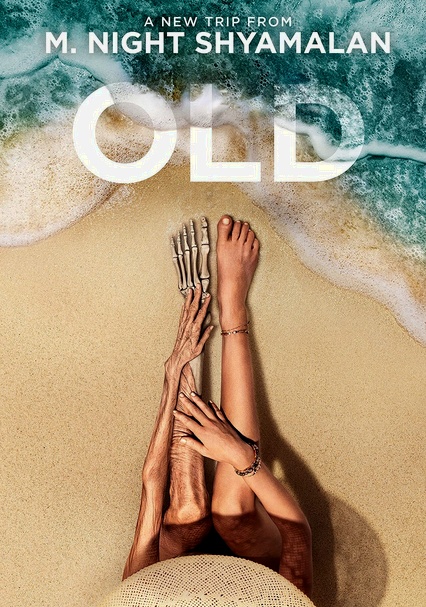
Old-2021

Old-2021

Director M. Night Shyamalan

Starring Gael García Bernal, Vicky Krieps

Scott’s Review #1,195

Reviewed November 13, 2021

Grade: B

I am always rather intrigued by any M. Night Shyamalan projects that come down the pike, whether it be a television or film offering. He has a knack for creating twist endings with a supernatural component.

Sometimes, like with The Sixth Sense (1999) and The Village (2004), he knocks it out of the park. Others are more average.

Old (2021) contains a novel and tantalizing premise that sometimes delivers and sometimes lags. It’s a worthy effort that picks up speed in the final fifteen minutes or so with a predictable conclusion I guessed about midway through, but it’s still really cool to see.

The film might have been better as a short film or a shorter episode – think The Twilight Zone.

Nothing in Old is too shocking or scary, and nothing that will make the hair on your neck stand up, but it’s entertaining and provides a message worthy of dissection.

The visionary filmmaker unveils a chilling, mysterious premise that oozes with possibility.

A seemingly happy suburban family decides to treat themselves to a tropical holiday in paradise. Prisca (Vicky Krieps), the wife, stumbles upon the exciting vacation offer online and decides to go for it. This alone should have been a red flag. Her husband, Guy (Gael García Bernal), agrees, and their children, Trent and Maddox, are overjoyed.

What the children don’t realize is that Guy and Prisca plan to divorce after the vacation ends.

The family is lavished with hospitality, food, and drinks and whisked away to a secluded beach where they relax for a few hours with other members of the resort, including a surgeon and his wife, an epileptic psychologist and her husband, and various others.

They realize that something is causing them to age rapidly, reducing their entire lives to a single day.

They panic and try to leave the island, sometimes turning on each other in the process.

M. Night Shyamalan himself has a small role as a resort employee who drives the group to the beach and monitors them.

Filmed primarily on the beaches of the Dominican Republic, the cinematography is outstanding and quite scenic. The film doesn’t specify where the action is supposed to take place, so I guessed it was Hawaii.

The lavish mountains, roaring waves, and exquisite underwater coral sequences give the film a beautiful and calming vibe, despite the drama unfolding.

I also drew comparisons to the popular television series Lost, which ran on ABC from 2004 to 2010. A group of stranded individuals faces complex and startling situations as they desperately try to flee an island.

When one character drowns and another falls to their death from a cliff while trying to leave, I was reminded that maybe the island is a force in itself.

As the title suggests, the characters begin to age rapidly. The makeup effects aren’t as significant as one might hope, and some characters inexplicably age more than others, making the whole idea feel a bit silly.

Some of the characters are written better than others, and there are some stereotypes to overlook, like the schizophrenic doctor who goes mad. His trophy wife is blonde, toned, and obsessed with remaining young. As a positive, the wife of another couple is a doctor and the husband a nurse. Many would expect the opposite.

To that end, I never felt very connected to any of the characters, and most are written as a means to an end. Their backstories are explored, but lack any depth.

The twist at the end, totally expected in a Shyamalan film, lends itself to a discussion that can be had after the movie ends. A question of medicine and playing god is the primary focus, and one character with a small role at the beginning of the film is pivotal in the final events.

Not one of his best but certainly worthy of a watch, M. Night Shyamalan continues to tickle my fancy for crafting good, twisty thrillers.

Old (2021) doesn’t come close to rivaling his classics but provides good entertainment and perhaps a bit more.

A.I. Artificial Intelligence-2001

A.I. Artificial Intelligence- 2001

Director Steven Spielberg

Starring Haley Joel Osment, Jude Law

Scott’s Review #1,052

Reviewed August 13, 2020

Grade: B+

A bit of a history lesson about the film A.I. Artificial Intelligence (2001).

The final cinematic version is based on the 1969 short story “Supertoys Last All Summer Long” by Brian Aldiss, which was purchased and developed by director Stanley Kubrick in the 1970s.

Left unfinished for years, and the subsequent passing of Kubrick after he had started to collaborate with Steven Spielberg, the film was finally carved into a final project by Spielberg.

Upon close study, the film possesses the mark of both directors with the edge going to Spielberg.

The tone of the story contains a creepiness and oddity familiar to fans of Kubrick, like he may have been thinking along the lines of a similar theme to the brilliant 2001: A Space Odyssey (1968).

Both center around robots and a futuristic world. Spielberg adds a humanistic, sympathetic, and slightly melancholy edge as he did with E.T. the Extra-terrestrial (1982) so that we adore the main character and want justice for him.

In contrast, Kubrick made his version of an extra-terrestrial in 2001: A Space Odyssey a scary villain. The results are mostly good, but uneven in parts.

The premise is solid and grasps our attention. The time is the twenty-second century when the polar ice caps have melted and submerged many coastal cities. It’s also a time when humans live side by side with “mechas,” or sentient robots.

Henry and Monica Swinton are suffering because their son Martin has a rare disease and is placed in suspended animation.

They are given a Mecha child capable of experiencing love. Henry and Monica fall in love with David and, in a plot twist worthy of a daytime soap -opera, Martin returns to life, becomes jealous of David in a plot reminiscent of The Good Son (1993), tries to frame David for monstrous deeds, and David is nearly shipped off to parts unknown.

This is Spielberg’s first crack at screenwriting in nearly twenty-five years, since Close Encounters of the Third Kind (1977) and he does a decent job. No secret is that both films, along with E.T. the Extra-Terrestrial have common themes so he feels comfortable with these subjects.

The humanity is there, but the screenplay is often too busy with story points coming and going at a rapid pace. I wanted a deeper dive into Henry and Monica to feel more about their characters and what makes them tick. I felt their pain of having (sort of) lost a child, but not why they needed to fill the void so quickly.

Osment is insanely good in a film so complex that his performance could have easily been overshadowed by the other elements.

Instead, he powers through adding complexities to a character the audience falls in love with, aching and yearning along with him. David is faced with terrible, life-changing news of not only being adopted but of not even being human.

His determination to find out who he truly is takes the viewer down a path of both entertainment and adventure, but also of bitter emotion.

A.I. Artificial Intelligence (2001) has a lot going on and critically speaking, maybe too much. Spielberg fleshes out the original short story and tasks the viewer with enduring a global warming message, important, but a trite overdone, and sympathizing with David, the lonely robot boy.

The story becomes an exciting adventure and the complexities between being human and being almost human are explored, but not quite satisfactory.

Osment and Law are terrific with dazzling chemistry and the visuals and musical score are astounding. Osment should have received a Best Actor Oscar nomination to follow the one he got for The Sixth Sense (1999).

Oscar Nominations: Best Musical Score, Best Visual Effects