Category Archives: Guy Films

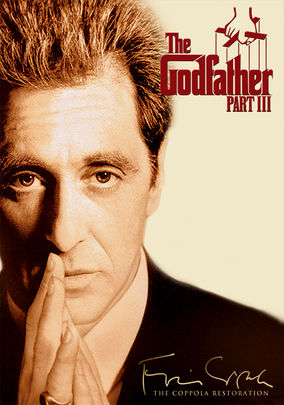
The Godfather: Part III-1990

The Godfather: Part III-1990

Director Francis Ford Coppola

Starring Al Pacino, Diane Keaton

Scott’s Review #533
60011153

Reviewed December 3, 2016

Grade: B+

The Godfather: Part III, released in 1990, has traditionally drawn criticism for not living up to the two preceding epics.

Sofia Coppola, who plays Mary, Michael Corleone’s daughter, in particular, has borne the brunt of the attacks.

No, The Godfather: Part III isn’t on the level of the others, but it is pretty damned good on its own merits and a capable mob epic that concludes the franchise satisfyingly.

The film’s central themes are Michael’s continued desire to leave the mafia and religion, and the role a the Catholic Church.

Some backstory on the film’s making: Coppola had a non-expiring offer to create a third installment of the saga ever since 1974, when Part II was released.

After a financial crisis, Coppola agreed to do the follow-up in 1990.

Julia Roberts was to play the ever-crucial role of Mary (now a coming-of-age young lady), but she dropped out. Winona Ryder was then cast and bailed at the very last minute.

Out of necessity, Coppola’s daughter, Sofia, was cast and had little time to prepare or much acting experience (she would later become an acclaimed director, which better suited her talents).

a with the other epics, a major event launches the film: Michael (Pacino) is named Commander of the Order of Saint Sebastian in a lavish ceremony at St. Patrick’s Old Cathedral.

Michael is approaching age sixty and semi-retired, leaving his business dealings mainly to Joey Zasa in New York, who has ravaged what the Corleone family once built.

Many characters, Kay, Mary, Tony, and Connie, are reintroduced, and new characters such as Vincent Mancini (Andy Garcia) and Don Altobello (Eli Wallach) appear in a flurry of new storylines.

It is like a big, grand soap opera, with wonderful, rich writing.

I was immediately impressed by the neat cinematography; the camera captures wind-swept leaves and an artistic introduction to the film, as well as characters from the first two films, either in cameo roles or as small characters, a great touch for continuity and history.

Coppola does a fantastic job of providing little updates on these characters during a party.

For example, we learn that Vincent is Sonny’s deceased, illegitimate son, and that his mother, Lucy Mancini, appears in a scene. (Clever viewers will remember Sonny and Lucy’s torrential affair in the bathroom during The Godfather (1972), and it is suggested that this produced Vincent).

The film mentions that Tom Hagen (Robert Duvall) has died, though his wife and son appear, and Coppola treats us to a myriad of flashbacks (Apollonia, a young Michael, and Kaye).

These nuances make The Godfather: Part III a film filled with cool little aspects that warm the loyal viewer.

The main story, Michael takes Vincent under his wing and tries to steer the family clear of criminal ties, is interesting, if not spectacular.

Connie rises from a battered mafia wife, raising kids, to a major player in the family, just as women progressed from the 1940s to the 1980s when the story takes place.

She even feeds her godfather a poisoned cannoli!

Michael, Vincent, and Connie get involved with the Catholic Church, bail it out (the real-life Papal banking scandal is linked to the story), and strike a deal for a major stake in the real estate company Immobiliare.

In-fighting between the major crime mob bosses leads to several bloody massacres throughout the film, on the streets, in Atlantic City, and finally, in the Sicilian Opera House.

The pairing of cousins and lovers, Vincent and Mary, never really works, nor does Bridget Fonda’s one-two-scene appearance as Grace Hamilton, a brief dalliance for Vincent.

Also, the exclusion of the loyal family attorney, Tom, is a glaring omission.

So the film does contain a few negatives.

In a nutshell, The Godfather: Part III (1990) is a very good, epic crime drama even without the Godfather name. To measure up to the glory of Parts I and II is impossible.

With the rich Corleone family history and the intricate relationships between the characters, it’s a treat for fans.

There has been a Part IV, nor should there ever be, as the film’s conclusion provides a satisfying wrap-up to the saga.

Oscar Nominations: Best Picture, Best Director-Francis Ford Coppola, Best Supporting Actor-Andy Garcia, Best Original Song-“Promise Me You’ll Remember”, Best Art Direction, Best Cinematography, Best Film Editing

Golden Globe Nominations: Best Picture- Drama, Best Director-Francis Ford Coppola, Best Actor-Drama-Al Pacino, Best Supporting Actor-Andy Garcia, Best Screenplay, Best Original Score, Best Original Song-“Promise Me You’ll Remember”

Bridge of Spies-2015

Bridge of Spies-2015

Director Steven Spielberg

Starring Tom Hanks

Scott’s Review #399

80050060

Reviewed April 28, 2016

Grade: B+

Tom Hanks teams with Stephen Spielberg once again in another A-list Hollywood film.

Like Saving Private Ryan (1998), Bridge of Spies (2015) is a historical film. This time, it features the Cold War; the film begins in 1957.

The camera work, artwork, and set decorations are second to none, and the film looks and feels authentic.

As interesting as the overall result is—it felt like a well-made film—something was missing that kept it from being truly riveting, which is why it received a B+ rating.

With Spielberg and Hanks on board, one will get a quality film.

Hanks portrays James B. Donovan, a Brooklyn attorney specializing in insurance law, a negotiation wiz, and someone with experience in the Nuremberg trials.

He is assigned to defend suspected spy Rudolf Abel (Mark Rylance) in what everyone assumes is an open-and-shut case; his guilt is taken as a given.

Abel has been arrested by the FBI and is thought to be a Russian spy. They will release him on the condition that he reveal Soviet contacts, but he refuses.

Meanwhile, an American pilot, Frances Powers, is captured in Soviet territory and taken hostage. To make matters more complicated, an American graduate student, Pryor, is trapped behind the Berlin Wall in East Germany and not allowed by the Germans to leave.

Donovan is pressured to defend Abel in the United States while also making a deal to return the three men to their respective countries.

Hanks, a great actor, is his typical stoic, capable self, and his portrayal reminds me of his role in Captain Phillips (2013), calm, well-mannered- a clear yet quiet leader.

The role is not as flashy as other legendary Hanks roles (Forrest Gump-1994, Philadelphia-1993). The film centers around Hanks and caters to his acting style. His character is always front and center.

Hanks never gives a bad performance, and I admire him in almost anything.

Let’s discuss the role and Mark Rylance’s Oscar-winning portrayal.

Giving a very subdued, nuanced performance, he is good and low-key in what could have been an energetic, over-the-top performance if written that way, but I am not sure I would have handed him the golden statuette over a few of the other nominees in the 2015 Supporting Actor category.

This isn’t a criticism, but I am unsure if he warrants an Academy Award.

Bridge of Spies is very detail-oriented, and every set piece, from late-1950s cars to clothing, hairstyles, and home furnishings, is spot on.

The film was expensive to produce, and no expense seems spared.

The film travels from Brooklyn to the Soviet Union to Germany and gives off a patriotic, Americana flair that feels true to life for the time. There was such a sense of country and community.

Nothing makes this more apparent than the distasteful glares, coldness, and hatred many characters show toward Donovan.

To counteract this, when Donovan is ultimately more the hero, he is revered and celebrated.

As great as the film looks, something about it feels slightly disconnected.

I left wanting more from a story perspective and feeling slightly disengaged at times. I was never riveted or blown away, even though I knew I was watching a well-made film.

This can happen if the story is less compelling than the way the film looks, as with Bridge of Spies.

After I finished watching, I felt I didn’t need to see the film again, unlike truly great films you can watch again.

A slight mention: Bridge of Spies is a “guy’s film.” Amy Ryan, a great actress, does all she can with the film’s only real female role: Donovan’s dutiful, supportive wife, a role written one-dimensionally hundreds of times.

It is a shame her character is not fleshed out. The typical worried scenes, or her fretting for her husband to return home to his family, are purely reactionary and don’t advance the plot.

In this sense, the film deserves criticism for being too traditional.

Bridge of Spies is a good effort but not a tremendous film. It is the kind of film I liked but didn’t love.

Perhaps the names Spielberg and Hanks on the marquee had me expecting more.

Oscar Nominations: 1 win-Best Picture, Best Supporting Actor-Mark Rylance (won), Best Original Screenplay, Best Original Score, Best Sound Mixing, Best Production Design

The Martian-2015

The Martian-2015

Director Ridley Scott

Starring Matt Damon

Scott’s Review #379

80058399

Reviewed February 19, 2016

Grade: C-

The latest film from heralded director Ridley Scott (notable for classics Blade Runner (1982) and Alien (1979), The Martian (2015) is a science-fiction space adventure about a presumed-dead astronaut (Matt Damon) trapped on Mars after his fellow team members believe he’s dead.

NASA and a rescue crew desperately try to save him as supplies run out.

Extremely resourceful, Mark Watney (Matt Damon) cleverly avoids death by using his wits to survive and prosper on the challenging planet.

Following several other high-profile modern science fiction offerings, such as Interstellar (2014) and Gravity (2013), The Martian features a big Hollywood star in the lead role.

Much of the action follows Watney as he tries to produce food and supplies and preserve his sanity, think Tom Hanks in Cast Away (2000), on another planet, with an indoor operations station left by his abandoned crew.

The Martian has received accolades, even winning the Golden Globe for Best Musical or Comedy Film, though that’s a poor category.

The film has snippets of humor and a few background songs, but that is it. Maybe some late-1970s disco songs make it a musical?

I found The Martian to be a Hollywood mainstream film in every sense. That may be a high compliment to some, but I expect more.

It is not that The Martian is a bad film; it is not, but it is mediocre and has all the elements of an average offering. The film aimed for an emotional experience that I didn’t get.

I had little doubt that the ending would be sweet and wrapped in a bow.

Mark Watney is the typical all-American character in a “guy film”. He hates disco and loves ketchup. The film makes him a guy’s guy so the average filmgoer can relate to him.

He is in good shape, cracks jokes, and is likable.

But that is also a problem with the character in The Martian. He lacks substance. We know little about him, except that his parents never appear on-screen.

The way the film touts him as the hero and has him cheered and praised, while it would be warranted in real life, just feels forced and contrived.

This is not a knock against Matt Damon, who does a decent job.

My beef is that the character is not fleshed out.  The well-built Damon at the beginning of the film versus the scrawny Damon at the conclusion feels like a facade, since they used a body double in the later scenes.

This lack of authenticity disappointed me.

I expected more from the supporting cast. Jessica Chastain, Jeff Daniels, Chiwetel Ejiofor, and Kristen Wiig play one-note types that any actor could have played.

Why were big stars cast at all?

Chastain as a mission commander, Daniels as Director of NASA, Ejiofor as NASA mission commander, and Wiig as a Public Relations specialist.

The casting, particularly Wiig in the straight-laced, stale role, was mysterious to me, and it wasn’t a particularly good portrayal… and I am a Wiig fan.

The humorous parts in The Martian are contrived and not dissimilar to countless other films, with the smart-ass remarks all containing a bland quality.

Lines like “Eat your heart out, Neil Armstrong” seem silly and unnecessary.

I expected more wit.

Let me be fair, the visual effects (it is space, after all) are impressive, and it was fairly interesting to see what is supposed to be the planet Mars, but in this day and age of CGI effects, the film isn’t that spectacular.

 I would much rather be given a compelling story than visual treats any day of the week.

My review of The Martian may seem harsh, but I expected more from it than I got.

With several Oscar nominations, including Best Picture, I expected a top-notch film, but The Martian didn’t come close.

Mediocrity, straightforwardness, and predictability describe The Martian (2015).

I have heard the novel is fantastic, so I added it to my reading list.

Oscar Nominations: Best Picture, Best Actor-Matt Damon, Best Adapted Screenplay, Best Sound Editing, Best Sound Mixing, Best Production Design, Best Visual Effects

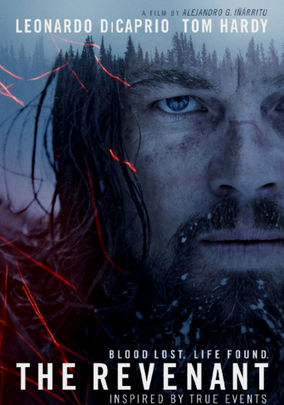
The Revenant-2015

The Revenant-2015

Director Alejandro G. Iñárritu

Starring Leonardo DiCaprio

Scott’s Review #371

80064516

Reviewed January 27, 2016

Grade: A

The Revenant is a fantastic 2015 film filled with intensity, great visual camera work/direction, and the acting talents of one of modern cinema’s dynamic performers, Leonardo DiCaprio.

He shines every minute he’s on screen.

Almost all the filming takes place outdoors (the American frontier period), and it is a revenge tale, which only adds to the film’s excitement and beauty.

Set in the 1820s, the film opens by introducing us to a large party of hunters and trappers in remote Wyoming.

Right off the bat, I was struck by the picturesque scenery.

We are treated to a compelling (and bloody) battle between the trappers and a tribe of Native Americans. The Louisiana Purchase has just passed, heightening tensions between various parties and spilling blood.

The hunters are decimated, so the survivors must flee on foot, hoping to reach safety hundreds of miles away.

The main character, Glass (DiCaprio), later receives a terrible injury, and the main crux of the story develops as we embark on a tale of his desperation to survive and exact revenge on the men responsible for leaving him to die.

The film is a lesson in endurance. Glass is arguably put through almost every punishment imaginable, and we wonder what more he can endure.

The film belongs to two actors. Dicaprio, and Tom Hardy as the villainous John Fitzgerald, a hunter with a major rivalry with Glass.

The film parlays into a revenge tale between the two characters.

DiCaprio is a gem in this film; not only is he compelling from a physical standpoint, but he also looks broken, battered, and bruised, and DiCaprio gives a performance that I am fond of.

He acts non-verbally.

In one crucial scene, Glass is unable to move or speak as a violent act is committed. He is desperate yet helpless.

DiCaprio’s emotional range is astounding. The pain, hurt, and frustration are evident on his face, and we sympathize greatly.

DiCaprio delivers a powerful performance.

Tom Hardy is compelling in his own right as the scoundrel he portrays. We despise this character and all his dirty deeds, and Hardy successfully pours all his energy into this grizzled role.

Hardy, quite handsome in real life, is transformed into a partially scalped, dirty man.

His fate at the end of the film is a clever touch that makes The Revenant more than a typical run-of-the-mill western.

The infamous “bear scene” is second to none. I don’t know how they shot this compelling scene, but the result is a realism I have seldom seen in film. The scene is so prolonged and violent that you wish it would end quickly.

A surprise comes that rivals any horror film.

Directed by Alejandro G. Iñárritu, it follows a vastly different type of film (Birdman, 2014) and does a wonderful job.

The Revenant is arguably a “guy’s movie”.

It features almost no women, and the ones who do are not treated well, which is unfortunate; sadly, that was likely true of the time.

Interesting to note, though, is that Iñárritu decided to have a female victim enact revenge on her abuser in a satisfying (though squeamish moment for the male viewer.

I found The Revenant to have definite left-wing leanings.

The age-old controversy of the white man taking the Indian’s land is explored, and the film has a way of bringing this up more than once, as well as not making the Indian tribes “bad”, but rather sympathetic.

Especially since Glass marries an Indian woman and has a son with her.

Gorgeous cinematography meets a wonderful, intriguing story, peppered with brutality.

The Revenant (2015) succeeds on every level and sets an important precedent for a film about perseverance in the face of hopelessness.

Oscar Nominations: 3 wins-Best Picture, Best Director-Alejandro G. Iñárritu (won), Best Actor-Leonardo DiCaprio (won), Best Supporting Actor-Tom Hardy, Best Sound Editing, Best Sound Mixing, Best Production Design, Best Cinematography (won), Best Makeup and Hairstyling, Best Costume Design, Best Film Editing, Best Visual Effects