Tag Archives: Hugh Marlowe

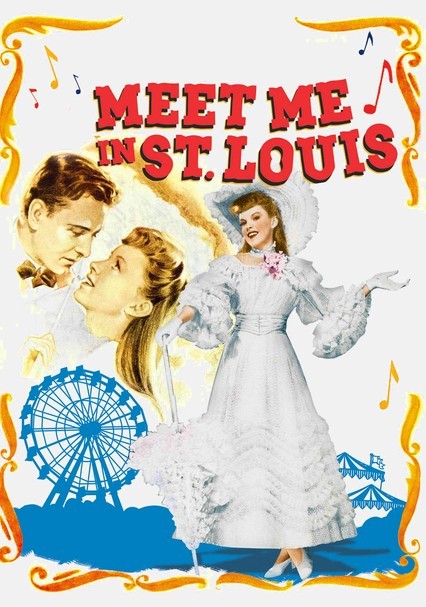
Meet Me in St. Louis-1944

Meet Me in St. Louis-1944

Director Vincente Minnelli 

Starring Judy Garland

Top 250 Films #83

Scott’s Review #845
Reviewed December 19, 2018

Grade: A

With talents such as Vincente Minnelli and Judy Garland involved in a project, it is tough for the results not to be resounding, and this is the case with Meet Me in St. Louis (1944), a treasured musical with enough songs and melodrama to last a lifetime.

The film is a lively and earnest achievement from both stars when each was at their prime. It is rich in flavor and contains a myriad of good touches.

Meet Me in St. Louis is an ensemble piece featuring many actors, but the film belongs to Garland for the musical numbers alone. The film is groundbreaking and sets the tone for the slew of MGM musicals to follow during the 1950s and 1960s.

The film is considered one of the greatest and most memorable musicals of all time, and I share this sentiment.

The story revolves around the upper-middle-class Smith family, set in 1903, St. Louis. In its lovely form, the film has been composed of seasonal vignettes for over a year.

Trials and tribulations erupt, especially involving the romantic entanglements of eldest sisters Rose (Lucille Bremer) and Esther (Garland), as well as the possibility of the family relocating to New York City.

Rose and Esther are two of the siblings, along with the Smith parents, Grandpa, and Katie, the maid.

The household is filled with glee, music, and heartbreak.

The film’s setup is a considerable success, eliciting a warm sensation. As the title card reads, “Summer 1903,” we are welcomed into a sunny and picturesque street, set against the backdrop of St. Louis, which is perfectly midwestern.

The Smith home is showcased, and the viewer is welcomed into the idyllic world of a bonded family.

Meet Me in St. Louis feels homespun and like a good best friend. It can be watched and re-watched often, regardless of the season, as it features a summer fair, a spooky Halloween sequence, and a dazzling Christmastime segment.

Other than Esther, the most memorable and fascinating character is Tootie (Margaret O’Brien). O’Brien gives a startlingly good performance and packs an emotional wallop, enriching a character arguably interpreted as obsessed with death with some needed humor.

She buries her dolls on a dare and throws flour in a man’s face on Halloween, thereby “killing” him.

Her most significant scene, though, occurs during a meltdown when Tootie destroys her beloved snowmen on the family lawn. The actress portrays such rage and despair during this scene that it is easy to forget, at the time, how young she was.

She was honored with an honorary Oscar for her efforts.

The musical numbers by Garland are absolute treasures. Highlights include “The Trolley Song,” performed as Esther rides the afternoon trolley across town, hoping that the boy next door with whom she is madly in love, John (Tom Drake), will be on the same trolley.

The gorgeously performed number “Have Yourself A Merry Little Christmas” is my favorite. Following a lavish Christmas Eve ball, Esther sings the song to Tootie, and nestled within its lyrics are emotions such as hope and sadness.

Meet Me in St. Louis (1944) is a film that has it all and can be enjoyed by audiences of all ages. With memorable musical numbers, romance, drama, and a wholesome, timeless sensibility, it is a favorite that deserves to be revisited.

Like the finest wines, this film improves with age.

Oscar Nominations: Best Screenplay, Best Scoring of a Musical Picture, Best Song-“The Trolley Song”, Best Cinematography, Color
All About Eve-1950

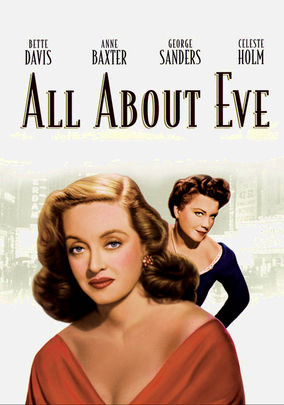
All About Eve-1950

Director Joe Mankiewicz

Starring Bette Davis, Anne Baxter

Top 250 Films #155

Scott’s Review #73

242142

Reviewed June 27, 2014

Grade: A

All About Eve is a cynical masterpiece from 1950 set in the competitive world of the New York theater.

Insecure Margo Channing, played to perfection by Bette Davis, is an aging actress whose career is declining. She meets naïve Eve Harrington, played by Anne Baxter, who insinuates herself into Margo’s life and career.

One interesting aspect of this film is the opening scene of Eve’s acceptance speech. The look of anger and disdain on the front table indicates what is to come.

The film backtracks from the first time the two women meet, and the story begins.

It is undoubtedly a dark film, and jealousy and back-stabbing are common themes throughout, as had never been done before, set in the world of theater.

One by one, Margo’s friends catch on to Eve’s plot, but at what cost?

This is Bette Davis’s comeback performance as a talented Broadway star, and she makes the most of the opportunity as she deliciously delivers her famous revenge-minded line, “Fasten your seat belts. It’s going to be a bumpy night.”

Marilyn Monroe has a cameo as a debutante in her first film.

The film deservedly won the 1950 Best Picture Oscar.

Oscar Nominations: 7 wins-Best Motion Picture (won), Best Director-Joseph L. Mankiewicz (won), Best Actress-Anne Baxter, Bette Davis, Best Supporting Actor-George Sanders (won), Best Supporting Actress-Celeste Holm, Thelma Ritter, Best Screenplay (won), Best Scoring of a Dramatic or Comedy Picture, Best Sound Recording (won), Best Art Direction-Set Decoration, Black-and-White (won), Best Cinematography, Black-and-White, Best Costume Design, Black-and-White (won), Best Film Editing

Golden Globe Nominations: 1 win-Best Picture, Best Director-Motion Picture-Joseph L. Mankiewicz, Best Performance by an Actress in a Motion Picture-Drama-Bette Davis, Best Performance by an Actor in a Supporting Role in any Motion Picture-George Sanders, Best Performance by an Actress in a Supporting Role in any Motion Picture-Thelma Ritter, Best Screenplay-Motion Picture (won)

The Day the Earth Stood Still-1951

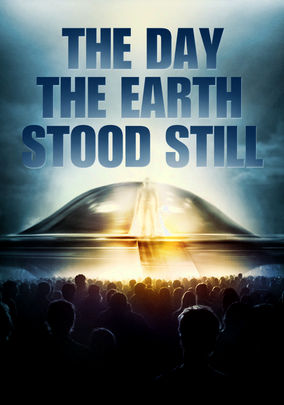
The Day the Earth Stood Still-1951

Director Robert Wise

Starring Michael Rennie

Scott’s Review #155

60026578

Reviewed August 18, 2014

Grade: B+

The Day the Earth Stood Still (1951) is one of the best, most credible, original science fiction thrillers. It has stood the test of time, considering it is over sixty years old.

Made in 1951, the film is a message movie about a spaceship that suddenly arrives on planet Earth in the United States Capitol of Washington, D.C.

Michael Rennie is fantastic as Klaatu, the calm, poised leader of the spaceship. Along with Gort, a 7-foot-tall robot, Klaatu intends to deliver a message of peace and humanity to Earth’s leaders.

The arrival sets off a panic, and Klaatu is captured, only to escape and meet local townspeople as he tries to pass himself off as human and deliver his message.

The Day the Earth Stood Still is a liberal-slanted, anti-war, pro-tolerance, and acceptance movie, but also a good, old-fashioned black-and-white science fiction thriller rolled into one.

It’s an important film.

It is an edgy, questioning film that can easily still be viewed and appreciated today (sad that not much seems to have changed in the world after all these years).

It is political, and the Washington, D.C., setting is wise and symbolic.

While a handful of humans are portrayed as intelligent and accepting, most of Earth’s human beings, especially politicians, are portrayed as war-happy, foolish individuals.

The viewer will question the world around them and, hopefully, begin to question political decisions and the horrors of war that continue unabated.

Golden Globe Nominations: 1 win-Best Original Score-Motion Picture, Best Promoting International Understanding (won)