Tag Archives: Bruce Greenwood

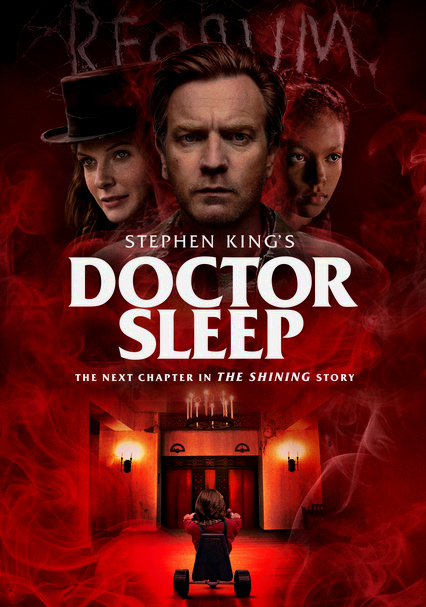
Doctor Sleep-2019

Doctor Sleep-2019

Director Mike Flanagan

Starring Ewan McGregor

Scott’s Review #1,026
Reviewed May 22, 2020

Grade: B

Based on the 2013 novel of the same name written by Stephen King, a sequel to his own 1977 novel The Shining, Doctor Sleep (2019) is also a direct sequel to the film adaptation of The Shining (1980).

Events are set several decades after the original events and incorporate elements from the 1977 novel as well. A fun fact is that King hated the film version of The Shining but approved of the script for Doctor Sleep.

The first and last parts of the film are superior to the rest, mainly succeeding when elements of The Shining are incorporated.

The rest meanders and teeters too much into supernatural and computer-generated imagery territory, taking away from the haunting ghost story elements that made the original The Shining such a frightening treasure.

Ewan McGregor plays Danny Torrance, the little kid scarred from the trauma he suffered when his father Jack went mad at the looming Overlook hotel decades earlier.

Danny, now a grown man and a suffering alcoholic, lives a life that is out of control, suppressing his “shining” gifts that allow him to possess psychic abilities.

Hitting rock bottom, Dan moves to a tiny town in New Hampshire and befriends Billy Freeman (Cliff Curtis), who sponsors him in AA. Dan is regularly visited by the spirit of Dick Hallorann, the deceased chef from the hotel who teaches Dan how to contain his demons.

Meanwhile, the True Knot, a cult of psychic vampires led by Rose the Hat (Rebecca Ferguson), extend their lifespans by consuming “steam”, a psychic essence released as they torture and kill those who have the shining.

They primarily feed on young children and pursue Abra Stone (Kyleigh Curran), a young girl whose shining is even more potent than Dan’s. She communicates telepathically with him and forms a pact to destroy Rose and her cronies.

Let’s take the good with the bad.

The film gets off to a perfect start with the recreation of scenes from The Shining when Danny rides his big wheel throughout the winding 1970’s 1970s-style hallways of The Overlook and gazes at the forbidden Room 237.

The synth musical score that made The Shining atmospheric and unforgettable is also included as the bass-infused heartbeat is showcased amid overhead camera angles, a clear ode to The Shining.

The finale of Doctor Sleep comes full circle as Dan and Abra travel from New Hampshire to snowy Colorado and revisit the Overlook, now tattered and ill-forgotten from decades of abandonment.

The showdown between Dan, Abra, and Rose treats fans to clips of Jack Nicholson and Shelly Duvall.

Visits from familiar characters and sets, such as the ghostly bartender, the conjoined twins, the wrinkled, old, naked woman, the gushing elevator blood, and the hedge maze, make their return, providing a lovely feeling of nostalgia.

Unfortunately, between the first thirty minutes and the final thirty minutes, there are another ninety minutes of screen time that don’t always work. For starters, a running time of two hours and thirty-two minutes feels too long for a horror film, and the filler lying in between is that much more apparent.

The action meanders, especially given the anticipated final battle, which is inevitable.

Taking nothing away from either Ferguson or Curran, who are fine in their respective roles of Rose and Abra, neither is the most interesting aspect of Doctor Sleep. They are new characters in the novel and therefore the film but are secondary to Dan and his intricate relationships with Jack, Wendy, and Dick.

The only parts of the story that were interesting to me were the connections and thoughts Dan had to experiences forty years earlier.

The battle scenes between Rose, Abra, and other characters do nothing for the story and take the film too far in the direction of the supernatural and slick technological aspects that The Shining didn’t need.

Since Doctor Sleep was adapted from the successful recent King adaptations of It Chapter Two (2019) and Pet Sematary (2019), perhaps this is the reason for the modern additions.

If Doctor Sleep (2019) could be sliced and diced to eliminate the middle and keep the bookends of the beginning and finale, the result would have paid proper homage to The Shining (1980); instead, we get only halfway there.

The film has some nice elements and stays true to its history, but it contains a few unnecessary additions that detract from its overall quality. And how can a film ever compare to the greatness of The Shining (1980)?
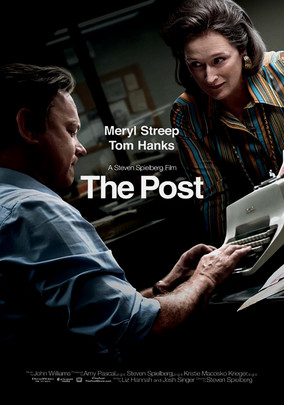
The Post-2017

The Post-2017

Director Steven Spielberg

Starring Meryl Streep, Tom Hanks

Scott’s Review #715

Reviewed January 15, 2018

Grade: A-

Amid the current political upheaval in the 2017 United States, comes a fresh and timely film named The Post, created by esteemed director Steven Spielberg and starring two of today’s biggest Hollywood film stars: Tom Hanks and Meryl Streep.

The film is a political, historical thriller set during the tumultuous year 1971, as the controversial Vietnam War raged on. It tells of the bravery of a female newspaper owner (Streep) who risked everything to publish the truth with her team of mostly male editors and staff.

The film is an intelligent piece of writing.

Its crisp script and quick editing allow for a believable foray into a different time, when newspapers were hot and rotary telephones, telephone booths, and polyester outfits were all the rage.

Spielberg is brilliant at setting just the right mood and tone to transport the audience back to 1971, on the eve of the enormous Watergate scandal.

While all of the elements are in play, and the truthful story is important, the film is very good but not quite brilliant—it falls just shy of that bombastic one or two scenes that would land it over the top.

The Post begins in the jungles of Vietnam in 1965, as military analyst Daniel Ellsberg documents the progress of military activities among the soldiers during battle.

On the journey home, he briefs then-President Lyndon Johnson that the war is hopeless and should be stopped. As history unfortunately shows, the brutal war continued with thousands of lives lost.

The film then continues on a journey of uncovering top-secret Pentagon papers documenting the White House’s knowledge of the war’s useless nature. Each administration chose to continue with the bleeding to avoid the United States being “humiliated.”

Streep gives her best performance in years as Katharine Graham, the Washington Post newspaper heiress, a woman who struggles to be taken seriously in a man’s world, especially given the period, many men were uncomfortable taking direction from a woman.

Streep infuses the role with the perfect amount of emotion, insecurity, and charm. Despite her wealth and control, she is frequently overruled by the all-male board of directors, so much so that she often doubts her confidence.

Hanks, however, underwhelms as the gruff editor-in-chief of the Post, Ben Bradlee. Given the actor’s enormous talents, I was expecting a meatier performance, which does not materialize.

I also anticipated an equal balance of Hanks and Streep, but the film belongs to Streep.

Perhaps because Hanks (the ultimate nice guy) portrays Bradlee as a challenging, yet family man, the performance does not quite work.

Also, the chemistry between Hanks and Streep is not the specialty of the film.

Evident is the correlation between 1971’s President Nixon and 2017’s President Trump—both administrations were shrouded in controversy.

A neat trick Spielberg creates is to only show Nixon in shadows, wildly gesturing and threatening, similar to Trump’s mannerisms—this is no accident.

The entire work of The Post seems to be a big call-out by Spielberg, a devout liberal, to the Trump administration.

This comparison of past and present makes The Post incredibly timely and topical for 2017.

Clever is the intriguing ending—as the Watergate scandal begins with a security guard catching intruders at the complex, Spielberg seems to be saying, “Watch out, Trump!”

In 2017, the current state of the media versus the White House has never been more controversial, disdainful, and even hateful, as the “truth” is often tough to come by or even to distinguish.

“Fake news” is now a thing and Twitter rants are now a daily occurrence, making the “truth” a precious commodity.

For this reason alone, The Post (2017) must be a film we celebrate and model ourselves after—how timely indeed.

Oscar Nominations: Best Picture, Best Actress-Meryl Streep

The Captive-2014

The Captive-2014

Director Atom Egoyan

Starring Ryan Reynolds

Scott’s Review #235

80013547

Reviewed April 18, 2015

Grade: C-

The Captive is a 2014 thriller that reminds me quite a bit of a 2013 thriller, Prisoners, which must have been an influence.

A similar plot involving a blue-collar, working-class family attempting to track down a missing child as the father takes matters into his own hands and is also considered a prime suspect in the crime by detectives is used.

Set in snowy upstate New York, the film follows Matthew (Ryan Reynolds) and Tina Lane (Mireille Enos), a struggling young couple whose nine-year-old daughter, Cassandra, is snatched from Matthew’s truck while he runs into a store to buy her a pie.

Told through flashbacks, the story picks up years later as the defeated couple is periodically taunted by Cassandra’s abductors, who leave clues suggesting she may still be alive.

Via video cameras, the abductors watch the parents’ emotional reactions to the clues and sell this “entertainment” to subscribers.

As the film moves along, we learn of a major crime syndicate involved in the kidnapping of Cassandra and other similarly aged girls.

At times, The Captive’s plot is compelling, with a few nice twists and surprises; other times, it moves slowly and drags.

The film sets the story in a cold, wintry season, emitting a tone of darkness, loss, and harshness. The cinematography is beautiful and deserves major recognition for the mood it creates.

The film’s major problem, though, is its extreme plot holes and ludicrous story; I still don’t understand the pivotal childhood ice-skating message at the end.

As the film progresses, the plot becomes hard to follow, and it raises many questions. Who is paying to watch parents emotionally tortured? How can Cassandra seemingly come and go as she pleases and remain a prisoner? Why, years later, is Matthew still a suspect?

These points feel too plot-driven for my taste and seem designed to move the plot along.

The main villain, Mika, is a weird guy, but what is his motivation? Why is he part of the kidnapping syndicate? What motivates anyone besides Matthew and Tina trying to get their daughter back?

This is not explained.

Some casting is problematic; I had difficulty buying Enos as a maid in a small town; she is way too glamorous a woman for that to be believable.

Similarly, casting Rosario Dawson and Scott Speedman as the central detectives seems unrealistic. The film is pure fantasy- these actors are too good-looking to be believable as upstate New York, small-town detectives.

While very handsome, Ryan Reynolds is the only actor I bought as a grizzled, broken father with a glimmer of hope that his daughter is still alive.

Despite some interesting turns, The Captive (2014) is too unrealistic and convoluted to follow closely, and it’s a bit of a mess.

For this type of film (kidnapping thriller?), I would recommend Prisoners (2013), though it has plot holes too.