Tag Archives: Paul Bogart

The Thanksgiving Treasure-1973

The Thanksgiving Treasure-1973

Director Paul Bogart

Starring Lisa Lucas, Jason Robards

Scott’s Review #1,562

Reviewed November 28, 2026

Grade: A

One of four wonderful made-for-television films in the early to mid-1970s, The Thanksgiving Treasure (1973) is indeed that, providing a discovery of a gem from another time just waiting to be unearthed and embraced.

It not only celebrates valuable messages of kindness, humanity, and acceptance, but also uses camerawork and a salt-of-the-earth tone that focuses on ordinary people in a small Iowa town during the Depression era.

Paul Bogart, who directed three of the four offerings, was one of the most prominent feature film and television special directors of the time and is a major factor in the special’s success.

The film feels so warm and understated thanks to his direction.

Rather than pushing sentimentality too hard and making the film feel stuffy or overwrought, he lets the performances and small-town atmosphere carry the story.

Deservedly so, many viewers consider it one of the stronger family television movies of the 1970s, and I’m ‘thankful’ I got to see it, especially around such a festive and hearty holiday.

The story is told from the perspective of Addie Mills, wonderfully played by Lisa Lucas. An older Addie (Patricia Hamilton) narrates the story

Addie is an open-minded, determined young lady who aspires to become an author one day and live an adventurous life in sophisticated Paris, far from the small-town heartland.

She is also mature beyond her years and optimistic even when faced with conflict or disappointment, believing that relationships can change and seeing the good in everyone.

Addie’s desire to learn about her family’s Thanksgiving traditions leads her to a surprising friendship with Mr. Radd (Barnard Hughes), an elderly hermit embroiled in a feud with Addie’s father, James (Jason Robards), over money.

Through that friendship, Addie begins to challenge some of the prejudices and stubborn attitudes held by the adults around her.

Warned to stay away from the old man, Addie is instead drawn to him and his horse Treasure, whom she falls in love with.

The many exterior shots set the Depression-era period wonderfully. The rolling farmland, unpaved roads, and gray atmosphere enhance the chilly Thanksgiving season in the Midwest.

Like many other viewers, I was reminded of childhood Thanksgivings in a small town while watching the film, especially during the Mills family dinner with a gigantic turkey, mashed potatoes, stuffing, and cranberry sauce.

Joined by James’s mother, ‘Grandma’ (Mildred Natwick), and other family members, they chit-chat about recipes and other idle gossip like real families do.

Addie humorously reminds everyone that every ingredient in their massive meal is fresh and homegrown.

This symbolizes what Thanksgiving is all about-forgiveness and togetherness.

Of course, these treats would only go so far without good acting performances. These are the strongest aspect of The Thanksgiving Treasure.

Lucas gives a natural, unaffected performance that elevates the film, avoiding missteps by other child actors, such as excessive sweetness.

Hughes is excellent as grouchy Mr. Radd, bringing quiet humor and slowly revealing underlying affection in an emotional crescendo that will leave viewers teary at the end.

Finally, Robards offers stubborn complexity mixed with love, avoiding a one-dimensional character, while Natwick gives a comforting presence and homespun charm for viewers seeking a grandmotherly type.

The Thanksgiving Treasure (1973) and its glowing warmth should be a must-watch for anyone seeking a strong message about family relationships, forgiveness, and overcoming prejudice.

For me, it was both a trip down memory lane and a positive reminder, thanks to Addie, to look to the future and always remain a kind human being.
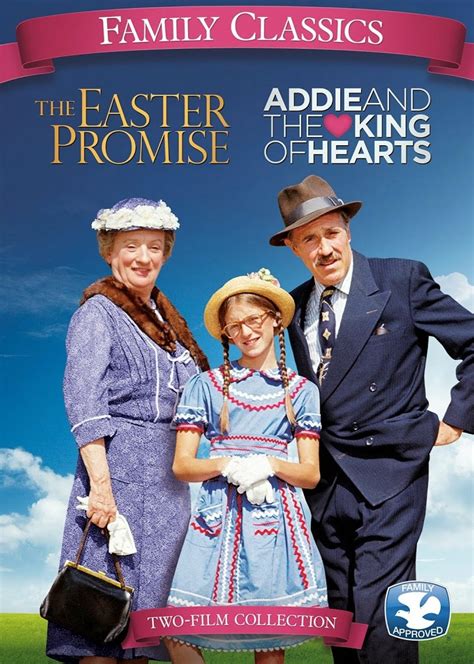
The Easter Promise-1975

The Easter Promise-1975

Director Paul Bogart

Starring Lisa Lucas, Jason Robards

Scott’s Review #1,525

Reviewed April 3, 2026

Grade: A

The Easter Promise (1975) is a television movie that is surprisingly powerful and emotional. The umbrella title ‘family classics’ was misleading to me, as I begrudgingly watched what I thought would be an overly sentimental and wholesome affair.

That is not the case at all, as The Easter Promise is laden with dark and strong themes of loneliness and alcoholism mixed with feminism and truth to oneself.

A major win and another surprise is the use of videotape rather than film. This makes the story feel like a stage play or a strong daytime television drama, layered with humanity and identification.

This worked in the same successful way for the well-known PBS series Upstairs, Downstairs, and ups the storytelling and investment in the characters.

Finally, a explores class distinction and the contrast between career success and failure. Characters struggle to decide whether to reach for the stars or be complacent and content with the daily drudgery of ordinary life.

One day, the townspeople of a small Nebraska town eagerly anticipate the return of a former resident and now famous, glamorous Broadway actress, Constance Payne (Jean Simmons). Constance returns to sell her recently deceased father’s house and quickly get back to the Big Apple.

Events are told from the perspective of pre-teen Addie Mills (Lisa Lucas), an aspiring artist who cannot wait to leave the folksy and dull Midwest for the lights of New York City the moment she is old enough to.

She intends to forge a connection with Constance, whom she admires for reaching career heights.

But when Addie and her girlfriends bombard Constance with requests for acting lessons and an appearance at a local fashion show, they begin to see a dark side of show business.

Drama also surrounds Addie’s father, Jamie (Jason Robards), a high school classmate of Constance’s, who finds her lifestyle flashy and ridiculous. He prefers the small-town mindset and folksy way of thinking, which clashes with Constance and Addie’s beliefs.

Jamie’s mother, Grandmother Mills, provides a kindly, non-judgmental presence that counters Jamie and is wonderfully portrayed by Mildred Natwick.

The character reminds me of Helen Potts, the sweet-natured older woman from Picnic (1955) who brings a sense of pride and good-naturedness to the image of the Midwest.

Serving up a freshly baked pie or muffins elicits a friendly, welcoming vibe.

Despite the dramatic, heavy alcohol scenes, the best moments are the quiet ones over a simple meal. When Addie impulsively invites Constance to dinner at her family home, much to Jamie’s dislike, career and mindset are on the agenda.

Constance and Addie calmly question why people are expected to stay passive and unhappy in an isolated place rather than embrace the hustle and bustle of New York City or the gypsy life of a creative soul.

Culturally, Constance expects a cocktail hour before the meal, whereas the Mills family does not even have wine on hand and serves dinner immediately.

This shows the difference between a good Christian family and the edginess of more creative types and perhaps non-believers.

The scenes involving alcoholism don’t exactly treat the topic as an addiction, or any other message deeper than someone who drinks has a myriad of problems.

But the acting between Lucas and Simmons is top-notch during these scenes.

I was impressed by the scene where Constance teaches the girls about acting, including improvisation and being in the moment of a scene. As a former brief theater major, I found the tips rang true and reminded a of my own drama teacher.

A clever, artistic addition is including drawings of the characters before particular sequences. The drawings come to life as real people, and the scene begins.

The Easter Promise (1975) is a wonderful early-spring made-for-television gem you can watch year after year.