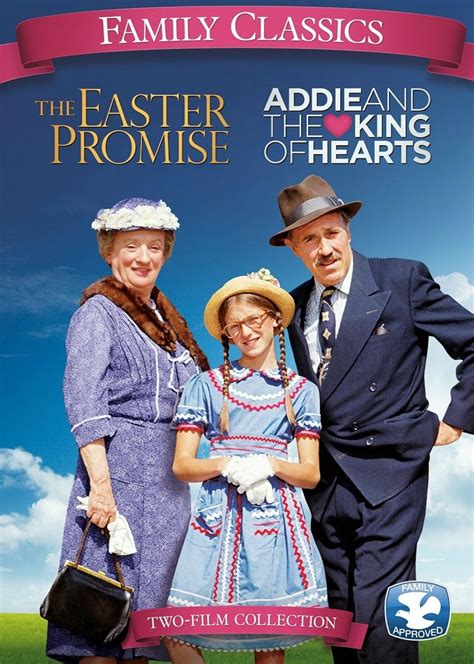
The Easter Promise-1975
Director Paul Bogart
Starring Jason Robards, Jean Simmons, Lisa Lucas
Scott’s Review #1,525
Reviewed April 3, 2026
Grade: A
The Easter Promise (1975) is a television movie that is surprisingly powerful and emotional. The umbrella title ‘family classics’ was misleading to me, as I begrudgingly watched what I thought would be an overly sentimental and wholesome affair.
That is not the case at all, as The Easter Promise is laden with dark and strong themes of loneliness and alcoholism mixed with feminism and truth to oneself.
A major win and another surprise is the use of videotape rather than film. This makes the story feel like a stage play or a very good daytime television drama layered with humanity and identification.
This worked in the same successful way for the well-known PBS series Upstairs, Downstairs series, and ups the storytelling and investment in the characters.
Finally, a hint of class distinction and career success versus failure is explored. Characters struggle to decide whether to reach for the stars or be complacent and content with the daily drudgery of ordinary life.
The story is that one day, the townspeople of a small Nebraska town eagerly anticipate the return of a former resident and now famous, glamorous Broadway actress, Constance Payne (Jean Simmons). Constance has returned to town to sell her recently deceased father’s house and quickly return to the Big Apple.
Events are told from the perspective of pre-teen Addie Mills (Lisa Lucas), an aspiring artist who cannot wait to leave the folksy and dull Midwest for the lights of New York City the moment she is old enough to.
She intends to forge a connection with Constance, whom she admires for reaching heights of career success.
But when Addie and her girlfriends bombard Constance with requests for acting lessons and an appearance at a local fashion show, they begin to see a dark side of show business.
Drama also surrounds Addie’s father, Jamie (Jason Robards), a high school classmate of Constance’s, who finds her lifestyle flashy and ridiculous. He prefers the small-town mindset and folksy way of thinking, which clashes with Constance and Addie’s beliefs.
Jamie’s mother, Grandmother Mills, provides a kindly, non-judgmental presence that counters Jamie and is wonderfully portrayed by Mildred Natwick.
The character reminds me of Helen Potts, the sweet-natured older woman from Picnic (1955) who brings a sense of pride and good-naturedness to the image of the Midwest.
Serving up a freshly baked pie or muffins elicits a friendly, welcoming vibe.
Despite the heaviness of the alcohol scenes staged dramatically, the best scenes are the quiet ones over a simple meal. When Addie impulsively invites Constance to dinner at her family home, much to Jamie’s dislike, career and mindset are on the agenda.
Constance and Addie calmly question why people are expected to stay passive and unhappy in an isolated place rather than embrace the hustle and bustle of New York City or the gypsy life of a creative soul.
Culturally, Constance expects a cocktail hour before the meal, whereas the Mills family does not even have wine on hand and serves dinner immediately.
This shows the difference between a good Christian family and the edginess of more creative types and perhaps non-believers.
The scenes involving alcoholism don’t exactly treat the topic as an addiction, or any other message deeper than someone who drinks has a myriad of problems.
But the acting between Lucas and Simmons is top-notch during these scenes.
I was impressed with the scene where Constance teaches the girls about acting and techniques surrounding improvisation and being in the moment of a scene. As a former brief theater major, I found the tips rang true and served as a reminder of my own drama teacher.
A clever, artistic addition is the inclusion of drawings of the characters prior to particular sequences. The drawings come to life as real people, and the scene begins.
The Easter Promise (1975) is a wonderful early-spring made-for-television gem that can be watched year after year.