Tag Archives: Barbara Jefford

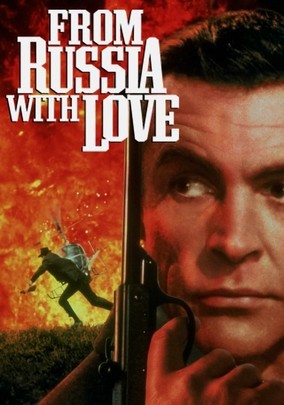
From Russia with Love-1963

From Russia with Love-1963

Director Terence Young

Starring Sean Connery

Top 250 Films #76

Scott’s Review #615
Reviewed February 5, 2017

Grade: A

From Russia with Love (1963) is only the second film in the storied James Bond franchise. It is a sequel to the debut installment, Dr. No, and received twice the budget.

This is evident in the film’s exquisite cinematography and look, with chase and battle scenes galore.

The film is lavish and grand, and what a Bond film ought to be, featuring adventures across countries, gorgeous location sequences, and a lovely romance between Bond (Sean Connery) and Bond girl Tatiana (Daniela Bianchi).

Still, she is not in my top Bond girls of all time.

Terence Young returned to direct the film with successful results.

Vowing revenge on James Bond for killing villainous Dr. No, SPECTRE’s Number 1 (seen only speaking and holding a cat) recruits evil Number 3, Rosa Klebb, a Russian director and defector, and Kronsteen, SPECTRE’s expert planner, to devise a plot to steal a Lektor cryptographic device from the Soviets and kill Bond in the process.

Klebb recruits expert killer Donald “Red” Grant and manipulates Tatiana into assisting. The story takes Bond mainly through Istanbul, Turkey, into a gypsy camp and via the Orient Express through Yugoslavia to the ultimate climax.

The villains in From Russia with Love are outstanding and a major draw to the film.

Klebb (Lotte Lenya) and Grant (Robert Shaw) are perfectly cast. Klebb, militant and severe with her short-cropped red hair, has a penchant for deadly footwear (she has a spike that shoots out from her boot containing venom that kills in seconds) and casually flaunts her lesbianism in front of Tatiana.

I admire this level of diversity in early Bond films—it was 1963, which was extremely rare.

Grant, on the other hand, is handsome and charismatic, with a chest of steel.

With his good looks and bleached blonde hair, he is a perfect opponent for Bond, as the final battle between him and Bond aboard the Orient Express is a spectacular fight scene and a satisfactory conclusion to the film.

The action sequences are aplenty and compelling, especially the Orient Express train sequence finale, which is grand.

As Bond and Tatiana, along with their ally Ali Kerim Bey, a British Intelligence chief from Istanbul, embark on a journey, they are stalked by Grant, who waits for an opportunity to pounce on his foes.

This sequence is the best part of the film for me- Grant, posing as a sophisticated British agent, has a cat-and-mouse conversation with Bond and Tatiana over a delicious dinner of Sole.

Grant drugs Tatiana by placing capsules in her white wine- the fact that he orders Chianti with Sole, a culinary faux pas, gives him away.

Other notable aspects of From Russia with Love are the soon-to-be familiar cohorts of Bond, who will be featured in Bond films for years to come: M, Q, and Miss Moneypenny become treasured supporting characters that audiences know and love.

Mere novices in this film, it is fun to see their scenes- especially lovelorn Moneypenny.

An odd scene of sparring female gypsies is both erotic and comical as the two women wrestle and fight over a gypsy chief, only to forget their rivalry and both bed Bond, falling madly in love with him as the two women suddenly become the best of friends.

The chemistry between Connery and Bianchi is good but nothing spectacular, and it is not the real highlight of this Bond entry.

Don’t get me wrong—they make a gorgeous couple—his dark looks and her statuesque blonde figure look great, but I found the pairing just decent rather than spectacular.

The action sequences, especially the Orient Express scenes, are a spectacle, and the many location shots in and around Istanbul are ravishing.

From Russia with Love (1963) is a top entry in the Bond series and a film that got the ball rolling with fantastic Bond features- it is an expensively produced film, and this shows.

Golden Globe Nominations: Best Original Song-Motion Picture
Thunderball-1965

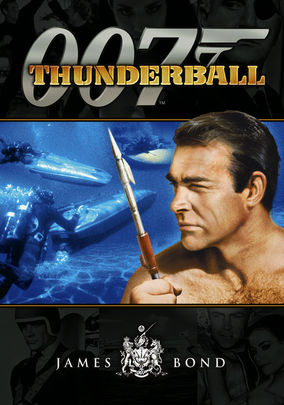
Thunderball-1965

Director Terence Young

Starring Sean Connery

Top 250 Films #99

Scott’s Review #364

1046268

Reviewed January 9, 2016

Grade: A

By 1965, the James Bond franchise was embarking on its fourth segment, and the budget reflected the success of the preceding films.

Thunderball reaps the benefits of an enormous budget and is. As a result, it is a grand, epic film. Its sheer magnitude makes it one of my favorite Bond films simply because of its look.

The special effects are a marvel.

By this time, Sean Connery had comfortably immersed himself in the role of Bond, utilizing his charm and ability to exude charisma.

In this story, two NATO atomic bombs have been stolen by SPECTRE and held the world to ransom for millions in diamonds. They are threatening to detonate one of the bombs in a major city in either the United States or England. Mr. Bond must race against time to deter this from happening.

For starters, the opening sequence is one of my favorites. Bond attends the funeral of a deceased SPECTRE agent (number 6) at a lavish chateau in France. The agent is disguised as his widow, but Bond is not fooled.

This sets the stage as a dramatic fight scene ensues between the two “men.”

The main villain of Thunderball is Emilio Largo (Adolfo Celi), a handsome, suave SPECTRE agent (number 2). He is rich and sophisticated, a quality that is reflected throughout the film.

His grand estate is set and filmed in the Bahamas, giving most of the film a steamy, posh look, with bluish-green waters and white, crispy sand.

It’s the most gorgeous backdrop.

Largo is a great Bond villain and on par with Bond. He also has charm, good looks, and charisma.

The main Bond girl is Domino, played by Claudine Auger. Largo’s mistress is typically clad in black and/or white, hence her name.

Auger has the perfect balance of beautiful looks, sophistication, and intelligence, and is an ideal match for Bond. The chemistry between Connery and Auger is palpable and a significant factor in the film’s success.

What sets Thunderball apart from some Bond films is the central portion of the film, mainly in the second half, which takes place underwater.

In a clear example of showcasing the modern technology of the time (1965), some complained that these sequences went on too long and did not advance the plot.

These points may have some validity, but oh, are they so visually appealing! The exotic underwater world is majestic.

Thunderball has it all and is one of the most gorgeous Bond films. It is big, bombastic, and filled with bright colors.

It contains all the elements of a great Bond film, so it has held up remarkably well over the years.

Oscar Nominations: 1 win-Best Special Visual Effects (won)

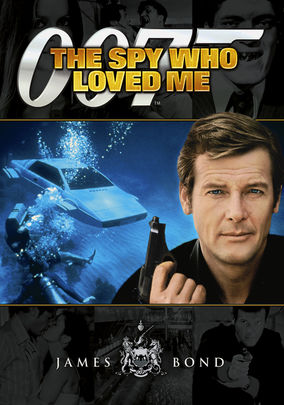
The Spy Who Loved Me-1977

The Spy Who Loved Me-1977

Director Lewis Gilbert

Starring Roger Moore

Top 250 Films #137

Scott’s Review #637

Reviewed April 27, 2017

Grade: A-

The Spy Who Loved Me (1977) is pure James Bond- an installment of the franchise that successfully contains all of the elements of an exceptional Bond film- and then some.

By this time, Roger Moore was firing on all cylinders and had made the character of James Bond his own- Sean Connery, who?

With his third appearance in the role, Bond exudes charisma and wry wit, combined with a fabulous story, sexy Bond girls, and a villain worthy of his role.

The Spy Who Loved Me achieves near perfection, save for a drawn-out ending; otherwise, it’s an excellent, memorable film that doesn’t feel dated in the least.

When Soviet and British submarines begin to vanish, the two sides team up and send their best agents forward to uncover the circumstances surrounding the disappearances.

Barbara Bach plays Major Anya Amasova, also known as Agent Triple X, a Soviet agent, and naturally, Bond becomes enamored with her beauty and intelligence.

Together they face off against a megalomaniac named Karl Stromberg, who is intent on destroying the world with nuclear missiles and creating his underwater world. Stromberg’s sidekicks are Jaws, a giant with steel teeth, and a deadly vixen named Naomi.

Interestingly, if you watch it as a companion piece to a 1960s Bond film, as I did this time around (You Only Live Twice), you notice a change in how Bond’s female characters are treated.

No longer servile and obedient to the male characters (Bond specifically), Bond women are now his equals in every way, matching him in career success and intelligence.

The main “Bond girl”, (Anya), is a shining example of this, which the film immediately offers.

In one of my favorite scenes, Anya is in bed with a handsome man- when “Agent Triple X” is paged, we assume the agent is the man until Anya slyly responds to the message.

It is a nonchalant, yet a brazen way to make the point that women have emerged as powerful and sexy figures in the modern Bond world.

The chemistry between Moore and Bach is immeasurably important to the success of the film, and their romance is dynamic- they have “it,” and their scenes smolder with sensuality.

To complicate matters, Bond has killed an agent whom Anya was in love with, and she plans to kill Bond as soon as their mission is victorious.

Director Gilbert also adds a slice of Bond’s backstory, lending the story truth and rich history, and mentions Bond’s deceased wife (married and killed in On Her Majesty’s Secret Service), a subject Bond deems off-limits.

This ode to the past only enhances the connection between these two characters.

Villains play an important part in the success of The Spy Who Loved Me.

Take Stromberg (Curd Jürgens); he is sophisticated, mature, worldly, and rich- and quietly insane. He also has a lavish dining room in his underwater submarine with exotic fish swimming about through visible tanks- a gorgeous element to this film.

Through a trap door,  victims meet their demise at the hands of a vicious killer shark swimming about. One unlucky female assistant, who has double-crossed Stromberg, meets her maker in bloody fashion. Later, Bond sees a severed hand floating about in one of the tanks.

This is great creative writing and adds nuances to the film.

Hulking henchman, Jaws, who would return in the next installment, Moonraker, dazzles and impresses with his deadly, steel teeth.

A great scene, aboard a high-speed train, and a throwback to 1963’s From Russia With Love, is action-packed.

Naomi meets her demise after an ill-fated helicopter chase scene. I would have liked more screen time and to get to know this character. Her brief, but obvious flirtation with Bond is all too short- and he never even gets to share a bed with her!

Not to be outdone, the locales in the film are lavish and gorgeous- Egypt and Italy are countries explored, and scenes are shot on location in each country in grand fashion.

The Egyptian pyramids are featured in a chase, and a murder occurs during a nighttime exhibit. Also fantastic are the gorgeous shots of Sardinia, a beautiful region in Italy where Stromberg’s hideout is set.

A mini gripe is a lengthy conclusion to the film. As Bond struggles to recalculate the two nuclear missiles set to destroy New York and Moscow, Bond must rush to make sure they do not hit their intended target.

The “final act” drags on, with too many soldiers and civilians running around in a panic. The action is great, but by the end, enough is enough.

Roger Moore once said The Spy Who Loved Me (1977) was his favorite Bond film to make; it is easy to see why.

The film contains all the necessary elements to make it one of the top entries in its franchise and has a magnificent feel.

Oscar Nominations: Best Original Score, Best Original Song-“Nobody Does It Better”, Best Art Direction

Golden Globe Nominations: Best Original Score, Best Original Song, “Nobody Does It Better”

Philomena-2013

Philomena-2013

Director Stephen Frears

Starring Judi Dench, Steve Coogan

Scott’s Review #50

70293789

Reviewed June 20, 2014

Grade: A-

I am thrilled to see anything starring Judi Dench (although don’t get me started on my disdain for Shakespeare in Love from 1998).

I could listen to her read the phone book; she has a voice that soothes and makes one content.

Philomena (2013) is thankfully a starring role for Ms. Dench after supporting turns in the recent James Bond films as M.

She plays a woman in search of her son who was taken from her by the Catholic Church fifty years ago.

I respect a film that challenges an institution, especially if it is based on a true story.

Beyond her wonderful performance, the film is layered, with a few twists and turns.

Dench’s self-titled character begins an adventure, with an author who champions her cause, to find her child.

It raises important questions about faith, religion, and the Catholic Church.

It will leave you pondering after the credits roll.

The main draw is Judi Dench, who is so simplistic yet effective in her performances.

Well done.

Oscar Nominations: Best Picture, Best Actress-Judi Dench, Best Adapted Screenplay, Best Original Score