Tag Archives: Eunice Gayson

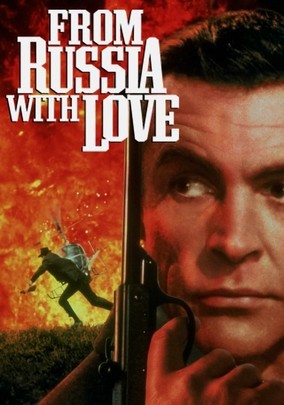
From Russia with Love-1963

From Russia with Love-1963

Director Terence Young

Starring Sean Connery

Top 250 Films #76

Scott’s Review #615
Reviewed February 5, 2017

Grade: A

From Russia with Love (1963) is only the second film in the storied James Bond franchise. It is a sequel to the debut installment, Dr. No, and received twice the budget.

This is evident in the film’s exquisite cinematography and look, with chase and battle scenes galore.

The film is lavish and grand, and what a Bond film ought to be, featuring adventures across countries, gorgeous location sequences, and a lovely romance between Bond (Sean Connery) and Bond girl Tatiana (Daniela Bianchi).

Still, she is not in my top Bond girls of all time.

Terence Young returned to direct the film with successful results.

Vowing revenge on James Bond for killing villainous Dr. No, SPECTRE’s Number 1 (seen only speaking and holding a cat) recruits evil Number 3, Rosa Klebb, a Russian director and defector, and Kronsteen, SPECTRE’s expert planner, to devise a plot to steal a Lektor cryptographic device from the Soviets and kill Bond in the process.

Klebb recruits expert killer Donald “Red” Grant and manipulates Tatiana into assisting. The story takes Bond mainly through Istanbul, Turkey, into a gypsy camp and via the Orient Express through Yugoslavia to the ultimate climax.

The villains in From Russia with Love are outstanding and a major draw to the film.

Klebb (Lotte Lenya) and Grant (Robert Shaw) are perfectly cast. Klebb, militant and severe with her short-cropped red hair, has a penchant for deadly footwear (she has a spike that shoots out from her boot containing venom that kills in seconds) and casually flaunts her lesbianism in front of Tatiana.

I admire this level of diversity in early Bond films—it was 1963, which was extremely rare.

Grant, on the other hand, is handsome and charismatic, with a chest of steel.

With his good looks and bleached blonde hair, he is a perfect opponent for Bond, as the final battle between him and Bond aboard the Orient Express is a spectacular fight scene and a satisfactory conclusion to the film.

The action sequences are aplenty and compelling, especially the Orient Express train sequence finale, which is grand.

As Bond and Tatiana, along with their ally Ali Kerim Bey, a British Intelligence chief from Istanbul, embark on a journey, they are stalked by Grant, who waits for an opportunity to pounce on his foes.

This sequence is the best part of the film for me- Grant, posing as a sophisticated British agent, has a cat-and-mouse conversation with Bond and Tatiana over a delicious dinner of Sole.

Grant drugs Tatiana by placing capsules in her white wine- the fact that he orders Chianti with Sole, a culinary faux pas, gives him away.

Other notable aspects of From Russia with Love are the soon-to-be familiar cohorts of Bond, who will be featured in Bond films for years to come: M, Q, and Miss Moneypenny become treasured supporting characters that audiences know and love.

Mere novices in this film, it is fun to see their scenes- especially lovelorn Moneypenny.

An odd scene of sparring female gypsies is both erotic and comical as the two women wrestle and fight over a gypsy chief, only to forget their rivalry and both bed Bond, falling madly in love with him as the two women suddenly become the best of friends.

The chemistry between Connery and Bianchi is good but nothing spectacular, and it is not the real highlight of this Bond entry.

Don’t get me wrong—they make a gorgeous couple—his dark looks and her statuesque blonde figure look great, but I found the pairing just decent rather than spectacular.

The action sequences, especially the Orient Express scenes, are a spectacle, and the many location shots in and around Istanbul are ravishing.

From Russia with Love (1963) is a top entry in the Bond series and a film that got the ball rolling with fantastic Bond features- it is an expensively produced film, and this shows.

Golden Globe Nominations: Best Original Song-Motion Picture
Dr. No-1962

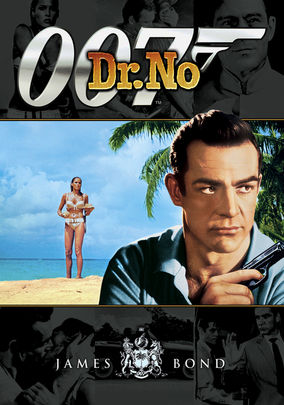
Dr. No-1962

Director Terence Young

Starring Sean Connery

Top 250 Films #145

Scott’s Review #667

Reviewed July 27, 2017

Grade: A-

Watching the 1962 film that launched the James Bond franchise into the legendary status it has since become, Dr. No is rich in history and a blueprint for what the Bond films would encompass in the decades to follow.

Admittedly, while more essential than the more sophisticated and fleshed-out chapters to come, the film is nonetheless a superb entry in the franchise and a chapter to be cherished on its own merits.

Charismatic Sean Connery, soon to forever be identified in the role of James Bond, fills the role with a masculine confidence oozing from the screen in every scene.

His performance is so seamless that one might assume he had been playing Bond for years rather than being a novice.

And who can forget the character’s first entrance- in a casino, confidently gambling and introducing himself to Sylvia Trench, a character initially slated to be his steady girlfriend?

The film version of Dr. No is adapted from the first Ian Fleming spy novel of the same name, which is clever. As the years passed, the Bond films were adapted from the original pages, so it is cool and original to have them closely mirror the book.

Lacking a hefty budget, the action is set in London and Jamaica and at Crab Key, a fictional island off Jamaica.

When Strangways, a British Intelligence Chief, is killed and his body taken by assassins known as “the Three Blind Mice,” who also steal files related to Crab Key island, and a mysterious man named “Dr. No,” Bond is summoned to his superior’s (M) office in London.

He is tasked with determining whether the incident has anything to do with radio interference from missiles launching in Cape Canaveral.

Naturally, it does, and the adventure sets off a series of dramatic events involving henchmen, scrapes with death, and Bond’s bedding of more than one beautiful woman before facing the ultimate showdown with the creepy title character, who is missing both hands.

Notable and distinguishable to the film are the fabulous, chirpy, child-like songs featured. From the tuneful, harmonic, nursery rhyme, “Three Blind Mice”, sung calypso style, to the sexy and playful, “Under the Mango Tree”, both are light, yet filled with necessary mystery.

The fact that the former is featured at the beginning and end implies that the same villains are joyfully singing the happy tune, is a good indicator.

Dr. No is also inspired by the introduction of the crime organization SPECTRE, which any Bond fan knows very well and is a staple of the franchise.

As Dr. No, Joseph Wiseman is well cast, though sadly, we only see him in the latter part of the film. Much more character potential is left untouched, though the mystique of knowing the man exists but not what he looks like is worth mentioning.

Admittedly, the assumption that the audience will not be witty enough to realize that Dr. No and Miss Taro (a villainous secretary) are Caucasian actors wearing unconvincing makeup is silly.

Why the choice was made not to cast authentically ethnic actors is unclear. My guess is the powers that be wanted to go a safer route due to the uncertainty of the franchise at that time.

Still, for a first try, Dr. No gets it just about right.

What woman in 1962 was sexier or cast more perfectly than Ursula Andress as the gorgeous and fiery sex kitten Honey Ryder? This casting was spot on, and who can forget her sultry introduction to the film as she emerges from the roaring waves on the beach in a scantily clad bathing suit?

The set designs and locales also work well in the film.

The sets are contemporary, especially the spacious prison apartment where Bond and Honey briefly reside. Sleek and sophisticated, the sofa, rug, and tables exude luxury and class.

Dr. No (1962) is a worthy film on its own merits and a fantastic introduction to the world of James Bond and the many trademark elements and nuances that the films contain.

Golden Globe Nominations: 1 win-New Star of the Year-Actress-Ursula Andress (won)