Tag Archives: Sari Lennick

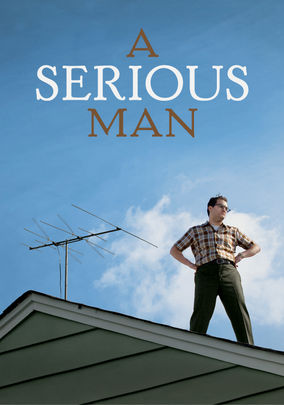
A Serious Man-2009

A Serious Man-2009

Director Joel Coen, Ethan Coen

Starring Michael Stuhlbarg

Scott’s Review #582
Reviewed January 4, 2017

Grade: B

A Serious Man (2009) is a quirky, odd film that is a character study.

Directed by the Coen brothers, who typically have an offbeat style (No Country for Old Men (2007) and Fargo (1996) spring to mind), A Serious Man is no different, offering wonderful, richly written supporting characters.

The film, however, lacks the violence of other Coen Brothers films; instead, it adds more humorous situations and an overall comical premise.

It tells the story of a Jewish Professor, Larry Gopnik (Michael Stuhlbarg), living in the 1960s, who has a string of bad luck.

People close to Larry begin to drop dead all around him, and he seems cursed.

The film centers around how he deals with crisis after crisis.

The first half of the film admittedly drags a bit, but the second part picks up nicely. The plot suddenly comes to a head rather quickly.

To stress, A Serious Man is a witty, dark comedy, so much of the dialogue is either tongue-in-cheek or dry.

The rabbis that Larry meets, combined with his son Danny and wife Judith, are very funny and well-carved-out characters, many certain “types”.

Larry’s character also contains elements of Larry David on TV’s Curb Your Enthusiasm.

Also, for those cinema lovers who pay close attention to or have an appreciation for good set design, the film captures the 1960’s style (dress, furniture, cars), perfectly.

Oscar Nominations: Best Picture, Best Original Screenplay

Independent Spirit Award Nominations: 2 wins-Best Director-Joel and Ethan Coen, Best Cinematography (won), Robert Altman Award (won)
Café Society-2016

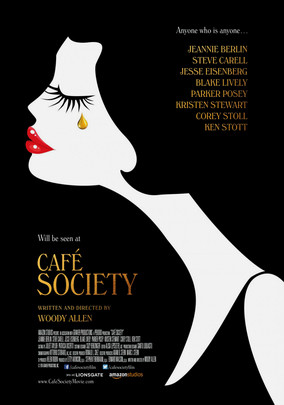
Café Society-2016

Director Woody Allen

Starring Jesse Eisenberg, Steve Carell

Scott’s Review #462

80106775

Reviewed August 11, 2016

Grade: B+

Having received sub-par reviews but wanting to see this film for myself, as it is a Woody Allen film, and I have yet to see an Allen film I did not like, I traversed to my local theater to see this flick.

I was not disappointed, though others did not share my opinion.

To love Woody Allen films is to love quirky characters who are either neurotic, damaged, or, more often than not, both.

Also notable to Café Society (2016) is the stellar cast of who’s who, many in minor cameo roles, another trademark of Woody Allen films.

Marisa Tomei, Daniel Radcliffe, and television stars Anna Camp (True Blood) have tiny roles, as do stars such as Sheryl Lee (Twin Peaks) and Tony Sirico (The Sopranos).

Additionally, Woody Allen himself narrates the film- a highlight.

The main stars of Café Society are Jesse Eisenberg and Kristen Stewart, both ideally cast.

The setting (which I adored) is 1930s Hollywood, and the action traverses between California and New York City, another common bond in Allen’s films.

Eisenberg plays Bobby Dorfman, a Jewish son of a working-class jeweler who has many siblings. Tired of New York, he flies to Los Angeles to obtain work with his hotshot Uncle Phil, played by Steve Carrell, who knows every celebrity.

There, he meets Vonnie (Stewart), and they fall in love, Bobby unaware of her on-and-off love affair with Phil.

The set and costume designs are to die for, and as a fan of this glamorous period in history, I find it an extraordinary visual treat.

Café Society is a prime example of a film that feels authentic to its time rather than appearing staged with actors merely dressed up in appropriate attire. This is tougher to achieve than one might imagine.

Despite contrary opinions, I enjoyed how most characters were wishy-washy and unsure of their motivations or feelings toward others.

Vonnie loves Phil, and then she warms to Bobby, who has been in love with her since their first meeting. She innocently shows him around Hollywood’s palatial mansions.

She is honest with Bobby but then makes a decision and becomes everything she once despised about Hollywood: a shallow, trophy wife.

Ironically, Bobby becomes involved with a stunning new woman named the same as his ex back in New York. This coincidence is crucial to the film’s point. He transfers his feelings to another woman, but is he pleased?

It did not bother me, though perhaps it should have, that several characters were introduced for a scene or two and then mysteriously dropped.

For instance, the novice hooker, Candy, having tried to make it as an actress and failed, has a heart of gold. However, after her awkward attempt at a tryst with Bobby, the character is never seen again.

Another characteristic of the film that I enjoyed is the natural, overlapping dialogue between the characters. It makes them more genuine and evokes my fondness for Robert Altman films, which used a similar technique with their actors.

The point of Café Society is that nobody ever gets what they want, and the film makes a point that nobody knows what they want.

Containing elements common to other Woody Allen films, Café Society (2016) is intended for fans of his lengthy work.