Tag Archives: Paul Benedict

Up the Sandbox-1972

Up the Sandbox-1972

Director Irvin Kershner

Starring Barbra Streisand, David Selby

Scott’s Review #1,308

Reviewed October 18, 2022

Grade: B

Up the Sandbox (1972) is likely the least successful film in the Barbra Streisand collection and more obscure than likely desired. The star performs no songs, and the film is experimental, but it’s unclear whether it was intended to be.

Streisand takes a break from comedies and musicals to venture into unknown territory, risking a payoff that doesn’t always come through.

On the flip side, she never looked more beautiful in a film.

The film has its moments. It’s shrouded in early progressive feminism, which provides intrigue, and it’s tough to go wrong with a bankable star like Streisand in a lead role.

Still, the fantasy sequences get too weird and sometimes unnecessary, and the film doesn’t always make a lot of sense.

The film gets taken down at least a notch for two anti-gay slurs that are shamefully unnecessary to any plot direction.

I award Up the Sandbox credit for thinking outside the box and being unconventional. Still, the parts don’t come together into a cohesive unit, leaving me unfulfilled while recognizing the superior qualities.

The cover art (see above) is wacky and thought-provoking.

Margaret (Streisand) is a young wife and mother who is bored with her day-to-day life in New York City, playing second fiddle to her successful and too-busy husband, Paul (David Selby).

He is a professor at Columbia University, and they reside in a cramped yet fairly sophisticated apartment.

To combat boredom, she regularly escapes into increasingly outrageous fantasies: her mother breaking into the apartment, an explorer’s demonstration of tribal fertility music at a party causing strange transformations, and somehow joining terrorists to plant explosives in the Statue of Liberty.

Streisand is well cast, and while other actresses could have given a fine performance, she plays New York Jewish better than anyone. Her struggle to break out of her life of doldrums is perfectly conveyed as she yearns to achieve a balance between men and women.

She resents going down the path of a housewife, just like her mother did, and vows to be nothing like her, as the women bicker and feud throughout the film.

The sequences involving her mother are the best in the film. Played by Jane Hoffman, Margaret’s mother provides all of the expected Jewish mother stereotypes, like nagging and judging, hilariously.

The funniest mother/daughter sequence sees Margaret smash her mother’s head into a giant birthday cake. Naturally, it’s just her fantasy.

Up the Sandbox wins big for the large number of location sequences set in early 1970s New York City, which is absolutely fascinating to watch. One with an appreciation for Manhattan can be assured of a pleasant viewing experience.

The most heartfelt and sentimental moments occur during a long shot of the still-under-construction World Trade Center. Seeing the Twin Towers still being erected brings back teary memories of 9/11.

Lavish sequences are set in and around Columbia University in upper Manhattan, and the campus is frequently seen as Margaret and her friends trudge their baby strollers through the campus and surrounding areas.

Where the film fails is when it teeters too far out in fantasy land. It makes little sense why Margaret would join terrorists intent on blowing up Lady Liberty, or what the group’s intentions are.

Perhaps it is a metaphor for something that went over my head.

Even when the screenplay is a dud, Ms. Streisand holds her head high and plays the comedy or drama with sincerity and professionalism. With her well-known perfectionism, she would have been aware when things were not working.

A film not remembered well, Up the Sandbox (1972) scores some points with its locales, progressivism, and star power, but stumbles off course too many times to recommend.

If only Streisand had belted out a number or two amid her scripted fantasies, the film might have worked better.
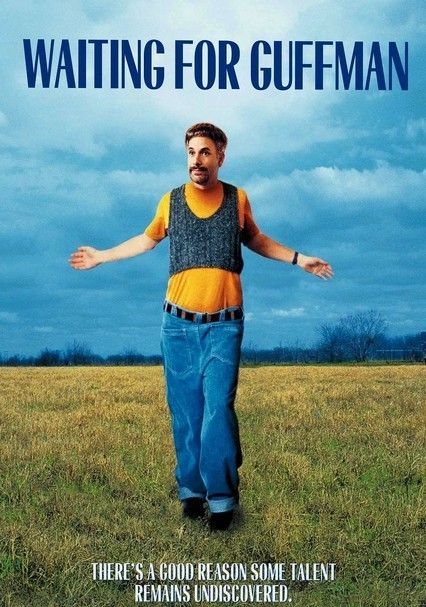
Waiting for Guffman-1996

Waiting for Guffman-1996

Director Christopher Guest

Starring Christopher Guest, Eugene Levy, Catherine O’Hara

Scott’s Review #1,145

Reviewed May 24, 2021

Grade: B+

Somehow mocking local community theater troupes with questionable talent couldn’t be funnier with the right premise and an outstanding cast.

The added fun of midwestern traditions like barbeques good manners and spot-on imitations put on display for humor works well.

They should be celebrated and appreciated in Waiting for Guffman (1996).

The hysterical Best in Show (2000) is probably my favorite Christopher Guest film but Waiting for Guffman is a hoot and hollering good time.

The ‘B+’ rating comes largely because Guffman is an opening act to the fab Best in Show. They can easily be watched back to back and perhaps should for further cherishing.

When the town of Blaine, Missouri approaches its sesquicentennial, the residents decide to celebrate by performing a musical revue called “Red, White, and Blaine.”

Flamboyant director Corky St. Clair (Christopher Guest) is determined to return to Broadway success by casting untalented but passionate individuals to perform.

Eugene Levy, Fred Willard, and Catherine O’Hara play the main cast members.

When Corky reveals that influential theater agent Mort Guffman will attend the opening, the cast is convinced that they will be rewarded with accolades and appearances on the Broadway stage if they perform successfully.

They become titillated, flustered, and manic as the pressure of opening night approaches.

I daresay, some folks from the midwest United States or those faithful to the local theater may not enjoy Wating for Guffman but I sure did. Most of the characters are written as buffoons and lacking any talent.

The hysterics come because they think that they possess what they lack.

The aforementioned Guest, Levy, Willard, and O’Hara work so well together they are the reason Waiting for Guffman is so damned funny! The comic timing between the actors is flawless and timed perfectly.

Levy and O’Hara appeared together in the Canadian television sketch comedy series SCTV in the 1970s and 1980s before hitting the jackpot with the television series Schitt’s Creek in later years so a fun thing to do is watch them in whatever they appear in together.

They are that good!

There abound many stereotypes in Waiting for Guffman since Corky is written as a walking gay stereotype with mascara and flamboyancy. The irony is that he reportedly has a wife who is never seen so the audience can draw their conclusions.

Given the casting and the director, Christopher Guest takes on acting and directing duties, the experience is largely improvisational and witty result.

Guest treats his actors, and himself, to famous Director Robert Altman’s mantra of letting his actors release and act on their terms, presumably knowing the characters better than anyone else.

The tactic works. Too often comedies are stagey and situations forced in an attempt to make the viewer laugh because he or she thinks they are supposed to laugh.

My favorite characters unsurprisingly are Ron and Sheila Albertson (Willard and O’Hara) as travel agents/amateur performers. They are zany and unpredictable and their antics cannot be superseded by anyone else.

Recommended mostly for the artistic and the improv comedy crowd. The spoofs are all over the place and fans of documentaries and talent shows can appreciate the gags.

Waiting for Guffman (1996) targets an intelligent audience craving fresh and original comedy. Being a cinema fan largely immersed in drama and horror, I was won over nonetheless.

The only drawback is the film pales in comparison to the brilliant Best in Show (2000) with largely the same cast and tone, but still should be watched.

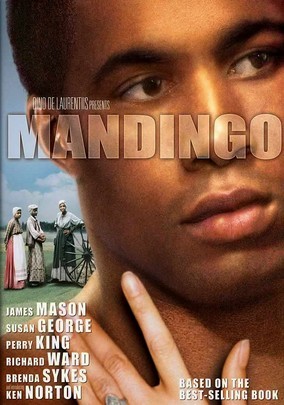
Mandingo-1975

Mandingo-1975

Director Richard Fleischer

Starring James Mason, Susan George

Scott’s Review #53

70094784

Reviewed June 21, 2014

Grade: B+

Mandingo is quite a controversial 1975 film and is inspirational to Quentin Tarantino’s Django Unchained (2012) and to 12 Years a Slave (2013), as it is very similar to the latter.

It centers on a family of southern slave owners who eventually have physical relations and even romantic, loving relationships with their slaves.

There is also a sub-plot involving bare-knuckle fights to the death among the enslaved men that is disturbing to witness.

The entire film is extreme and difficult at times, but also has a mystical, dreamlike element to it and is in no way an exploitation film.

The sticky, hot, deep southern setting adds a wonderful atmosphere. The romances are an interesting facet of the film, which I have never seen in similarly themed movies.

There is one sympathetic enslaver, but happily, the others get their comeuppance, one by one, which is delightful to watch.

Mandingo (1975) is an interesting film because it inspires others to follow in its footsteps and shows how far we have come as a society.