Tag Archives: Charles Vanel

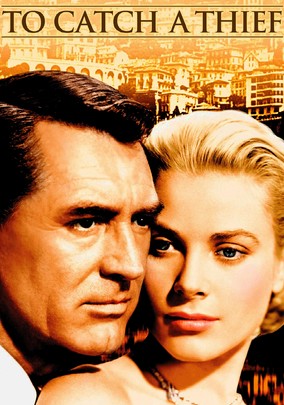
To Catch A Thief-1955

To Catch A Thief-1955

Director Alfred Hitchcock

Starring Cary Grant, Grace Kelly

Top 250 Films #73

Scott’s Review #455
60000732

Reviewed July 24, 2016

Grade: A

Cary Grant starred in five Alfred Hitchcock films in his day, and 1955’s To Catch A Thief is right smack in the middle of Hitchcock’s prime period of masterful pictures.

Grace Kelly (her third and final Hitchcock film) co-stars, making this film a marquee treat, as both actors were top-notch in their heyday and had great chemistry.

While not my all-time favorite Hitchcock film, To Catch a Thief has mystery, a whodunit, and some of the most gorgeous cinematography of the French Riviera.

The breathtaking surroundings are my favorite part of this film.

Grant plays John Robie, aka. “The Cat,” an infamous jewel thief who has now gone clean. He spends his days quietly atop the French Riviera growing grapes and flowers and keeping out of trouble.

When a new jewel thief begins to strike wealthy tourists, Robie is immediately under suspicion by the police.

He is forced to prove his innocence by catching the real thief in the act, as the thief uses the same style of stealing as Robie once did.

Amid this drama, Robie meets the beautiful heiress Frances (Kelly) and her interfering mother, Jessie Stevens (Jessie Royce Landis), which leads to romance.

Although Grant could be old enough to be Kelly’s father, we immediately accept Robie and Frances as the perfect couple- she is sophisticated, stylish, and rich, and he equally has a bad-boy edge.

To Catch A Thief has a strong romantic element and a glamorous and wealthy tone. After all, the subject matter at hand- jewels- equates to lavish set decorations, women dripping in expensive jewelry, and a posh resort among the gorgeous French waters.

The supporting characters are interesting, too. A triangle emerges as Frances plays catty with a young girl, Danielle, eager for Robie’s affection.

Danielle, much plainer looking than Frances, though no shrinking violet, holds her own in a match of wits with Frances as they bathe in the water one afternoon.

Frances’s mother, Jessie, provides tremendous comic relief as she attempts to bring Robie and Frances together. She is always searching for a handsome suitor for her daughter.

Finally, insurance man H.H. Hughson also contributes to the comic relief by begrudgingly providing Robie with a list of wealthy visitors with jewels.

In their playfully awkward lunch- delicious quiche is the meal of the day- at Robie’s place, Robie proves how Hughson himself is a thief of sorts to accomplish what he needs to get from Hughson.

Despite all of the positive notes, something about To Catch A Thief prevents it from being among my all-time favorite Hitchcock films. Perhaps it is because I never doubted Robie’s innocence, and if dissected, the caper is a bit silly.

I get the sense that the audience is supposed to question whether Robie is truly reformed or playing a game and is back to his dirty deeds, but I wasn’t fooled.

This is a minor gripe, but To Catch A Thief is a fantastic film.

The way the film is shot is almost like being on the French Riviera. Countless coastal shots of the skyline will amaze the viewer with breathtaking awe of how gorgeous the French countryside is and how romantic and wonderful it is.

This is my favorite part of To Catch A Thief.

The visuals of the film rival the story, as the costumes created by costume designer and Hitchcock mainstay Edith Head are simply lovely. And who can forget the costume ball near the conclusion?

Though the story might be the weakest and lightest element of the film,  who cares?

The visuals more than make up for any of that, as To Catch A Thief (1955) will please loyal fans of Hitchcock’s vast catalog.

Oscar Nominations: 1 win-Best Art Direction, Color, Best Cinematography, Color (won), Best Costume Design, Color
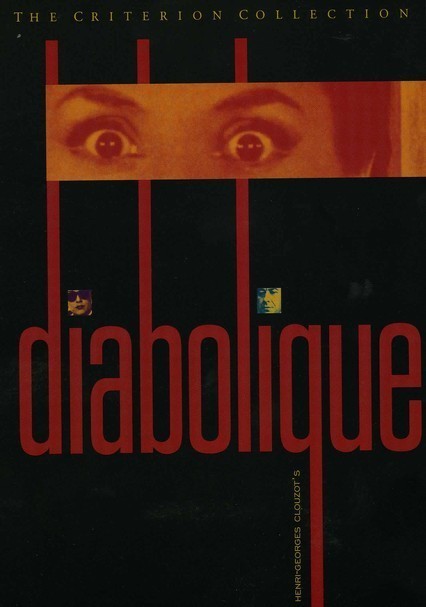
Diabolique-1955

Diabolique-1955

Director Henri-Georges Clouzot

Starring Simone Signoret, Vera Clouzot, Paul Meuisse

Top 250 Films #198

Top 40 Horror Films #27

Scott’s Review #878

Reviewed March 16, 2019

Grade: A

Diabolique (1955) is a masterful French thriller as compelling as frightening. It will have an insurmountable influence on future generations.

Shamefully remade and Americanized in 1996, starring Sharon Stone, a waste of time if you ask me, the original is the one to discover.

The film perfectly blends psychological intrigue, never-ending suspense, and even a good mix of horror that Hitchcock would find impressive (more about him later). Its pacing and frequent twists and turns make it brilliant.

Directed by Henri-Georges Clouzot, Les Diaboliques is set in a crumbling boarding school in Paris. Sadistic headmaster Michel Delassalle (Paul Meuisse) runs a tight ship but works for his Venezuelan wife, Christina (Vera Clouzot), who owns the school.

Michel is immersed in a torrid affair with schoolteacher Nicole Horner (Simone Signoret) and regularly abuses both women as well as his students. The two women embark on a plot to kill Michel, but when they succeed in their plan, Michel’s body goes missing.

The women panic.

In a few fun trivia tidbits, director Clouzot optioned the screenplay rights right after finishing Wages of Fear (1953), preventing Hitchcock from making the film. This movie helped inspire Hitchcock’s Psycho (1960).

Robert Bloch himself, the author of the novel version of Psycho, has stated in an interview that his all-time favorite horror film is Diabolique. If the film displays nuances incorporated in Psycho, this is undoubtedly the reason.

Clouzot also directs his wife, Vera, in the prominent role of Christina.

Hitchcock could have made the brilliance since the entire experience has his stamp and influence even though his best works lay ahead of him in 1955.

Still, from the Gothic mood to the “can’t believe your eyes” twisted, blood-curdling ending, the director immediately comes to mind every time I watch the film. The “shock” ending only exceeds expectations with a fantastic delivery.

The film takes an unusual stance on the dynamic between the two women, Christina and Nicole. Rather than take a traditional route and make the women rivals for the man’s affections, Clouzot makes the pair co-conspirators.

This only deepens their relationship as events unfold and take a darker and more dire turn.

They rely on each other as teammates rather than despise each other over their love for another man. Intelligently, they spend their energy ensuring the insipid man gets his just comeuppance for his dirty deeds.

Nicole leads Christina in the direction she needs to go.

The black-and-white cinematography is highly influential on the mood. With each unexpected twist or scene of peril, the lighting radiates suspense. The camera juxtaposes the frequent glowing of the white against the dark black, exuding a frightening, ghost-like presentation.

The entire setting of the school is laden with dark corners that provide good elements of foreboding and sinister moments to come.

As the women become more and more unnerved by the limitless possibilities that the missing body presents, many questions are asked but are impossible to answer. “Where is the body?”, “Could Michel be alive?” “If he is alive, is he hell-bent on revenge?” The viewer will also ask these questions throughout most of the final half.

When an unknown person begins to call the women, the questions multiply.

Clouzet uses frequent shots of objects to enhance the tension even further. There are close-ups of a dripping bathtub, a typewriter with a man’s hat and gloves, a woman’s feet as she removes her shoes, and a woman running in terror through the school.

These facets only enhance the overall experience as the suspense and the terror begin to mount.

Diabolique (1955) is considered one of the greatest thrillers of all time, and I concur with this assessment. A French version of Psycho (1960) that combines an acclaimed director’s ingenious subtle ideas into a giant web of delicious filmmaking.

The surprise ending is never seen coming, even if the viewer thinks they have the plot figured out. This point alone is reason enough for the film to realize its greatness.