Category Archives: Musical Comedy

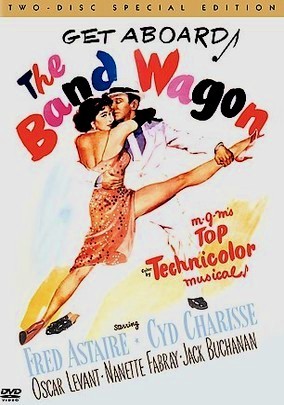
The Band Wagon-1953

The Band Wagon-1953

Director Vincente Minnelli

Starring Fred Astaire, Cyd Charisse

Scott’s Review #549

Reviewed December 15, 2016

Grade: B

The Band Wagon, made in 1953, is a second-tier MGM (Metro-Goldwyn-Mayer) production- and by that, I mean it is not as stellar as other musicals of its time.

It lacks the majestic appeal of similar musicals like An American in Paris and Singin’ in the Rain.

Directed by Vincente Minnelli- a legendary music director of the 1950s, and starring Fred Astaire, The Band Wagon tells the story of a washed-up movie star trying to revive his career on Broadway.

He meets opposition from his co-star and prima ballerina, Gabrielle, played by Cyd Charisse, ironically, an actress who appeared in Singin’ in the Rain.

The Band Wagon is a fun movie, but it is not nearly as good as the film mentioned above. Instead, it is a pale imitator. While other musicals of similar style can be watched numerous times, The Band Wagon is a one-and-done affair.

The story starts slowly but gets much better towards the end.

The film has a few memorable musical numbers, notably “That’s Entertainment.”

Oscar Nominations: Best Story and Screenplay, Best Scoring of a Musical Picture, Best Costume Design, Color

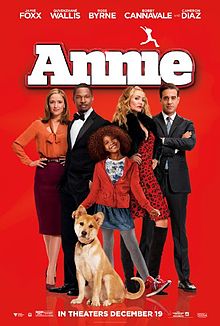
Annie-2014

Annie-2014

Director Will Gluck

Starring Quvenzhane Wallis

Scott’s Review #231
220px-Annie2014Poster

Reviewed March 25, 2015

Grade: D-

The latest remake of the film version of Annie, the last film production in 1982, though at least one television variation exists, and all based on the Broadway hit of the same name, is a saccharine-laden mess of a film.

Annie stars Quvenzhane Wallis, Jamie Foxx, and Cameron Diaz as Annie, William Sparks (changed from Daddy Warbucks), and Miss Hannigan, respectively, and features Rose Byrne and Bobby Cannavale in supporting roles.

Let me start with the film’s one redeeming quality, though admittedly a bit of a stretch. I found the musical numbers okay, not great, but far from the worst parts of the film.

The numbers are remixed into hip-hop-type songs with a trendy approach, presumably to add a modern element. While not great, some songs are catchy and not dreadful, especially “It’s A Hard Knock Life” over the closing credits.

Whether the actors sing their songs is another question I might not want to answer.

The rest of Annie is terrible.

The casting is poor. Wallis, very believable in Beasts of the Southern Wild (2012), portrays Annie as an intelligent, social-climbing child, and I sensed awkwardness in the part. Regardless, it did not work.

I did not buy her in the role, and how she was awarded a Golden Globe nomination for Best Actress in a Musical Comedy speaks volumes about the limited choices in 2014.

Jamie Foxx completely phoned in his performance as Cell-phone technical mogul and mayoral candidate William Sparks.

Why the film changed the character from Daddy Warbucks is a mystery. He is unbelievable as a germaphobe, an aggressive yet sensitive, powerful man who amazingly develops a soft spot for Annie.

Cameron Diaz completely overacts and turns Miss Hannigan into an obnoxious, hysterical shrew who, towards the end of the movie, somehow “turns good,” with no real motivation for doing so.

Rose Byrne and Bobby Cannavale give uninteresting, one-note performances as Sparks’s assistant, love interest, and right-hand man.

The film changes so many aspects of the original stage version of Annie that it is barely recognizable.

It takes place in present times rather than the Depression-era 1930s; Annie is no longer an orphan but is in foster care.

Miss Hannigan’s first name is changed to Colleen instead of Agatha, and she is now a former pop performer whose career subsequently died.

Hannigan’s brother Rooster and his girlfriend Lily don’t appear at all.

The story has zero interest and zero believability.

But the worst part of the film is its corniness. It is so overwrought with contrived scenes that it is hard to take seriously.

At a Mayoral function, Annie (an untrained singer) suddenly leaps onstage and belts out a perfectly sung, choreographed number melting the hearts of the wealthy powerhouses in attendance.

The film is pure fantasy with no realism to speak of.

Miss Hannigan fosters an apartment full of children that she hates, to collect $150 a week, but her apartment is pretty spacious and beautiful by Manhattan standards.

The film is full of inconsistencies and is a horrendous modern take on a long-loved treasure; the 2014 version of Annie should be seen once, snarled at, and put back on the shelf, then forgotten for good.
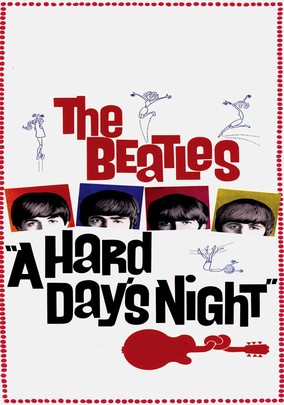
A Hard Day’s Night-1964

A Hard Day’s Night-1964

Director Richard Lester

Starring The Beatles

Scott’s Review #154

60023947

Reviewed August 18, 2014 

Grade: C

Why this rock documentary, a day in the life film, is considered among the Top 100 films of all time completely escapes me. I’m a huge fan of the band The Beatles, but this is a letdown.

The segments consisting of musical numbers performed by the band are excellent, and, humming along, I enjoyed the black and white filming of the “documentary.” Still, the film is not a documentary in the traditional sense and is very difficult to categorize.

Is it a rock opera, a comedy, a documentary, or a musical? It is somewhat of a hybrid as the viewer journeys through a typical day in the life of a Beatle.

But everything else seems fluff to the point of silliness. Countless scenes of the band running through the streets with adoring fans screaming and chasing after them become irritating. The film has little plot.

The Beatles were a huge band. We get it.

Paul, George, Ringo, and John do a capable job in the film, considering they are non-actors. I’d much rather have been exposed to a straightforward documentary focusing on the background of some of the songs or the band members themselves instead of a lightweight tale of a day in the life of The Beatles with silly attempts at humor thrown in.

A Hard Day’s Night (1964) influenced the 1960s television comedy starring The Monkees.

Oscar Nominations: Best Story and Screenplay Written Directly for the Screen, Best Scoring of Music-Adaptation or Treatment

Rebecca of Sunnybrook Farm-1938

Rebecca of Sunnybrook Farm-1938

Director Allan Dwan

Starring Shirley Temple

Scott’s Review #113

70040593

Reviewed July 16, 2014

Grade: B

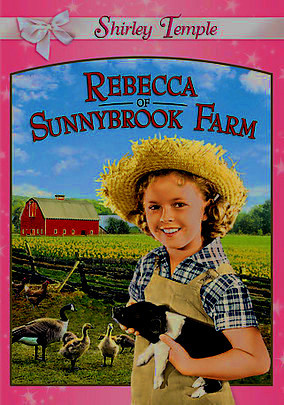
Rebecca of Sunnybrook Farm (1938) is one of several Shirley Temple films released in the 1930s and 1940s.

In this story, Rebecca (Temple) is a confident child singer auditioning for a New York City radio gig with her opportunistic Uncle. Through a series of mishaps, she winds up outside the city with her aunt and other people living on or near the farm.

The radio people race to find Rebecca in time and make her a star. Other romantic subplots involving the supporting characters occur.

The film is innocent and cutesy, but you must be a Shirley Temple fan to enjoy it truly. If not, you might find it contrived and sentimental.

It falls somewhere in the middle for me. While I enjoyed the Shirley Temple musical numbers and the star’s talent, the story was predictable, and no surprises were in store. It felt more like a pleasant trip down memory lane.

The film is harmless and contains the standard Temple curls, smiles, and joyfulness. The supporting cast includes Jack Haley (The Wizard of Oz) and Gloria Stuart (Titanic-1997).

Godspell-1973

Godspell-1973

Director David Greene

Starring Victor Garber, David Haskell

Scott’s Review #23

549055

Reviewed June 17, 2014

Grade: B

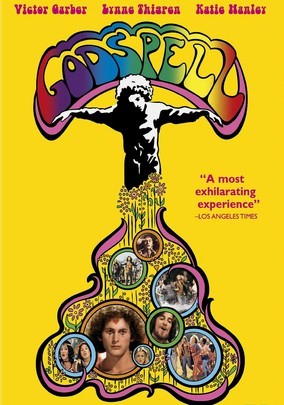
Although Godspell (1973) is a popular and legendary Broadway musical production, the film left me with very mixed reactions.

The positives for me are the songs- they are memorable, and they stay in your head for days to come.

My absolute favorite is “Day by Day”.

I also enjoy the cast traveling throughout NYC, as I love it when films are set here.

For the first thirty minutes of the film, I did not get it at all.

There is no plot, but simply a group of college-aged people leaving their crummy jobs and celebrating Jesus as they aimlessly flit about the city, with nobody else in sight, singing songs of salvation and celebration.

Then I realized this is not a “message” movie or an attempt to convert people to religion. Many devout Christians despise the film.

The film left me with questions.

Is it tongue-in-cheek or meant to be taken seriously?

By the end of the film, I took it for a fun musical with great songs. It offers nothing more, nothing less.