Tag Archives: Sam Riley

Rebecca-2020

Rebecca-2020

Director Ben Wheatley

Starring Lily James, Armie Hammer

Scott’s Review #1,430

Reviewed June 30, 2024

Grade: A-

Impossible to compare to the legendary 1940 Alfred Hitchcock film, I tried very hard to take the 2020 retelling of Rebecca based on its merits. After all, it’s been eighty years, and other attempts have been made, mostly forgotten or irrelevant.

Aware of lukewarm reviews by other critics, I desperately set those aside and settled in for a macabre, dark, ghostly British thriller.

The film is quite good! Feeling fresh and with a polished cinematic look, I’d describe it as a modern British offering, despite being set in a long-ago era.

For comparison, it reminds me of the British television series Downton Abbey (2010-2015) in terms of its look and feel—a grandiose estate, dutiful servants, and a cast of other wealthy and not-so-wealthy characters.

A young newlywed (character nameless) arrives at her husband’s imposing family estate on a windswept English coast and finds herself battling the shadow of his first wife, Rebecca, whose legacy lives in the house long after her death.

The lead actress, Lily James, whom I initially couldn’t recall, is best known for Downton Abbey and the 2023 film The Iron Claw.

The character she plays, the insecure second Mrs. de Winter, is confused and haunted, requiring terrific acting. James hits it out of the park on that front.

Emotionally abused by her employer, wickedly played by Ann Dowd, she is instantly heroic and likable so we are happy when she graduates from servant to queen bee.

I cringed at first when I realized that the gorgeous and lovely Kristin Scott Thomas was playing the pivotal role of the villainous Mrs. Danvers. Known for the film The English Patient (1996), where she played the romantic Katharine Clifton, I wasn’t sure she’d be able to go so dark.

Boy, was I wrong? It took me a bit to channel out the dastardly performance by Judith Anderson from the original and accept Scott Thomas. She gets better with each scene and even forces the audience to sympathize with her.

Finally, Armie Hammer is good in the lead role of Maxim de Winter. Handsome, sophisticated, and wealthy, he peculiarly fancies a lady’s maid who inexplicably becomes his wife.

We wonder what he sees in her when his deceased wife, Rebecca, was gorgeous, affluent, and a perfectionist. Rebecca was presumed to have drowned in a terrible boating accident, but as events unfold, we wonder if there’s more to the story.

If only the characters communicated with each other, it would have eliminated confusion. Maxim refuses to talk about Rebecca. If his true feelings were revealed, he’d have a different kind of second marriage.

Besides the story and acting, other elements make Rebecca circa 2020 worth watching.

The cinematography captures crashing waves and high cliffs, which provide a haunting mood; the dining room and kitchen sequences brim with goodness and excellent meals.

The art direction and set design are overall flawless in the presentation.

The costume party that Mrs. de Winter eagerly plans and hopes will admonish the house of any thoughts of Rebecca going wrong, which, for viewers, is a delight because the scene is already rich.  With help from Danvers, a regal red costume is designed and prepared to showcase Mrs. de Winter.

When she confidently descends the staircase, the startled crowd gasps with fright at the similarities between her and Rebecca. Maxim angrily dismisses her to change outfits while Danvers smirks in the background.

She’s won round one.

The Danvers/Mrs de Winter feud is my favorite aspect of Rebecca (both original and 2020 versions), so it’s delightful to see it work so well with Scott Thomas and James.

There is nothing quite as satisfying as watching a film with little expectations and finishing it feeling fulfilled, still thinking about it the next morning.

I’ll always watch 1940s Rebecca as a treasured friend, but Rebecca (2020) quite capably offers a modern spin with good acting and lavish production values.
Maleficent: Mistress of Evil-2019

Maleficent: Mistress of Evil- 2019

Director Joachim Ronning

Starring Elle Fanning, Angelina Jolie

Scott’s Review #1,039

Reviewed July 14, 2020

Grade: B+

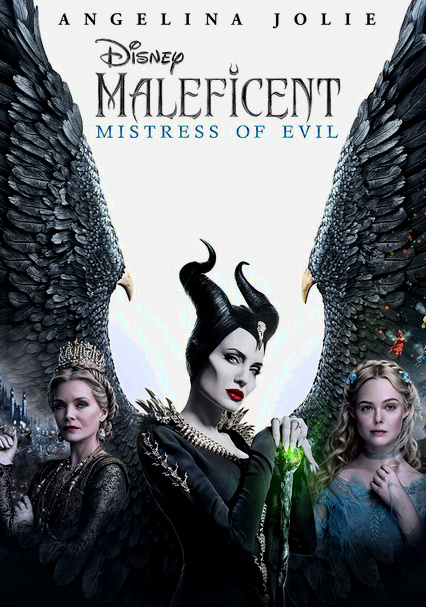
Maleficent: Mistress of Evil (2019) is the follow-up to the 2014 film, titled Maleficent, and while not a necessary sequel, it surpasses the original.

The intent was to create a significant studio effort that would generate substantial revenue, and the experiment appears to have been successful.

The production is not as frightening as the title might lead one to believe, and children over the age of ten would be a suitable target audience.

While the screenplay features traditional plot elements and a predictable ending, the real winner is the visual and cinematic treatment, which will leave viewers gasping.

The lush landscapes, odd little worlds, castles, and forests blossom with vibrant colors and exquisite shapes and objects.

It may primarily be CGI, but marvelous all the same.

To recap, the character of Maleficent debuted in the 1959 classic animated Disney film Sleeping Beauty. Maleficent is an evil fairy and the self-proclaimed “Mistress of All Evil” who, after not being invited to a christening, curses the infant Princess Aurora to “prick her finger on the spindle of a spinning wheel and die” before the sun sets on Aurora’s sixteenth birthday.

The character has since “evolved”, now portrayed as a sympathetic character, who is misunderstood in trying to protect herself and her domain from humans.

For five years, Aurora (Elle Fanning) has reigned peacefully as Queen of the Moors with Maleficent (Angelina Jolie) serving as teacher and protector. They have a rapturous relationship and flock and carry on with fairies and animals alike.

Handsome Prince Phillip (Harris Dickinson) proposes to Aurora, thereby uniting her kingdom with his, which is met with caution by his parents, specifically his mother, Queen Ingrid (Michelle Pfeiffer).

When the players gather for a celebratory dinner, Maleficent is mocked, causing her to fly into a rage, setting off a war between humans and fairies.

A key positive, and a notable shift in the story, is that Maleficent, a legendary film villain, is written sympathetically, and the plot device is effective. Rather than have her sparring with daughter Aurora, the duo team up to thwart the devious efforts of the evil Queen Ingrid, who is the real villain.

Jolie and Pfeiffer must have had fun playing the roles, and both perform their respective parts adequately. Favorable to me is Jolie, adding just enough vulnerability to balance her fierce nature and blood-red lips. Pfeiffer plays the role straight, as a caricature, with no redeeming value.

Both roles are fun.

Keeping in mind the target audience, the characters of Maleficent and Aurora are inspiring, especially to young females everywhere. The film adds more than a hint of progressive feminism as both characters are strong and no-nonsense.

This does not detract from their sensitivity or sense of fairness. Both could equally be role models of tough yet compassionate female characters.

In most Disney films, there are heroes and villains, and we all know and expect that. The standard storyline of good revolting against evil is on display, and an epic climactic battle scene gives a customary ending to the film.

Likewise, the fairy tale romance between Prince and Princess is prominently featured, and for my money, Dickinson and Fanning are tremendous in the roles.

The chemistry between the actors is apparent, and there is a nice balance between a believable romance and strong, independent characters.

Queen Ingrid, barely a mention in the original animated film, is turned into an evil shrew, all completely plot-driven. The story is what I expected it to be, but not the film’s high point.

More impressive is how the viewer can easily escape into a world of make-believe and long to stay there forever. Especially for the younger viewers, the Moors are a bevy of magical creatures and fluttering fairies rich with goodness.

The comical Knotgrass, Thistlewit, and Flittle, the red fairy, green fairy, and blue fairy, respectively, make a return appearance, though in a limited capacity. It would have been nice to give them a stronger presence, providing more wisdom, more advice, and more humor, but they serve their comic relief purpose well.

Will there be a third incarnation of Maleficent?

The filmmakers provide a strong likelihood. After Aurora and Philip wed, Maleficent returns to the Moors with the other Dark Fey, teaching the young fairies to fly. She promises to return for Aurora and Philip’s future child’s christening.

This vow seems like an easy setup to build on the original storyline, unlocking the next chapter in this engaging saga.

Oscar Nominations: Best Makeup and Hairstyling

Maleficent-2014

Maleficent-2014

Director Robert Stromberg

Starring Angelina Jolie

Scott’s Review #251

Maleficent_poster

Reviewed June 27, 2015

Grade: C+

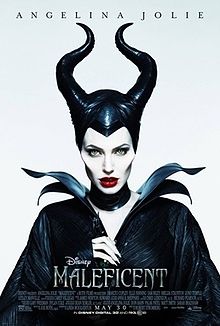
Maleficent (2014) is an updated retelling of the classic fairy tale “Sleeping Beauty,” told from the perspective of Maleficent, the evil godmother, who, in this version, is revealed not to have always been evil.

She is rather sympathetic towards the beginning of the film.

Later, as the antagonist, she begins in a world of goodness, wonder, and hope until she is duped by a young man she loves and turns wicked with hatred and revenge.

Angelina Jolie’s casting as Maleficent is excellent and the main reason to watch the film.

Also worth noting are the wonderful, creative art direction and costumes, which look gothic and interesting.

Otherwise, the film meanders a bit, feels slightly watered down, and includes a sappy, Disney-style love story. The story itself is Maleficent’s weakest part.

Maleficent, a young girl and protector of the fairies in the magical land of the Moors, is betrayed and is NOT a villain. Her male suitor (Stefan) is someone she trusts, loves, and respects; he then dupes her and has her wings stolen.

He becomes the King of the neighboring land of humans, vastly different from the peaceful world that Maleficent lives in.

These events lead to devastation, followed by revenge, as she places a vicious sleeping curse on Stefan’s firstborn, Aurora.

Jolie is wickedly delicious in this role- the sultry, pouty looks, and those eyes! She plays scorned, revenge-driven to the hilt without being too over the top as lesser actresses would have.

As the actress ages, she is beginning to take on more character, villainous parts rather than sexy bad girls or heroines, and I am all for that.

It gives the actress something meaty to sink her teeth into. Her dark costumes give the character a clear edge.

The art direction is magical, and the difference between the two lands is distinctive. The beauty of the Moors with gushing streams, mountains, and flowers contrasts with the stark nature of the human world.

The fairies symbolize peace and freedom with a life filled with treasures, whereas the human kingdom symbolizes ambition, greed, and coldness. The tiny fairies flitting around add zest and life to the film.

The silly love story, though, isn’t believable or compelling to me, especially the later romance between Stefan’s daughter, Aurora, and her wealthy suitor, Phillip.

They seem manufactured to be together without having a chance to get to know each other.

This seems contrived and produced to add something young to the story.

On a storytelling note, Maleficent’s sleeping curse is set to transpire on Aurora’s sixteenth birthday when she pricks her finger on a spindle and falls into a deep sleep that can only be remedied by love’s true kiss.

Why does he send Aurora away to live in hiding when she is a newborn? Doesn’t he have sixteen years to enjoy her?

The film then dwindles into the inevitable battle finale, with lots of movement and fire, and a stand-off between Maleficent and Stefan that is dull and predictable.

Overall, the first half of Maleficent (2014) is the better part, and Angelina Jolie’s performance is wonderful.

Oscar Nominations: Best Costume Design